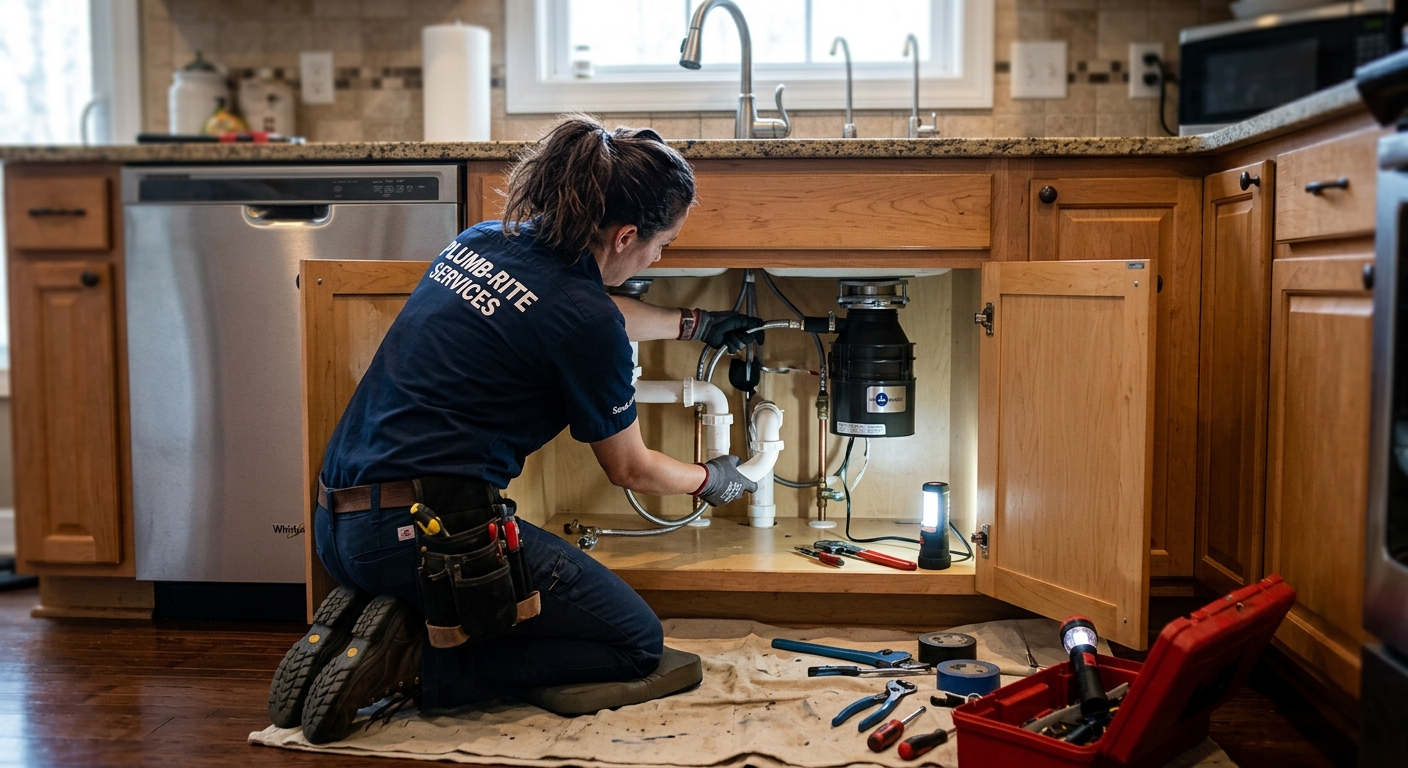
East Hanover plumbing prices by job type — 2026
East Hanover homeowners face a wide range of plumbing costs, and the price can jump considerably if you’re dealing with an emergency. In a community of nearly 6,000 (U.S. Census Bureau, ACS 2024), where over 80% of homes are single-family and 42.3% were built before 1980, plumbing needs are shaped by the era and materials of your home as much as the specific problem. For example, if your house was part of the post‑1950 suburban wave in nearby Lower Paxton Township, you’re more likely to have a copper or PEX supply—and frequent issues like pinholes or aged sewer laterals, each driving its own repair costs.
The clearest guide to cost is whether this is an urgent call. Emergency work in East Hanover comes with its own price, whether it’s after hours, a burst pipe, or uncontrollable water flow. The same repair, scheduled, can land on the lower end of the price range simply because it gives the plumber time to plan, bring the right materials, and often avoid extra drywall patching or overtime labor.
| Service |
Scope |
Emergency rate |
Standard rate |
| Emergency repair — burst pipe |
Locate, open, repair section, restore service |
$650–$1,250 |
$375–$1,250 |
| Water heater replacement (gas, 40–50 gal) |
Remove old, install, test, haul away |
$2,000–$3,000 |
$1,250–$3,000 |
| Drain cleaning — main line |
Augering or hydro-jet, camera if needed |
$350–$800 |
$200–$500 |
| Sewer line spot repair |
Excavate or reline a failed section |
$2,100–$12,500 |
$2,100–$12,500 |
| Whole-house repipe |
Replace supply lines throughout, patch and finish |
|
$3,700–$9,000 |
| Water service line replacement |
Street to house, excavation and restoration |
|
$5,800–$12,500 |
Estimates for a typical East Hanover home. Access difficulty and pipe material move these figures more than anything else.
The leak you can hear but can't see
If you hear running water in your East Hanover home but can’t find the source, do this before calling anyone: shut off every faucet and appliance, make sure no toilets are filling, then check your water meter. If the meter is still running, you’ve got a hidden leak somewhere on your water supply—not just a dripping tap. This is a simple, free way to confirm a real problem before spending a dollar.
Professional leak detection starts with acoustic listening devices—these are sensitive microphones used to pick up the sound of water escaping under floors, slab foundations, or inside walls, typically running $375–$1,250 if it’s part of an emergency call. Thermal imaging cameras can spot temperature differences behind finished walls, helping narrow down leaks with less cutting. For particularly stubborn or underground leaks (like a slab-on-grade home or a buried irrigation line), tracer gas can be injected and detected as it escapes—this is a more involved service, generally near the higher end of the emergency pricing. Slab leak location itself will usually fall within these same bands, especially given East Hanover’s mix of construction types.
If a plumber wants to start removing drywall or digging before pinpointing the leak with these tools, it’s backwards. The best approach is always non-destructive investigation first. In our area, leaks inside wall cavities often appear as unexplained damp spots, and irrigation or exterior line leaks are frequently noticed as soft ground or spikes in your water bill. The right detection saves both money and future repairs.
What construction era means for your pipes
The age of your East Hanover home says more about your plumbing than most people expect. With 42.3% of homes built before 1980 and a strong wave of post‑1950 suburban tract development (U.S. Census Bureau, ACS 2024), you’ll see everything from galvanized steel and copper to early plastic pipes. Older homes are likely to have galvanized supply lines, cast iron or even clay tile drains, and original service lines—lead is not uncommon in Harrisburg and neighboring suburbs, thanks to the era and local utility history.
If your house came up during the postwar boom, you’re probably dealing with copper or even polybutylene (if built or remodeled in the late ‘70s to early ‘90s). That supply material is key: copper pinholes, polybutylene leaks, and scale buildup tell you where future repairs land. Cast iron drains from this era often develop root intrusion at joints, especially where clay lateral meets original iron inside.
In more recent constructions—the minority in East Hanover but present in certain tract developments—expect builder-grade fixtures, PEX supply, and original water heaters just reaching the end of their first life. Newer homes dodge some of the corrosion problems but face plastic fitting failures and accelerated wear if the water chemistry is aggressive. And whether your water heater is on its first or third swap, don’t believe newer stock means “worry-free.” Each era brings its own set of symptoms for the plumber—and homeowner—to pay attention to.
Spot repairs or whole-house repipe?
In East Hanover and the nearby tracts, you’ll reach a point where spot repairs just don’t make sense. If you’ve had two or more leaks in the same type of pipe within three years, that’s not bad luck—it’s a sign the material is aging out and you should seriously consider at least a partial repipe.
Other warning signs include water pressure that drops all over the house (not just at one sink), brown or rusty water on the first draw of the morning, and visible corrosion or stains around exposed joints. Repeated pinhole leaks in copper, or any leak in polybutylene, should also prompt a talk about replacement, not just repair.
Copper is reliable but, when it fails, tends to fail in clusters due to pitting or water chemistry. PEX—if installed correctly—is less prone to corrosion but not immune to fitting issues. A whole-house repipe costs more up front but resets your risk profile for decades.
Don’t overlook one of the biggest hidden costs: patching drywall or plaster after the work is done. In older homes with plaster walls, the cost to repair surfaces can rival or even exceed the plumbing itself. In East Hanover’s mixed stock, “partial repipe” often means the first floor and basement lines, but if you’re seeing patch after patch, whole-house replacement pays off.
| Situation |
Recommendation |
Cost |
Reasoning |
| One leak, accessible, modern pipe |
Spot repair |
$375–$1,250 |
Single isolated incident; material not prone to repeat leaks |
| Two or more leaks in 3 years |
Partial repipe |
$3,700–$6,000 |
Repeating failures point to aging or poor-quality material |
| Galvanized supply, pressure loss |
Full repipe |
$3,700–$9,000 |
Corrosion and buildup in entire system, not fixable by spot repair |
| Polybutylene anywhere in the house |
Full repipe |
$3,700–$9,000 |
Inherent failure risk in material, insurance issues often arise |
| Cast iron drain with root intrusion |
Camera, then reline or replace |
$2,100–$12,500 |
Must confirm damage; options depend on pipe condition |
| Suspected lead service line |
Test, then replace the lateral |
$5,800–$12,500 |
Lead confirmed by test; replacement is only safe long-term answer |
What's in the water here
If you’re on public water in East Hanover, your tap is supplied by Capital Region Water, which provides both water and wastewater services for Harrisburg and much of the region. By law, they publish an annual water quality report—ask for it if you haven’t seen one in the mail or online. Most public supplies in the area are moderately hard, so expect some scale buildup in water heaters and on faucets; over the years, that shortens the life of both. Aggressive water (low pH) isn’t common but can cause pinhole leaks in copper; if you’re seeing greenish corrosion, ask about the utility’s pH or request a basic chemistry test ($200–$500 when bundled with other plumbing work).
Water softeners are a popular fix in some East Hanover households, but be careful: the monthly salt and service adds up, and unless your fixtures or appliances are suffering, the economics rarely pay back for average local conditions. Whole-house filters are useful if you want aesthetics—better tasting or odor-free water—but do little for pipe or fixture longevity. If you want real protection for drinking, a point-of-use filter at the kitchen sink does the job far more economically.
If you’re outside the public supply footprint and using a private well (common in the more rural northern parts of Dauphin County), remember: nobody publishes a report for you. County health or independent labs can test for the basics—bacteria, nitrates, metals—for a few hundred dollars. Don’t buy treatment equipment on a salesperson’s word alone; get your well tested first and only treat real problems.
Verifying a East Hanover plumber's credentials
Plumbing isn’t licensed statewide in Pennsylvania—the state has no universal plumbing licence. Licensing is handled by individual municipalities. That means a plumber registered in Harrisburg could have zero standing in your part of East Hanover, so always ask directly: “Are you licensed to pull permits here?” In Harrisburg, for example, pulling a permit for anything beyond a fixture change requires local contractor registration. East Hanover itself, like most of Dauphin County, doesn’t issue a county-level plumbing licence.
Permits are also a patchwork. In Harrisburg, any interior plumbing change beyond a faucet or toilet swap needs a permit from the Bureau of Codes. In Derry Township, you can replace a toilet or faucet in your owner-occupied home without a plumbing permit. For bigger jobs—water heaters, repipes, sewer work—expect to pull a permit and be ready for inspection by the relevant municipal office.
You should also verify their Home Improvement Contractor (HIC) registration through the Pennsylvania Office of Attorney General—legally required for any contract over $500. Check hic.attorneygeneral.gov for confirmation. Workers’ compensation insurance is mandatory for any company with employees, and you can verify that on the state’s WCAIS system (wcais.pa.gov). Never rely on a verbal assurance; ask to see an insurance certificate naming your property, and check coverage dates.
Choosing a plumbing contractor
When you hire a plumber in East Hanover, your first step should be verifying their credentials with the actual authority for your municipality. There is no Dauphin County-wide plumbing licence, so what matters is whether the contractor can pull a permit in your town or township—especially for major jobs like repiping or sewer line replacement. Use the Pennsylvania Attorney General’s HIC registration website for verification, but always ask where the licence applies.
Ask for proof of general liability and workers’ compensation insurance, and insist the certificate lists your address. Some companies run their own uniformed crews, others subcontract—ask directly who will be in your house and who takes responsibility if damage or injury occurs on-site. When it comes to emergency calls, request a detailed explanation of their after-hours pricing. Reputable contractors will state clearly what the base callout costs.
- Verify the contractor’s municipal registration for permit eligibility
- Confirm Pennsylvania HIC registration at hic.attorneygeneral.gov
- Check workers’ compensation insurance for active coverage at wcais.pa.gov
- Ask for general liability insurance certificate naming your address
- Determine who actually performs the work—employees or subcontractors
- Request camera footage and written findings for sewer or major drain work
- Get a clear, written contract for any work over $500
- Insist on a line-by-line quote, with emergency vs. scheduled rates shown
- Review their process for drywall and finish repairs post-plumbing
- Ask for references from similar homes (especially those of similar construction era)
- Avoid pressure to sign immediately, especially for major repipe jobs
- Do not accept any plumber who waives your insurance deductible (it’s illegal in PA)
Red flags in the East Hanover market—which lines up with its moderate suburban density—include contractors recommending full sewer replacement with no camera report or pressurized water test to back it up, ambiguous permit status, or “emergency-only” pricing that isn’t clearly disclosed upfront.
Frequently asked questions — plumbing in East Hanover
What does emergency plumbing cost in East Hanover?
Emergency plumbing in East Hanover always costs more than a scheduled visit—it’s not just overtime, but rapid response, stocking extra parts, and sometimes temporary fixes to prevent water damage. For a typical burst pipe or major leak, you should expect to pay between $650–$1,250 for a full shutoff, opening the wall or floor, repairing the affected pipe, and restoring water service. Even a late-night call for a failed water heater or an overflowing drain will often fall within this band. Always ask if there’s an additional call-out fee or if that range covers the job start-to-finish. Some local contractors will apply the emergency premium toward a larger repair if you schedule full restoration the next day, so it’s worth asking.
Are tree roots a common sewer problem in East Hanover?
Yes—tree roots in sewer lines are common in East Hanover, especially for homes built before 1980 or those in areas with mature landscaping and older clay or cast iron laterals. Over time, even small root infiltrations can lead to backups, slow drains, or complete blockages. The most effective repair starts with a camera inspection, which usually runs on the low end of the $2,100–$12,500 sewer line repair range if roots have already broken through. Hydro-jetting or mechanical augering is often used first, but if the pipe is badly damaged or collapsed by root growth, spot repair, relining, or even full replacement may be recommended. Always insist on camera footage before authorizing a major dig.
Should I wait until business hours to call?
If you’re dealing with an active leak, gushing pipe, or any situation where the water won’t stop with a simple shutoff valve, don’t wait for business hours—call a plumber right away. In East Hanover, after-hours rates do carry a premium (typically $650–$1,250 for emergency leak repair), but waiting can multiply water damage costs much faster. For non-emergencies, like a slow drain or leaking faucet, it’s smart to wait and schedule during regular hours. The difference in cost can be hundreds of dollars. In some cases, a plumber may talk you through shutting off water or containing the problem until the morning, which saves money and mess.
How do I find a hidden water leak?
The first step in any East Hanover home is the meter test: turn off every tap and appliance, check that nothing is running, and look at your water meter outside or in the basement. If the dial is still spinning, you have a leak on your supply side. Professional leak detection uses acoustic listening (microphones to “hear” leaking water in walls, floors, or under slabs), thermal cameras, or tracer gas. These methods typically fall within the $375–$1,250 price range for a detection visit and targeted repair. It’s much better to spend on detection than to guess—or start opening walls blindly. In houses with slab or finished basements, non-destructive location is especially valuable.
What does drain cleaning cost in East Hanover?
Main-line drain cleaning in East Hanover generally runs $200–$500 for a scheduled visit, which includes augering or, with heavier blockages, hydro-jetting and a camera follow-up if the clog is stubborn or recurring. Emergency rates (evenings or weekends or when there’s sewage backing up) jump up to $350–$800. The biggest factor is access: a cleanout in the yard is much quicker and cheaper than one hidden below a basement slab or behind finished walls. Always ask if camera inspection is included, especially for older homes prone to root infiltration or heavy buildup.
Should I leave a faucet dripping in cold weather?
In East Hanover, with a winter design temperature of 12 °F and repeated freeze-thaw cycles, leaving a faucet dripping can help prevent pipe freezes when the temperature is expected to drop suddenly—especially if your pipes run along exterior walls or through unheated crawlspaces. Letting a trickle run is much cheaper than repairing a burst pipe, which can run between $375–$1,250 just for the plumbing, not counting drywall repair. However, it won’t solve an underlying insulation problem. If this is a yearly issue or you find frozen pipes more than once, you’re better off investing in pipe insulation or heat tape before winter returns.
Does insurance cover a burst pipe in East Hanover?
Most homeowners insurance policies in East Hanover will cover the sudden and accidental damage from a burst pipe—including water damage cleanup and repair, within your policy limits—if you’ve maintained some minimum heat in the house and taken reasonable precautions. The actual pipe repair, though, is often not covered; you’ll be responsible for the plumber's bill (typically $650–$1,250 for an emergency fix). What is usually covered is the associated damages, like tearing out drywall and restoring finishes. Don’t let a contractor offer to waive your deductible; it’s against Pennsylvania law. Always call your insurer promptly to start the claims process.
Do I need a permit for plumbing work in East Hanover?
Permit requirements vary by municipality in Dauphin County. In Harrisburg, any plumbing system work beyond simple fixture replacement—like moving a water heater, main supply, or drain—triggers a permit and inspection by the Bureau of Codes. In Derry Township, you can swap out a faucet or toilet without a permit if you’re the owner and live in a single-family home. Larger jobs like repipes, new water heaters, or sewer repairs always require a permit. The cost for a typical permitted project starts with the plumbing labor—$1,250–$3,000 for a water heater, for example—plus the municipal permit fee. Always get a written contract over $500 and make sure your contractor can pull permits in your jurisdiction.
Should I reline or replace my sewer line?
The right choice for East Hanover homeowners depends on the pipe material, the degree of damage, and—critically—camera inspection findings. Spot relining is a good option if the pipe is basically intact but undermined by small cracks or root intrusion, and avoids major excavation for $2,100–$12,500 depending on access and length. Full replacement is usually needed when there are collapses, missing sections, or repeated failures spanning more than one area. Insist on video proof before making the call; never authorize a full replacement without seeing the footage yourself, especially as many sewer laterals in neighboring townships are original clay or cast iron and may need serious attention.