Plumbing costs in Jeannette — 2026
In Jeannette, with 68.7% single-family homes and most properties built before 1980 (U.S. Census Bureau, ACS 2024), plumbing problems often come down to the age and material of your pipes. Post‑1945 suburban tracts nearby in Hempfield and North Huntingdon keep local plumbers busy with copper and galvanized line replacements—older pipes mean leaks, clogs, and corrosion are more common, and repairs cost more when access is tight or materials are outdated.
Whether you place the call during business hours or in the middle of a leak at midnight makes all the difference to your bill. Emergency work comes with a premium—you're paying for the privilege of not waiting and for a plumber to drop everything and respond. Routine jobs scheduled ahead cost less—sometimes a lot less—as crews can plan ahead and avoid overtime and after-hours fees.
| Service |
Scope |
Emergency rate |
Standard rate |
| Emergency repair — burst pipe |
locate, open, repair section, restore service |
$550–$1,100 |
$325–$1,100 |
| Water heater replacement (gas, 40–50 gal) |
remove old, install, test, haul away |
$1,700–$2,500 |
$1,100–$2,500 |
| Drain cleaning — main line |
augering or hydro-jet, camera if needed |
$350–$800 |
$200–$500 |
| Sewer line spot repair |
excavate or reline a failed section |
$1,800–$11,000 |
$1,800–$11,000 |
| Whole-house repipe |
replace supply lines throughout, patch and finish |
$3,100–$7,600 |
$3,100–$7,600 |
| Water service line replacement |
street to house, excavation and restoration |
$4,900–$11,000 |
$4,900–$11,000 |
Estimates for a typical Jeannette home. Access difficulty and pipe material move these figures more than anything else.
Choosing a water heater in Jeannette
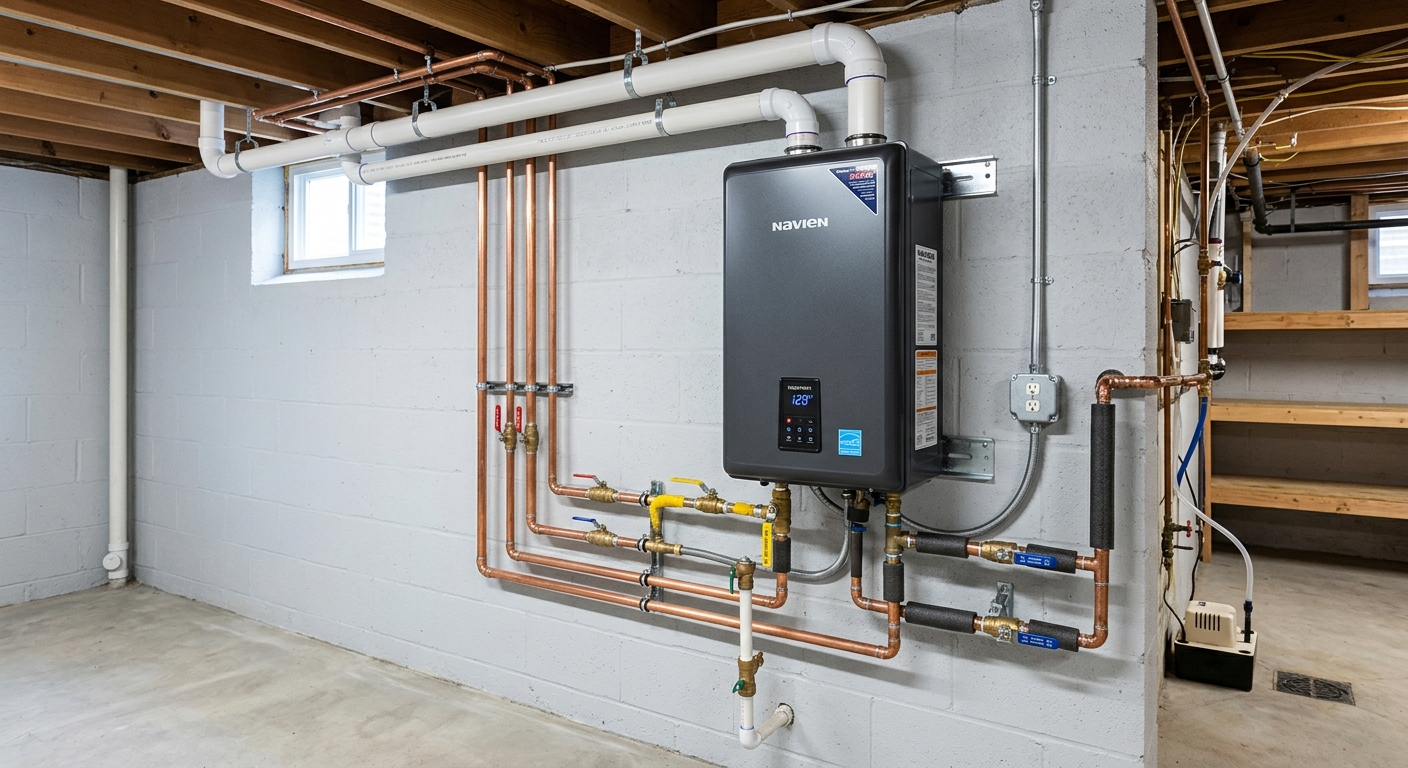
In Jeannette, most homes rely on gas or electric tank water heaters, mainly because they’re easy to install and generally the cheapest up front. Tank models have a reputation for failing by leaking at the bottom—usually after 8 to 15 years. Tankless gas models promise endless hot water and take up less space. The catch? They cost more to install, and, in the older housing stock found in Jeannette, a larger gas supply line and new venting are often needed to handle the demand—surprise costs that aren’t always mentioned in the initial quote.
Heat pump water heaters are the most efficient when it comes to operating costs. They extract heat from the surrounding air, so they need a good-sized unfinished space like a basement, and they cool that room as they run. The downside is they’re noisy for a finished basement and require a drain for condensate. For most homes built before 1980, where water heater replacement comes up every decade or so, first-hour rating—how much hot water you get out of the tank all at once—matters more than advertised gallons. Expansion tanks and drain pans are required by code in many municipalities. Ninety percent of failures come down to the tank corroding, not a bad control board or thermostat.
| Type |
Installed cost |
Service life |
Operating cost |
Best when |
| Gas tank, 40–50 gal |
$1,100–$2,500 |
8–12 yrs |
moderate |
utility gas, no venting surprises |
| Electric tank, 40–50 gal |
$1,100–$1,700 |
10–15 yrs |
high |
no gas line, easy set-up |
| Gas tankless |
$1,700–$2,500 |
18–25 yrs |
low-moderate |
space savings, endless hot water, large gas line |
| Heat pump water heater |
$1,700–$2,500 |
13–15 yrs |
lowest |
plenty of basement air, electric service upgrade |
Verifying a Jeannette plumber's credentials
Pennsylvania does not have a statewide plumbing license. Instead, plumbers are licensed and registered at the municipal level—so the real question is whether your plumber is properly registered or licensed for work in Jeannette or your specific municipality. For example, the City of Greensburg maintains its own contractor registration, and surrounding boroughs and townships can have entirely different requirements. In practice, a plumber with credentials in one municipality might hold none where your property sits.
For contracts over $500, Pennsylvania requires contractors to be registered with the state as Home Improvement Contractors (HIC). You can (and should) verify this at hic.attorneygeneral.gov. If you’re in nearby Hempfield Township, any new or altered plumbing connected to public water or sewer generally requires a township-issued construction permit. In Greensburg, a like-for-like fixture swap without pipe changes is often permitted as routine maintenance, so no city plumbing permit is typically needed for that.
Don’t overlook insurance: all employers are required to carry workers’ compensation and can be checked through the WCAIS system at wcais.pa.gov. Ask to see a certificate specific to your address. Always get a written contract for work over $500; that’s your protection under Pennsylvania’s Home Improvement Consumer Protection Act, which includes rights like a three-day cancellation period.
Lead service lines in Jeannette
The Municipal Authority of Westmoreland County manages public water for Jeannette, and their systemwide lead service line inventory shows partial replacements, especially in Greensburg’s older neighborhoods. The water service line is split between the publicly owned section (typically from the street to the curb or main shutoff) and your privately owned lateral (from the curb into your house). Replacement programs generally address only the public side, so homeowners may be responsible for the rest.
To check your line’s material, find where it enters your basement or crawlspace. Lead pipes are dull gray and easily scratched, and won’t attract a magnet. Copper has a yellowish shine, and galvanized steel is magnetic. After a partial lead pipe replacement, released particles from disturbed scale can increase lead levels temporarily, so full replacement is the safest option.
The Authority maintains an inventory you can request, but if lead line replacement is needed, costs on the private side usually fall to the homeowner. Always ask the utility directly about assistance or cost-sharing, as published information is the only way to be certain—don’t assume you’re covered by an ongoing program.
Depending on how far your line runs and the complexity of excavation, a water service line replacement in Jeannette can run from $4,900–$11,000, while a repair or partial replacement could be $1,800–$11,000. In homes built before 1980, chances are higher for original lead, galvanized, or copper lines, especially in certain blocks. Do the scratch test before committing to any upgrade.
What construction era means for your pipes
With over 93% of Jeannette homes built before 1980 (U.S. Census Bureau, ACS 2024), the odds are strong that your house has some combination of copper or galvanized steel supply lines and cast iron or clay drains. Clay tile was common for sewer laterals in the postwar boom years, which means root intrusion and cracks are increasingly likely as these systems age. Even if fixtures have been swapped out, original lines behind the walls remain vulnerable to corrosion and mineral buildup.
Water heaters in Jeannette’s older homes are often second or third replacements, especially if the property has changed hands. If your home was built after 1945 in one of Hempfield or North Huntingdon’s suburban tracts, builder-grade copper or PEX may be present. These homes may seem “newer,” but copper pinholes and PEX fitting failures are a rising issue as materials approach their design lives. In all cases, age means higher odds you’ll face a leak or clog needing attention sooner rather than later. Knowing your home’s build era and plumbing material is the fastest way to anticipate both the type and cost of repairs you’ll see next.
When to call now and when to wait until Monday
Some plumbing problems can be safely scheduled for regular business hours, while others demand immediate action—especially in a town with older pipes like Jeannette. The extra cost for emergency service covers dispatching a crew right away, overtime labor, a trip charge, and the reality that troubleshooting under pressure is more challenging. Those costs add up fast, turning a standard repair of $325–$1,100 into an emergency bill of $550–$1,100 or more, just for a burst pipe.
True emergencies that need after-hours response include active flooding, no water at all to the property, visible sewage backing up, and any kind of gas leak or smell. If water is gushing onto floors or into finished walls, immediate shutoff and help are necessary. But a slow drip under the sink, one sluggish drain, or a running toilet? These can almost always wait until regular hours—a scheduled visit saves hundreds.
Every homeowner should know how to shut off water at the main (usually a lever near the water meter) and at individual fixtures (small valves under sinks and toilets). This simple step turns most emergencies from a midnight panic into a calm, planned repair—your wallet and patience will thank you.
Water quality and what it does to your pipes
The Municipal Authority of Westmoreland County supplies most public water in Jeannette and publishes an annual water quality report you can request directly. Water hardness varies, but mineral scale is the usual culprit for shortening the life of water heaters and showerheads. Hardness causes white crust buildup, while aggressive (slightly acidic) water can eat away at copper, leading to pinhole leaks common in pre-1980 homes.
Softeners can help if you’re replacing fixtures every few years, but in many cases, the cost doesn’t justify the investment unless your appliances are failing early or you’re fighting constant buildup. Whole-house filters are rarely necessary unless a specific contaminant (like lead from old lines) is found. For most, a simple point-of-use filter at the kitchen sink does the job. Oversold “miracle” systems rarely pay back, so ask for a copy of the water report and only target proven issues.
If you’re on a well, remember there’s no public report—private well owners should test annually at their own expense for safety and to diagnose corrosive or hard water before buying any treatment equipment.
Frequently asked questions — plumbing in Jeannette
What do I do if sewage is backing up?
When sewage starts backing up in a Jeannette home, this is an emergency—raw waste can be a serious health risk and damage finishes quickly. First, stop using all plumbing fixtures, including sinks, toilets, and laundry; this reduces further backup. If your main shutoff is accessible, closing it can limit water use into drains. Call a plumbing contractor right away for emergency service, which in Jeannette will typically cost between $350–$800 for main line cleaning or more for a camera inspection. The problem could be a blocked main, tree roots in a clay line, or even a failed sewer lateral—issues common in pre-1980 homes. Many properties here still have original clay or cast iron drains. Fast action limits the cleanup you’ll face after the clog is cleared.
How do I verify a plumber's licence and insurance?
There is no statewide plumbing license in Pennsylvania; all licensing is municipal. In Jeannette and neighboring areas, ask contractors specifically, "Are you licensed or registered for plumbing in this municipality?" Not just anywhere in the state. Verify Home Improvement Contractor (HIC) registration at hic.attorneygeneral.gov for any project over $500. For workers’ compensation, Pennsylvania employers must carry coverage, which you can check through WCAIS (wcais.pa.gov). Insist on a certificate with your address listed before signing a contract. If you need a major job like a water heater replacement—which costs $1,100–$2,500 here—checking these credentials protects your investment and makes sure your homeowner’s insurance won’t be jeopardized if there's an incident.
What causes low water pressure in Jeannette homes?
Low water pressure in Jeannette often comes down to aging galvanized or partially clogged copper supply lines—especially common since over 93% of homes were built before 1980. Sometimes the culprit is a corroded main shutoff or even a municipality issue through the Municipal Authority of Westmoreland County. Aerators on faucets can also clog with mineral scale from hard water, backing up flow. If the problem is widespread throughout the house, the main supply line or pressure regulator may be to blame, which sometimes requires a partial or full replacement in the $4,900–$11,000 range. For one or two fixtures, it’s usually a quick cleanout. Diagnosis by a plumber familiar with local housing eras is always a good first step.
How do I prevent frozen pipes in Jeannette?
Jeannette sees heavy freeze-thaw cycles, and the frost depth is 36 inches, which means pipes in crawlspaces, garages, or along uninsulated basement walls are at real risk during a cold snap. Letting faucets drip at a trickle on very cold nights, insulating exposed pipes, and sealing wall cracks can save hundreds—emergency burst pipe repairs cost $550–$1,100 if you have to call a plumber out after hours. Always disconnect hoses and shut outside valves before winter, and if you’re leaving town, keep your thermostat set to at least 55°F. Many older homes in the area have supply pipes run through attics or above garage ceilings, which makes pipe insulation and proper heat essential.
Who pays to replace a lead service line in Jeannette?
In Jeannette, the water service line is split between your property and the public main, and the Municipal Authority of Westmoreland County's inventory shows many partial lead line replacements in older neighborhoods. Usually, the utility covers replacement only up to the curb, leaving homeowners responsible for the stretch from curb to home. Costs for a private line replacement can reach $4,900–$11,000. Programs sometimes exist to share costs, but since this is not guaranteed, always contact the Authority directly to clarify your liability. Never start replacement work before confirming exactly which segment you’re responsible for—the answer varies by address and utility practice.
How much does a plumber cost in Jeannette?
Plumbing costs in Jeannette can swing widely depending on urgency and job type. For example, an emergency burst pipe repair may run $550–$1,100, while the same repair, if you can wait for business hours, might be just $325–$1,100. Replacing a water heater typically runs $1,100–$2,500. Whole-house repiping (often necessary in pre-1980 homes here) may cost $3,100–$7,600. When calling for a quote, ask for separate pricing for emergency vs. non-emergency work and always get a written contract. Diagnosis fees and access issues can add costs, so provide details about your home’s construction era and pipe materials for a tighter estimate.
Do older Jeannette homes have galvanized pipes?
Yes—most Jeannette homes were built before 1980, and galvanized steel was standard for water supply lines well into the postwar years, especially in original suburban tracts. While some pipes may have been partially replaced, many remain in service, leading to mineral buildup that causes low pressure and leaks. Plumbers around here see a steady stream of repipe jobs costing $3,100–$7,600 due to corroded galvanized pipes. Partial fixes (like just replacing a section) only kick the can down the road. If your water is discolored or pressure is low, a full inspection is worth doing—don’t assume new fixtures mean safe pipe behind the walls.
Should I reline or replace my sewer line?
With original clay or cast iron sewer laterals common in Jeannette, you might face branch line cracks or root intrusion. Relining (trenchless) can renew the inside of a pipe at a lower cost and minimal yard damage. However, relining doesn’t make sense if sections have collapsed or been offset—excavation and full replacement is then needed. Spot repairs and relining run $1,800–$11,000 depending on length and access. Always have a camera inspection done first to assess the line’s condition; it saves money and helps you avoid the wrong choice. In older homes here, an annual camera look is never wasted money—it catches trouble before it’s urgent.
Why do plumbers charge a diagnostic fee?
Diagnostic fees in Jeannette, similar to other Pennsylvania towns, cover the trip, the time to troubleshoot, and use of specialty equipment like cameras or leak detection tools. Older homes—with original copper, clay, and galvanized lines—often need methodical work to pinpoint issues. A typical main line cleaning or diagnostic service runs $200–$500 in normal hours. These fees cover the cost of keeping skilled staff on hand and ensure your job gets careful attention. If follow-up repairs are needed, many contractors will credit the diagnostic fee back if you hire them for the work. Always ask about this when booking.