Plymouth plumbing prices by job type — 2026
Plymouth’s plumbing costs reflect the area’s housing mix and age—about 90% of local homes were built before 1980, and only 40.6% are single-family (U.S. Census Bureau, ACS 2024). These figures matter because older, multifamily buildings in nearby towns like Wilkes-Barre and Hazleton often contain legacy galvanized piping, making repairs and upgrades more complex. In Plymouth, two identical plumbing issues can command very different prices based on whether you call for emergency service–that’s the single biggest variable. If you have a burst pipe at midnight, you’re paying for after-hours dispatch, quick mobilization, and skilled labor working under time pressure.
Pipe material is the other price lever. Pre-1940 galvanized supplies are prone to corrosion and can be tough to access, pushing up costs. More modern homes with copper or PEX are usually cheaper to restore. In Plymouth, expect higher costs for any job in older stock with tight crawlspaces or concrete basements—a common story in Luzerne County.
Here’s what you can expect to pay for common jobs:
| Service |
Scope |
Emergency rate |
Standard rate |
| Emergency repair — burst pipe |
locate, open, repair section, restore service |
$500–$1,050 |
$300–$1,050 |
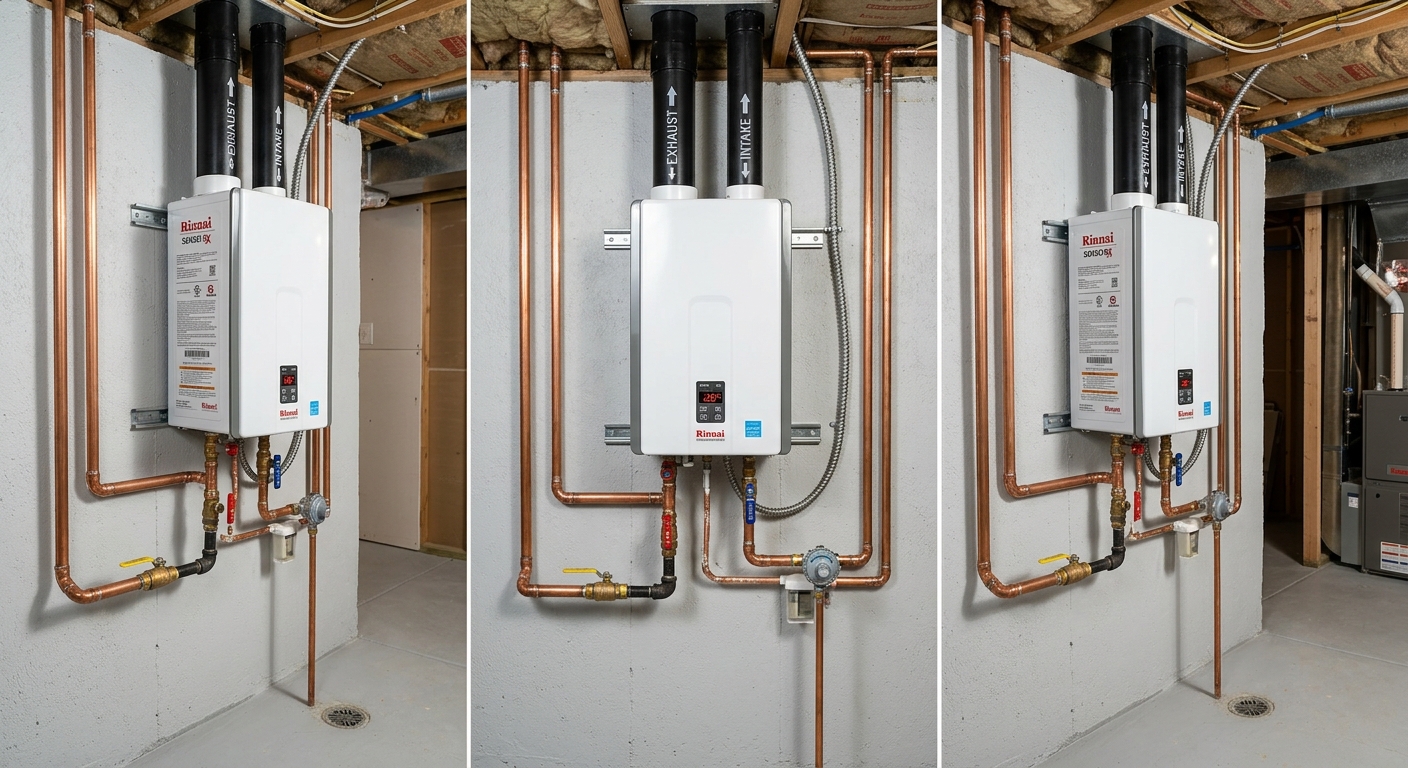
| Water heater replacement (gas, 40–50 gal) |
remove old, install, test, haul away |
$1,650–$2,400 |
$1,050–$2,400 |
| Drain cleaning — main line |
augering or hydro-jet, camera if needed |
$350–$800 |
$200–$500 |
| Sewer line spot repair |
excavate or reline a failed section |
$1,750–$10,500 |
$1,750–$10,500 |
| Whole-house repipe |
replace supply lines throughout, patch and finish |
— |
$3,100–$7,400 |
| Water service line replacement |
street to house, excavation and restoration |
— |
$4,800–$10,500 |
Estimates for a typical Plymouth home. Access difficulty and pipe material move these figures more than anything else.
When to call now and when to wait until Monday
Every call to a Plymouth plumber boils down to one question—do you need it fixed tonight, or can it wait? Emergency calls cost more for four reasons: after-hours dispatch, a trip charge, overtime labor, and pressure to diagnose and resolve quickly. For instance, a burst pipe repair after hours can cost up to $1,050, while waiting for regular hours might range from $300–$1,050. The premium comes from the disruption and urgency, not the parts or the pipe itself.
Not everything needs a 2 a.m. response. These need immediate help:
- Active flooding from a burst pipe
- Complete loss of water supply to the whole house
- Sewage backing up into a tub or basement
- Gas smell near the water heater — stop and call the gas company before a plumber
These issues can usually wait for business hours:
- A slow drip under a sink — place a bucket and check it every few hours
- One slow drain (as long as others still work)
- A running or stuck toilet
- Low pressure at a single fixture
To stop most emergencies from getting worse, turn off the water. Every Plymouth home should have a main shutoff (usually a green or blue handle, or sometimes a round wheel) on the supply pipe near the water meter or where it enters the basement. For sinks and toilets, turn the small oval valve under or behind the fixture clockwise until snug.
Knowing how and when to turn off water can turn a $500–$1,050 after-hours event into a Monday-morning $300 fix.
Pipe materials in Plymouth homes and how they fail
Plymouth homeowners inherit the plumbing history of northeastern Pennsylvania. Much of Wilkes-Barre and Hazleton’s housing is pre-1940 multifamily stock, so Plymouth homes often have legacy galvanized piping tucked behind plaster—making replacement a challenge. Knowing your pipe material is key because it predicts how things will fail and what it will cost to fix.
Galvanized steel (pre-1960) looks dull gray and takes a magnet; it corrodes inside, slowly choking off water before springing leaks. Copper (1950s–present) shows a reddish color and will not attract a magnet; it’s durable but can develop pinhole leaks with aggressive water. Polybutylene (late 1970s–1995) is gray or blue plastic with crimped metal ends—unreliable and uninsurable. Modern supply is PEX (2000s–present): flexible and usually red or blue. Drains add another layer—cast iron (pre-1975, heavy and black, may ring if struck) and clay tile for early sewers. PVC and ABS (post-1970s) are white or black plastic, light, and non-magnetic.
To estimate what’s left in the tank: If your house predates 1940 and still has galvanized, original piping is overdue—40–60 years is all it can offer. Cast iron drains, common in basements here, start to flake and crack after 50–75 years. Knowing your material tells you if you have runway for repairs or need to plan for repiping.
| Material |
Typical era |
Failure mode |
Service life |
| Galvanized steel supply |
pre-1960 |
internal corrosion, pressure loss |
40–60 yrs |
| Copper supply |
1950s–present |
pinhole leaks, joint failure |
50–70 yrs |
| Polybutylene supply |
late 1970s–1995 |
fitting failure, sudden bursts |
unreliable |
| PEX supply |
2000s–present |
fitting or UV degradation |
40–50 yrs |
| Cast iron drain |
pre-1975 |
corrosion, cracking, scale |
50–75 yrs |
| Clay tile sewer lateral |
pre-1980 |
root intrusion at joints, offset |
50–60 yrs |
| PVC / ABS drain |
1970s–present |
joint separation, crushing |
50+ yrs |
Verifying a Plymouth plumber's credentials
In Pennsylvania, plumbing isn’t licensed by the state. It’s handled at the municipal level, which means a plumber fully approved in one town may lack standing in the next. For Plymouth, and towns like Wilkes-Barre, contractor licensing comes through the municipal Code Enforcement Office if required. Don’t just ask “are you licensed”—ask “are you licensed here?” That detail matters: Wilkes-Barre requires all plumbers to hold a local license, but rules can differ across Luzerne County.
For contracts over $500, Pennsylvania law requires Home Improvement Contractor (HIC) registration—this is state-issued and can be checked at hic.attorneygeneral.gov. Any reputable plumber must also carry workers’ compensation, and you can independently confirm coverage for their crew at WCAIS (wcais.pa.gov).
When work involves new or altered supply or drain lines, a permit is required in Wilkes-Barre, and municipal inspectors handle sign-off. Insurance—especially liability—should name your property specifically. Never accept a handshake for anything big; the Home Improvement Consumer Protection Act says you’re owed a written contract and three days to cancel after signing for any job over $500.
Freeze risk and what to do about it
Plymouth sits in a climate with a 36-inch frost line and a frigid winter design temperature of 4°F. Sudden cold snaps, heavy snow load, and ice-dam formation make pipes freezing a real risk. Most freeze breaks don’t happen at the frozen point, but just beyond—between the ice plug and the next closed faucet, as pressure spikes in the trapped pipe and ruptures a weak spot.
Problem areas for freezing include pipes in exterior walls, unheated crawlspaces, garages that rarely see heat, and hose spigots. Attics in older Luzerne County homes can be especially risky if they’re not insulated. Prevention is almost always cheaper than a repair—insulating exposed pipe runs, installing heat tape for trouble spots, running a pencil-thin stream of water from a vulnerable faucet during deep freezes, and leaving cabinet doors open to allow warm air to reach pipes. Always shut off and drain outdoor hose bibs before the first hard freeze.
If you need to thaw a frozen line, a hair dryer or gentle heat works—never use an open flame. Burst pipes bring clean-up and repair costs, plus a typical emergency repair of $500–$1,050. Spending a weekend on pipe wraps and weatherproofing is almost always a better bargain.
Spot repairs or whole-house repipe?
In Plymouth, legacy piping in homes built before 1940 pushes the issue. If you’ve had two or more leaks in the same pipe material within three years, it’s not bad luck—it’s a failing system. Spot repairs solve one failure, but chronic corrosion or repeated pinholes mean more problems are coming.
Signals that repiping is on the table: whole-house water pressure drop instead of a single fixture, brown water at first draw, visible rust or white crust on pipe joints in the basement, or repeated pinhole leaks. Once these appear, investing in more band-aids usually isn’t cost-effective.
PEX and copper are generally accepted for repipe work; PEX is flexible and less invasive for retrofits, but copper still holds up where exposed. The hidden cost is fixing walls and ceilings—plaster in older Luzerne County homes is labor-intensive to patch, and finish work can rival the plumbing bill itself.
| Situation |
Recommendation |
Cost |
Reasoning |
| One leak, accessible, modern pipe |
Spot repair |
$300–$1,050 |
Least invasive, pipe has remaining life |
| Two or more leaks in 3 years |
Partial repipe |
$3,100–$5,000 |
Pattern of failure means more coming |
| Galvanized supply, pressure loss |
Full repipe |
$3,100–$7,400 |
Corroded pipes restrict flow, leaks inevitable |
| Polybutylene anywhere in the house |
Full repipe |
$3,100–$7,400 |
Prone to sudden failure, often uninsurable |
| Cast iron drain with root intrusion |
Camera, then reline or replace |
$1,750–$10,500 |
Structural failure and roots can’t be patched |
| Suspected lead service line |
Test, then replace the lateral |
$4,800–$10,500 |
Lead is a health hazard, replacement is the standard |
How to find a good plumber in Plymouth
Start local. In Plymouth and Wilkes-Barre, municipal licensing is what matters, not a state-issued number. Confirm the plumber is registered or licensed in your town—otherwise, inspections can be invalid or paperwork rejected. Always check their HIC registration with the Pennsylvania Office of Attorney General. Insurance matters: get a certificate naming your address, not just a general policy. Verify workers’ compensation at WCAIS, and ask if the company sends their own crews or subs out your way—a point that matters in Luzerne County’s mix of dense city neighborhoods and thin rural townships.
Every contractor should explain emergency rates upfront. Beware of vague “time and materials” language without a clear after-hours schedule. Camera proof is non-negotiable for any sewer or drain replacement; never accept “it’s bad, trust me.”
- HIC registration number matches listing at hic.attorneygeneral.gov
- License or registration for work in Plymouth or Wilkes-Barre verified
- Certificate of insurance names your home address
- Workers’ compensation checked at wcais.pa.gov
- Own crews, not undetected sub-labor
- Detailed written quote and contract for jobs over $500
- Three-day right to cancel contract spelled out
- Clear disclosure of emergency/after-hours rates
- Sewer or repipe quoted only after camera video or pressure test shown
- References from recent, local jobs (especially for repipe or sewer)
- No pressure to “waive your deductible”—that’s illegal in PA
- EPA Lead-Safe certification if working in a pre-1978 home
Red flag: Any repipe or replacement pushed without evidence—especially in a market like ours, where contractor competition is high in the Scranton–Wilkes-Barre core (and thinner as you get rural). Don’t pay a premium without proof.
Frequently asked questions — plumbing in Plymouth
How much does sewer line repair cost in Plymouth?
Sewer line repair costs in Plymouth depend on how extensive the damage is, how easy the access is, and whether it’s an emergency. For a spot repair—meaning a single failed section gets excavated or relined—the price in 2026 typically ranges from $1,750–$10,500. Most jobs in Luzerne County towns like Plymouth end up near the middle, often around $4,800, especially if backup or line collapse is under a front yard or old alley. If multiple breaks or a full replacement are needed, expect costs to reach the top end. Always ask for camera footage: never sign for a sewer line job without physical proof of the problem, since digging up or relining a good pipe is a fast way to waste thousands.
Should I leave a faucet dripping in cold weather?
In Plymouth’s climate—with a winter design temperature of 4°F and a frost line of 36 inches—leaving a vulnerable faucet dripping during an extreme cold snap is cheap insurance, especially for pipes along exterior walls or in crawlspaces. That small amount of water flow relieves pressure and can keep a pipe from freezing and bursting. A burst pipe in a Luzerne County home will usually cost $500–$1,050 in immediate repairs—not including water cleanup or drywall patching—so running a drip overnight is almost always worth the pennies. Also open vanity or cabinet doors to let warm air in, and shut off outdoor spigots. Prevention goes a long way in a place where single-digit temps are common and older homes aren’t always well insulated.
How much does a water heater replacement cost in Plymouth?
In Plymouth, replacing a standard gas water heater (40–50 gallons) runs $1,050–$2,400 in 2026, with most jobs coming in close to $1,650. Price depends on access, whether local code requires expansion tanks or earthquake strapping, haul-away charges for the old heater, and if venting needs updating in pre-1980 homes. Be wary of the lowest bids—some omit permit fees or send work out to unlicensed subs. If your heater is over ten years old, runs out of hot water, or makes rumbling noises, replacement is usually more cost-effective than a series of repairs. Always ask for a written contract and confirm that the installer is registered with the Attorney General and licensed for plumbing work locally.
Does Pennsylvania license plumbers at the state level?
Pennsylvania does not have a statewide plumbing license—each municipality sets its own requirements. In Luzerne County, Wilkes-Barre and certain other cities enforce their own local contractor licensing through their Code Enforcement Office. For Plymouth, always confirm the plumber is both Home Improvement Contractor (HIC) registered with the Pennsylvania Office of Attorney General and licensed for work in your municipality. Never accept “state licensed” as proof: that doesn’t exist here. For contracts over $500, Pennsylvania law requires a written agreement and gives you three days to cancel if you change your mind.
Is Plymouth on combined sewers or septic?
Plymouth homes pull from a mix of systems depending on their exact location. In Wilkes-Barre and immediate surroundings, separate sanitary and storm sewers run beneath the streets—no combined overflow into the river. Further out in Luzerne County townships, many properties (especially older or rural ones) rely on single-home septic tanks and drain fields. If you’re unsure which you have, ask your water bill provider or check with the township. Backups in a house on city sewer may mean a line break, which can run $1,750–$10,500 to repair, while septic issues are its own set of problems best handled by a dedicated septic contractor.
Is a sewer line replacement covered by homeowner's insurance?
In most cases in Plymouth and the rest of Pennsylvania, standard homeowner’s insurance does not cover routine wear or root intrusion in a sewer line. If coverage exists at all, it’s usually via a sewer and drain endorsement or a separate service line policy, which must be added in advance. If a city tree root or ground movement causes a break under a public way, you may have a shot at help from the city, but that’s rare. For a typical homeowner, you’re looking at an out-of-pocket cost of $4,800–$10,500 for a full replacement. Always review your policy details and consider the add-on if your home is pre-1980, which is common here.
Should I reline or replace my sewer line?
In Plymouth, the answer depends on the specific problem and where the line runs. Relining is often the better choice if the existing pipe is basically intact but has roots, minor cracks, or scaling—especially true for cast iron or clay tile lines common in pre-1980 Luzerne County homes. Replacement is necessary if there are severe offsets, collapse, or missing sections. While relining can be less invasive and about the same price (typically $1,750–$10,500 for a spot repair), you need a camera inspection before deciding. Never commit to either without seeing the footage—some “urgent” replacement pushes are nothing but sales jobs in disguise.
What do I do if sewage is backing up?
If sewage is backing up into your Plymouth home, stop all water use immediately—don’t flush, run sinks, or do laundry. Call a plumber who offers emergency drain clearing. Expect to pay $350–$800 for main line cleaning if it’s after hours. Most backups here are caused by a clog at or just outside your foundation, often from roots or scale in an old cast iron or clay lateral. If you’re on city sewer (not septic), try to locate your cleanout and open it slightly—if standing water flows out, the blockage is downstream and needs professional tools. For repeat problems, always request a camera inspection before agreeing to repair or replacement.
How do I tell what my pipes are made of?
In Plymouth, decades of remodels mean many homes mix several pipe types. Exposed basement pipes give useful clues: Galvanized steel looks gray, is magnetic, and has threaded joints. Copper is reddish and has soldered joints. Polybutylene is gray or blue flexible plastic, with crimp rings, usually for supply lines from the late 1970s to mid-90s. Modern PEX is red, blue, or white, very flexible. For drains, cast iron is heavy, black, and rings when tapped; clay tile is reddish-brown and grainy. Use a scratch test: scrape with a coin—shiny copper under the patina means just that, while dull metal is likely steel. If your home was built before 1940 and you see old steel pipe with crusty joints, plan for repiping—the service life is about 40–60 years ($3,100–$7,400 for a whole-house job). Always have a pro confirm if you’re unsure.