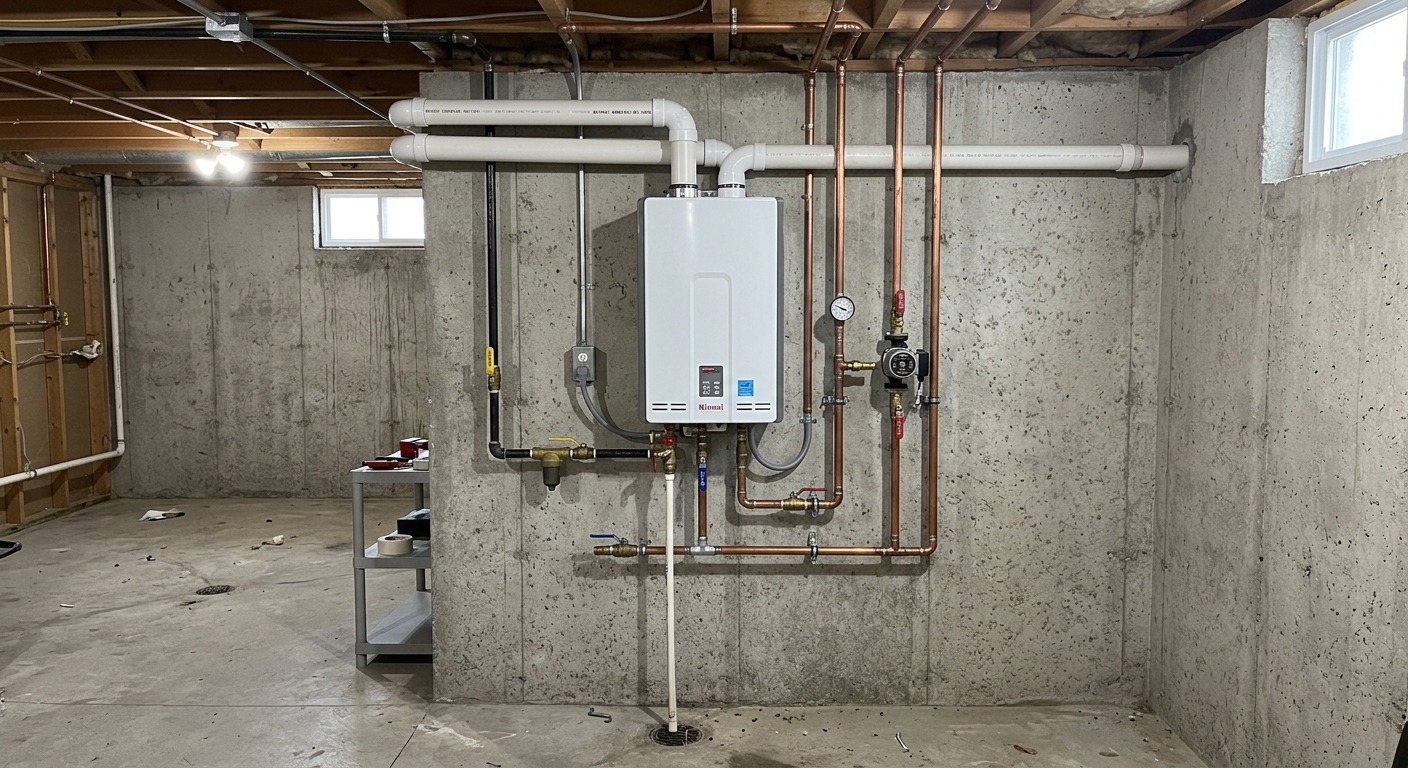
Springfield plumbing prices by job type — 2026
Springfield’s plumbing prices vary most between emergency and standard calls, which makes a real difference for homeowners with older homes. With 83.0% of Springfield’s housing built before 1980 and 70.2% made up of single-family homes (U.S. Census Bureau, ACS 2024), the odds are high your home was plumbed after World War II and before plastic pipe was common. That vintage determines the pipe material—and what’s likely to go wrong. Galvanized and early copper are typical in these homes. Galvanized corrodes from the inside, causing pressure loss and leaks, while old copper can develop pinhole leaks from water chemistry. Recurrent leaks, fixture replacements, and water heater changes are more common here as original materials reach the end of their life.
A plumbing job in Springfield will cost more if it’s an emergency—dispatch, call-out, and off-hours work all add up. The same burst pipe repair that costs $400–$1,350 can run $700–$1,350 if called in after hours or during a weather event. Non-emergency jobs, planned ahead, give you a wider choice of contractors and rates—especially in a market as busy and close-knit as suburban Montgomery County.
| Service |
Scope |
Emergency rate |
Standard rate |
| Emergency repair — burst pipe |
locate, open, repair section, restore service |
$700–$1,350 |
$400–$1,350 |
| Water heater replacement (gas, 40–50 gal) |
remove old, install, test, haul away |
$2,200–$3,200 |
$1,350–$3,200 |
| Drain cleaning — main line |
augering or hydro-jet, camera if needed |
$350–$800 |
$200–$500 |
| Sewer line spot repair |
excavate or reline a failed section |
$2,300–$13,500 |
$2,300–$13,500 |
| Whole-house repipe |
replace supply lines throughout, patch and finish |
|
$4,000–$9,700 |
| Water service line replacement |
street to house, excavation and restoration |
|
$6,200–$13,500 |
Estimates for a typical Springfield home. Access difficulty and pipe material move these figures more than anything else.
Hardness, treatment and fixture life in Springfield
Springfield homes get their public water from Aqua Pennsylvania. Aqua supplies treated municipal water, and each year issues a water quality report you are entitled to request. This report tells you exactly how hard or soft your water is, what disinfectants are used, and any contaminants measured—key factors in the performance and life of plumbing fixtures and water heaters.
Hard water is the norm in much of Montgomery County, and two things follow: scale builds up in fixtures and water-using appliances, and water heater life is shortened as sediment accumulates. If you find yourself replacing elements or flushing sediment from your tank, this is not a scam—it’s the chemistry at work. By contrast, Springfield’s treated water isn’t especially aggressive, so copper corrosion and greenish pinholes do show up but aren’t epidemic. Installing a softener in our area can extend the life of water heaters and fixtures, but the cost—equipment, salt, and ongoing maintenance—rarely pays back in a 10–15 year window unless your fixtures or appliances show early failure.
Whole-house filters are useful if you have taste, odor, or sediment complaints. In most Springfield homes, a simple point-of-use filter at the kitchen tap is enough, unless the water quality report gives a reason to go larger. For most people with Aqua water, spending thousands on complex treatment just isn’t justified. But if you do have a private well in the township outskirts, you’re on your own for annual bacteria, nitrate, and lead testing, because there’s no public report—and treatment choices depend entirely on what you find in your own water.
Plumbing systems in Springfield homes
Most Springfield homes were built in the 1950s through 1970s, when developers filled Montgomery County with quickly-constructed, single-family brick or frame houses (U.S. Census Bureau, ACS 2024). The dominant plumbing system from this era is copper supply piping, sometimes joined by older galvanized steel in homes that haven’t been updated. The drain lines are often cast iron, though you’ll see sections of older homes with Orangeburg or clay-tile sewer laterals running out to the main—especially in houses on the original lots with big trees and deep setbacks.
The water service line from the curb to the house can be copper, older galvanized, or sometimes even lead, depending on exact vintage and past updates. With houses in Springfield so rarely newer than 1980, most are on their second or third water heater, and many have already had partial repipes or spot repairs. Sewer backups and slow drains are frequent calls, especially where tree roots exploit clay joints or early plastic piping, and garages and slabs can conceal leaky sections for years.
In these homes, predict that fixture replacements and water heater changes will never be “drop-in” jobs. Expect to encounter existing shutoffs that don’t function, pipe bends from repeated repairs, and valves frozen by corrosion. Never pad for age alone—but be realistic: built-in obsolescence is baked in to most Springfield plumbing by now, making updates routine, not emergencies.
Comparing plumbing estimates in Springfield
In Springfield’s saturated suburban Philadelphia contractor market, most reputable plumbers offer either flat rate or time-and-materials billing, and it pays to know the difference. Flat rate means you’re quoted a set price for the work, regardless of hours—good for cost certainty, since the contractor bears risk if the job runs long. Time-and-materials can run cheaper for simple repairs but can balloon on difficult jobs, particularly in older Springfield homes where locating the source of a leak can take longer than the fix itself. Neither approach signals a scam; the real pitfall is not knowing which you’ve signed up for.
Most contractors charge a diagnostic fee, especially for emergency calls, and it may or may not credit toward the work. Read the estimate closely: does the price just list a number, or does it detail what work is included—such as patching drywall after opening a wall, or whether floor finish is restored? Permits are required for most work that alters your piping, and a trustworthy contractor will state up front if the permit (and required inspection) is included, plus the labor and parts warranty periods. For after-hours rates, you should receive a clear disclosure. Below are the main line items and signs to be wary of:
| Line item |
What to look for |
Red flag if… |
| Billing model |
flat rate or hourly, stated up front |
unstated |
| Diagnostic fee |
amount, and whether it credits |
vague |
| Scope |
what is opened, repaired and restored |
price with no scope |
| Restoration |
drywall and finish explicitly in or out |
silent |
| Permit |
included and priced |
'not needed' |
| Parts |
brand and model for fixtures |
'standard fixture' |
| Warranty |
labour period stated separately |
parts only |
Verifying a Springfield plumber's credentials
In Pennsylvania, plumbing is not licensed at the state level. This is a point of confusion for many Springfield homeowners. Every municipality in Montgomery County—including Springfield—runs its own enforcement of the Pennsylvania Uniform Construction Code (UCC), which is based on the IRC and administered locally. That means the only licensing that matters is whether a plumber is approved in your township. A plumber licensed just across the county line (or even in Norristown) may hold zero credential in Springfield; so your question is not “Are you licensed?” but “Are you licensed to work here?”
For any plumbing work involving alterations—repipes, new water heaters, or new supply, drain, or vent lines—a permit is required in Springfield. Inspections are performed by the municipal code office. Minor like-for-like fixture swaps with no piping changes typically do not require a permit.
Always check your contractor’s Home Improvement Contractor (HIC) registration, issued by the Pennsylvania Office of Attorney General. Any job over $500 requires a written contract under the Home Improvement Consumer Protection Act (HICPA), with a three-business-day cancellation window. You can verify HIC registration at hic.attorneygeneral.gov. Workers’ compensation is mandatory for employers; check coverage at WCAIS (wcais.pa.gov).
The point where patching stops making sense
As a rule, if you’ve had two or more pipe leaks in the same Springfield house within three years, it’s not unlucky—it’s a material in decline. In homes built from the 1950s to 1970s, galvanized steel pipes (still found in some houses) lose pressure and rust, while older copper can develop repeated pinholes. Signals include poor flow throughout the house, water that runs rusty or brown at first draw, chains of small leaks, and any section where you can see visible corrosion on a joint or fitting.
At that point, patching becomes expensive and disruptive compared to targeted or whole-house repiping. Copper offers longevity and resale value, though it’s pricier; PEX is fast and versatile, and makes sense where water chemistry is causing copper failures. But remember, the cost you don’t plan for is the repair of every wall and ceiling opened to change pipe—on old plaster, this can nearly match or even exceed plumbing labor on a big job.
Springfield’s dominant 1950s–70s housing keeps plumbers busy with these upgrades, and the choice is usually whether you do it all at once, or limp by with repeated patch jobs that add up. Here’s what makes sense (and what it costs) in real-world scenarios:
| Situation |
Recommendation |
Cost |
Reasoning |
| One leak, accessible, modern pipe |
Spot repair |
$400–$1,350 |
Isolated failure; modern pipe is not prone to widespread leaks |
| Two or more leaks in 3 years |
Partial repipe |
$4,000–$6,500 |
Pattern signals wider issue—patching becomes wasteful |
| Galvanized supply, pressure loss |
Full repipe |
$4,000–$9,700 |
Pressure and corrosion indicate full system decline |
| Polybutylene anywhere in the house |
Full repipe |
$4,000–$9,700 |
Material failure risk is high, insurance often refuses claims |
| Cast iron drain with root intrusion |
Camera, then reline or replace |
$2,300–$13,500 |
Roots mean cracks or open joints—patching is stopgap |
| Suspected lead service line |
Test, then replace the lateral |
$6,200–$13,500 |
Only total replacement makes water safe and insurable |
The leak you can hear but can't see
If you suspect a hidden leak in your Springfield home, the first free test is simple: shut off every faucet, washer, and fixture, then watch your water meter. If the dial is spinning (even a little), you have a leak on the supply side. This confirms you’re not chasing a slow drain or condensate issue.
Professional leak detection uses three main methods: acoustic listening devices that “hear” pressurized leaks through floors or walls, thermal imaging that spots damp areas from surface temperature changes, and tracer gas for the toughest finds (a harmless odorant is pumped into the pipe and detected by a sensor wherever it escapes). Each method usually costs in the $400–$1,350 range, though a simple meter-based confirmation is free.
Slab leaks are the most demanding—supply pipes run under the slab and must be pinpointed before jackhammering. Wall cavity leaks or hidden irrigation lines are easier to detect by sound than by vision. Any plumber who goes straight to cutting into walls without confirming location should be questioned; in a Springfield home with plaster and lath, unnecessary demolition makes a small job into a big repair quickly. Insist on location before opening up.
Frequently asked questions — plumbing in Springfield
How do I prevent frozen pipes in Springfield?
The moderate freeze-thaw cycles in Springfield mean frozen pipes aren’t guaranteed every winter, but the risk is real—especially during cold snaps when overnight temperatures drop below 14°F. The most critical areas are uninsulated crawl spaces, garages, and exterior walls, which are common in Springfield’s 1950s-1970s ranches and split-levels. Prevent freezing by keeping cabinet doors open during cold nights, letting faucets drip on the coldest nights, and insulating any pipes near exterior walls or in garages. If you’re traveling, set your thermostat no lower than 55°F and ask someone to check the house if it gets below freezing for days at a time. If you do experience a frozen or burst pipe, emergency repair runs $700–$1,350 during an after-hours call in Springfield. Spending a bit on insulation usually beats the mess and expense of even a single winter leak here.
What does drain cleaning cost in Springfield?
Drain cleaning rates in Springfield fall into two bands depending on the line and how urgent the job is. For a main sewer or branch line, snaking or hydro-jetting (plus camera inspection if needed) typically costs $200–$500 for a scheduled call. Emergency or after-hours service is higher, with most jobs in the $350–$800 range. Built-up roots and pipe scale are very common in Springfield’s older clay or cast iron mains—sometimes a camera is needed to see if you’re dealing with a break or collapse. Never let anyone sell you a whole-house drain “subscription” unless you have ongoing tree root issues. For most homeowners, a single cleaning restores flow, and repeat calls shouldn’t be annual.
How much does a water heater replacement cost in Springfield?
Replacing a standard gas water heater (40–50 gallon) in Springfield is a routine job, especially in homes built before 1980 where heaters are often on their second or third life. Expect a typical cost of $1,350–$3,200, with most jobs running about $2,200 when you include haul-away of the old unit, plus permit and code-required venting updates. Hard water shortens heater life here, so spending on a flush or anode replacement can stretch years, but rarely “saves” an old heater already leaking. Ask to see the full quote and ensure the permit fee is included, as Springfield requires inspection on water heater swaps that alter piping or venting.
Do older Springfield homes have galvanized pipes?
Many 1950s–1960s Springfield homes do still contain original galvanized steel water pipes, especially if never repiped in a major remodel. Galvanized degrades from the inside out—causing low flow, sediment at taps, or brownish water on first draw. Only replacement truly solves it. Patching buys time but rarely fixes pressure issues for long. A whole-house repipe in Springfield, with drywall and restoration included, falls in the $4,000–$9,700 range depending on how much pipe is exposed and how much finish work is needed. If you’re seeing pressure drop or rust in the water, it’s likely you have at least some galvanized left.
Who inspects plumbing work in Springfield?
In Springfield, all plumbing alterations—repipes, water heater changes, fixture moves—require permits and inspection. Code enforcement is run by your local municipal office, not the county or state. The Springfield township code office handles inspections, applying the Pennsylvania Uniform Construction Code. Fast fixes, like-for-like swaps that do not alter pipes, usually don’t need an inspection or permit, but anything more involved does. After work is completed, the township sends an inspector to confirm everything meets code before the walls are closed. Insist on seeing your contractor’s permit and don’t pay in full until you have a passed inspection. For a major job like a repipe ($4,000–$9,700), the final inspection is your protection.
What do I do about a burst pipe right now?
First, shut off your water at the house main valve—usually found just above where the service line enters, near the water meter. Then call an emergency plumber. In Springfield, a typical emergency burst pipe repair costs between $700–$1,350, with standard rates if you catch it during working hours ($400–$1,350). Remove valuables from the affected area and (if safe) catch leaking water in buckets to minimize damage. Springfield’s contractors often arrive quickly, given short travel times, but cleanup afterward is your responsibility. If your home is older, have the plumber check for deeper issues; repeat leaks can signal it’s time for a repipe.
Who pays to replace a lead service line in Springfield?
In Springfield, homeowners are responsible for the entire water service line from the curb to the house—this includes full replacement if the pipe is lead or fails. There is no ongoing township or utility replacement program for private laterals, and your homeowner’s insurance may not cover lead pipe replacement. Full replacement runs $6,200–$13,500 depending on distance and restoration needs. Some buyers have luck negotiating a credit at purchase if a lead line is documented, but absent a grant, the expense is on the owner. If you suspect lead, testing costs little and total replacement is the only long-term fix.
How do I tell what my pipes are made of?
In Springfield homes, you can usually see pipe where it enters the basement or at any exposed shutoff. Copper pipe is reddish or bronze; galvanized is silvery and magnetic; lead is dull gray, easily scratched, and bends if pushed. Plastic (PEX or CPVC) is usually colored or white. Your home inspection report may also list materials, especially if you bought within the last few years. For full certainty, a plumber can ID all visible lines and may use a camera for drains. If you find galvanized or lead, consider the risk: a partial repipe costs $4,000–$6,500, while total replacement runs higher, but both solve years of future headaches.
Should I repipe my Springfield home or keep repairing?
Once you’ve had multiple leaks in Springfield—especially two or more in three years—it’s almost always more cost-effective to repipe than to keep patching. Each repair carves another hole in a ceiling or wall, and the bill racks up quickly. If your pipes are copper and the leaks are scattered, sometimes a targeted partial repipe ($4,000–$6,500) is wise. If you’re dealing with galvanized or polybutylene, or the home has visible corrosion, a full repipe ($4,000–$9,700) is the honest fix, and you’ll likely increase both comfort and resale value. Springfield’s vintage homes are great, but at some point, the pipes just reach their end—so if you’re spending hundreds every year, planning for a one-time upgrade can be the smarter investment.