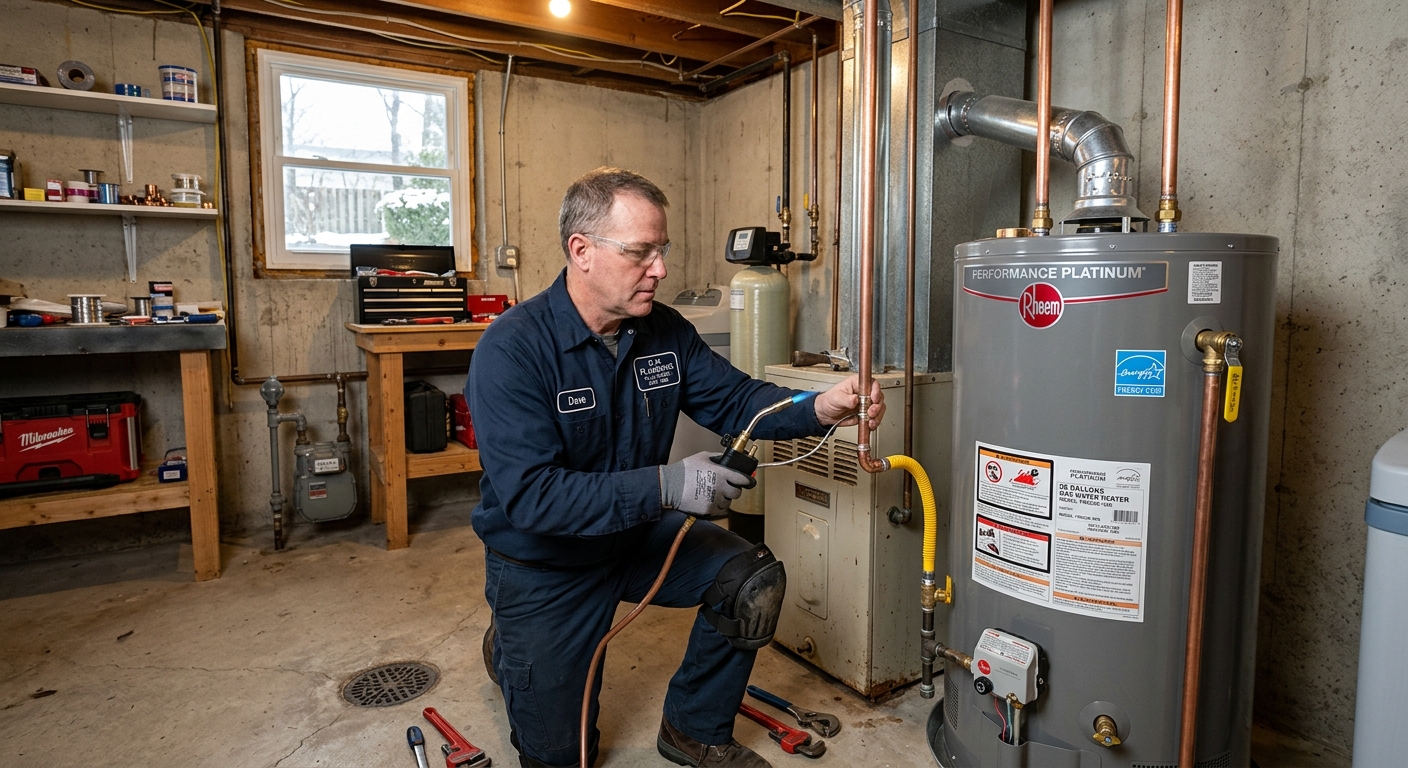
West Earl plumbing prices by job type — 2026
West Earl residents face a familiar challenge found throughout Lancaster County: the cost to fix or replace plumbing varies more with pipe material and access than any other factor. Nearly 41% of area homes were built before 1980 (U.S. Census Bureau, ACS 2024), which puts many properties in the higher-risk pool for pipe leaks, especially where older galvanized or lead lines are present. In Lancaster city, many pre-1940 row and twin homes are driving demand for copper or PEX repipes to replace outdated systems. This era of construction directly predicts what goes wrong — and how much it costs to fix.
No less important, plumbing work in West Earl follows a two-track price system: one rate for true emergencies, and a lower rate for jobs that can wait for standard hours. If you have active flooding or a gas leak, expect to pay the emergency premium, which covers fast response and after-hours labor. Routine replacements and planned upgrades, on the other hand, allow for more competitive pricing and scheduling flexibility.
Remember, the price bands below assume average access and do not account for extreme cases, but they’re reliable starting points for most West Earl homes — especially single-family properties, which make up nearly 76% of local housing. Know your home’s plumbing era before you schedule any major job.
| Service |
Scope |
Emergency rate |
Standard rate |
| Emergency repair — burst pipe |
locate, open, repair section, restore service |
$600–$1,250 |
$375–$1,250 |
| Water heater replacement (gas, 40–50 gal) |
remove old, install, test, haul away |
$1,950–$2,900 |
$1,250–$2,900 |
| Drain cleaning — main line |
augering or hydro-jet, camera if needed |
$350–$800 |
$200–$500 |
| Sewer line spot repair |
excavate or reline a failed section |
$2,100–$12,500 |
$2,100–$12,500 |
| Whole-house repipe |
replace supply lines throughout, patch and finish |
|
$3,600–$8,800 |
| Water service line replacement |
street to house, excavation and restoration |
|
$5,700–$12,500 |
Estimates for a typical West Earl home. Access difficulty and pipe material move these figures more than anything else.
Hardness, treatment and fixture life in West Earl
West Earl homes rely primarily on municipal water from local authorities, not private wells. Most properties are served by the City of Lancaster Water Bureau or other regional water providers. All public water systems are required to provide an annual water quality report — homeowners can request this directly from their provider for details on hardness, chlorination, and trace contaminants.
In practical terms, hardness in Lancaster County means you’ll see visible scale in kettles and on fixtures after only a few years. This isn’t just a cosmetic problem: scale shortens water heater life, clogs aerators, and raises energy use. A standard gas water heater in West Earl sees its life span drop by several years when hardness is not managed, possibly leading to a premature replacement at $1,250–$2,900.
Copper pinholes are less common but do occur when water is more aggressive (lower pH). Most West Earl water is moderately hard, not aggressive, so you’re more likely to deal with scale than with pitting.
Whole-house softeners make sense if your water tests well above 7–10 grains per gallon, but don’t count on a softener saving you more than it costs in annual maintenance. For most West Earl residents, a point-of-use filter at the kitchen sink captures taste and odor issues for far less money and upkeep than whole-house options. If you’re on municipal water, expensive “whole-home filtration” is rarely needed unless you have a specific contaminant issue the utility identifies in its report.
Private well users — mainly in the rural townships — should test for bacteria and nitrates yearly, as no county or state office tracks water quality for your address.
Emergency rates versus scheduled work in West Earl
When plumbing trouble hits your West Earl home, you’ll pay a real premium if the call comes after hours. The gap isn’t just about the clock but reflects several cost drivers: dispatching a crew at night or on weekends, a dedicated trip charge, and time-and-a-half labor rates. Equally, diagnosis has to happen fast, with repairs sometimes made temporarily to restore service, all of which is reflected in higher bills.
Take a burst pipe. The same repair that runs $375–$1,250 during the day can quickly become a $600–$1,250 job if it’s Saturday night — same materials, just different timing and urgency.
That’s why it’s useful to know what’s a true emergency versus what can safely wait for standard hours:
- Emergencies that need a plumber now (emergency rate): Active flooding (can’t shut off), sewage backing up anywhere in the house, no water supply at all, or the smell of gas.
- Not an emergency (wait for business hours): Slow drip under a sink, one clogged fixture if the rest are working, a running toilet, water heater not making hot water but no leak present.
Learning to shut off your main water valve converts half of urgent calls into planned work. For most West Earl homes, the main shutoff is found near where the water line enters — typically in a basement or utility space. Twist the handle or lever until water stops at all fixtures. For isolated issues (like a leaky toilet), individual shutoffs will let you isolate the problem fixture and keep the rest of your house running.
If you’re not facing active flooding or sewage inside, delaying repair until regular hours can save you hundreds.
Spot repairs or whole-house repipe?
In West Earl’s older homes, patching a single leak sometimes makes sense, but patterns matter. If you have two or more leaks on the same pipe material within three years, it’s rarely just bad luck — it’s systemic failure. Signs you need to think past spot repairs include: water pressure drops everywhere (not just one sink), brown or rusty water on first draw, green or white corrosion visible at pipe joints, and repeated pinholes in copper.
For homes with galvanized supply lines, especially those built before 1940 (like many in Lancaster city and its suburbs), you’ll eventually be told to repipe. The reason: inside those old pipes is scale so thick it chokes off water flow and hides corrosion. Partial repipes can work if the bad sections are isolated, but “fix as you go” quickly runs into diminishing returns due to labor and finish costs.
PEX is now the norm for whole-house jobs due to speed and flexibility, but copper remains the gold standard in critical or exposed areas. However, drywall or plaster repair can nearly double total costs on homes with intricate finishes or historic walls. In older West Earl homes, budget for patching and painting after the plumbing itself is done.
| Situation |
Recommendation |
Cost |
Reasoning |
| One leak, accessible, modern pipe |
Spot repair |
$375–$1,250 |
Cheaper to fix than to open walls for more; low future risk. |
| Two or more leaks in 3 years |
Partial repipe |
$3,600–$5,900 |
Repeated failures show systemic pipe aging — start replacing sections. |
| Galvanized supply, pressure loss |
Full repipe |
$3,600–$8,800 |
High risk of new failures, poor water quality — recommended upgrade. |
| Polybutylene anywhere in the house |
Full repipe |
$3,600–$8,800 |
Material is known defective; insurers may not cover water damage. |
| Cast iron drain with root intrusion |
Camera, then reline or replace |
$2,100–$12,500 |
Roots or collapse? Use camera, repair only the failed section or line. |
| Suspected lead service line |
Test, then replace the lateral |
$5,700–$12,500 |
Lead is a health risk; full replacement eliminates future exposure. |
Service line material and drinking water in West Earl
West Earl properties depend on local municipal water providers, many of which, including the City of Lancaster Water Bureau, draw from systems with active lead service line inventories. In most cases, the water line running from the street to your home includes two parts: the utility-owned section (usually under municipal street) and the privately owned “lateral” from curb to foundation. Replacement programs often address only one of these, so owners can be left with a half-finished job — not always a bargain, and in some cases, a greater risk if disturbed scale makes more lead available at the tap.
The simplest way to check your home’s pipe material: locate the main where it enters your basement wall. Scratch the pipe with a key (dull grey, easily nicked means lead), check with a magnet (lead is not magnetic, steel and iron are), and look at shape — lead lines often bulge at joints or have wipe marks. Copper is orange, galvanized steel is grey and magnetic, and plastic is, well, plastic.
Lancaster city has an active and publicly managed lead service line replacement program, but if you’re outside the city limits, you’ll have to check your utility’s website for their inventory or call them to verify your address. Don’t assume full replacement unless you see it in writing. City records or your water provider’s reports usually list which homes are confirmed or suspected to have lead — always ask.
If your line turns out to be lead, budget $5,700–$12,500 for a full water service line replacement. Spot repairs are not recommended, and partial replacements are only a stopgap that may increase short-term lead levels. For only a suspected issue, camera and material testing starts at $2,100–$12,500 if excavation is involved.
Who is allowed to do plumbing work in Pennsylvania
Plumbing in Pennsylvania is licensed and permitted at the municipal, not state, level. There is no statewide plumbing license, which trips up many West Earl homeowners. Instead, each city or township chooses whether and how to credential plumbers. For example, the City of Lancaster requires specific permits and inspections for anything altering or adding value to a property, while surrounding townships run their own code and zoning offices.
What does this mean for West Earl? The plumber who is fully licensed and legal to work in Lancaster city may not be able to pull permits or pass inspections in East Lampeter Township or West Earl unless they’re registered in that exact township. The right question to ask is, “Are you licensed to work here?” Get a copy of their Home Improvement Contractor (HIC) registration from the PA Attorney General’s website (hic.attorneygeneral.gov) for any job over $500.
Permits are required in Lancaster city any time a job alters, expands, or improves a property’s value. Minor repairs to a faucet or toilet usually go permit-free. When a permit is needed, code officers from the township or city inspect the work. For workers’ compensation, you can verify active coverage through Pennsylvania’s WCAIS system (wcais.pa.gov). Remember, state law also requires a written contract for any job over $500, and you have a three business-day right to cancel under HICPA.
Water heater replacement decisions
Most West Earl homes use either gas or electric tank water heaters, but there’s been a rising share of tankless and heat pump units — each with real trade-offs. Tank-style heaters have the lowest up-front cost and a service life of 8–15 years, but they waste energy by holding water at temperature around the clock and fail most often due to tank corrosion, not controls. Replacing a tank is straightforward and usually lands between $1,250–$2,900 installed.
Gas tankless heaters deliver endless hot water and use less energy by only firing when you turn on a tap. However, many West Earl homes with older or smaller gas lines will need upgrades to gas supply and venting (sometimes running several hundred extra), pushing initial cost up. Tankless units last longer — often 18–25 years — but annual descaling and maintenance is a must to avoid lime buildup, especially in our moderately hard water.
Heat pump water heaters are the most efficient choice for households with enough air volume and a warm utility space. They use the surrounding air to heat water, reducing electric bills the most, but draw heat from where they sit (not a great fit for a finished or already-chilly basement) and can be noisy in small spaces.
Always size by first-hour rating — not simply tank gallons — to match morning and evening peak use. Any modern replacement should include a pan and, if your main is shutoff-prone, an expansion tank. Price each option against real operating costs before upgrading.
| Type |
Installed cost |
Service life |
Operating cost |
Best when |
| Gas tank, 40–50 gal |
$1,250–$2,900 |
8–12 yrs |
moderate |
Replacement in most basements, easy access |
| Electric tank, 40–50 gal |
$1,250–$1,950 |
10–15 yrs |
high |
Homes without gas service, low upfront |
| Gas tankless |
$1,950–$2,900 |
18–25 yrs |
low-moderate |
Endless demand, space savings, good gas supply |
| Heat pump water heater |
$1,950–$2,900 |
13–15 yrs |
lowest |
Well-ventilated basement, electric-only homes |
Frequently asked questions — plumbing in West Earl
Do older West Earl homes have galvanized pipes?
From what’s seen in West Earl and much of Lancaster County, plenty of older homes (especially those built before 1940) still have galvanized water lines lurking in walls and basements. These older pipes corrode from the inside, gradually restricting flow and increasing the risk of leaks. If your home fits this construction era, or if you notice brown water on first draw, you may have galvanized standing in the way of a good shower. Most spot repairs on these lines, like fixing a burst section, run $375–$1,250, but this is rarely a “fix it once and forget it” situation. If you need more than one repair within a few years, a full or partial repipe is often smarter in the long run. Check exposed pipe for grey, magnetic sections — that’s your telltale sign.
How much does sewer line repair cost in West Earl?
Sewer line spot repair in West Earl typically falls in the $2,100–$12,500 range, depending on how deep the pipe is, whether it’s under a driveway, and if you have to dig in the street. If the line is clay tile or cast iron and has root intrusion, you’ll likely start the process with a camera inspection to pinpoint the problem. Urban parcels in West Earl are more likely to be tied directly to municipal sewers, but outlying homes sometimes have older lines running longer distances, which can drive up cost due to access. Always get a camera review before digging — it can save thousands if the fix can be local or relined instead of full replacement.
Should I wait until business hours to call?
In West Earl, waiting for business hours saves you a significant emergency premium unless water is actively flooding your home or sewage is backing up. Standard repairs like a slow drip or no hot water are well within the range of $375–$1,250 during business hours. True emergencies like a burst pipe with water pouring in, or a gas smell, don’t wait — those merit a call right away, and you’ll see the charge climb above $600–$1,250 for the rapid response. Learn where your main shutoff is: closing it can buy you time and bring your repair back into the planned (and less expensive) rate category.
How deep do water lines need to be buried in West Earl?
In West Earl, water service lines need to be buried to a minimum frost depth of 30 inches, reflecting the south-central Pennsylvania ground freeze standard. That’s enough to prevent winter freeze-ups, even in cold snaps where the design temperature falls to 12 °F. When replacing a buried line — such as with a water service line replacement in the $5,700–$12,500 range — make sure the plumber is familiar with local code enforcement so you don’t risk a failed inspection or an exposed line subject to frost heave.
Should I repipe my West Earl home or keep repairing?
For West Earl homes, the choice comes down to the pattern and material. If you’ve had two or more leaks in the last three years (especially on the same type of pipe, like galvanized or copper) or you notice pressure falling throughout the house, it’s time to consider a repipe. The cost for a whole-house job can be $3,600–$8,800, but patch after patch almost always overtakes that over time — especially factoring in opening walls or repeated water damage. Newer homes with a single, accessible leak can usually get away with a spot repair, but older West Earl houses in the pre-1940 category are prime candidates for a full upgrade.
What does repiping a house cost in West Earl?
A full supply line repipe in West Earl ranges from $3,600–$8,800. The biggest driver of cost is access: houses with finished basements or plaster walls can end up at the top of the band once patching and repainting is figured in. Material choice — copper versus PEX — also impacts price, with copper commanding a premium but lasting longer (especially in visible or high-wear areas). Older homes (pre-1980) are much more likely to need additional work, like bringing pipes up to code or rerouting around historic framing. Always get a detailed quote that breaks out the plumbing labor and the finish work to avoid unwelcome surprises.
Is a sewer line replacement covered by homeowner's insurance?
Most West Earl homeowner’s insurance policies do not cover the cost to replace a collapsed or deteriorated sewer line due to age, tree roots, or typical wear. Some policies include limited “service line” endorsements, but these are the exception, not the rule. The average spot repair or replacement cost — $2,100–$12,500 — is almost always out-of-pocket unless the problem resulted from a specifically covered event, such as sudden damage from a vehicle. Always call your insurer before starting work, and ask what exclusions apply; don’t assume coverage until you have it in writing.
Is my water line lead?
In West Earl, especially in neighborhoods with pre-1940 construction, lead service lines remain possible. The only way to know for sure is to check where your main line enters the house: if it’s soft, dull grey, and not magnetic, it could be lead. Lancaster city and surrounding utilities have ongoing inventories — contact your water provider for their latest updates. If it’s confirmed or strongly suspected, replacing your side of the line (the “lateral”) usually falls on the homeowner and costs between $5,700–$12,500. Testing kits are available, but a plumber or utility rep can perform a scratch and magnet test in minutes.
Who inspects plumbing work in West Earl?
Plumbing inspections in West Earl are handled by your township’s code or zoning office — not by a statewide agency. Lancaster city has its own Bureau of Building Code Administration, while other municipalities, including West Earl, manage enforcement locally. Any work that changes or adds plumbing to your property usually needs a permit and a final inspection. To verify your plumber’s credentials, be sure they have a Home Improvement Contractor (HIC) registration (required for work over $500) and check that their insurance is current via WCAIS. Always ask, “Are you registered or licensed to work here in West Earl?”