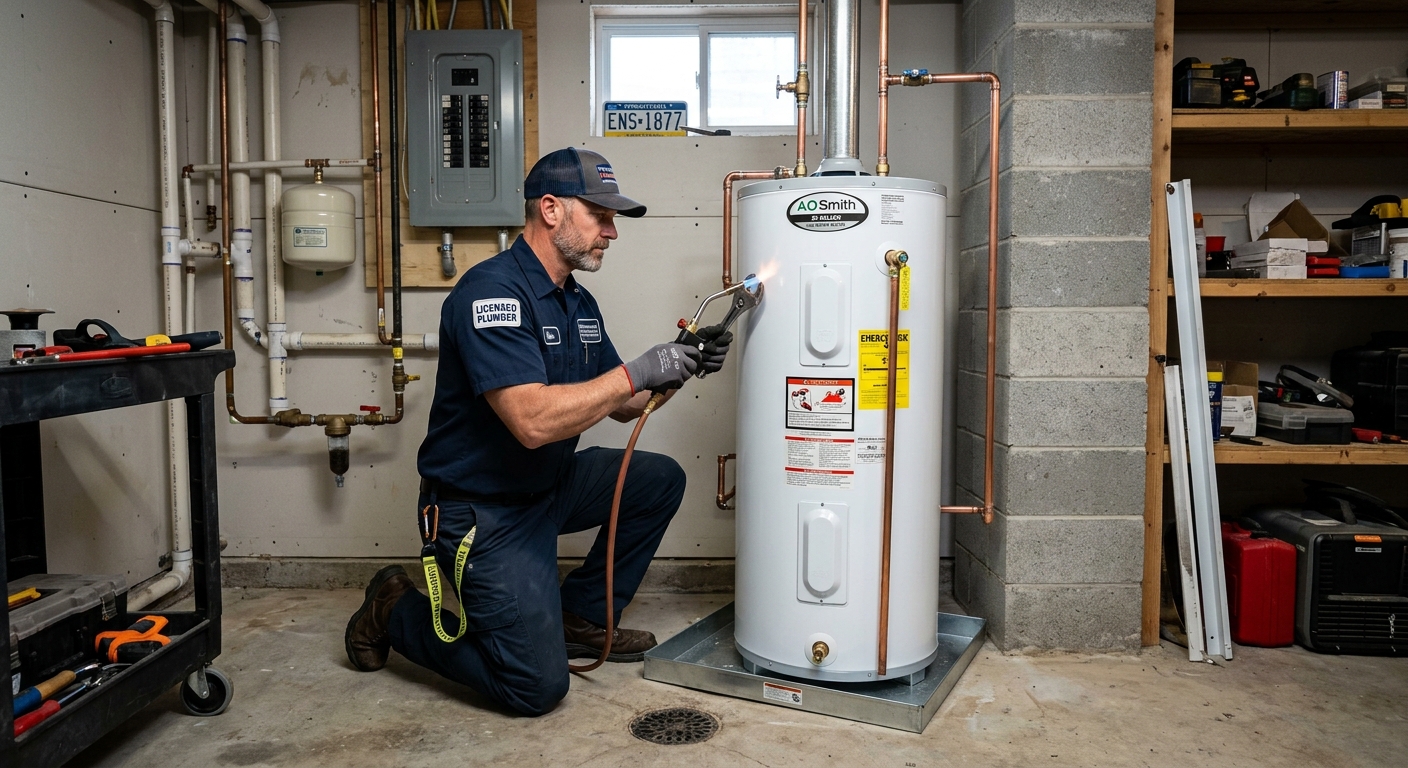
What plumbers charge in Center
In Center Township, Butler County, what you pay a plumber to fix or replace something depends on two main things: whether it’s an emergency after hours or a scheduled visit, and what your home is made of. Center homes are mostly owner-occupied single-families, and with a median income of $87,036 (U.S. Census Bureau, ACS 2024), most residents expect professional-level work and written contracts. Cranberry Township’s subdivision boom from the 1990s to the 2010s brought modern PVC, PEX, and complex multi-bath setups, and that era’s materials shape what can fail — or what a repair will cost.
If your pipe bursts at 2 a.m., an emergency call will add 50–100% to the bill versus a planned repair. That’s true for everything: leaks, water heaters, sewer lines. PVC and PEX (used since the 1990s) are easier and quicker to work with than copper or galvanized pipe, so labor and materials cost less for these newer homes. Older houses, especially those built before 1980, may have galvanized steel or cast iron, which takes longer to diagnose and fix, sometimes requiring specialized tools or more invasive work.
Below are typical price ranges in Center. Emergency rates are always higher. Blocked access, below-grade repairs, or challenging layouts can push you toward the top of these bands. The rest is about era and material — newer usually means cheaper repairs, but more bathrooms and fixtures can add up.
| Service |
Scope |
Emergency rate |
Standard rate |
| Emergency repair — burst pipe |
locate, open, repair section, restore service |
$600–$1,250 |
$350–$1,250 |
| Water heater replacement (gas, 40–50 gal) |
remove old, install, test, haul away |
$1,950–$2,900 |
$1,250–$2,900 |
| Drain cleaning — main line |
augering or hydro-jet, camera if needed |
$350–$800 |
$200–$500 |
| Sewer line spot repair |
excavate or reline a failed section |
$2,000–$12,500 |
$2,000–$12,500 |
| Whole-house repipe |
replace supply lines throughout, patch and finish |
— |
$3,600–$8,700 |
| Water service line replacement |
street to house, excavation and restoration |
— |
$5,600–$12,500 |
Estimates for a typical Center home. Access difficulty and pipe material move these figures more than anything else.
Winter pipe failures in southwestern Pennsylvania
Winters in Center and across Butler County come with heavy freeze-thaw swings and regular cold snaps—frost can reach down 36 inches, and 8 °F is the winter design low. Under these conditions, pipes in exterior walls, crawlspaces, garages, unheated basements, and attics risk freezing. The damage doesn’t happen at the frozen spot itself: when a pipe freezes solid, water pressure builds between the ice and the next closed valve (like a faucet), eventually bursting pipe sections that may not be frozen at all. You see leaks after the thaw, rarely during the freeze.
Vulnerable areas include outdoor hose bibs that aren’t winterized, pipes against poorly insulated foundation walls, and lines running above the ceiling in older homes. Most Center homes have modern PEX or PVC, which bend a bit under pressure, but any water-filled pipe can burst if exposed and unprotected.
Prevention, in rough order of cost: add foam insulation to exposed water lines; install heat tape; open cabinet doors under sinks on cold nights to let warm air in; and let a trickle run from faucets during subzero spells (especially in older homes). Most importantly, shut off and drain outdoor hose bibs before the first hard freeze, since replacing these pipes each spring gets expensive—up to $1,250 if you call during an emergency.
If your pipe does freeze, use a hairdryer or a specialty heat gun on low. Never use an open flame, as this is the fastest way to start a fire or melt PEX. Prevention is always cheaper than cleanup, especially when a burst pipe leads to wet drywall, ruined insulation, and an urgent after-hours call for a repair bill in the $600–$1,250 range.
Dating your plumbing by what it's made of
If you know when your Center home was built—or when it was last remodeled—you can usually guess what kind of plumbing you have. Cranberry Township and surrounding areas saw a flood of new homes in the 1990s–2010s, and most of these have white or blue PEX supply lines and white PVC drain pipes. Older homes, built before 1980, could have anything from thick-walled galvanized steel or copper supplies to cast iron or even clay tile drain lines, depending on what was available and popular at the time.
Each material has its own failure mode and lifespan. Galvanized steel, common in pre-1960 homes, rusts from the inside out, quietly choking off water flow before leaking. Copper lasts decades but is susceptible to pinhole leaks, especially with aggressive water chemistry. Polybutylene—a gray, blue, or black flexible plastic found in some homes from the late 1970s through 1995—is notorious for failing at the fittings and is largely uninsurable. PEX, first Red and Blue and now often white, is easier to work with, but fittings can leak if installed carelessly. On the drain side, old cast iron corrodes and scales over from the inside, and clay tile underneath lawns and driveways lets in roots at the joints, causing blockages and slow drains.
To identify your pipes: scratch a supply pipe with a key—shiny silver is steel (magnet sticks), coppery is, well, copper (magnet won’t stick). Threaded fittings mean steel; smooth, soldered joints mean copper. PEX is flexible and colored; PVC and ABS drain lines are white or black plastic. Knowing what you have helps estimate both the risk of sudden failure and your remaining years before a major repipe expense.
| Material |
Typical era |
Failure mode |
Service life |
| Galvanized steel supply |
pre-1960 |
internal corrosion, pressure loss |
40–60 yrs |
| Copper supply |
1950s–present |
pinhole leaks, joint failure |
50–70 yrs |
| Polybutylene supply |
late 1970s–1995 |
fitting failure, sudden bursts |
unreliable |
| PEX supply |
2000s–present |
fitting or UV degradation |
40–50 yrs |
| Cast iron drain |
pre-1975 |
corrosion, cracking, scale |
50–75 yrs |
| Clay tile sewer lateral |
pre-1980 |
root intrusion at joints, offset |
50–60 yrs |
| PVC / ABS drain |
1970s–present |
joint separation, crushing |
50+ yrs |
What construction era means for your pipes
Center’s housing mix includes a strong pre-1980 contingent, but newer subdivisions neighboring Cranberry Township dominate the landscape. That means most local water supply lines are PEX or copper, and sanitary drains are typically PVC or ABS. Older houses in Center may still have a patchwork of galvanized steel (supply) and cast iron (drain) pipes, especially visible in crawlspaces or unfinished basements. If your home was built after the 1990s, expect PEX for water and PVC for drains—materials that are far less likely to corrode or clog inside, but still depend on good installation at every joint.
For homes built before 1980 (56.8%, U.S. Census Bureau, ACS 2024), supply lines may be at or beyond typical service life, with corrosion and leaks not far behind. Older clay tile sewer laterals are especially vulnerable to root intrusion and collapse—they show up as frequent drain backups or wet patches on the lawn, prompting expensive repairs. Water service lines buried decades ago may be copper or even remnants of galvanized pipe, but the prevalence of lead is lower here than in nearby counties, thanks to the later building booms.
Expect water heaters in newer homes to be approaching their first replacement cycle (often after 15–20 years), while older homes could be on their third or fourth unit. In short: newer doesn't mean invincible—it just means repairs cluster around fittings and mechanicals, not the pipe walls themselves.
Sewer laterals: the pipe you own and can't see
In Center and nearly every township in Butler County, the homeowner owns the sewer lateral from the house to where it ties into the municipal main—sometimes all the way into the middle of the street. This line is out of sight and, as a result, the cause of surprise repair bills whenever a backup hits. First symptoms run from one slow drain to slow drains throughout the house, gurgling noises, or worst of all, sewage backing up at the lowest fixture (usually a basement floor drain).
Before you even consider digging, a good plumber will perform a camera inspection of the entire lateral. In homes with pre-1980 clay tile laterals, the camera often finds roots pushing through joints, or “bellies” where the pipe has settled and holds water. Newer lines—typically PVC—can separate at fittings after years of freeze-thaw cycling in our local clay and shale subsoil. If repair is needed, you may see two options: open trench replacement (dig and replace the pipe) or trenchless relining (insert and cure a new liner inside the old pipe). Each method has its own suitability, and cost depends on access and length, running from $2,000–$12,500 for a spot repair.
Not every home in Butler County is on public sewer. Many rural townships, including parts of Center outside the main service area, rely on septic systems. These have their own issues: tanks should be pumped every 3–5 years, and drainfield failure is expensive and disruptive, but that’s a different repair entirely.
Never accept an excavation quote for a broken sewer lateral without seeing the inspection video with your own eyes. Otherwise, you’re guessing underground.
Verifying a Center plumber's credentials
Pennsylvania does not run a statewide plumbing license system. In Butler County, plumbing licensing is handled municipally—so a plumber licensed to work in Butler City may not be approved for jobs in Cranberry Township or Center Township, unless registered and permitted separately. That makes the key question, “Are you licensed to work in Center?” instead of “Are you licensed in Pennsylvania?”
The City of Butler has its own contractor registration requirements for plumbers, as do other municipalities in the county. In Cranberry Township, a plumbing permit is required for any new system installation or addition to water or drain piping. Replacing above-ground fixtures without piping changes in Butler City often happens without a permit, but it’s always best to confirm with local code staff before work, especially on anything tied to gas, water service, or sewers—which affect health and safety.
Pennsylvania requires all contractors doing over $500 of work in a home to be registered under the Home Improvement Contractor (HIC) program—verify at hic.attorneygeneral.gov. State law also demands written contracts for jobs over $500 and gives you three business days to cancel after signing. All employers must maintain workers’ compensation insurance (check at WCAIS, wcais.pa.gov). For older homes, proper EPA certification is mandatory for work disturbing painted surfaces pre-dating 1978 (search certifiedrenovatorsearch.epa.gov). Get proof before anyone starts.
The leak you can hear but can't see
If you suspect a hidden leak in your Center home, start with a free test: shut off every fixture and appliance using water, then check your meter. If the red dial or digital readout is still moving, there is a supply-side leak somewhere between the street and your house, or inside the building after the main. This is a sharp diagnostic—you don’t need a plumber to spot the problem, only to pinpoint it.
Professional leak detection usually starts with acoustic listening tools that amplify running water inside walls or slabs. For tougher cases, thermal imaging can show “cold” or “hot” spots that betray an underground or wall leak. In rare causes—like a slab leak or a hidden exterior irrigation pipe—a tracer gas might be introduced to hunt down the crack. Finding a leak with these methods typically costs far less than the cost to open up and fix drywall. Expect a detection service to range close to the lower end of an emergency repair ($350–$1,250), depending on house size and access.
A plumber who wants to cut open walls or jackhammer a slab before making a positive locate is working backwards. The right tools mean less demolition, faster repairs, and fewer holes left for you to patch afterward.
Frequently asked questions — plumbing in Center
Who pays to replace a lead service line in Center?
In Center and other Butler County communities, the homeowner is responsible for the water service line from the street to the home—even if it runs under sidewalks or landscaping. Fortunately, thanks to the region’s 1990s–2000s subdivision boom in nearby Cranberry Township and much of Center, lead service lines are quite rare compared to neighboring older areas. If you do have a documented lead line, you must pay for its full replacement. The job, which involves excavation and restoration, usually falls in the $5,600–$12,500 range. Some water utilities may offer financial assistance, but replacement is typically your cost and not the city’s. Always have an EPA-certified pro do the work if your house pre-dates 1980—this keeps the job compliant with federal renovation rules.
Should I wait until business hours to call?
If water is still running and you can contain a leak with a bucket or by shutting off local valves, you’ll save significantly by waiting until regular hours—an emergency visit can cost as much as $1,250, while non-urgent repairs are almost always cheaper. But don’t wait if there’s an active, uncontrolled leak, water spraying near electrical equipment, or sewage backup—these can quickly do thousands in property damage or become a health risk. If in doubt, call your plumber and describe the situation; a good contractor will tell you if the work can safely wait. Center’s moderate suburban market means most firms offer both regular and after-hours service.
How do I verify a plumber's licence and insurance?
In Pennsylvania, plumbing contractors must be registered under the Home Improvement Contractor (HIC) system for jobs over $500—and you can look up their credentials at hic.attorneygeneral.gov. There’s no statewide plumbing license, and registration in one municipality (like Butler City) may not cover Center Township, so always ask if they’re permitted for your exact location. For insurance, request to see proof of workers’ compensation, which you can also verify at WCAIS (wcais.pa.gov). If your home was built before 1978 and painted areas will be disturbed, check their EPA Lead Renovator certification. This diligence protects you, since an unregistered or uninsured contractor can leave you with both regulatory headaches and possible liability if something goes wrong.
What does drain cleaning cost in Center?
For a typical main line blockage in Center, expect to pay $200–$500 during standard hours and $350–$800 if you call after hours or need urgent service. These prices cover basic augering or hydro-jetting and a quick camera check if needed. The exact amount depends on ease of access, whether there’s a cleanout, and if multiple fixtures are affected or if there are recurring problems. For older homes with cast iron or clay tile drains, repeated root intrusions can mean more frequent service or even bigger repairs down the line.
How long should a water heater last in Center?
In most Center homes, a tank-type water heater lasts about 10–15 years if properly installed and maintained. The prevalence of newer homes with modern plumbing means many are now facing their first unit replacement since the big building boom of the 1990s–2010s. Hard water or poor installation can cut that lifespan short. As soon as your heater starts leaking from the tank or fails to provide hot water to multi-bath layouts, it’s time to plan for a replacement—costing between $1,250–$2,900 for a typical gas 40–50 gallon unit, depending on access and labor.
Repair or replace a leaking water heater?
In Center, if your water heater is leaking from somewhere other than a connection or valve (like dripping from the tank seam or the base), replacement is nearly always the right move. Once a tank rusts through, repairs aren’t code-compliant or cost-effective; you’re better off investing in a new unit, which runs $1,250–$2,900. For minor leaks at the relief valve or supply line, a repair may run at the bottom of the emergency rate spectrum, but if the heater is over a decade old, replacement is often cheaper in the long run. Multi-bath homes with fast hot water demands especially benefit from an upgrade, both for efficiency and peace of mind.
Which utility supplies water to Center?
Most Center homeowners get their public water from Pennsylvania American Water’s Pittsburgh-area district, the same utility serving Cranberry Township and many neighboring communities. If you’re farther out from Center or on a township border, some properties may still rely on private wells—more common in rural parts of Butler County. Either way, any main supply line repair or service line replacement on your property is your responsibility, with utility rates and tap fees set by Pennsylvania American Water for public users.
How do I prevent frozen pipes in Center?
Prevention in Center’s climate is all about insulation and keeping pipes out of the path of freezing air. Insulate exposed lines, plug gaps in foundation walls, and put foam covers on outdoor spigots before the first hard frost. For pipes in exterior walls or basements, install electric heat tape where needed. On symptomatic nights—below 10 °F—open cabinet doors and let a slow trickle run through at-risk faucets, especially in older homes. Always shut off and drain outdoor hose bibs before the snow flies; skipping this step can mean a repair bill in the $600–$1,250 range when the thaw reveals burst pipes.
How much does a water heater replacement cost in Center?
Replacing a standard 40–50 gallon gas water heater in Center runs between $1,250–$2,900, including removal and haul-away of the old unit, safe hookup, and basic code compliance. The price climbs if the job requires extra labor, major venting updates, or access is tight (like in a finished basement or closet). For homes built in the 1990s and 2000s, many are now at the replacement threshold of their first original water heater; newer units and more complex multi-bath layouts may cost toward the higher end of the range.