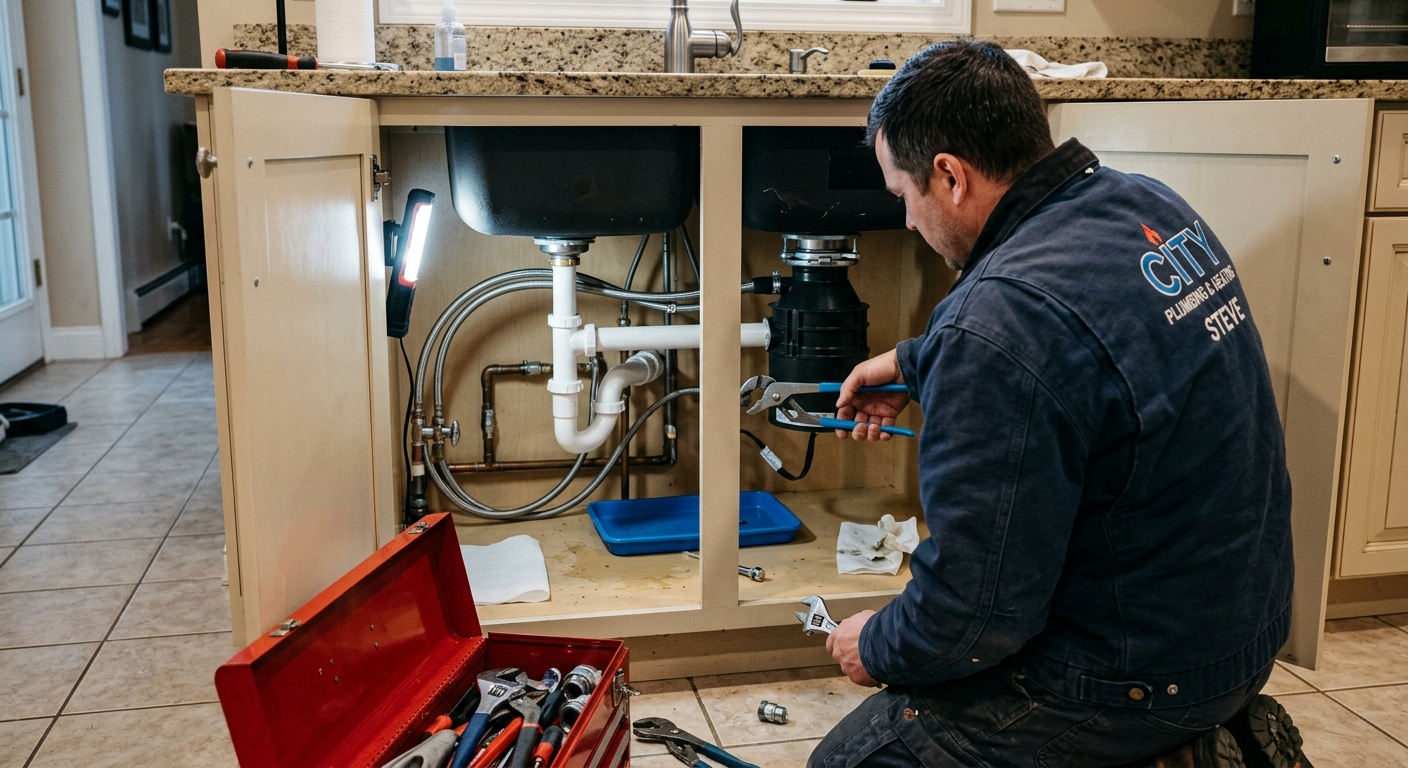
What plumbers charge in Clifton Heights
Clifton Heights, with its heavy mix of homes built before 1980 and a homeownership rate just over 70% (U.S. Census Bureau, ACS 2024), sees more than its share of plumbing headaches tied to aging pipes. Most of the neighborhood rowhouses and twins—like those clustered through Upper Darby and Lansdowne—still have some galvanized water lines or old clay drains. With these older materials, you see a steady stream of both spot repairs and more expensive full replacement work. In short, what you pay for plumbing here comes down to two questions: is it an emergency, and what’s in your walls?
Emergency repairs—think burst pipes or active leaks—always cost more, both from the urgency and because they often hit outside regular business hours. The same exact pipe patch can swing several hundred dollars depending on how fast you need service. Meanwhile, scheduled jobs like replacing a water heater or repiping the whole house can be planned and shopped around, so you’ll see a broader price range and a better shot at savings. But in most Clifton Heights homes, just finding every shutoff and tracing pipes behind thick plaster, not drywall, can add time. Material plays a role too: repairs on galvanized or cast iron are pricier and more disruptive than copper or PEX. That’s why plumbers are busy in this area with drain replacement and galvanized-to-copper upgrades year after year.
| Service |
Scope |
Emergency rate |
Standard rate |
| Emergency repair — burst pipe |
locate, open, repair section, restore service |
$600–$1,150 |
$350–$1,150 |
| Water heater replacement (gas, 40–50 gal) |
remove old, install, test, haul away |
$1,850–$2,700 |
$1,150–$2,700 |
| Drain cleaning — main line |
augering or hydro-jet, camera if needed |
$350–$800 |
$200–$500 |
| Sewer line spot repair |
excavate or reline a failed section |
$1,950–$11,500 |
$1,950–$11,500 |
| Whole-house repipe |
replace supply lines throughout, patch and finish |
|
$3,400–$8,200 |
| Water service line replacement |
street to house, excavation and restoration |
|
$5,300–$11,500 |
Estimates for a typical Clifton Heights home. Access difficulty and pipe material move these figures more than anything else.
Who is allowed to do plumbing work in Pennsylvania
Pennsylvania does not issue a single, statewide license for plumbers. Instead, licensing is set at the municipal level. This means a plumber working in one township or city may not automatically be authorized to work in Clifton Heights or the rest of Delaware County. For homeowners, the important question is not “are you licensed?” but “are you licensed to work here?” In this area, Philadelphia’s plumbing license does not allow work in Delaware County municipalities, and there is no unique countywide license for plumbers.
When it comes to permits, each Delaware County municipality makes its own rules. In Upper Darby, for example, any new plumbing piping or fixture relocation nearly always requires a building permit and municipal inspection. By contrast, in Media and other boroughs, minor fixture repairs—like changing faucet cartridges or toilet parts—can often be done without a permit. Large projects, like moving fixtures, repiping, or water service line work, will need permits almost everywhere locally, and the local code office or a third-party inspector must sign off.
Pennsylvania does require that contractors doing home improvement work over $500 have a Home Improvement Contractor (HIC) registration issued by the Office of Attorney General. Homeowners can verify a contractor’s HIC registration at hic.attorneygeneral.gov. Every employer performing work in Pennsylvania must have worker’s compensation insurance; homeowners can check coverage through the WCAIS system at wcais.pa.gov. If your home was built before 1978 and work disturbs painted surfaces, federal EPA Lead RRP rules apply, and you can check renovator credentials online.
Hardness, treatment and fixture life in Clifton Heights
Most Clifton Heights homes draw water from Aqua Pennsylvania, Inc., which serves much of Delaware County—including Upper Darby and Haverford. This public system publishes a yearly water quality report you can request directly from the utility. In older homes, especially those built before 1980, hard water and mineral content can shorten the life of water heaters and fixtures. Scale buildup is a fact of life, leading to less efficient appliances and potential for clogs. Replacement water heaters and faucets show more wear here than in softer water areas, and many Clifton Heights homeowners now opt for units that tolerate hard water a bit better.
Some companies will push costly softener systems, but unless you see obvious scaling or appliance failure, for most households the numbers don’t add up. A basic softener install and upkeep can take years to pay for itself, and not every system installed locally is sized correctly. Aggressive or "soft" water, while less likely to scale, can attack copper pipes, leading to pinhole leaks—another headache common in this housing stock. If you’re seeing green stains or leaks at copper joints, a plumber should test your water’s pH and minerals before recommending treatment.
Whole-house filtration is only worth it if your utility’s report flags a contaminant you care about. Most homeowners do fine with a point-of-use (faucet or fridge) filter for drinking water. If you’re on a private well—more likely in outer townships, less so here—there is no public report, so you need your own annual test. In the end, cautious buyers get their facts from the annual report before spending big on extras.
The leak you can hear but can't see
If you suspect a hidden leak in your Clifton Heights home, the simplest free test is to shut off every fixture—no laundry, no dripping faucets, no ice maker running—and watch your water meter. If the dial keeps spinning or the numbers increase, you have a supply-side leak somewhere between the meter and your faucets. This trick works just as well in a 1950s Clifton Heights row as it does in a newer build.
Professional leak detection offers several methods, each with its own price point. Acoustic listening is the most common starting point, especially for leaks inside wall cavities or under floors. It can locate pipe failures for a few hundred dollars when combined with a service call—typically in the $350–$800 range. For concrete slab leaks or pipes buried beneath the house, thermal imaging and tracer gas (inert, safe gases that trace leak pathways) can pinpoint issues with more accuracy—costing more, but avoiding needless holes. Slab leak location, for example, can save thousands in unnecessary demo compared to a guess-and-search approach. For irrigation lines or buried copper, these tools are indispensable.
Don’t trust any tradesperson who wants to start opening walls or slabs before narrowing the leak’s location—there’s no reason in 2026 not to use non-destructive tools first. Pay for a confident diagnosis, not drywall dust everywhere.
Tank, tankless or heat pump water heater?
When it comes time for a new water heater in Clifton Heights, most homeowners still choose a conventional tank—usually 40 or 50 gallons—because it’s the cheapest to install. Tanks have the shortest service life (often 8–12 years), and you do lose some energy to standby heat. But a straight swap rarely surprises the budget or requires much work on the house.
Tankless (on-demand) water heaters promise endless hot water and longer service lives. But expect a bigger upfront bill, and in many rowhouses and twins here, a gas tankless can mean reworking the gas piping and flue. Many local mains are sized for small tanks, not tankless units, so a new line is sometimes needed. This is where unexpected costs creep in—as much as $1,850–$2,700 installed, depending on the scope of upgrades.
Heat pump water heaters are catching on due to their very low operating costs—they pull heat from the air and can cut energy use in half. However, they run best in large, unfinished areas that don’t mind a colder ambient temperature and have room for volume. They are a terrible fit in a finished or tight Clifton Heights basement, as they are loud and will cool the space. They also cost more to install—or at least as much as a tankless—but last longer than most electric tanks.
No matter which you choose, size your unit for the household’s first-hour rating—the gallons available in the peak morning rush—rather than the number on the tank. Most homes need an expansion tank and a drip pan with a working floor drain to meet code and avoid messes. In the end, tanks fail from rust-out, not electronics.
| Type |
Installed cost |
Service life |
Operating cost |
Best when |
| Gas tank, 40–50 gal |
$1,150–$2,700 |
8–12 yrs |
moderate |
simple swap, existing gas line, budget first |
| Electric tank, 40–50 gal |
$1,150–$1,850 |
10–15 yrs |
high |
no gas service, easy replacement |
| Gas tankless |
$1,850–$2,700 |
18–25 yrs |
low-moderate |
endless hot water, long life, upgrade gas/vent possible |
| Heat pump water heater |
$1,850–$2,700 |
13–15 yrs |
lowest |
unfinished basement, energy savings matter, low noise tolerance |
Camera inspection, relining and replacement
In Clifton Heights, and most Pennsylvania municipalities, the homeowner is responsible for the sewer lateral—the pipe that runs from your house all the way to the main, even if that means past your sidewalk or into the street. This surprises many, especially when the failure is under the public right-of-way. Any repair or replacement from the foundation to the main is yours to fix and pay for.
Symptoms follow a pattern: one slow drain is usually a local clog, but multiple slow drains, gurgling, or a backup at the lowest fixture (often the basement toilet or tub) signal a sewer problem. Before any digging or quoting, a camera inspection is standard and should be non-negotiable. For $200–$500, a plumber will feed a camera down the line and show you live video of blockages, offsets, root balls (common with old clay tile in this area), and even bellies (sags that hold water and waste). No honest pro will sell you excavation or relining work without first showing you that footage.
When the problem is roots, trenchless “relining” can often fix the pipe without digging up lawns and driveways, saving time and mess. If the pipe is collapsed or badly misaligned, open-cut (excavation) may be required. Every situation is unique, but with the average repair or replacement in the $1,950–$11,500 band, insist on proof before you commit. For homes on septic—still found in outlying Delaware County townships—issues are usually tank or drainfield failure, not the sewer pipe itself, and those systems need their own periodic pumping and inspections.
Spot repairs or whole-house repipe?
Here’s a rule that holds up in Clifton Heights: if you’ve had two or more leaks in three years on the same pipe material, it’s not bad luck—it’s the pipe. In homes from the 1945–1975 wave, you’ll often see original galvanized water lines and cast iron drains headed toward end of life. The warning signs are reliable: house-wide pressure drop (not just one faucet), brown or gray water on the first draw, green or rusty corrosion at visible joints, or repeated pinhole leaks. If you’ve patched the same style of pipe more than once within a few years, more spot repairs won’t save money long-term.
Full repipes swap every supply line, usually replacing galvanized with copper or PEX, and can restore flow and quality. PEX is less labor-intensive (helpful with thick plaster walls common in this area), while copper remains the long-term standard. Plumbers don’t always remind you that in older homes, the cost to patch and repaint walls, ceilings, or even exterior brick after plumbing is equal to or greater than the piping itself. Where finish matters—historic trim or ornate plaster—this makes half-measures less appealing.
Most ongoing work in Upper Darby and Lansdowne is exactly this: moving from galvanized or cast iron to modern materials as leaks pile up. One leak is a repair; patterns demand a bigger plan. See the table for real-world thresholds and price ranges in Clifton Heights.
| Situation |
Recommendation |
Cost |
Reasoning |
| One leak, accessible, modern pipe |
Spot repair |
$350–$1,150 |
Cheapest, no sign of systemic failure |
| Two or more leaks in 3 years |
Partial repipe |
$3,400–$5,500 |
Emerging pattern points to tired pipes |
| Galvanized supply, pressure loss |
Full repipe |
$3,400–$8,200 |
Galvanized closes up with scale, partial repairs won’t restore pressure |
| Polybutylene anywhere in the house |
Full repipe |
$3,400–$8,200 |
Material fails unpredictably, replacements strongly advised |
| Cast iron drain with root intrusion |
Camera, then reline or replace |
$1,950–$11,500 |
Roots signal compromised joints or cracks needing real fix |
| Suspected lead service line |
Test, then replace the lateral |
$5,300–$11,500 |
Lead exposure risk requires full pipe out to curb/main |
Frequently asked questions — plumbing in Clifton Heights
What do I do about a burst pipe right now?
A burst pipe in Clifton Heights means you need to act fast. First, find your main water shutoff—typically in the basement near where the water line comes in from the street—and turn it off to stop more water from flooding your house. Next, open a faucet on the lowest floor to drain out residual pressure. Most plumbers in the area offer emergency service calls for these situations, with the typical cost for a burst pipe repair in the $600–$1,150 range for emergency visits. Document the damage with photos for your insurance company, and move your valuables out of harm’s way. In cold weather, a burst pipe can also mean a frozen one nearby—so you’ll need a thorough inspection, not just a patch. Don’t wait: water damage moves fast and restoration gets costlier by the hour.
Why do plumbers charge a diagnostic fee?
Plumbers in Clifton Heights, as in the rest of Pennsylvania, often charge a diagnostic or assessment fee because tracing plumbing problems—especially in older homes—takes time, tools, and experience. For example, finding a leak or diagnosing a slow drain can mean pulling fixtures, using cameras, or even tracing piping buried in walls. Diagnostic fees, typically rolled into the repair if you proceed, cover the cost of this up-front work. With many local homes built before 1980, past DIY repairs and complicated pipe runs make even simple leaks tricky to find. For main drain issues, a camera inspection runs in the $200–$500 range. While some jobs can be quoted by phone, any reputable plumber will need to see the actual problem before offering a firm price, and this protects both you and them from surprises.
Is Clifton Heights on combined sewers or septic?
Clifton Heights, like much of Delaware County, is served by separated sanitary and storm sewers. This means household wastewater and stormwater flow in different pipes, reducing the risk of backups during heavy rain events—a problem for older cities with combined sewers. Some outer townships in Delaware County still rely on private septic systems, but in Clifton Heights itself, sewer backups are more likely related to tree roots, pipe bellies, or age. When a main line backs up, main sewer repairs typically fall into the $1,950–$11,500 range depending on location and the need for excavation. Always get a camera inspection first, especially if you notice multiple fixtures backing up at the same time.
Does insurance cover a burst pipe in Clifton Heights?
Most standard homeowner insurance policies in Clifton Heights do cover sudden and accidental water damage from burst pipes, but you need to act quickly and document everything. Coverage may exclude damage that develops slowly (like long-standing leaks or old plumbing failures typical in pre-1980 homes), so insurance won’t always help if maintenance was overdue. Insurers expect homeowners to take steps to prevent further damage—shutting off water, drying affected areas, and arranging prompt repairs. Repairs to the broken pipe usually come out of your pocket; insurance more often pays for damage to floors, walls, and belongings. Burst pipe repair costs here typically range from $350–$1,150, so check your deductible before filing a claim to see if it makes sense to involve insurance at all.
Should I reline or replace my sewer line?
In Clifton Heights and the neighborhoods around Upper Darby, relining is a good option when the existing pipe is basically intact but has cracks, minor root intrusion, or slight bellies. Relining (also called trenchless repair) can fix these without digging up your front yard or sidewalk, and is often much quicker than a full excavation. But if the camera shows your pipe is badly collapsed, crushed, or completely offset, full replacement becomes necessary. Either way, you should not accept any quote for repair or replacement in the $1,950–$11,500 range without first reviewing the actual camera footage of your line. This visual evidence is standard practice in Delaware County and protects you from paying for unnecessary work.
How do I prevent frozen pipes in Clifton Heights?
Winters in Clifton Heights can drop below 14 °F, making pipe freezes a real risk, particularly in older homes with less insulation or pipes in unheated crawl spaces. The most important step is to insulate any pipe runs near exterior walls, attics, or garages. Letting a trickle of water run on the coldest nights also helps prevent freezes. If you’re leaving your home for a winter trip, ask a neighbor to check in and keep the heat set above 55 °F. If you do experience a freeze, do not use an open flame to thaw pipes—use a hair dryer or space heater instead, or call a plumber. Emergency repairs for burst or frozen pipes can cost from $600–$1,150 in Clifton Heights, not counting any water damage restoration.
What does drain cleaning cost in Clifton Heights?
Main line drain cleaning in Clifton Heights typically costs $200–$500 for a standard call using a motorized auger. If hydro-jetting or video camera work is needed to clear roots or confirm a clear line—common in older clay drains—the price can climb to $350–$800 on an emergency basis, especially after hours or on weekends. Local homes built before 1980 tend to experience more frequent clogs due to older pipe materials and tree roots, so a regular cleaning schedule can actually save money by preventing backups. Always ask your plumber to show you both the clog location and a clear camera shot after cleaning, so you know the work is complete.
How do I verify a plumber's licence and insurance?
In Pennsylvania, plumbers working on any job over $500 are required to have a Home Improvement Contractor (HIC) registration from the Pennsylvania Office of Attorney General. You can quickly verify a Clifton Heights plumber’s HIC registration number at hic.attorneygeneral.gov. Workers’ compensation insurance—required for all employers—can be confirmed at wcais.pa.gov. Since plumbing licenses are municipal, you should also ask what licensure (if any) your township requires. Never sign a contract or pay a deposit over $500 before seeing these credentials. For homes built before 1978, check for lead safety certification at the EPA’s renovator search site. It’s your right—don’t be shy about asking for proof.
What does discoloured water on first draw mean?
In many Clifton Heights homes, especially those with older galvanized or iron pipes, discoloured water at first draw often signals internal pipe corrosion or sediment that has settled in the line overnight. While brief brownish water isn’t always dangerous, it does warn that your pipes are nearing the end of their service life—very common in the 1945–1975 era rowhouses and twins. If the color sticks around or you see rust flakes, it’s time for a plumbing inspection. Repairs may start with a flush or a single line fix ($350–$1,150), but full repipes in old homes are sometimes needed. If you notice both pressure drops and discolouration, don’t delay—these are signs the problem is widespread.