Plumbing costs in Coal — 2026
Coal and its neighboring communities like Shamokin are unique in Pennsylvania: about 90% of homes here were built before 1980, and over 80% are owner-occupied, according to the U.S. Census Bureau (ACS 2024). That translates directly to what you’ll pay for plumbing. Most Coal Township and Shamokin homes are classic rowhouses or miner’s homes built between 1900 and 1930, and still have a patchwork of old galvanized, copper, or even lead pipes. Old pipe means more leaks, more corrosion, and a near-inevitable need for a whole-house repipe as fixtures are updated. Construction era determines what goes wrong, and what it costs to put right.
In Coal, plumbing prices split in two: a planned job (like a water heater replacement) gets a standard rate, but if you need help on a Sunday with a burst pipe or flooding, expect an emergency surcharge. For the same fix, the price difference is real—an emergency burst pipe repair can easily top $1,050, while a scheduled non-emergency call might run half that. Age, access, and material move these numbers more than the zip code alone.
| Service |
Scope |
Emergency rate |
Standard rate |
| Emergency repair — burst pipe |
locate, open, repair section, restore service |
$550–$1,050 |
$300–$1,050 |
| Water heater replacement (gas, 40–50 gal) |
remove old, install, test, haul away |
$1,700–$2,500 |
$1,050–$2,500 |
| Drain cleaning — main line |
augering or hydro-jet, camera if needed |
$350–$800 |
$200–$500 |
| Sewer line spot repair |
excavate or reline a failed section |
$1,800–$10,500 |
$1,800–$10,500 |
| Whole-house repipe |
replace supply lines throughout, patch and finish |
|
$3,100–$7,600 |
| Water service line replacement |
street to house, excavation and restoration |
|
$4,900–$10,500 |
Estimates for a typical Coal home. Access difficulty and pipe material move these figures more than anything else.
Water quality and what it does to your pipes
Coal and the surrounding Northumberland County communities rely on Pennsylvania American Water’s Sunbury-area district for public water. You can ask the utility for a copy of their annual water quality report—a straightforward way to see exactly what's in your water. Most tap water here is considered “moderately hard,” which means scale (mineral deposits) will eventually clog up water heater elements and reduce fixture life. Hardness is rough on everything, but especially tank-style water heaters, cutting their life by a few years if you don’t stay on top of flushing the tank.
Aggressive (slightly acidic or highly chlorinated) water can eat away at copper pipes, creating pinhole leaks—right where old pipe insulation is missing, or in runs never updated in those 1930s rowhomes. Softener systems are widely sold, but run the math: at Coal’s moderate hardness, you’ll rarely save what you spend on salt, maintenance, and repairs unless you have serious scaling. For most homes, routine heater maintenance and aerator cleaning do more than a $2,000 filtration system. Whole-house filters shine only when you are trying to solve a specific aesthetic problem (taste or odor); point-of-use filters under the kitchen sink make dollars-and-sense for drinking water.
If you’re on a private well (common in certain Northumberland County rural townships), nobody is publishing an annual report—it's on the homeowner to test annually, especially for bacteria, nitrates, and iron. Don’t fall for scare tactics: many treatment systems are oversold. Start with basic tests, then fix only what truly needs fixing.
Choosing a plumbing contractor
For Coal homeowners, the first step in hiring a plumber is to pin down exactly which local credential (if any) is required. Pennsylvania doesn’t issue a statewide plumbing license—each Northumberland County municipality sets its own rules. If your plumber claims “licensed and insured,” always ask: “Are you licensed in this township?” For work above $500, every job needs a Home Improvement Contractor registration from the Pennsylvania Office of Attorney General (check at hic.attorneygeneral.gov), and a written contract by law. You also want to see a current insurance certificate listing your own property, plus confirmation of workers’ compensation—always check on WCAIS (wcais.pa.gov) if you’re using a company, not a solo tradesman.
Ask if the company uses its own employees or subs it out—Coal’s thin rural market means some crews come from out of town, and travel surcharges are fairly common. Emergency dispatch fees should be up front, not a nasty surprise on the bill.
- Is the contractor registered as a Home Improvement Contractor in Pennsylvania?
- Is their registration valid and current (check hic.attorneygeneral.gov)?
- Do they hold a plumbing credential—if required—in your specific municipality?
- Did they present insurance naming your property?
- Can you verify workers’ compensation via WCAIS?
- Will your contract be in writing if it’s over $500 (required by law)?
- Are you being asked to sign any waivers around home insurance deductibles? (That’s illegal.)
- Do they employ their crews or subcontract?
- Is emergency pricing clearly listed?
- Is lead paint certification shown for pre-1978 homes?
- Are all work and travel surcharges up front?
- For sewer/pipe replacements: was camera footage or a pressure test provided?
Red flag: In a sparse market like Coal, beware any company offering major repiping or sewer work (costing $3,100–$7,600 or more) with no clear video, leak detection, or pressure test as proof. If they won’t show what’s wrong, get a second quote.
Freeze risk and what to do about it
In Coal and Northumberland County, winter can turn tough quickly: the design temperature is 2°F, frost depth is 36 inches, and the area claims the highest snow loads in Pennsylvania. The risk for frozen pipes is real, especially in older miner’s houses and rowhomes. Here’s what you need to know: pipes freeze when cold air finds an uninsulated section—usually in exterior walls, crawlspaces, garages, or unconditioned attics. But the actual burst usually occurs between the ice plug and a closed faucet, as expanding ice pressure has nowhere to go.
The vulnerable spots: piping along outside walls, under kitchen or bathroom sinks against an exterior wall, in unheated basements/crawlspaces, in garages, and exterior hose bibs (spigots). Anywhere insulation has been missed or the wind can get in, you’ve got a problem.
How to prevent it, by cost:
- Insulation: pipe wrap is cheap and pays for itself by preventing damage.
- Heat tape: electric heat tape added to pipes in unconditioned spaces can keep water flowing all winter.
- Extreme cold? Let a faucet trickle overnight—moving water rarely freezes.
- Open cabinet doors: lets warm air reach pipes under sinks on outside walls.
- Shut off and drain exterior spigots before the first real freeze.
If your pipes do freeze, never use an open flame. Use a hair dryer or space heater (safely!), or wrap towels soaked in hot water—take your time. You want gradual thawing with the faucet open to relieve pressure as ice melts.
Ignoring prevention in Coal often means a call that runs $550–$1,050 for an emergency burst pipe repair. A few dollars in insulation and half an hour of prevention beat that every time.
The leak you can hear but can't see
If you suspect a hidden leak in Coal, start with a free check: shut off every faucet and appliance, then go to your main water meter. If the leak dial is spinning, there’s a supply-side leak somewhere in or under the house. That’s your signal to call in a pro.
Professional leak detection ranges from basic acoustic listening (using sensitive microphones, around $200–$500) to thermal imaging cameras for slab or wall leaks. Some rare cases—such as a deeply buried line or under a concrete floor—call for tracer gas, a more advanced and pricier approach. For suspected slab leaks, the camera or acoustic equipment pinpoints the spot, so excavation is exact. In wall cavities, technology can trace a leak to within inches without demo.
Common Coal leak trouble: slab homes built after WWII, irrigation lines, or an upstairs bath leaking into a kitchen ceiling. The right plumber finds the source before opening walls or floors—anyone who wants to start cutting before locating is not doing it right. Good leak detection means you pay to fix the problem, not the whole house.
Tank, tankless or heat pump water heater?
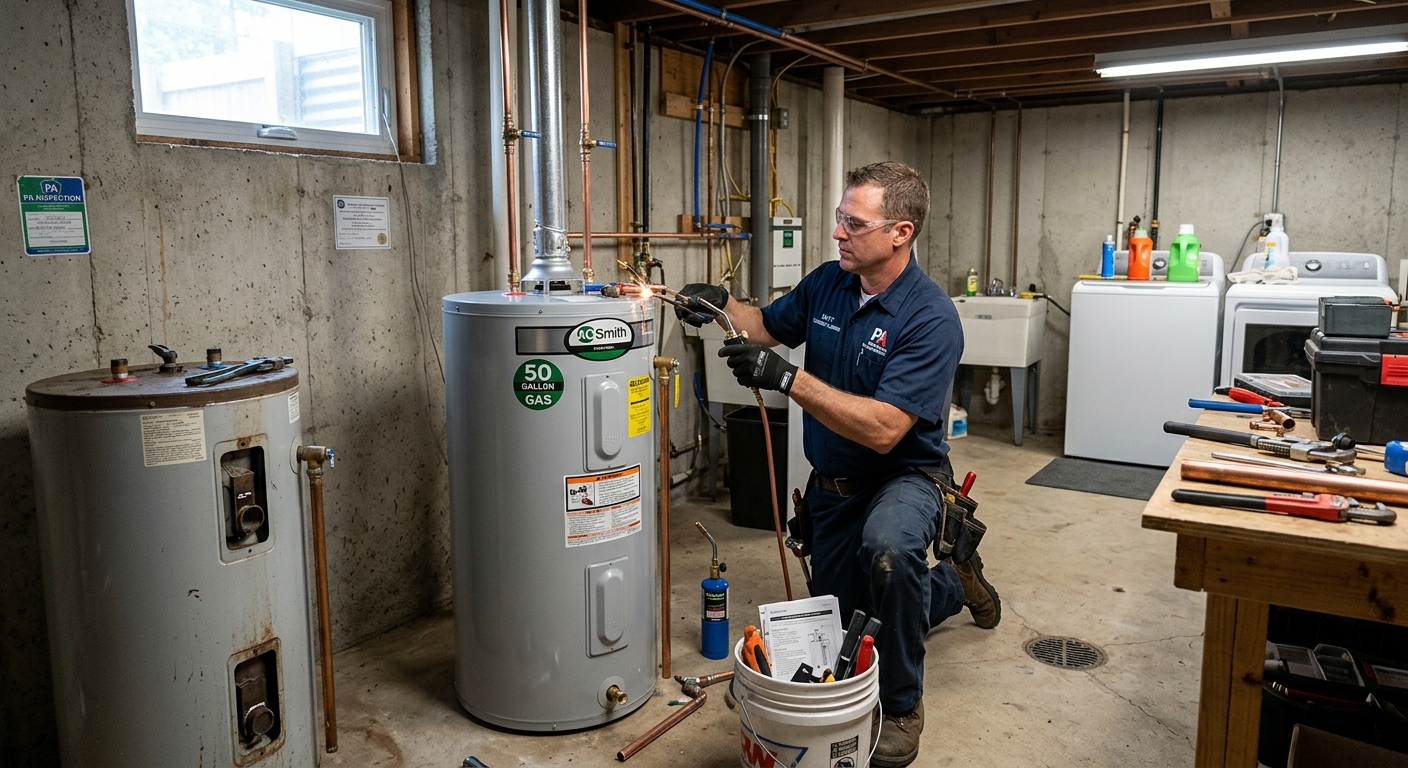
Coal homes spanning a century of construction mean every basement or utility closet is different, and your water heater choices need to fit that space and your family’s needs. Traditional tank (storage) heaters are still the most common and the cheapest to install, but use more energy because of “standby” heat loss. Figure on $1,050–$2,500 installed. Life expectancy is around 8–12 years for gas, 10–15 for electric, but hard Coal water can shorten that if you don’t flush the tank and watch sediment.
Tankless water heaters promise endless hot water and save on energy, but installation is higher—$1,700–$2,500 is typical. In Coal’s older homes, many gas tankless models need a larger gas line and upgraded venting, which adds to cost. For smaller households or low water demands, the savings may not pencil out. Heat pump water heaters cost about the same to install, use far less energy, and work best in a warm, unfinished basement with plenty of air; the downside is noise, plus cooling the space they’re in—less ideal for finished or tight basements.
Always size by first-hour rating (not just the tank size), and ask if you need an expansion tank (often required for closed systems) and a proper drain pan. Most water heater failures in Coal are tank failures—rarely electronic or control-side.
| Type |
Installed cost |
Service life |
Operating cost |
Best when |
| Gas tank, 40–50 gal |
$1,050–$2,500 |
8–12 yrs |
moderate |
Basements with existing gas & vent, price-sensitive |
| Electric tank, 40–50 gal |
$1,050–$1,700 |
10–15 yrs |
high |
No gas available, minimal venting, cheapest upfront |
| Gas tankless |
$1,700–$2,500 |
18–25 yrs |
low-moderate |
Endless hot water, enough flow and venting, new gas line OK |
| Heat pump water heater |
$1,700–$2,500 |
13–15 yrs |
lowest |
Warm, unfinished basement, moderate to high hot water use |
Verifying a Coal plumber's credentials
In Coal and across Northumberland County, plumbing is not licensed at the state level—each municipality sets its own requirement. That means a plumber licensed in Sunbury or Shamokin might have no credential at all in Coal Township. Always ask point-blank: “Do you hold a plumbing license for this township?” Don’t settle for “licensed and insured” if you won’t see a document approved by your local office.
Pennsylvania law requires Home Improvement Contractor (HIC) registration (over $500), which you can check at hic.attorneygeneral.gov, but this is not a plumbing license. Municipalities may or may not require separate plumbing permits and credentials. In Sunbury, anything beyond replacing a fixture needs a permit under the Pennsylvania Uniform Construction Code (UCC), enforced by the Sunbury Code Enforcement Office; in other townships, these rules vary.
Always verify insurance and require a certificate that lists your address. For workers’ compensation, confirm directly through WCAIS, especially whenever a crew—not a solo owner—is working on site. Don’t be rushed—if the paperwork isn’t there, don’t start the job and don’t hand over a deposit.
Frequently asked questions — plumbing in Coal
What counts as a plumbing emergency?
In Coal, a plumbing emergency is any problem that risks immediate water damage, health, or loss of basic service—think active leaks (burst pipes), sewage backup, total loss of water, or a failed water heater flooding the basement. In winter, frozen pipes with no water flow count as an emergency, especially in the region’s older, uninsulated homes. Remember, emergency work in Coal means higher labor rates—an active leak repair typically falls around $550–$1,050. If it can safely wait for regular hours, it’s always cheaper to schedule it, but any leak or backup with an active flow should be treated as urgent to limit damage and avoid bigger repair costs.
What does discoloured water on first draw mean?
In Coal, discoloured water (rusty or brown) on the first draw is common in older homes with galvanized or iron lines—especially after sitting overnight. This is usually from sediment or rust buildup in the home’s own pipes or, less often, from local water main work. If it clears after running for a minute, it’s rarely an emergency. However, persistent color or debris can mean the inside of pipes are badly deteriorated—a common issue in Coal’s pre-1930 housing stock. A whole-house repipe in Coal typically costs $3,100–$7,600, but you may be able to replace just the worst section if all else works. If only one fixture is affected, check the aerator for debris before calling a plumber.
Which utility supplies water to Coal?
Most public water in Coal comes from Pennsylvania American Water’s Sunbury-area district, covering Sunbury and much of Northumberland County. They publish annual water quality reports, which you should request if you have concerns. Homes in Coal’s rural outer reaches may still rely on private wells—especially in outlying township areas. Wherever your water comes from, if you notice frequent sediment, scale, or taste changes, know that Pennsylvania American Water is responsible for public main issues, but you handle everything from the curb in. Remember, water quality can affect plumbing costs—for example, hard water can shorten your water heater’s life, leading to a replacement cost of $1,050–$2,500.
How much does a water heater replacement cost in Coal?
In Coal, replacing a gas or electric water heater (40–50 gallons) usually runs $1,050–$2,500, depending on access, venting, and whether it’s an emergency. Most plumbers in Coal include haul-away of the old tank. If you want to upgrade to tankless or a heat pump water heater, expect higher install costs and possibly some changes to your plumbing or venting. Given Coal’s mostly older homes, check your basement height and vent path before committing—surprises here cost money. Labor is the big driver, so ask for a full price up front, including permits if required.
Does insurance cover a burst pipe in Coal?
Home insurance in Coal often covers sudden water damage from a burst pipe—such as freezing or corrosion failures—so long as regular maintenance wasn’t neglected. Insurers in Pennsylvania expect homeowners to keep heat on, pipes insulated, and shut off and drain exterior spigots in winter. If you ignored these basics, a claim could be challenged. When a burst happens, call your plumber first and document everything: repair visits for active leaks can run $550–$1,050 as an emergency call. Never work with a plumber who offers to “waive the deductible”—it’s illegal in Pennsylvania. Review your policy and call your agent if in doubt.
Who inspects plumbing work in Coal?
Plumbing inspections in Coal are handled locally. In Sunbury, the Sunbury Code Enforcement Office oversees building and plumbing permits and inspections for interior system alterations. Other townships in Northumberland County may have their own permitting offices or different requirements. There’s no countywide or statewide plumbing license, so it’s critical to hire someone credentialed for your municipality (if required). After a permitted job—like a whole-house repipe, which often runs $3,100–$7,600—the local office inspects the work before walls are closed. Ask your contractor who pulls the permit and schedules inspection so nothing gets missed.
What does repiping a house cost in Coal?
In Coal, where much of the housing dates to 1900–1930 and still uses some galvanized or even lead pipes, a typical whole-house repipe costs $3,100–$7,600. The bill covers new PEX or copper pipes for all interior supply lines, wall repairs, patching and finish work. Labor is the biggest factor: tight rowhome basements, stacked bathrooms, and hidden pipe runs mean more hours. If your water is rusty or your pressure is low, ask your plumber for camera footage or a pressure test before committing. In Coal’s thin contractor market, always check credentials and look over the contract before signing.
How do I prevent frozen pipes in Coal?
In Coal’s deep-winter climate—design temp 2°F and frost depth of 36 inches—it pays to be proactive. Start by insulating exposed pipes, especially along outside walls and in unheated areas. Heat tape is a good investment for pipes in crawlspaces or garages. Before winter, always shut off and drain exterior hose bibs. On the coldest nights, let the faucet furthest from your meter trickle a tiny bit to keep water moving, and open cabinet doors under sinks. Prevention is always cheaper than the cure: a split pipe in Coal will send you to the emergency rate, usually $550–$1,050 just to get water back on, plus the cost of drying and repairs. Spend the $30 on insulation now and save the headache later.
Is trenchless sewer repair reliable?
Trenchless sewer repair is increasingly common in Coal, especially where tight rowhome spacing or mature landscaping make excavation disruptive and costly. For spot repairs, costs align with traditional digging—typically $1,800–$10,500—but with less surface damage and faster turnaround. In Coal’s older neighborhoods, pipe condition and access matter most: severe bellies or collapsed lines in sectioned clay or cast iron don’t always qualify. Before saying yes, insist on camera footage of your line. When done on suitable lines by a reputable local contractor, trenchless repairs last as long as traditional pipe—just be sure the warranty matches. Cheap, quick, and guaranteed is the right combo to look for here.