What plumbers charge in New Castle
In New Castle, where the majority of homes were built between 1900 and 1940, the age and original build materials of your plumbing directly influence what goes wrong and what it costs to fix. With 93.9% of local homes built before 1980 and over half of households owning their homes (U.S. Census Bureau, ACS 2024), it’s common to see older galvanized pipes or patchwork from decades of repairs. This is a big reason galvanized-to-copper or PEX repiping projects come up so often here—they’re both a reaction to leaks and a long-term upgrade against future ones.
Plumbing costs here swing hardest on two axes: whether you’re calling for an emergency and how easy it is to access what needs work. An emergency makes any repair significantly more expensive, especially after hours. Don’t be surprised if the same fix costs twice as much when it’s a burst in the winter versus a scheduled repipe in August. Likewise, those older mill-era homes tend to hide pipes behind plaster or tight crawlspaces, which adds to labor.
| Service |
Scope |
Emergency rate |
Standard rate |
| Emergency repair — burst pipe |
locate, open, repair section, restore service |
$550–$1,050 |
$300–$1,050 |
| Water heater replacement (gas, 40–50 gal) |
remove old, install, test, haul away |
$1,650–$2,500 |
$1,050–$2,500 |
| Drain cleaning — main line |
augering or hydro-jet, camera if needed |
$350–$800 |
$200–$500 |
| Sewer line spot repair |
excavate or reline a failed section |
$1,750–$10,500 |
$1,750–$10,500 |
| Whole-house repipe |
replace supply lines throughout, patch and finish |
– |
$3,100–$7,500 |
| Water service line replacement |
street to house, excavation and restoration |
– |
$4,800–$10,500 |
Estimates for a typical New Castle home. Access difficulty and pipe material move these figures more than anything else.
Licensing and permits for plumbing work in New Castle
Pennsylvania does not have statewide plumbing licensing. Plumbing is licensed municipally, meaning the City of New Castle enforces its own rules through the New Castle City Code Enforcement Department. This matters because a plumber qualified in one city, like Pittsburgh, may have no standing or permit privileges in New Castle or surrounding townships. When hiring in Lawrence County, ask if the company is licensed in your specific municipality—there’s no single state credential to fall back on.
Permits are required in New Castle for nearly any new or replacement interior plumbing piping or fixture installation. Every legal plumbing job above minor repair should trigger a Uniform Construction Code plumbing permit. That also means the city will inspect the work for code compliance. In Neshannock Township, you can typically repair a leaking faucet or replace a fixture without a permit as long as you’re not altering pipes.
For any contract over $500, your plumber must be registered as a Home Improvement Contractor (HIC) with the Pennsylvania Office of Attorney General. You can check a registration at hic.attorneygeneral.gov. Pennsylvania also requires every employer to carry workers’ compensation insurance; you can verify this at wcais.pa.gov. Finally, state law mandates a written contract for plumbing work over $500, and you have a three-business-day right of cancellation.
Freeze risk and what to do about it
Lawrence County winters are tough on pipes. With a frost depth of 36 inches and winter design temperatures bottoming out at 8 °F, pipes in New Castle are exposed to heavy freeze-thaw cycles, especially in older homes with minimal insulation or pipes on outside walls. The hilly terrain and clay or shale subgrade around New Castle only contribute to cold spots in basements and crawlspaces.
Most winter pipe bursts don’t actually split where the ice forms. Instead, ice builds pressure between the frozen plug and a closed faucet, which means the rupture could show up in the wall or ceiling, not at the coldest section. The most vulnerable placements are in exterior walls, unheated crawlspaces or garages, hose bibs, and pipes snaked through attics with no heat.
Prevention options, from least to most expensive, include: opening cabinet doors to let indoor heat reach pipes, letting a trickle of water run from faucets in extreme cold, insulating pipes (especially near outside walls), applying electrical heat tape, and always shutting off and draining outdoor spigots before the first hard freeze hits. For most New Castle homeowners, just leaving a tap dripping during an arctic blast can dodge $550–$1,050 in emergency burst pipe repairs.
If you find a frozen pipe, don’t use an open flame. Safest is a space heater, heat lamp, or hair dryer—slow and steady warmth, starting nearest the faucet and moving toward the cold spot.
Lead service lines in New Castle
New Castle is served primarily by Pennsylvania American Water’s New Castle District, and both the city and the utility report an active inventory of lead service lines with ongoing replacement programs. The water line running from the main in the street to your home is usually split responsibility: the utility owns and maintains the street-to-curb stop portion; the homeowner is responsible from the curb to the house. Most replacement programs—when offered—cover the utility side, sometimes leaving the customer to manage and pay for their portion.
If your home is from the early 1900s, it’s a candidate for lead. You can check by finding where the pipe enters your basement. A lead pipe is soft and dull gray, easily scratched with a coin, and a magnet won’t stick to it. If you see galvanized or copper, you likely don’t have a lead service line.
Partial replacement—just swapping half the line—can temporarily spike lead levels in your water by disturbing protective scale, so full replacement is safest. Pennsylvania American Water publishes its inventory for New Castle; check their website or call to see if your address is listed or included in upcoming work. If a cost share or program isn’t clearly spelled out, always ask the utility before moving forward—you can’t assume coverage.
If you need to replace the homeowner-side line, typical costs run $4,800–$10,500 for a full new service. If a damaged section needs repair (like after a leak), it could fall in the $1,750–$10,500 range. There are no guarantees of reimbursement, so verifying first saves painful surprises.
Hardness, treatment and fixture life in New Castle
Residents of New Castle on Pennsylvania American Water can access an annual water quality report upon request. Local water is generally of moderate hardness, which causes mineral scale to build up in older water heaters and on faucet aerators. Scale shortens heater lifespan—one reason those pre-1980 homes see heaters swapped out every 10–15 years. In some New Castle homes, water is slightly aggressive; that means you might also see pinhole leaks in thin copper over time.
If you’re considering a water softener, run the math before jumping in. Retail units cost a chunk up front and require salt, service, and occasional repairs. For most families, softeners don’t fully “pay themselves back” unless you have a real scale or spot problem. Whole-house filters help with sediment, but unless your water smells, tastes, or looks off, point-of-use filters (like under-sink or faucet cartridges) are enough at a fraction of the price.
If your home draws from a private well (common in rural Shenango or Union Townships), there’s no published report—you should test annually for bacteria, nitrates, and iron at minimum. A local well water lab or the county extension service can help. Think twice before installing treatments you don’t need; in New Castle, dealers will happily oversell, but most systems are fine with only basic filtration.
New Castle's housing stock and its plumbing
With nearly 94% of homes in New Castle built before 1980, most plumbing here sits in wood‑framed houses raised between 1900 and 1940. That history comes with a patchwork of original galvanized steel supply pipes (which corrode and close up over time), upgraded copper or PEX supply lines, and sometimes cast iron or clay drain lines, especially running out to the street. Sewer laterals are often original clay pipe—a common site for root intrusion and cracking after a century underground.
Water service lines for these older homes may be lead, galvanized, copper, or sometimes plastic, depending on how many times things have been replaced. With all those years on the meter, very few heaters are original—most homes cycle through two or three replacements. Fixtures and stops are usually a blend of old and new; don’t be surprised to find a 90-year-old shutoff next to a ten-year-old PEX section.
Unlike newer suburban tracts where risks come from builder-grade fixtures or plastics like polybutylene, New Castle homes face failures tied mostly to age and material—galvanized blockages, pinhole leaks in copper, and brittle clay sewer lines, not simply normal wear and tear.
Vetting a plumber in Lawrence County
Vetting a plumber here is all about the right credential for your address. There’s no statewide plumbing licence, so always ask if your candidate holds a permit or city approval in the exact municipality where you live. The New Castle City Code Enforcement Department issues permits and checks credentials locally, while every plumber on a job over $500 must hold active HIC registration from the Pennsylvania Office of Attorney General (verify at hic.attorneygeneral.gov).
Don’t stop there—demand a certificate of insurance that lists your property, not a generic certificate. Workers’ compensation is mandatory for all employers; check status at wcais.pa.gov. Ask if the company uses their own W‑2 employees or subs out jobs to others. Plumbing rates can jump for after-hours emergencies, so get the emergency pricing in writing before you sign off, especially in this market where rural density makes night calls more expensive and long-distance travel cuts into competitive bid volume around the suburban core.
- Ask if they're licensed or approved in your municipality (especially New Castle).
- Verify Home Improvement Contractor (HIC) registration for contracts over $500.
- Check workers’ compensation at wcais.pa.gov.
- Request a certificate of insurance naming your address.
- Confirm the company uses their own employees, not unscreened subcontractors.
- Demand written estimates, not just a verbal quote.
- Get emergency rates and after-hours premiums in writing up front.
- Require copies of inspection approvals after work is finished.
- Ask whether camera footage or a pressure test documents sewer or repipe work.
- Don’t accept “just trust me”—demand proof for big jobs.
- Request local homeowner references, especially for full repipe or sewer work.
- Avoid those who “find” new problems at every visit.
Red flag: In this moderate-density market, beware any company quoting $4,800+ for a repipe or sewer job with no photos, no camera, and no pressure test—they may be upselling risk that isn’t real.
Frequently asked questions — plumbing in New Castle
Repair or replace a leaking water heater?
If you spot a leak near your water heater in New Castle, check the source. A slow drip at a fitting or relief valve sometimes means a valve swap or tightening is all you need, which usually falls well below full replacement costs. But if the tank itself is rusting through—common in homes over 20 years old, especially with local hard water—it's time for a replacement. The age and mineral content in New Castle’s water wears most heaters out by 10–15 years. A full heater replacement runs between $1,050–$2,500 locally. Don’t patch a tank leak; no sealant can stop corrosion from the inside for long. If it’s just fittings or piping, a smaller repair often saves serious money, but for a rusty, dripping base, schedule a replacement before it bursts and causes more water damage.
What do I do if sewage is backing up?
A sewage backup in New Castle—especially in older homes with original clay pipes in the yard—is rarely a DIY job. Stop running water immediately to limit spillover, and avoid using bathrooms or appliances until it's checked. Sewage backups often start with slow drains or gurgling fixtures. If it’s just one drain, it might be a local clog, but if every drain is slow or bubbling, your main sewer line is likely blocked. Tree roots and years of scale are common causes here. For urgent relief, expect to pay $350–$800 for emergency main line drain cleaning. Most reputable plumbers will use a camera to check the line after clearing it. If there’s a collapse or repeated history, you may be facing a spot repair, which can run much higher. Don’t let anyone dig until you’ve seen camera footage yourself.
How do I prevent frozen pipes in New Castle?
In New Castle, where winter lows hit 8 °F and frost lines run deep, pipes in exterior walls, crawlspaces, and unheated basements freeze faster than you’d expect. Prevent this by insulating pipes in those areas and opening cabinet doors during cold snaps to circulate warm air. During arctic blasts, let a bathroom or kitchen faucet trickle overnight to relieve pressure. Before winter, always shut off and drain outdoor spigots. If you find a frozen pipe, never use an open flame to thaw—use a space heater, heat tape, or even a hair dryer. Prevention costs a fraction of a burst-pipe emergency, which can easily cost $550–$1,050 or more and tear up floors and walls in the process. A few preventive steps save real money and a major headache for New Castle homeowners.
How do I verify a plumber's licence and insurance?
In New Castle and across Pennsylvania, plumbers are municipally licensed, not statewide. So the first question is: “Are you licensed to work in my city or township?” For codes and permits, check with the New Castle City Code Enforcement Department if you’re in city limits. For contracts over $500 anywhere in Lawrence County, the plumber also needs Home Improvement Contractor (HIC) registration from the Pennsylvania Office of Attorney General, which you can verify at hic.attorneygeneral.gov. Always ask for a certificate of insurance—make sure your address is actually listed, not just the plumber’s home office. For workers’ compensation, check status at wcais.pa.gov. These steps protect you in case of workplace injuries or property damage. Pulling permits and verifying insurance may prevent thousands in liability on a $3,100–$7,500 repipe job.
How do I tell what my pipes are made of?
In a New Castle home built before 1940, you’re likely to find a mix of old galvanized steel supply lines (dull silver, magnetic) and upgrades to copper (shiny reddish-brown, non-magnetic) or PEX plastic (flexible, colored tubing). Look under a sink or at your water meter for exposed pipe. Galvanized feels heavy and rough, while copper is smooth and slightly bendable. Cast iron or clay drains (thick, heavy) are common going to the street. For your service line, do the scratch and magnet test: lead is soft, gray, and non-magnetic. This can guide repairs—replacing all galvanized with PEX or copper in a typical Lawrence County home runs $3,100–$7,500, but targeted repairs cost much less if you know what's there.
How much does a water heater replacement cost in New Castle?
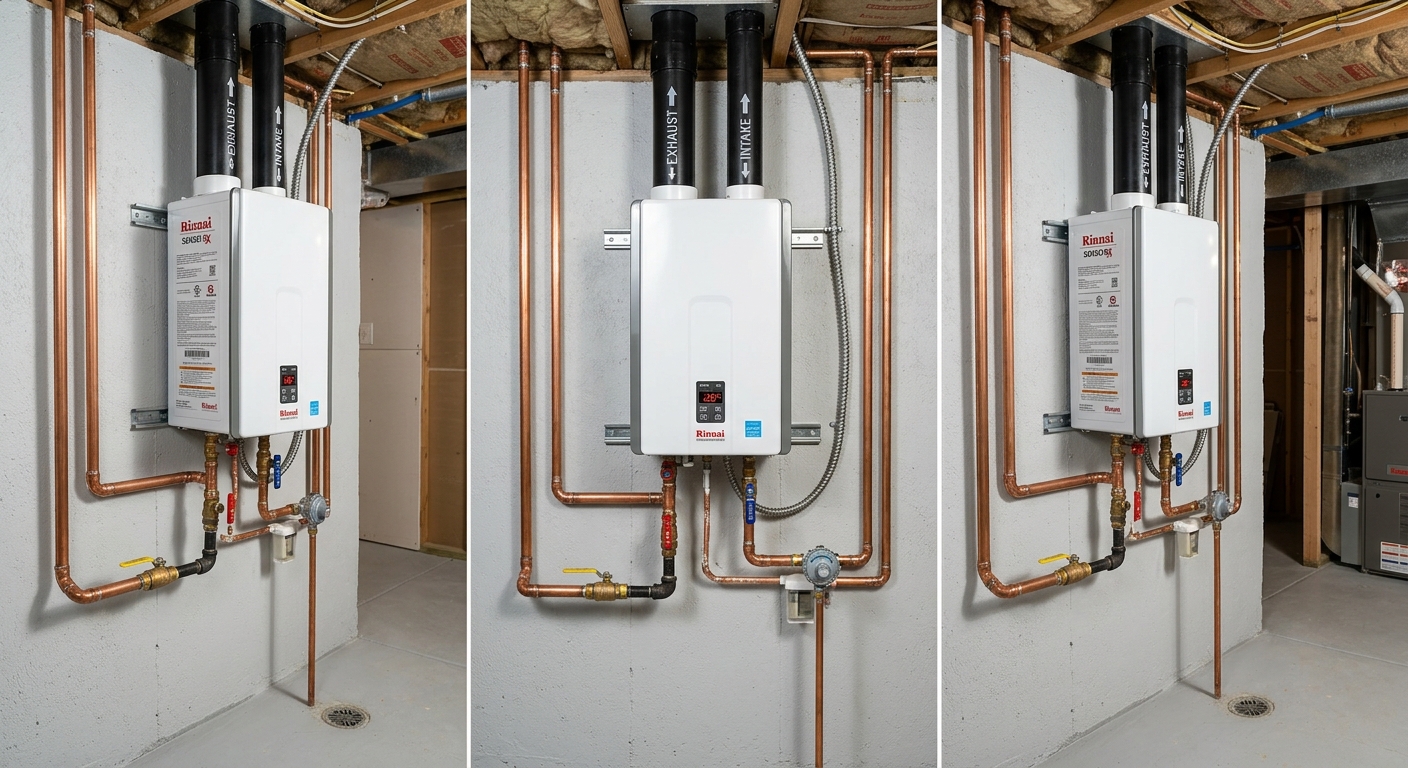
For New Castle homes, a standard gas water heater replacement—including removing the old unit, installing a new 40–50 gallon tank, and hauling away the old—ranges from $1,050–$2,500. The biggest factors in price are whether your heater is a standard type, accessibility, and if any codes require upgrades to venting or earthquake straps. In older houses with tight basements or tricky stairs, labor costs bump up the total. For tankless units, expect more, but most homes use conventional tanks. Always ask if the price includes permit fees and disposal. Given local water hardness and housing age, plan on heater replacements every 10–15 years.
How much does a plumber cost in New Castle?
In New Castle, plumbing costs depend on whether it’s an emergency and how much pipe is buried inside plaster or tight crawlspaces. Emergency repairs, like a night call for a burst pipe, often cost $550–$1,050, while routine jobs like drain cleaning typically land between $200–$500 for a standard main line clear. Full repipes (replacing all old galvanized with PEX or copper) run $3,100–$7,500, much lower per-foot than open-wall new construction, but you pay for labor and wall patching. Always get detailed estimates, and don’t pay more just because it’s “old house plumbing”—local experience really counts in Lawrence County’s pre-war homes.
Who pays to replace a lead service line in New Castle?
If your New Castle home is still connected by a lead service line, Pennsylvania American Water usually handles only the utility side (street to curb stop), while the homeowner is responsible for the line from curb to house. The city and utility have active replacement programs, but unless it’s clearly listed, don’t assume they’ll pay for your portion—always check your address and eligibility with the utility first. If you do have to cover a replacement yourself, expect $4,800–$10,500 for a typical dig-and-replace on the customer side. Sometimes partial replacements can actually spike lead levels short-term due to disturbed scale, so full replacement is safer, but more expensive. Always confirm program coverage before hiring anyone for the work.
Are tree roots a common sewer problem in New Castle?
Yes, very common—especially for New Castle’s pre-1980 homes with original clay sewer laterals. After nearly a century underground, joints in clay pipe crack or separate, letting roots sneak in and block flow. Typical signs are repeated main drain clogs or gurgling toilets after rain. Local plumbers tackle this all the time, and a main line auger or hydro-jet cleaning call averages $200–$500 for a standard job. If the root damage is severe, a camera inspection will document whether you just need cleaning or a more serious spot repair, which can run up to $10,500. Never agree to full sewer replacement without seeing video proof of the break or blockage—that’s a costly mistake in New Castle’s older neighborhoods.