What plumbers charge in Penn
Penn homeowners, especially those among the 86.9% living in single-family houses (U.S. Census Bureau, ACS 2024), face plumbing costs that swing sharply depending on whether you need an emergency fix or can schedule standard work. In Westmoreland County, the character of your home—its construction era and pipe material—tells the story of what’s most likely to go wrong. For example, those post‑1945 tracts in Hempfield and North Huntingdon are just now facing the end of life on many original copper and galvanized pipes, so small leaks or poor pressure often stem directly from aging infrastructure rather than a rogue fitting. This means a homeowner in a 1970s rambler pays a different bill than someone in a recent build, for the same job.
Emergency repairs—think burst pipes or sudden leaks—always cost more. Nights, weekends, and holidays drive costs high, not just due to labor but because urgent plumbing often means hunting for a buried main or cutting into finished drywall. If you can safely wait, you could pay hundreds less for the same repair. With most Penn homes built before 1980, age-driven failures are common, so keep an eye out for mounting evidence before you get surprised by a big bill.
| Service |
Scope |
Emergency rate |
Standard rate |
| Emergency repair — burst pipe |
locate, open, repair section, restore service |
$650–$1,250 |
$375–$1,250 |
| Water heater replacement (gas, 40–50 gal) |
remove old, install, test, haul away |
$2,000–$2,900 |
$1,250–$2,900 |
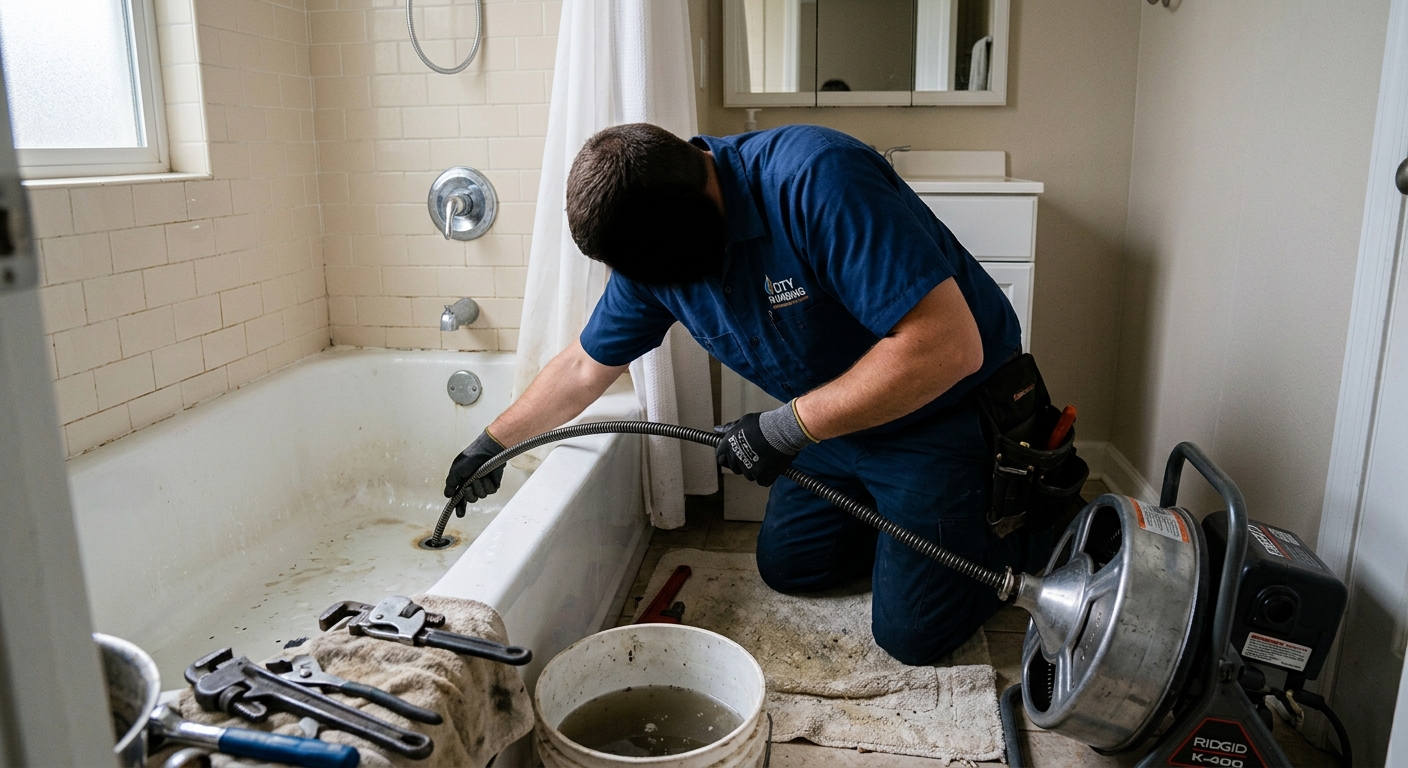
| Drain cleaning — main line |
augering or hydro-jet, camera if needed |
$350–$800 |
$200–$500 |
| Sewer line spot repair |
excavate or reline a failed section |
$2,100–$12,500 |
$2,100–$12,500 |
| Whole-house repipe |
replace supply lines throughout, patch and finish |
|
$3,700–$9,000 |
| Water service line replacement |
street to house, excavation and restoration |
|
$5,800–$12,500 |
Estimates for a typical Penn home. Access difficulty and pipe material move these figures more than anything else.
Water heater replacement decisions
Water heater replacement in Penn is usually a forced decision—most often because the tank rusts through and leaks, not from a control failure. Picking the right type and size means balancing installation cost, performance, and future bills. Traditional tank heaters (gas or electric) are usually fastest and cheapest to install, and in many homes with limited venting or space, they’re still practical. However, they waste energy with standby losses and tend to wear out in 8–15 years. Tankless gas units offer endless hot water and better efficiency, but require more technical installation—often a larger gas supply and new venting you didn’t plan for. These changes aren’t cheap, and in houses with older gas lines common in post‑1945 builds around North Huntingdon or Hempfield, upgrades can add hundreds or more.
Heat pump water heaters are the cheapest to operate and, with rising utility prices, can offer real savings. But they need a large, warm room and will cool the air around them; running one in a finished basement could be annoying because of the noise and cold air they produce. Sizing is about first-hour rating (how much hot water you get in a big burst, not just tank size). In most Penn homes, code expects an expansion tank at the water heater, plus a pan and floor drain in finished spaces for leak protection.
| Type |
Installed cost |
Service life |
Operating cost |
Best when |
| Gas tank, 40–50 gal |
$1,250–$2,900 |
8–12 yrs |
moderate |
existing vent/gas, standard needs |
| Electric tank, 40–50 gal |
$1,250–$2,000 |
10–15 yrs |
high |
no gas supply, simple swap |
| Gas tankless |
$2,000–$2,900 |
18–25 yrs |
low-moderate |
need endless hot water, willing to upgrade gas/vent |
| Heat pump water heater |
$2,000–$2,900 |
13–15 yrs |
lowest |
want lowest bills, have warm/unfinished space |
When to repipe a Penn home
If you live in a Penn home and have had two or more plumbing leaks from the same pipe material within three years, it’s a sign you need a repipe—not just repairs. This is especially true for those in post‑1945 tracts in Hempfield and North Huntingdon, where original copper and galvanized pipes are now past their expected life. Warning signs include whole-house pressure loss (not just at one faucet), brown or rusty water on first draw, visible green or white corrosion at pipe joints, and pinholes that seem to appear overnight. With galvanized, the bore shrinks from internal rust, making showers weak and washing machines slow. With copper, pinholes cluster in certain years or locations, typically from water chemistry eating the pipe from inside.
A full repipe replaces all supply lines and usually means some walls or ceilings get opened. Don’t forget to factor in the cost (and disruption) of plaster or drywall repair—older Penn homes with real plaster can see patch costs rival the plumbing work itself. Most plumbers today use PEX or copper; PEX is easier and minimizes drywall work because it snakes through tight spaces with fewer joints. Consider a targeted (partial) repipe if only one material or area keeps failing, but once leaks multiply, it’s time to go all in and avoid repeated disruption and mounting labor bills.
| Situation |
Recommendation |
Cost |
Reasoning |
| One leak, accessible, modern pipe |
Spot repair |
$375–$1,250 |
No sign of systemic failure, isolated fix |
| Two or more leaks in 3 years |
Partial repipe |
$3,700–$6,000 |
Repeated failure is pattern, not luck |
| Galvanized supply, pressure loss |
Full repipe |
$3,700–$9,000 |
Pipe bore restricted, more leaks coming |
| Polybutylene anywhere in the house |
Full repipe |
$3,700–$9,000 |
Uninsurable for many carriers |
| Cast iron drain with root intrusion |
Camera, then reline or replace |
$2,100–$12,500 |
Roots mean failure, needs permanent fix |
| Suspected lead service line |
Test, then replace the lateral |
$5,800–$12,500 |
Lead is a health hazard, must go |
Detection methods and what they cost
Before picking up the phone, do this free: shut off every fixture, then watch your water meter. If the small dial keeps spinning, you have a supply side leak. Many Penn homes with aging pipes—especially those with abnormally high bills or hidden water damage—can spot a slow leak before it turns into a flood this way.
Professional leak detection starts at about $375–$1,250 for a home visit and basic acoustic listening—using sensitive microphones to hear water escaping in a wall or under a slab. Thermal imaging adds a bit to the cost but is very useful in finished spaces, making temperature differences from leaking pipes visible behind drywall. Tracer gas (helium or nitrogen) is for the toughest leaks—a non-toxic gas is forced into the line, then sniffers trace its escape. Slab leak location combines these tools, and is common in certain 1960s–1980s builds here. For hidden irrigation or exterior leaks, ground microphones and sometimes even small cameras can zero in. If a plumber wants to start cutting open walls without trying to locate the leak first, get a second opinion—good tech saves on demolition and repair, and you shouldn’t pay for guesswork.
Licensing and permits for plumbing work in Penn
In Penn and throughout Westmoreland County, plumbing licensing is a local (municipal) matter—not statewide. This means you should ask, “Are you registered or licensed in my township or borough?” For example, the City of Greensburg has its own contractor registration for plumbing firms, apart from neighboring townships. A plumber registered in Greensburg may have no standing to pull a permit or pass inspection in Hempfield or Unity. This comes up often, so always confirm your contractor is registered locally for your address.
Permitting also depends on your exact location. In Hempfield Township, any new or altered plumbing that ties to public water or sewer requires a township-issued construction permit—Plan to have the Hempfield Township Planning & Zoning Department inspect the finished work. However, in Greensburg, like-for-like fixture swaps (as long as there are no piping changes) usually don’t need a city permit at all. For projects over $500, Pennsylvania requires Home Improvement Contractor (HIC) registration from the Office of Attorney General. Always check your contractor's HIC registration at hic.attorneygeneral.gov, and verify workers’ compensation at WCAIS (wcais.pa.gov). Insurance is as crucial as credentials. Don’t rely on the word “licensed”—double-check it’s for your municipality.
Sewer laterals: the pipe you own and can't see
In most of Westmoreland County, including Penn, the homeowner is responsible for the sewer lateral that runs from the house to the main—sometimes reaching under sidewalks or even into the public right-of-way. If you have an issue, it’s almost always on your dime. Classic red flags: one sluggish drain (usually a branch line), then multiple slow drains on lower floors, then gurgling, and finally, a backup at the lowest fixture (like a basement floor drain or tub).
Camera inspection is the first, necessary step—don’t accept any excavation or relining quote unless the contractor shows you video of the actual blockage or section failure. Old clay tile pipes in the area (especially pre‑1980 construction) commonly suffer from root intrusion at joints, while cast iron pipes corrode or develop offset joints and bellies. Open-cut replacement means digging a trench; trenchless relining is less disruptive, but not always possible if the pipe is collapsed. Typical repair costs in Penn fall between $2,100–$12,500, depending on access, depth, and restoration needs.
Some homes in outlying townships are still on individual septic. If that’s you, sewer symptoms may mean a full tank (regular pumping is needed every 3–5 years) or drainfield failure—not a pipe break. In town, expect separated sanitary and storm sewers, but always confirm with your utility before approving major work.
Dating your plumbing by what it's made of
The era of your Penn home—especially those built in the post‑1945 booms of Hempfield and North Huntingdon—often tells you exactly what plumbing material you have, and what’s bound to go wrong. Galvanized steel (gray, magnetic, threaded joints) was the norm until 1960 or so. It rusts from the inside, restricting flow well before leaks show, and often gives you brown water on first draw. Copper pipe (reddish-brown, non-magnetic, joined with solder at fittings) is common from the 1950s on; it’s generally long-lived but can suffer from pinhole leaks, especially if the water is acidic or has high mineral content. Polybutylene (gray-blue flexible pipe, usually with plastic or aluminum crimp rings) is a 1970s–1990s experiment now infamous for sudden, insurance-disqualifying failures.
PEX (usually red, blue, or white with “PEX” printed on the side) is the current code standard, preferred for speed and flexibility. Drainage pipes show their age through clogs and backups: cast iron (heavy, black, non-magnetic, with “bell and spigot” joints) holds up for decades but eventually cracks; clay tile (orange-brown, unlined, with visible joints) is prone to root infestation; newer PVC and ABS (white or black plastic, glued joints) hold up best but can fail if buried shallow or crushed by settling dirt.
The scratch test is easy—gently scrape an exposed pipe with a screwdriver. Silver and magnetic? Galvanized. Red-brown? Copper. Blue or gray and plastic-feeling? Polybutylene or PEX. Knowing what runs behind your walls is the first step to predicting costly future repairs, so match your home’s build to the table below to see what you’re working with.
| Material |
Typical era |
Failure mode |
Service life |
| Galvanized steel supply |
pre-1960 |
internal corrosion, pressure loss |
40–60 yrs |
| Copper supply |
1950s–present |
pinhole leaks, joint failure |
50–70 yrs |
| Polybutylene supply |
late 1970s–1995 |
fitting failure, sudden bursts |
unreliable |
| PEX supply |
2000s–present |
fitting or UV degradation |
40–50 yrs |
| Cast iron drain |
pre-1975 |
corrosion, cracking, scale |
50–75 yrs |
| Clay tile sewer lateral |
pre-1980 |
root intrusion at joints, offset |
50–60 yrs |
| PVC / ABS drain |
1970s–present |
joint separation, crushing |
50+ yrs |
Frequently asked questions — plumbing in Penn
What does discoloured water on first draw mean?
In Penn, discoloured water that clears after a few seconds is typically a sign of corrosion inside old galvanized steel or cast iron pipes. Homes in post‑1945 developments around Penn often still have original galvanized supply lines, which rust internally and shed iron oxide when unused. The first burst of water flushes out these particles. This isn’t immediately dangerous, but it signals your pipes are well into the last years of their life—pressure loss and leaks are usually next. If you see this issue and also notice weak pressure, it’s time to talk about repiping. Replacing all supply lines in a Penn home generally runs $3,700–$9,000. If you catch it early, a targeted section may be all you need, but recurrent discolouration nearly always means more trouble soon.
How hard is the water in Penn?
Water in Penn, supplied mostly by the Municipal Authority of Westmoreland County, is considered moderately hard—enough that you’ll see some mineral buildup on faucets and appliances after a few years. This isn’t unique to Penn, but it has a real effect: hard water speeds up the failure of tank water heaters, especially electric models, by building scale on the heating elements. This means you may be closer to the low end of the expected 8–12 years for a gas tank heater (see price range $1,250–$2,900). Flushing your tank yearly and cleaning scale off aerators helps, but over time the minerals will win, especially in the town’s older housing stock. If you notice frequent scale, consider a softener, but it’s not essential for most homes.
What does repiping a house cost in Penn?
Whole-house repiping in Penn, whether with copper or PEX, generally costs $3,700–$9,000. You’ll be toward the higher end if you have a larger home, plaster walls, or complex runs common in older county houses. PEX repipes usually run cheaper because it’s quicker and less invasive—fewer wall cuts and less labor. Don’t forget the “hidden” cost: drywall or plaster repair after plumbing is done, which can rival the plumbing itself in a house with original finishes. If you’re only seeing a single leak, a targeted repair may be smarter—but repeated leaks, pressure loss throughout, or rusty water mean your pipes are on borrowed time and a repipe will ultimately save hassles, secondary repairs, and ongoing emergency charges.
Should I reline or replace my sewer line?
In Penn, the decision to reline or replace depends on what the camera shows. Trenchless relining is less invasive and keeps landscaping or driveways intact, but it only works if your existing pipe is mostly intact with no major offsets or collapses—common issues in old clay or cast iron laterals in Penn’s pre‑1980 homes. If roots have collapsed sections or if there are deep bellies, replacement is the only real fix. Relining typically costs from $2,100–$12,500, similar to open trench work. Never accept any method or price without seeing and reviewing the actual inspection footage for yourself; don’t take a contractor’s word that a full replacement is required until you’ve seen what’s happening under your own yard.
Am I responsible for the water line under the street?
In most of Penn and the rest of Westmoreland County, the homeowner is responsible for the entire water service line from the house to the curb or tap, which can mean the pipe running all the way under a sidewalk and as far as the public street. If you have a leak in the lateral—common with old copper or even lead lines reported in older Greensburg areas—you are usually responsible for the full cost of replacement or repair. Expect a cost between $5,800–$12,500 for a full water service replacement. Always confirm this with your water utility before starting work, but in nearly all local cases, the bill is yours.
Why do plumbers charge a diagnostic fee?
Diagnostic fees are common in Penn for non-emergency plumbing calls and are usually rolled into the final price if you hire the contractor for the work. With so many homes built before 1980, tracing the true source of a problem—be it a hidden leak, misrouted lateral, or a failing water heater—can take time and expensive tools. A visit with acoustic leak detection or a video inspection easily justifies a base fee in the $375–$1,250 range. This covers labor, plus the cost to maintain and transport specialist equipment. You’re paying not just for time, but for expertise that avoids bigger, costlier mistakes down the line.
How do I verify a plumber's licence and insurance?
In Penn, plumbing contractors working on jobs over $500 must be registered as Home Improvement Contractors (HIC) with the Pennsylvania Office of Attorney General—verify this at hic.attorneygeneral.gov for your own peace of mind. For workers’ compensation, use the state’s WCAIS system (wcais.pa.gov) to confirm current insurance status. In the City of Greensburg, there’s an additional contractor registration for plumbers; always ask if your plumber is registered for your specific township or borough, as local rules vary. This is worth a call before you approve anything beyond a minor repair—just because someone is licensed elsewhere in Westmoreland County doesn’t mean they’re authorized in Penn or Greensburg. Proper documentation is especially crucial for major repairs like a whole-house repipe (typically $3,700–$9,000).
Should I wait until business hours to call?
If you’re facing active water flowing where it shouldn’t—like a burst pipe or major sewer backup—don’t wait, as delays risk tens of thousands in damage (common costs $650–$1,250 for emergency response, plus cleanup and restoration). For less urgent problems (like a slow drain or a trickle from a shut-off valve), you’ll usually pay less if you can safely wait for normal business hours. Penn’s plumbers do respond after hours, but you’ll pay a premium especially if drywall or digging is needed. Shut off supply at the main if you can, drain off excess pressure, and only wait if you're sure there’s no structure or electrical hazard emerging.
How do I prevent frozen pipes in Penn?
Penn winters bring freeze-thaw cycles and temperatures down to 8°F. The usual victims are pipes in unheated garages, crawlspaces, or against exterior walls—especially in homes built before 1980 when insulation was spottier. To avoid a broken pipe and a bill in the $650–$1,250 range, insulate exposed supply lines with foam or fiberglass, keep cabinet doors open under sinks on cold nights, and let faucets drip (a slow trickle keeps water moving and reduces freeze risk). For basements that sit above the 36-inch frost line, keep the space moderately heated and seal up drafts. If you’ve had a freeze once, professional rerouting or upgrading with PEX (which flexes rather than bursts) may be a cost-effective solution.