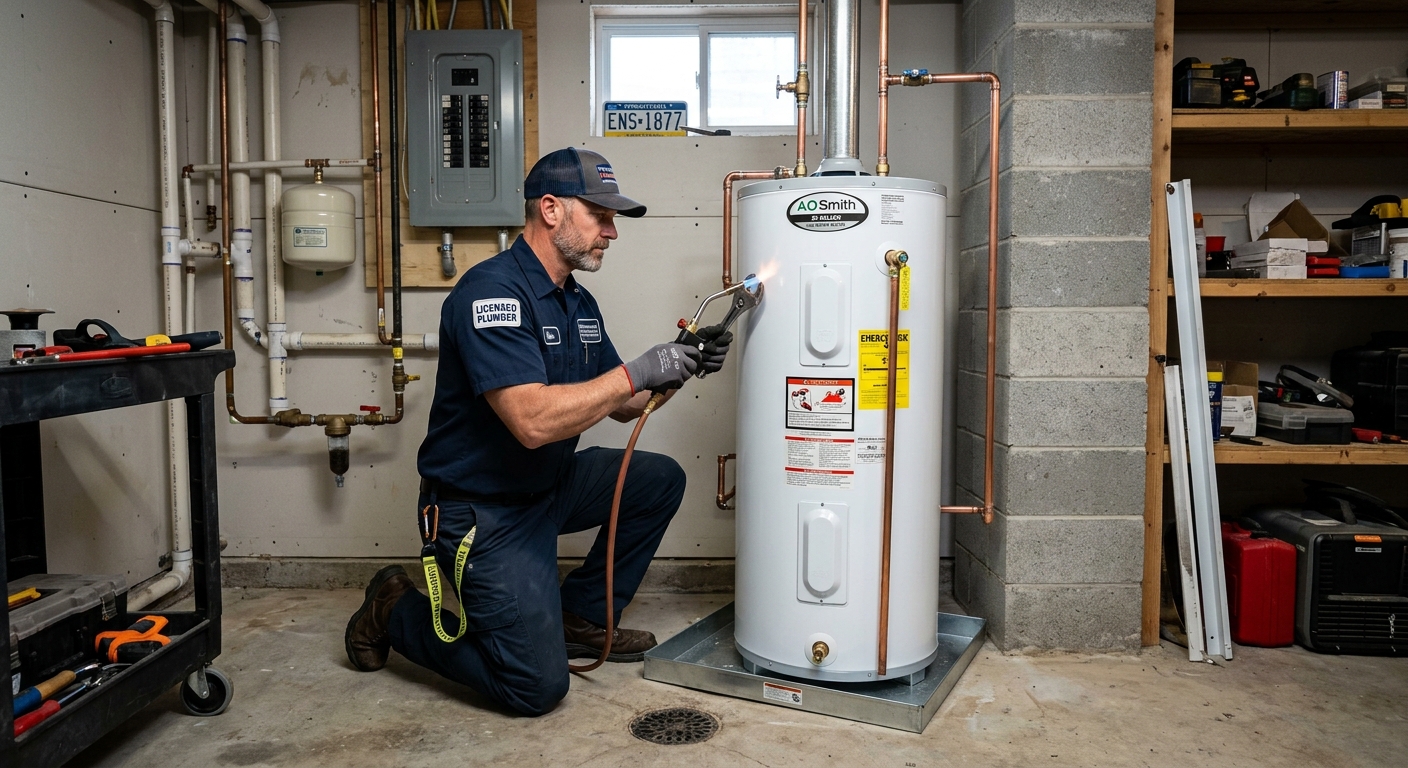
What plumbers charge in South Hanover
South Hanover, with its population of just over 7,000 and a high homeownership rate of 71.7% (U.S. Census Bureau, ACS 2024), sees plumbing costs shaped by not only what needs fixing, but how fast you need it. For any plumbing job here, you’ll pay a standard rate—unless it’s an emergency. Burst pipe at midnight? Emergency pricing applies, reflecting everything from rapid crew mobilization to after-hours supply runs.
In this area, the era of your home matters as much as the job itself. Many homes in Lower Paxton Township were built as post‑1950 tract housing, which means lots of original copper eventually swapped with PEX when leaks or pinhole bursts show up. Sewer issues are common too, with mature clay or cast iron lines developing offsets and root intrusion. These material and era specifics directly steer what goes wrong—and what it costs to fix.
It’s not just about parts or time: accessing pipes in a finished basement, removing old tile, or beating a sudden cold snap all tip the pricing scale. Emergency work always runs higher than booking a standard service call, but even “regular” rates jump if you have tricky angles or legacy materials hiding behind walls.
| Service |
Scope |
Emergency rate |
Standard rate |
| Emergency repair — burst pipe |
locate, open, repair section, restore service |
$650–$1,300 |
$375–$1,300 |
| Water heater replacement (gas, 40–50 gal) |
remove old, install, test, haul away |
$2,100–$3,000 |
$1,300–$3,000 |
| Drain cleaning — main line |
augering or hydro-jet, camera if needed |
$350–$800 |
$200–$500 |
| Sewer line spot repair |
excavate or reline a failed section |
$2,200–$13,000 |
$2,200–$13,000 |
| Whole-house repipe |
replace supply lines throughout, patch and finish |
|
$3,800–$9,200 |
| Water service line replacement |
street to house, excavation and restoration |
|
$6,000–$13,000 |
Estimates for a typical South Hanover home. Access difficulty and pipe material move these figures more than anything else.
Sewer line problems in South Hanover
If you run into sewer trouble in South Hanover, remember: for nearly all homes here, you own the sewer lateral from the house to the municipal main—sometimes even under the street itself. That means any repair cost, whether spot or full replacement, lands on you. Expect the same in Harrisburg and surrounding Dauphin County townships. Nearly all disputes and headaches come from this awkward split.
The early warnings are almost always the same: one slow drain, then a second, maybe gurgling when you flush. If you see a backup at the lowest drain (like the basement utility sink), it’s no longer a warning—action is needed. Before any digging or quoting, a camera inspection is crucial. Forgetting this step causes too many unnecessary excavations, especially where original clay tile pipes develop root intrusions or sags (“bellies”). In homes built during the tract housing era, clay tile and sometimes cast iron are the usual culprits for roots and separated joints.
Repair options in South Hanover include open-cut trenching to swap out bad sections, or trenchless relining where possible—each with its place, depending on your yard, pipe material, and access. Never accept a sewer excavation quote without actually viewing the camera footage—not just a description—of your specific line. If your drain issues point to a septic system (common in rural townships), the problems and solutions are different: regular tank pumping (every 3–5 years) and drainfield failure are typical pitfalls requiring different pros altogether.
Licensing and permits for plumbing work in South Hanover
Pennsylvania does not issue a statewide plumbing license, and this matters for South Hanover homeowners. Only specific cities—like Harrisburg or Philadelphia—license plumbers directly; Dauphin County as a whole does not maintain a countywide plumbing license. If your job needs a permit, a plumber registered in one municipality may not be able to pull permits in your township. The question is always: “Are you licensed or registered in South Hanover—or my township—not just somewhere else?”
In Harrisburg, any plumbing system alteration beyond simple fixture replacement triggers a building permit. Their codes department inspects the work, looking for compliance with the Pennsylvania Uniform Construction Code (UCC), based on the IRC. In townships like Derry or South Hanover, you may find faucet or toilet swaps are often done without a permit in owner-occupied homes. Always ask your plumber if a permit is needed for your specific job.
If your project is over $500, contractors must hold a valid Home Improvement Contractor (HIC) registration from the Pennsylvania Office of Attorney General. You can verify this at hic.attorneygeneral.gov. Workers’ compensation coverage is mandatory for all employers—verify this via WCAIS (wcais.pa.gov). Insist on certificates naming your property; do not take generic proof-of-insurance at face value. These steps keep your bases covered without unnecessary cost or bureaucracy.
The leak you can hear but can't see
If you suspect a hidden leak in your South Hanover home, start with the most basic test: shut every faucet, appliance, and fixture, then check your water meter. If the dial still moves, there’s a leak somewhere on the pressurized supply side—and you haven’t spent a dime to find out. This simple check can save hours chasing minor drips or worrying about moisture that isn’t even from your pipes.
Once you’ve confirmed there’s a real leak, a plumber may recommend professional detection. The first tier is acoustic listening—a sensitive microphone listens for pipe noise in walls, under floors, or even under the slab ($250–$500, usually included if repair goes ahead). Some situations call for thermal imaging to spot cold or wet spots in finished walls. Tracer gas testing, rarely required in South Hanover’s slab-on-grade homes, is mostly reserved for complex leaks under concrete.
Common “invisible” leaks here include pinholes inside wall cavities, supply pipes that run under a slab, or irrigation lines. Every good plumber should locate the leak before opening walls or doing demolition work. If someone pushes to start cutting drywall with no clear pinpoint, that’s backwards and wastes both time and money.
Vetting a plumber in Dauphin County
Hiring a plumber in South Hanover or elsewhere in Dauphin County means checking several things, since licensing is handled by each municipality, not the county or state. If someone claims to be “state licensed,” press for specifics—they should have local registration for permit work in your town. Always verify their Home Improvement Contractor (HIC) registration at hic.attorneygeneral.gov for jobs over $500, and confirm workers’ compensation through WCAIS (wcais.pa.gov). Insurance must name your property address, not just a company blanket policy.
Ask whether your plumber runs their own crew or uses subcontractors; clear, written contracts protect you under Pennsylvania’s Home Improvement Consumer Protection Act. Emergency work should have pricing spelled out before dispatch. The moderate suburban density around Harrisburg–Carlisle means real plumbers don’t need to pressure you—good providers are working in your neighborhood every week.
- Confirm local municipal registration (not just a business card address)
- Check HIC registration at hic.attorneygeneral.gov
- Verify workers’ comp at wcais.pa.gov
- Request insurance certificate specifically naming your address
- Ask about who will physically do the work (in-house crew or subcontractors)
- See and keep a copy of your written contract for jobs over $500
- Know your right to cancel (three business days by law)
- Get all emergency and diagnostic fees in writing
- Demand a camera inspection for any proposed sewer work
- Always ask for a pressure test for repiping quotes
- Look up reviews tied to your actual township, not just a metro area
- Never hire anyone who tries to absorb your insurance deductible—illegal in Pennsylvania
Red flags: Any plumber pushing massive repairs with no camera footage or pressure readings, or who can’t prove current insurance and compensation in your town, is one to avoid in a market with so many established providers.
Water heater replacement decisions
Choosing a new water heater in South Hanover means weighing not just install price, but fuel availability, location, and daily use. Most homes here were built after 1950 with gas lines for tank-type heaters, but upgrades or switching to tankless catch folks by surprise—gas models often need bigger gas lines or new vents, which can balloon costs without much warning.
The classic gas tank model is the cheapest to put in and has a fast install time, but comes with shorter service life and steady heat loss from the tank. Electric tanks have the lowest upfront cost but eat up more in utility bills if you have a larger family. Tankless gas gives endless hot water and a longer life but can require significant rework for venting and fuel supply. Heat pump water heaters are the most efficient, running on electricity and using ambient warmth, but they need space to breathe and can chill finished basements—a real concern in homes relying on that space year-round.
For any type, size your replacement by checking the “first-hour rating” (hot water output per hour), not just gallons. Extra touches—a pan with a drain, expansion tank, or an automatic shutoff valve—protect your investment. The most common way heaters fail is tank rupture, not a broken thermostat. If yours is more than ten years old, especially the original in a South Hanover postwar tract home, it’s probably on borrowed time.
| Type |
Installed cost |
Service life |
Operating cost |
Best when |
| Gas tank, 40–50 gal |
$1,300–$3,000 |
8–12 yrs |
moderate |
Existing gas line, family of 2–5, standard needs |
| Electric tank, 40–50 gal |
$1,300–$2,100 |
10–15 yrs |
high |
No gas, smaller households, lower upfront budget |
| Gas tankless |
$2,100–$3,000 |
18–25 yrs |
low-moderate |
High usage, long-term value, easy access to gas upgrade |
| Heat pump water heater |
$2,100–$3,000 |
13–15 yrs |
lowest |
No gas, large unfinished basement, low utility rates |
Plumbing systems in South Hanover homes
Most South Hanover homes—like much of suburban Dauphin County—were built since 1950, with about 35.5% predating 1980 (U.S. Census Bureau, ACS 2024). That housing wave means you’re likely to find original copper supply lines, with older homes possibly retaining sections of galvanized or clay tile sewer pipe. In homes built before the late 1970s, the sewer lateral may be clay, inviting root intrusion and joint separation as tree roots follow moisture.
With the postwar building boom, many homes saw their first water heater replacement around the late 1980s or 1990s—so if your heater is nearing a decade old now, it could be on its second or third round. Aging service lines from the street, especially in Harrisburg, could still include sections of lead, but copper or polyethylene is more common in later tract homes. Drain lines in these homes skew toward cast iron or ABS plastic depending on the renovation history—each with its own failure pattern as time marches on.
Newer doesn’t mean worry-free: tract homes are famous for builder-grade materials, meaning some polybutylene piping was used in homes built between the late 1970s and mid-1990s—now a known risk for premature failure. The first sign is sometimes a pinhole leak in a wall or a slab, or slow, recurring drain clogs from aging original lines.
Frequently asked questions — plumbing in South Hanover
How much does a plumber cost in South Hanover?
Plumbing rates in South Hanover depend on both the type of job and whether it’s an emergency. For something urgent like a burst pipe, you’ll see charges between $650–$1,300 just to stop the leak and restore water. A standard call for a drain cleaning, handled during business hours, might cost as little as $200–$500. What moves the number most is access—digging into a finished basement or crawling in a tight attic adds time and risk—and whether you need service right away. With homeownership rates above 70%, many here find that regular maintenance avoids the highest bills, while after-hours emergencies cost most of all. Ask for all fees—diagnostic, labor, parts—up front to avoid surprises.
How deep do water lines need to be buried in South Hanover?
Water pipes in South Hanover and across Dauphin County must be buried deep enough to stay below the “frost line”—that’s 30 inches by code for this region’s climate and freeze/thaw cycles. This level is set to protect your supply from winter lows (the design minimum here is 12°F). Exposed or shallow pipes risk freezing—and bursting—when colder spells sweep through. Any water service line replacement you’re quoted, whether it runs $6,000–$13,000, should include restoring this original trench depth. Local builders and code officials check for this depth during inspections, especially on new service line installs or major repairs.
Who owns the sewer lateral, me or the city?
In South Hanover, as in most of Dauphin County, the homeowner is responsible for the entire sewer line (lateral) running from your house to the public main—even where it passes under the sidewalk or into the street. The city or water authority only maintains the main itself. If you have a backup or root intrusion, it’s your property—and your bill, sometimes as much as $2,200–$13,000 for repair or replacement. Always request and watch a camera inspection before agreeing to any excavation. This not only avoids costly mistakes but also documents exactly where your problem sits for both you and the utility.
Why do plumbers charge a diagnostic fee?
Diagnostic fees in South Hanover typically run in the $100–$250 range (often rolled into the repair if you go forward). Pinpointing a problem—like a hidden leak or a stubborn drain clog—takes tools, time, and experience. Especially in homes with finished basements, paneling, or old additions, a plumber might spend more time hunting than fixing. These fees ensure that the provider shows up with the right tools and isn’t forced to rush or guess. In a market where hourly rates for emergency repairs can reach $650–$1,300, starting with a clear diagnosis avoids both wasted effort and runaway bills. Ask up front if your charge will be credited toward the repair.
How hard is the water in South Hanover?
Water in South Hanover is supplied by Capital Region Water (for those inside the Harrisburg system), which generally falls in the moderately hard water range due to the area’s underlying limestone and municipal treatment practices. You may notice white scaling on fixtures or reduced soap lather, common signs of hard water. Hardness won’t usually harm your pipes but does shorten the life of tank water heaters—a key reason replacements here are often needed after 8–12 years ($1,300–$3,000 for a new gas tank model). If you’re considering a water softener, get your actual tested numbers before spending thousands—it’s not always necessary for every home.
Is my water line lead?
If your South Hanover or Harrisburg home was built before 1950, there’s a chance the original water service line is lead. Capital Region Water is working to identify and replace remaining lead lines, but in tract homes built after 1960, copper and polyethylene became standard. A water service line replacement typically runs $6,000–$13,000. To check, look at the pipe coming through your basement wall: lead pipes are dull gray and can be scratched with a key, while copper is reddish. If you’re unsure, your plumber or the water utility can run a quick test. Don’t panic—many “gray” pipes turn out to be galvanized steel, not lead.
Should I reline or replace my sewer line?
The decision between trenchless relining and full trench replacement in South Hanover depends on pipe condition and yard layout. Relining can fix smooth-sided damage (roots, minor offset, cracks in clay) without digging up your whole lawn, often costing $6,000–$13,000. Open-cut replacement is needed when there’s a full collapse, massive root balls, or otherwise inaccessible bends. In this area’s post‑1950 tract homes, relining is a real option—but only if confirmed by camera. Don’t take a one-size-fits-all bid; get footage, ask about warranty length, and weigh disruption against price. Sometimes relining extends the pipe’s life ten-plus years at a fraction of the mess.
Does Pennsylvania license plumbers at the state level?
No, Pennsylvania does not have a statewide plumbing license. Plumbers here are regulated and licensed (if at all) on the municipal level. That means someone licensed in Harrisburg may not automatically have the right paperwork for your South Hanover job. The only state-issued credential relevant to plumbing is the Home Improvement Contractor (HIC) registration, which is required for contracts over $500 and can be checked at hic.attorneygeneral.gov. Always confirm that your plumber’s credentials cover work within your specific township or city before hiring.
Should I wait until business hours to call?
If you have active flooding from a burst pipe or sewage backing up into your basement, don’t wait—emergency plumbing rates in South Hanover run $650–$1,300, but waiting could multiply damages. For most other problems (drippy faucet, slow drain, lukewarm water), waiting until the next business day is reasonable and saves money, as standard rates drop to $375–$1,300 or less. In a region with many experienced, locally-based plumbers, after-hours fees are for genuine emergencies—so if you can safely cut water to a problem fixture or area, you’re better off calling first thing in the morning and describing the issue calmly.