What plumbers charge in Harrisburg
Harrisburg’s aging housing stock—where 87.6% of homes were built before 1980 and just 13.3% are single-family dwellings (U.S. Census Bureau, ACS 2024)—means that plumbing jobs here often involve older pipe materials, limited access, and, sometimes, original water service lines. In Post‑1950 suburban tract homes in Lower Paxton Township, copper-to-PEX repipes and sewer lateral work are common; in older Uptown Harrisburg buildings, the problems tend to be even more downstream and labor-intensive. Your home’s construction era is a strong predictor of both the original materials and the likely scope—copper or galvanized supply pipes, cast iron or clay drains, and whether your next call will be an emergency drain cleaning or a full repipe. Expect two prices for the same repair: a premium for emergencies, reflecting after-hours labor and urgent scheduling, and a lower rate for scheduled work. The gulf can be wide, especially after hours or on holidays, so the urgency of the call determines your price as much as the job itself.
| Service |
Scope |
Emergency rate |
Standard rate |
| Emergency repair — burst pipe |
locate, open, repair section, restore service |
$550–$1,150 |
$325–$1,150 |
| Water heater replacement (gas, 40–50 gal) |
remove old, install, test, haul away |
$1,800–$2,600 |
$1,150–$2,600 |
| Drain cleaning — main line |
augering or hydro-jet, camera if needed |
$350–$800 |
$200–$500 |
| Sewer line spot repair |
excavate or reline a failed section |
$1,900–$11,500 |
$1,900–$11,500 |
| Whole-house repipe |
replace supply lines throughout, patch and finish |
— |
$3,300–$8,000 |
| Water service line replacement |
street to house, excavation and restoration |
— |
$5,200–$11,500 |
Estimates for a typical Harrisburg home. Access difficulty and pipe material move these figures more than anything else.
What construction era means for your pipes
In Harrisburg and the surrounding area, the year your home was built reveals a lot about your plumbing risks. With 87.6% of local homes built before 1980, it’s common to find original galvanized steel or copper water lines, cast iron or even clay sewer laterals, and fixtures that are long past their design life—often on their third or fourth replacement. That era’s pipes are well past the point where pinhole leaks or total failures are “bad luck.” If you’re in Lower Paxton Township, expect a wave of tract homes built after 1950: these often have copper supply lines prone to pinholes from aggressive municipal water or polybutylene installed in the ’80s or early ’90s, which is now failing area-wide. Builders often used builder-grade fixtures on these tracts, meaning faucets, toilets, and water heaters tend to be due for their first or second replacement right about now.
In neighborhoods with older multifamily buildings—especially along Uptown Harrisburg’s Front Street—stacked cast iron drain lines and original lead or galvanized service lines can be hiding out of sight. Clay sewer laterals are typical outside the city core, leading to chronic root breakthroughs. If your home is among the minority built post-1980, you likely have PVC drains and copper or PEX supply, but “newer” does not mean “problem-free.” Here, the concerns shift to cheaper plastic valves, aging water heaters ready for replacement, and original shut-offs that may not function when needed. Knowing your home’s construction era arms you for what repairs make sense and the urgency of addressing old materials before they become disasters.
Hardness, treatment and fixture life in Harrisburg
Capital Region Water supplies public water to Harrisburg residents, maintaining both potable water and wastewater services. This utility, like all public systems, publishes an annual water quality report you can request, which lists local mineral content and any treatment processes. Harrisburg’s tap water is generally considered moderately hard, which means minerals accumulate over time in water heaters, shortening their lifespan and decreasing efficiency. Scale build-up often starts to affect old galvanized or copper pipe after a decade or two, which goes hand-in-hand with the frequent need for repipes and fixture changes in the area’s pre-1980 homes.
If you’re considering a softener, they do reduce scale, but installation costs outweigh savings unless you’re replacing fixtures or water heaters every few years. In most Harrisburg homes, softeners make sense only if you see heavy spotting, visible crust, or if your appliances fail early. Whole-house filtration is usually not necessary unless the annual report highlights a specific issue—chlorine taste or sediment can be solved at the tap much more cheaply. For rural homes on private wells, which are common in northern Dauphin County, you must test your own water—no utility report or standard applies. Well owners should check annually for bacteria, nitrates, and metals. Don’t get talked into more treatment equipment than the quality test justifies; most Harrisburg homeowners do not benefit from expensive filtration systems beyond taste preferences.
Choosing a water heater in Harrisburg
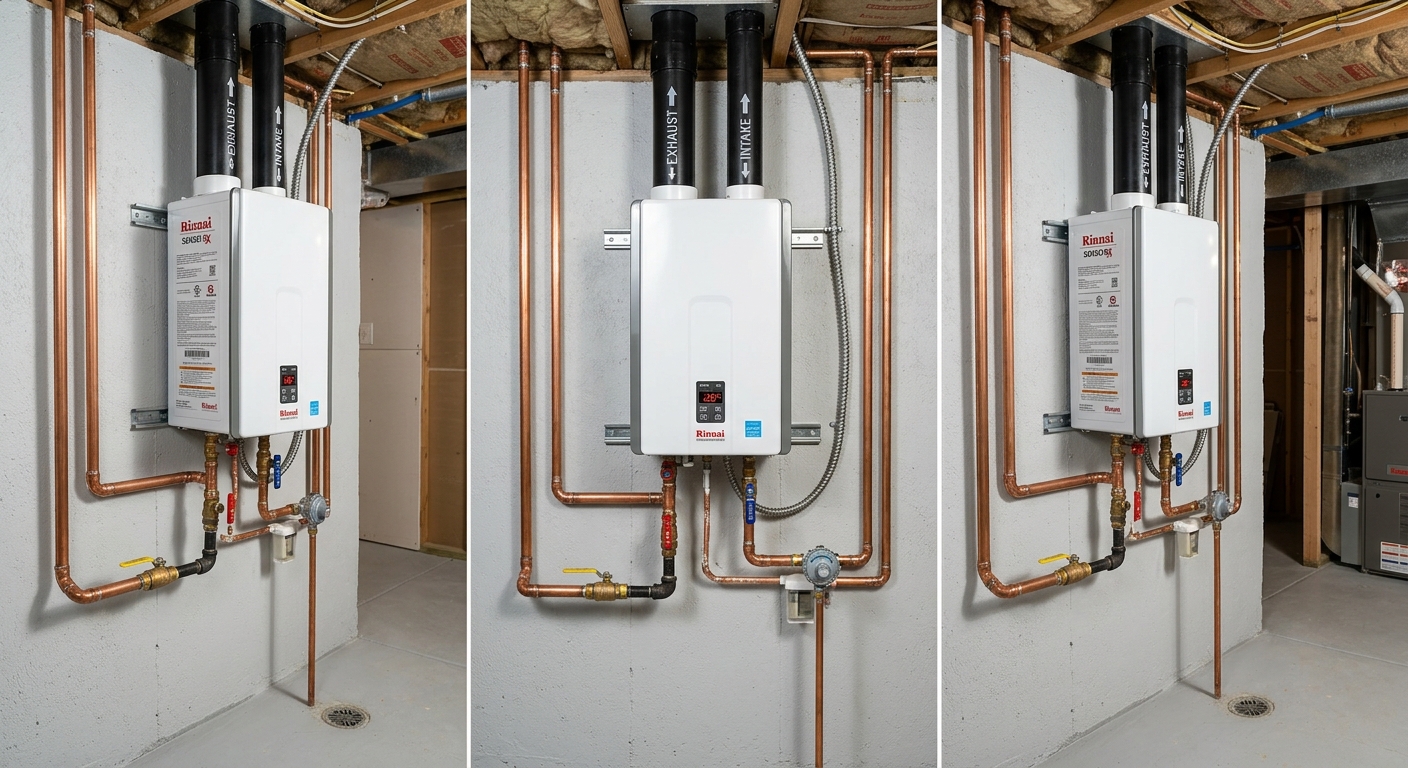
For most Harrisburg homes, the decision between tank, tankless, and heat pump water heaters is about balancing cost, longevity, and practicality for your space. Standard gas or electric tank heaters are the least expensive to install and easiest to replace, with a life of 8–15 years. Their main drawbacks are higher operating costs from standby losses and taking up floor space. Tankless gas models offer endless hot water and much longer service lives, but the upfront installed cost is higher. Many Harrisburg houses—especially older ones—require a gas line upgrade or additional venting ($500 on top of the heater itself isn’t unusual), which surprises a lot of homeowners.
Heat pump water heaters deliver the lowest running costs since they use electricity far more efficiently, but you need enough space for air flow and they’re best for semi-conditioned areas. They cool the room where they sit and can be noisy, so if your basement is finished or serves as living space, tank or tankless may fit better. Whatever model you pick, size it by the first-hour rating—how much hot water it can deliver at peak—rather than tank size. Expansion tanks are code-required when you have a new pressure-reducing valve or backflow preventer. Always use a pan and drain to avoid flood damage. Most water heater failures are tank leaks, not control issues, so replacement is the only solution when it starts to seep.
| Type |
Installed cost |
Service life |
Operating cost |
Best when |
| Gas tank, 40–50 gal |
$1,150–$2,600 |
8–12 yrs |
moderate |
Existing gas, unfinished basement |
| Electric tank, 40–50 gal |
$1,150–$1,800 |
10–15 yrs |
high |
No gas line, simple swap |
| Gas tankless |
$1,800–$2,600 |
18–25 yrs |
low-moderate |
Continuous use, existing large gas line |
| Heat pump water heater |
$1,800–$2,600 |
13–15 yrs |
lowest |
Large, warm unfinished basement |
The point where patching stops making sense
If you’ve had two or more leaks in three years on the same piping material—especially copper or galvanized—it’s time to stop patching and consider a partial or full repipe. Isolated leaks in modern materials can usually be repaired, but repeated failures are a sign of systemic deterioration. Watch for falling pressure throughout the house (not just at one faucet), water that’s discolored after sitting for hours, or visible corrosion and pinholes at exposed joints. In Harrisburg’s pre-1980 housing, these are not one-off flukes, they’re warning shots.
In Lower Paxton Township’s post-war tract homes, it’s common for original copper to reach the end of its service life around now, prompting copper-to-PEX repipes. Around Uptown, galvanized supply pipes or old lead service lines are still in place on many blocks. When you do repipe, remember the total cost includes not just plumbing labor but wall and ceiling repairs. Plaster restoration in older homes can rival the cost of the repipe itself.
| Situation |
Recommendation |
Cost |
Reasoning |
| One leak, accessible, modern pipe |
Spot repair |
$325–$1,150 |
Problem is isolated, pipe is otherwise sound |
| Two or more leaks in 3 years |
Partial repipe |
$3,300–$5,400 |
Repeating leaks signal widespread issue |
| Galvanized supply, pressure loss |
Full repipe |
$3,300–$8,000 |
Galvanized pipes clog and corrode from inside |
| Polybutylene anywhere in the house |
Full repipe |
$3,300–$8,000 |
Material fails suddenly and can't be reliably patched |
| Cast iron drain with root intrusion |
Camera, then reline or replace |
$1,900–$11,500 |
Roots mean joints have already failed |
| Suspected lead service line |
Test, then replace the lateral |
$5,200–$11,500 |
Lead puts health and property at risk, replacement is permanent |
What a plumbing quote should contain
Harrisburg plumbers use two main models for quoting: flat rate and time-and-materials. Flat rate means you get the exact price for a defined scope—no matter how long it takes, which puts the risk on the contractor. Time-and-materials can save you money on a straightforward job but turns unpredictable fast on anything complicated. Neither is misleading by itself, but you need to know which agreement you’re signing—most disputes stem from that confusion, not dishonesty. A typical Harrisburg quote will show a diagnostic fee (sometimes credited back if you do the work), spell out what gets opened, which surfaces will be restored, and whether the price includes permits and city inspections. Plaster and drywall repairs should be itemized; otherwise, you’ll be left patching walls at your own cost. Labor and parts warranties should be stated separately—one is not a substitute for the other. After-hours labor rates are usually higher, and that premium should be detailed on your estimate before any work begins.
| Line item |
What to look for |
Red flag if… |
| Billing model |
flat rate or hourly, stated up front |
unstated |
| Diagnostic fee |
amount, and whether it credits |
vague |
| Scope |
what is opened, repaired and restored |
price with no scope |
| Restoration |
drywall and finish explicitly in or out |
silent |
| Permit |
included and priced |
'not needed' |
| Parts |
brand and model for fixtures |
'standard fixture' |
| Warranty |
labour period stated separately |
parts only |
Licensing and permits for plumbing work in Harrisburg
Pennsylvania does not have a statewide plumbing licence system. Instead, licensing is handled at the municipal level. In Harrisburg, a plumber must be registered locally to pull permits; if you’re hiring for work in Harrisburg, verify local registration before signing a contract. The next township over may not recognize that same contractor’s credentials. For projects in Harrisburg, any plumbing system alteration beyond fixture replacement—such as moving or replacing water or drain lines—requires a permit from the Bureau of Codes, and all work must comply with the Pennsylvania Uniform Construction Code (UCC) based on the IRC, enforced by the Harrisburg Department of Building and Housing Development Bureau of Codes. In Derry Township, minor fixture swaps by homeowners often proceed without a permit for owner-occupied single-family houses. Always verify your plumber’s Home Improvement Contractor (HIC) registration at hic.attorneygeneral.gov and their workers’ compensation coverage via WCAIS (wcais.pa.gov) before signing. A written contract is required for jobs over $500, per HICPA, and you have three business days to cancel. Never allow a contractor to waive your homeowner’s insurance deductible—this is prohibited by law.
Frequently asked questions — plumbing in Harrisburg
Does Pennsylvania license plumbers at the state level?
No, Pennsylvania does not issue a statewide plumbing license. Plumbing is regulated at the municipal level. For work in Harrisburg, the city requires local contractor registration in order to pull plumbing permits; Dauphin County itself does not issue a countywide plumbing license, so you need a plumber registered specifically in Harrisburg for projects there. If you’re hiring for a project expected to cost over $500, contractors must be registered as a Home Improvement Contractor (HIC) with the Pennsylvania Office of Attorney General. Always check registration before work begins—for HIC at hic.attorneygeneral.gov and for insurance at wcais.pa.gov—to avoid being caught with a plumber who cannot pull the correct permits for your city.
How do I shut off the water to my house?
In most Harrisburg homes, the main shut-off valve is found where the water service enters the building—usually in the basement, close to the wall facing the street. In older parts of the city or in post‑1950 tract homes, it may be a wheel-type valve or a lever. To shut off the water in an emergency, turn the valve clockwise until it stops. Some older valves may not close entirely due to mineral buildup or corrosion, which is common in pre-1980 housing stock that makes up 87.6% of Harrisburg’s homes (U.S. Census Bureau, ACS 2024). If your valve doesn’t work, or if you have an active leak that continues after shutting it off, an emergency repair call typically ranges from $550–$1,150. If you’re replacing the valve, consider upgrading to a quarter-turn brass ball valve for reliability.
Is a tankless water heater worth it in Harrisburg?
Tankless water heaters can be a good fit in some Harrisburg homes, offering endless hot water and a longer service life—typically 18–25 years compared to 8–12 for a standard gas tank. However, installation is almost always more expensive, especially if your home needs a larger gas line or new venting, which is common in older Harrisburg construction. The installed cost runs $1,800–$2,600. You save on long-term operating costs if you use a lot of hot water—like a large family with back-to-back showers—but most smaller households or those with existing tank systems may not see payback before the unit needs replacement. In short, unless you specifically need endless hot water or face space constraints, a standard tank heater may be the more economical choice in Harrisburg’s market.
Who pays to replace a lead service line in Harrisburg?
In Harrisburg, responsibility for service line replacement is typically split. Capital Region Water is actively working to replace lead lines in the city, but in most cases, property owners are liable for the segment of pipe from the curb into the home, while the utility may cover or assist with replacement in the public right-of-way. Replacement of a private lead service line from street to house costs $5,200–$11,500. Some utility-provided cost sharing or grant programs might be available depending on project timing and neighborhood. Always confirm responsibility with Capital Region Water before beginning work and never delay, because lead pipes are a documented health risk, especially in houses predating 1980, which make up most of the city.
Why do all my drains drain slowly at once?
If every drain in your Harrisburg home is slow, the problem is almost always downstream of your fixtures—either in the main house drain or the sewer lateral running out to the street. Build-up inside old cast iron, root intrusion into clay laterals (very common in Lower Paxton and city neighborhoods), or a partial blockage from years of waste will slow drainage across the whole house. A proper main line cleaning, typically done by auger or hydro-jet (sometimes with a camera inspection), usually resolves this and costs $350–$800 as an emergency call or $200–$500 if scheduled. If the problem returns or the pipe is damaged, a spot repair or full replacement may be needed. Persistent slow drains are worth addressing promptly; wet basements from drain backups are no fun in this area.
How much does a water heater replacement cost in Harrisburg?
In Harrisburg, a standard replacement for a gas or electric tank water heater (40–50 gallon) typically costs between $1,150–$2,600, depending on the difficulty of access, location in the home, and any code upgrades needed—such as adding a pan, expansion tank, or upgrading venting. Tankless and heat pump water heater installations fall between $1,800–$2,600. Older homes may need additional electrical or gas work, increasing the total. On average, most Harrisburg homeowners pay around $1,800 for a quality install that includes removal of the old heater, installation, testing, and hauling away debris. Always ask if the quote includes disposal, city permits, and any required upgrade for code compliance.
Should I leave a faucet dripping in cold weather?
Leaving a faucet dripping during freezing weather is a short-term solution used in Harrisburg’s older homes—especially those with pipes running through unconditioned porches, crawl spaces, or exterior walls—because it helps prevent freeze-ups during severe cold snaps. The winter design temperature here is 12°F, and freeze-thaw cycles are pronounced. However, a drip isn’t a guarantee and wastes water. Your long-term solution should be insulating vulnerable pipes or rerouting exposed lines during a renovation. If a pipe does burst, emergency repairs run $550–$1,150. Fixing the insulation is cheaper than repeated emergency calls, especially given how many houses in Harrisburg predate modern insulation standards.
Which utility supplies water to Harrisburg?
Capital Region Water is the public utility supplying potable water and managing wastewater services for Harrisburg. If you need to report a main break, request a water quality report, or ask about lead service line replacement programs, start with them. In surrounding rural parts of Dauphin County, the water supply may come from individual wells, and no public water quality report is issued for private wells. For homeowners in Harrisburg itself, any changes to your water service or scheduled outages will come through Capital Region Water. If you are paying for water or sewer service in town, it comes from this utility, and they or their contractors will replace any public side service lines as part of their ongoing upgrades.
How much does sewer line repair cost in Harrisburg?
Sewer line repairs in Harrisburg range widely depending on the length, depth, and location of the problem. A spot repair—where a single damaged section is excavated or relined—costs between $1,900–$11,500. Typical jobs land around $5,200, especially in Lower Paxton’s post‑1950 homes with original clay or cast iron laterals. Root intrusion, ground shifting from freeze-thaw cycles, or collapse in older lines are the big culprits. The quoted price should include restoration of any disturbed yard or pavement and clear camera footage showing the issue before digging. Always make sure your contractor pulls the required city permit and arranges a post-repair inspection from the Bureau of Codes.