Plumbing costs in Tredyffrin — 2026
Tredyffrin’s plumbing costs in 2026 reflect its suburban housing stock, where owner occupancy is high (74.7%) and most homes (63.4%) were built before 1980 (U.S. Census Bureau, ACS 2024). What’s unusual for this part of Chester County is the overlap between older copper and iron systems and a wave of 1960–2000 tract homes with original PVC or PEX supply lines. That construction era predicts pipe material, and pipe material is what drives costs: what leaks, why it leaks, and how disruptive it will be to fix.
For any plumbing job, the price divides into two bands—an emergency call (burst pipe, active leak) versus a scheduled or standard repair. Emergency rates reflect the need to drop everything and restore working water or stop an ongoing leak: after-hours labor, fast response, and higher risk. Standard rates assume you can wait for a regular time slot. The same repair—say, a split copper elbow or a dead water heater—will cost more at 9 pm on a Sunday than at 10 am midweek, sometimes double if restoration crews are involved for flood dry-out.
| Service |
Scope |
Emergency rate |
Standard rate |
| Emergency repair — burst pipe |
locate, open, repair section, restore service |
$750–$1,500 |
$425–$1,500 |
| Water heater replacement (gas, 40–50 gal) |
remove old, install, test, haul away |
$2,300–$3,400 |
$1,500–$3,400 |
| Drain cleaning — main line |
augering or hydro-jet, camera if needed |
$350–$800 |
$200–$500 |
| Sewer line spot repair |
excavate or reline a failed section |
$2,500–$15,000 |
$2,500–$15,000 |
| Whole-house repipe |
replace supply lines throughout, patch and finish |
$4,300–$10,500 |
$4,300–$10,500 |
| Water service line replacement |
street to house, excavation and restoration |
$6,800–$15,000 |
$6,800–$15,000 |
Estimates for a typical Tredyffrin home. Access difficulty and pipe material move these figures more than anything else.
Plumbing systems in Tredyffrin homes
Tredyffrin’s plumbing reflects the surge in Chester County development from the 1960s through 2000. If your home falls into that era, you’re most likely dealing with original copper supply lines and PVC or, in later years, PEX for new installs and repairs. The pre-1980 percentage—63.4% of homes—means a substantial share still have cast iron drains and maybe even a clay tile sewer lateral running out to the street. In the oldest stretches, you’ll encounter galvanized steel, which has now exceeded its typical life if not already replaced. Seeing aging copper under your sinks or an original square-bodied “auto-vent” under the kitchen means you’re in the heart of these postwar-to-late-century builds.
Sewer lines connected to public systems from this era would often have clay tile through the 1970s, with PVC arriving as the cost-effective favorite by the 1980s onward. For water service, copper was dominant but not universal, with the rare but consequential exception of lead supply lines—now under 1% per recent Aqua Pennsylvania surveys. Most water heaters in Tredyffrin homes are not original by any means; with the average tank lasting around 10–15 years, the typical house is on its second or third by now, especially if built before 1980. In newer suburban developments, the list of worries is different—original builder-grade fixtures wearing out, and occasional sections of problematic polybutylene supply for homes built late in the transition window. A water heater pushing past its design life or an aging section of PVC main line are routine calls.
Pipe materials in Tredyffrin homes and how they fail
Large tracts of Chester County built from 1960 to 2000 mean a mix of materials, each with their own failure signature. Pre-1960 homes have galvanized steel supply lines—gray, threaded, and a magnet will stick—prone to corrosion that gradually closes the pipe from inside, dropping pressure before any visible leaks start. Copper, which dominates homes from the 1950s to the present, is usually joined by soldered elbows and has a signature coppery color you can reveal by scratching off oxidation, but it can develop pinhole leaks over time, especially if the water chemistry is aggressive.
Polybutylene, found mostly in homes from the late 1970s through the mid-1990s, is gray or blue plastic, often marked "PB", with crimped metal rings at the fittings. It is notorious for unpredictable, catastrophic failure at those joints, leading many insurance companies to balk at coverage. PEX became common from the 2000s onward—red, blue, or white flexible tubing—lasting well if protected from sunlight, but like all plastics, vulnerable at the fittings and if mishandled during installation.
On the drain side, pre-1975 homes have thick, dull-black cast iron stacks and branches, which corrode from the inside and often crack as they hit 50 to 75 years. Clay tile sewer laterals—orange, joined every 3–4 feet—are found in many pre-1980 installs, failing first at the joints with root penetration. Since the 1970s, PVC (white) and, less often, ABS (black) plastic drain lines have become the standard, with much longer service lives but occasional issues from poor bedding or joint separation.
| Material |
Typical era |
Failure mode |
Service life |
| Galvanized steel supply |
pre-1960 |
internal corrosion, pressure loss |
40–60 yrs |
| Copper supply |
1950s–present |
pinhole leaks, joint failure |
50–70 yrs |
| Polybutylene supply |
late 1970s–1995 |
fitting failure, sudden bursts |
unreliable |
| PEX supply |
2000s–present |
fitting or UV degradation |
40–50 yrs |
| Cast iron drain |
pre-1975 |
corrosion, cracking, scale |
50–75 yrs |
| Clay tile sewer lateral |
pre-1980 |
root intrusion at joints, offset |
50–60 yrs |
| PVC / ABS drain |
1970s–present |
joint separation, crushing |
50+ yrs |
Who is allowed to do plumbing work in Pennsylvania
Pennsylvania does not issue a statewide plumbing license. Plumbing contractor licensing is handled at the municipal level. This means that a plumber licensed in a city like Philadelphia may hold no credential in Tredyffrin Township or any other Chester County municipality. For homeowners, it’s more important to ask if a contractor is registered or authorized to work where your property is located. Some Chester County townships, such as Westtown Township and those immediately surrounding West Chester Borough, have their own plumbing contractor registrations separate from any city certifications.
In Chester County, code enforcement operates by municipality. West Goshen Township, for instance, requires a township plumbing permit for any new or replacement work connected to public water or sewer. Permits are generally inspected by the local code office, so you’ll want a contractor familiar with your township's approval process. The residential code followed is the Pennsylvania Uniform Construction Code, based on the IRC and enforced by each municipality (or by the state only if the township opts out).
For contracts over $500, Pennsylvania requires Home Improvement Contractor (HIC) registration from the Office of Attorney General; you can verify a contractor’s HIC at hic.attorneygeneral.gov. Workers’ compensation insurance is required for all employers—confirmation can be found through WCAIS (wcais.pa.gov). If you’re in a pre-1978 home and disturbing paint, federal Lead RRP applies and you should check for EPA certification. Always require a written contract over $500, as outlined by the Home Improvement Consumer Protection Act.
Spot repairs or whole-house repipe?
If you’ve had two or more leaks over three years in the same piping material—especially on copper, galvanized, or polybutylene—you’re seeing a pattern, not a run of bad luck. Falling pressure throughout the house, rather than just one fixture, is a strong sign that supply piping is failing from the inside out. Discolored water at the first draw, visible blue-green or rust deposits at exposed joints, or repeated pinhole leaks are all signals that spot repairs will only delay—and possibly increase—the total cost of a full fix.
The practical choice in Tredyffrin often comes down to copper versus PEX for a repipe. PEX is now the market standard, especially in Chester County’s mix of finished basements and multi-story homes, due to its flexibility and faster install time. Copper still sees use for visible runs, but it’s more expensive and less forgiving of water chemistry. Homeowners often overlook the significant cost of drywall and plaster repair—especially if you’re opening up older walls or ceilings. In a home with original plaster, the restoration can rival the plumbing labor, especially if not explicitly included in the plumbing quote.
The 1960–2000 construction wave fills Tredyffrin with homes now at the point where copper is aging out and polybutylene—where present—should be considered uninsurable right away. Sewer issues are often clay or cast iron at the lateral (street connection), and those nearly always signal a more substantial repair or replacement.
| Situation |
Recommendation |
Cost |
Reasoning |
| One leak, accessible, modern pipe |
Spot repair |
$425–$1,500 |
Isolated fix, material is not at end of life |
| Two or more leaks in 3 years |
Partial repipe |
$4,300–$7,000 |
Sign of systemic failure, especially on copper or galvanized |
| Galvanized supply, pressure loss |
Full repipe |
$4,300–$10,500 |
Near end of service life, poor water quality and flow |
| Polybutylene anywhere in the house |
Full repipe |
$4,300–$10,500 |
Systemic failure and high insurance risk |
| Cast iron drain with root intrusion |
Camera, then reline or replace |
$2,500–$15,000 |
Roots signal failed joints or cracks, repair will be extensive |
| Suspected lead service line |
Test, then replace the lateral |
$6,800–$15,000 |
Lead lines should be replaced for health and insurance reasons |
Comparing plumbing estimates in Tredyffrin
In Tredyffrin, reputable plumbers quote jobs using either a flat rate (fixed price for the whole job) or a time-and-materials model (hourly labor plus parts). Flat rate means you know the cost up front—this favors the customer on complicated jobs but includes the contractor’s risk premium. Time-and-materials can be the cheaper option if access is easy or a repair is minor but risks overruns if unforeseen work is uncovered. Trouble comes when a homeowner signs without knowing which model is in play, or when crucial details are missing from an estimate.
Look for a diagnostic fee—most charge one for assessment, which may be credited toward work if you proceed. A good estimate spells out the scope (what gets opened, fixed, and closed up), states whether wall and floor restoration are included or excluded, and specifies permit costs. On a repipe or fixture install, the brand/model of major parts should be listed. The quote should also break out the labor warranty, not just manufacturer’s coverage. Ask if rates differ after hours or weekends—those can double a bill if you run into trouble late in the day.
| Line item |
What to look for |
Red flag if… |
| Billing model |
flat rate or hourly, stated up front |
unstated |
| Diagnostic fee |
amount, and whether it credits |
vague |
| Scope |
what is opened, repaired and restored |
price with no scope |
| Restoration |
drywall and finish explicitly in or out |
silent |
| Permit |
included and priced |
'not needed' |
| Parts |
brand and model for fixtures |
'standard fixture' |
| Warranty |
labour period stated separately |
parts only |
Detection methods and what they cost
If you suspect a leak in your Tredyffrin home, start free: shut off every fixture and appliance that uses water, then check your water meter. If the dial moves, you have a supply-side leak—no tools or tech needed, just some patience. Beyond that, professional plumbers deploy a range of detection tools suited to Tredyffrin’s mix of slab-on-grade homes, tight wall cavities, and underground pipe runs.
Acoustic listening (using sensitive mics) helps pinpoint leaks within walls or under floors and is usually bundled into the diagnostic portion of a call—expect this as part of a visit in the $425–$1,500 range if an urgent leak is being traced. Thermal imaging spots temperature anomalies, helping find hot water leaks behind drywall for similar cost. Tracer gas (introducing a harmless gas into the line and searching for its escape with a sniffer) is reserved for especially hidden supply leaks and usually involved in jobs nearing the upper end of the emergency repair range. Slab leak detection—common on homes where pipes run under concrete—requires both listening and imaging, and often drives up labor costs further.
Leaks inside walls, behind tubs, or underground should be located before any demolition—if a plumber wants to start by blindly opening walls, stop and get a second opinion. The best approach always finds the leak before the repair starts, minimizing unnecessary damage and cost.
Frequently asked questions — plumbing in Tredyffrin
What does drain cleaning cost in Tredyffrin?
Drain cleaning in Tredyffrin ranges from $200–$500 for a standard main line auger or snaking, up to $350–$800 or even more for emergency hydro-jetting. Most homes here have long main drains out to the street, often PVC or aging cast iron, so access quality matters—a cleanout near the house keeps the lower end of the price realistic. Blockages from tree roots or collapsed clay tile will push the cost higher and may require camera inspection, which sometimes adds another modest fee. The price also jumps if it’s an after-hours or weekend emergency, so if water is backing up into the basement late at night, expect to land nearer the top of the band. For a routine slow drain, most Tredyffrin plumbers won’t push for the heavy equipment unless a simple snake doesn’t clear it. Always ask if the price includes camera inspection if you suspect a reoccurring problem or roots.
Who owns the sewer lateral, me or the city?
In Tredyffrin and the rest of Chester County, the homeowner is responsible for the entire sewer lateral from the house to the street connection. The local authority (not the city) typically maintains the public main in the road, but everything up to and including the connection is on the property owner. This is especially crucial if you’re dealing with an old clay tile or cast iron line. Repairs or replacements can be significant—spot repairs run between $2,500–$15,000 depending on severity and access. If you have frequent backups or are buying a house, a pre-sale camera inspection of the lateral is money well spent. This can prevent a very expensive surprise, especially with Chester County’s mix of aging infrastructure and mature trees.
How long should a water heater last in Tredyffrin?
The average life of a typical gas water heater in Tredyffrin is around 10–15 years, consistent with national trends. Many homes here are on their second or third tank, especially those built before 1980 when the first round of replacements happened decades ago. Local water conditions don’t dramatically shorten water heater life, but annual flushing (to prevent sediment from local water lines, often supplied by Aqua Pennsylvania) can help stretch it further. If your water heater is nearing its second decade or you see rust at the tank base, start budgeting for replacement. Installs typically cost $1,500–$3,400, with the higher end applying if access is tough or you need code upgrades for venting and pan. If your unit fails suddenly, you’ll be paying emergency rates at the top end.
Is a tankless water heater worth it in Tredyffrin?
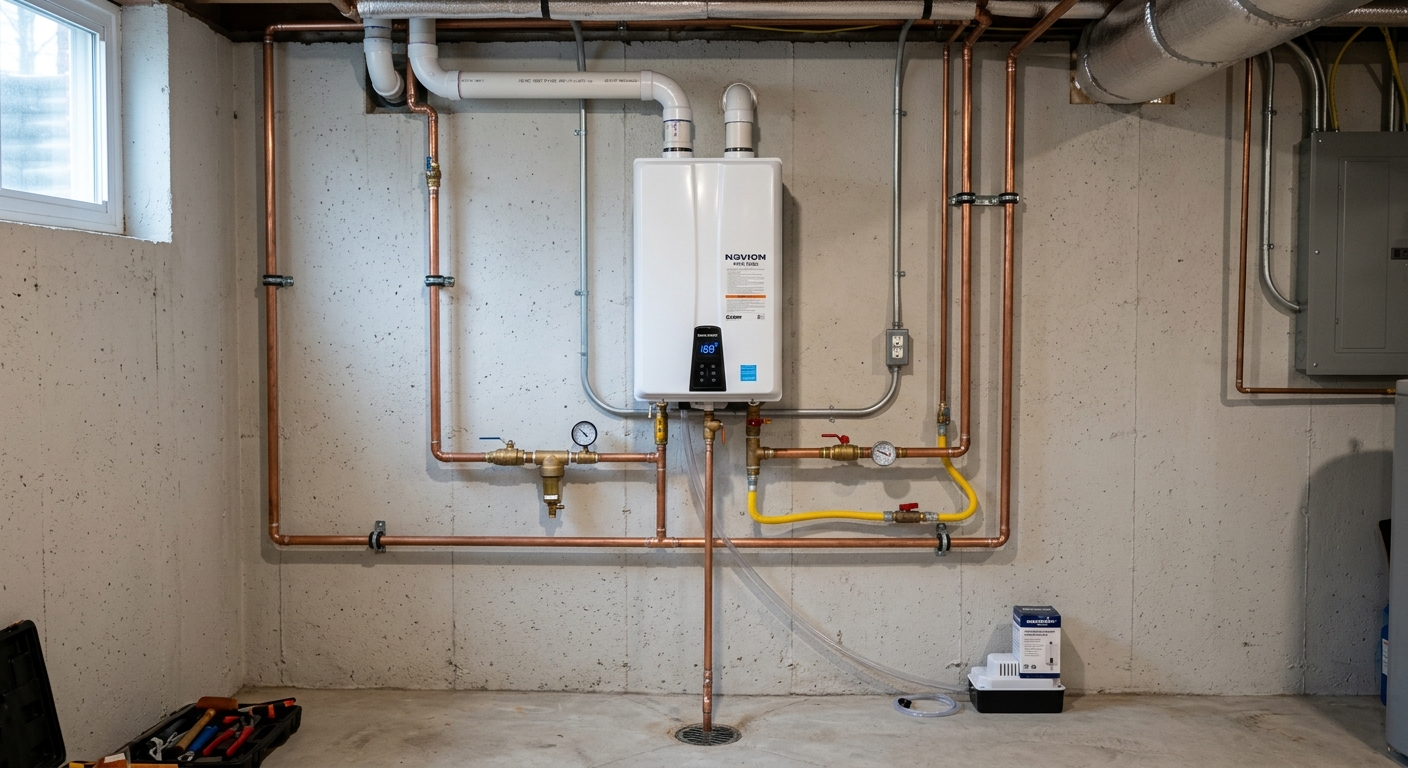
Tankless water heaters can make sense in Tredyffrin if you value endless hot water and are willing to pay a premium for installation. They generally cost more upfront—well above the $1,500–$3,400 range for standard tanks—but offer energy savings and a longer projected lifespan if properly maintained. For larger single-family homes (over half of the housing here), tankless models may require upgraded gas lines and potentially new venting to comply with local code (Pennsylvania Uniform Construction Code as administered by your township), adding to the cost. Yearly descaling is a must with southeastern PA’s moderately hard water. Tankless units are ideal if you have high peak demand or are remodeling. For most replacement situations, a conventional tank heater still offers a better return on investment, but tankless is a viable upgrade for the right household.
Are tree roots a common sewer problem in Tredyffrin?
Yes, tree roots in sewer laterals are a known problem in Tredyffrin, particularly in homes with original clay tile or cast iron lines—common in the large tracts built mid-century. Roots find their way into pipe joints, causing blockages and sometimes breaking the line completely. The telltale sign is repeated main line backups, slow floor drains, or gurgling from lower-level fixtures. Clearing roots by auger or hydro-jet will cost $350–$800, but persistent problems often indicate the need for a camera inspection and possibly a spot repair or even a full section replacement in the $2,500–$15,000 range. If you have mature trees in the front yard and original lateral pipe, it’s wise to be proactive: periodic cleaning and inspection can prevent extensive damage.
Does Pennsylvania license plumbers at the state level?
No, in Pennsylvania, plumbing licenses are issued by municipalities, not at the state level. Each city or township sets its own requirements and inspections. For Tredyffrin homeowners, this means a plumber licensed in Philadelphia or Pittsburgh is not automatically authorized to work in your township. Instead, check for local registration—some Chester County townships, including those near West Chester Borough, issue their own credentials. For any job over $500, make sure your plumber holds valid HIC registration from the Attorney General’s office (you can check at hic.attorneygeneral.gov). For a straightforward job, like an emergency pipe repair in the $425–$1,500 band, you’re looking for registration, solid insurance (verify through WCAIS), and experience with local permitting—not just a generic license.
Why do plumbers charge a diagnostic fee?
In Tredyffrin and elsewhere, most plumbers charge a diagnostic fee for coming out, inspecting the problem, and providing an estimate. This fee covers their time, use of tools (sometimes including camera scopes or thermal imaging), and travel expenses in a relatively dense market where homes are close but traffic can be unpredictable. For straightforward cases, this cost may be credited against the repair if you move forward with the work. For example, if you have a burst pipe and the repair runs $750–$1,500, it’s common for the initial visit fee to be rolled into the final bill. Upfront diagnostic charges discourage “free advice” calls and ensure the plumber is compensated for their expertise even if you decide to shop around. Always ask if the diagnosis charge will be applied to your repair cost.
Do I need to drain outdoor spigots in Tredyffrin?
Yes, draining and winterizing outdoor spigots is necessary in Tredyffrin to prevent freeze damage. Southeastern Pennsylvania regularly sees winter lows below 14 °F, and frost depth reaches 30 inches. Even frost-free sillcocks can split if hoses are left attached or water isn’t fully drained. A split spigot or burst section of pipe behind brick can easily cost $425–$1,500 to open, repair, and restore. In homes built since 1960, you may have dedicated shutoff valves inside—find these, shut them off, and drain the outside line fully. For older homes, budget for an upgrade to frost-proof fixtures if you tackle any plumbing work.
How do I shut off the water to my house?
Every Tredyffrin home will have a main shutoff valve—usually located just after the water line enters the house, often in the basement by the front foundation wall nearest the street. It’s a round wheel or lever handle mounted to copper, iron, or sometimes plastic pipe. Turning this valve clockwise (right) should stop all water in the house. Test it periodically so you’re not fighting a stuck valve in an emergency. Knowing where this shutoff is can mean the difference between a small spot repair and a $750–$1,500 flood from a burst pipe. If the valve is stuck, corroded, or you see old iron pipe, have it replaced the next time you have a plumber in—these failed shutoffs are a common source of avoidable water damage in Tredyffrin’s older housing stock.