What plumbers charge in Lower Gwynedd
Lower Gwynedd homeowners, like the rest of Montgomery County, see plumbing costs shaped by the area’s heavy concentration of 1950s-1970s suburban housing. Over half the homes here were built before 1980 (U.S. Census Bureau, ACS 2024), and the majority are single-family. That era predicts what’s in your walls—typically copper or galvanized steel supply pipes, with either cast iron or clay sewer lines. Those materials drive common failures: pinhole leaks, bursts in freezing weather, and slow-building blockages. Unsurprisingly, this keeps repipes, fixture swaps, and water heater replacements on most plumbers' schedules.
In Lower Gwynedd, the same job comes with two price tags: an emergency rate—charged when a problem can’t wait, often after-hours—and a standard, scheduled rate when you can put off repairs until regular business hours. The difference comes from overtime labor and the cost of rolling a truck immediately, not just the actual repair.
| Service |
Scope |
Emergency rate |
Standard rate |
| Emergency repair — burst pipe |
locate, open, repair section, restore service |
$700–$1,400 |
$400–$1,400 |
| Water heater replacement (gas, 40–50 gal) |
remove old, install, test, haul away |
$2,200–$3,200 |
$1,400–$3,200 |
| Drain cleaning — main line |
augering or hydro-jet, camera if needed |
$350–$800 |
$200–$500 |
| Sewer line spot repair |
excavate or reline a failed section |
$2,300–$14,000 |
$2,300–$14,000 |
| Whole-house repipe |
replace supply lines throughout, patch and finish |
— |
$4,000–$9,800 |
| Water service line replacement |
street to house, excavation and restoration |
— |
$6,300–$14,000 |
Estimates for a typical Lower Gwynedd home. Access difficulty and pipe material move these figures more than anything else.
What's in the water here
Lower Gwynedd’s public water comes from Aqua Pennsylvania, which is required to publish an annual water quality report—you should ask for the most recent version if you want specifics on minerals or contaminants. Hardness is fairly common in the region, and you’ll see the effects over time: scale on fixtures and tanks, reducing water heater efficiency and sometimes shortening fixture life. While truly aggressive water (which can pit copper pipe) isn’t widespread, it does occur in pockets, leading to pinhole leaks.
If you’re thinking about a water softener, the economics are mixed. The upfront and ongoing costs—purchase, salt, and maintenance—mean you’re not likely to “save” money over replacing fixtures on a typical cycle. Most Lower Gwynedd water is safe to drink as delivered, so whole-house filtration is a want, not a need, unless you prefer filtered taste or have a specific contaminant concern. Point-of-use filters under the kitchen sink or on the tap are a more cost-effective upgrade for taste or chlorine if you don’t need to treat every drop.
Septic and private well water are rare, but if you do have a private well, remember: nobody is automatically testing or treating that water for you. You need to arrange regular testing yourself. Expensive “miracle” filters are oversold here—stick with proven, certified products, and never spend more than you have to just for peace of mind.
When to call now and when to wait until Monday
Emergency plumbing in Lower Gwynedd comes at a premium, often adding $300–$600 to a typical repair because you’re paying for overtime labor, a rush dispatch, and diagnosis in a hurry. The emergency rate can nearly double your cost, as with a burst-pipe repair running $700–$1,400 in an emergency versus $400–$1,400 if scheduled during normal hours. That’s not just labor; it’s also about the disruption, and “dropping everything to roll a truck” when demand is highest.
Here’s how to triage:
- Drop everything and call now: Water gushing or flooding, no water at all, sewage backing up in the house, or a gas smell from your water heater—these can’t wait.
- Can usually wait until Monday: Slow drips, one fixture not draining, a running or “ghost” flushing toilet, or a slow hot water loss. These are inconvenient, not emergencies.
You’ll often save hundreds—real money—by shutting off the water and waiting. Here’s how:
- Locate your main shutoff: usually in the basement near where the water line enters. Turn clockwise to close.
- Every sink and toilet has its own shutoff (oval valve below the fixture). Turn that off to localize the problem and keep the rest of the house running.
This single skill can turn a costly emergency into a scheduled, standard-rate job—and helps avoid water damage before help arrives.
Freeze risk and what to do about it
Lower Gwynedd sees a frost depth of 30 inches and a winter design temperature of 14 °F. That, along with the region’s moderate freeze-thaw cycles, means pipes in vulnerable spots—like exterior walls, unheated crawlspaces, garages, and hose bibs—are at risk every winter. Most bursts don’t happen at the exact frozen spot. Instead, an ice plug forms, and increasing pressure between the blockage and a fixture with the tap closed causes a split somewhere downstream.
Watch out for supply lines in unconditioned attics or run along outside walls. Prevention is about layers:
- Add pipe insulation—cheap and effective for any accessible, cold-prone run.
- Use heat tape on problem areas (especially crawlspaces and garages).
- If a deep freeze is forecast, let a faucet trickle; moving water resists freezing.
- Open cabinet doors below sinks to allow room heat to reach pipes.
- Shut off and drain outdoor spigots and hoses before the first hard freeze. This is a five-minute DIY and stops many spring leaks.
If a pipe does freeze, use a hair dryer, portable heater, or warm towels to thaw. Never use an open flame or torch—aside from the fire hazard, it can actually cause steam pressure that splits the pipe.
The aftermath of a burst often lands in the $700–$1,400 repair band. A few minutes spent preventing and knowing how to react saves both money and a bigger headache.
Plumbing systems in Lower Gwynedd homes
With most Lower Gwynedd homes built before 1980 (U.S. Census Bureau, ACS 2024), you’re likely living with original copper or galvanized steel supply pipes, and cast iron or (less often) clay tile drains. Many sewer laterals are clay, which means root intrusion and offset joints—the usual culprits behind backups and spot repairs.
Service lines from the street vary based on the home’s age: older homes might have copper or even a short run of galvanized, while 1970s and newer builds tend toward copper or early plastics. If you haven’t repiped, you’re probably on your second or even third water heater. Original water heaters from the 1960s-’70s are long gone, with newer replacements now reaching their expected end of life at 8–15 years. Fixture changes are also routine in this area, driven by wear and aesthetic updates, with decades-old plumbing behind the scenes.
Younger pockets of housing (1970s and newer) might still hold builder-grade fixtures, with the real risk being pipes in locations never meant to freeze, and water heaters that look OK but are just waiting for the next cold snap to give out.
Verifying a Lower Gwynedd plumber's credentials
Pennsylvania does not issue a statewide plumbing license; instead, it’s up to each municipality. That means a plumber licensed in Philadelphia or Norristown may have no standing in Lower Gwynedd unless they’ve completed local requirements. So your question isn’t “are you licensed?” but “are you licensed to work here, in Lower Gwynedd?”—and you should ask plainly.
Any contract over $500 requires a Home Improvement Contractor (HIC) registration from the Pennsylvania Office of Attorney General. You can (and should) verify this at hic.attorneygeneral.gov before you sign anything. For plumbing that changes anything behind the wall—water heaters, pipe replacements, system repairs—a permit is required by your township, and the work will be inspected by the municipal code office, which uses the Pennsylvania Uniform Construction Code (UCC) as its standard.
Insurance and workers’ compensation are non-negotiable. Every employer in Pennsylvania is required to carry workers’ compensation; if you want proof, check through the WCAIS system (wcais.pa.gov). For work in homes built before 1978, lead safety isn’t a nice-to-have—it’s the law. Make sure your contractor is EPA Lead RRP certified, and check at certifiedrenovatorsearch.epa.gov. Don't be afraid to ask for these documents; a real pro is never surprised by the question.
Water heater replacement decisions
Most Lower Gwynedd homes have gas service available, but expect to see both gas and electric tanks in basements and utility closets. Here’s the honest break-down on replacement choices. A standard gas tank water heater is the cheapest up front and has the shortest service life—typically 8–12 years. There’s some standby heat loss, but for families who don’t want to think about hot water, it’s the default. Electric tanks cost a bit less to install and last a few years longer, but operating costs are high; expect to pay more every month, especially if your hot water use is heavy.
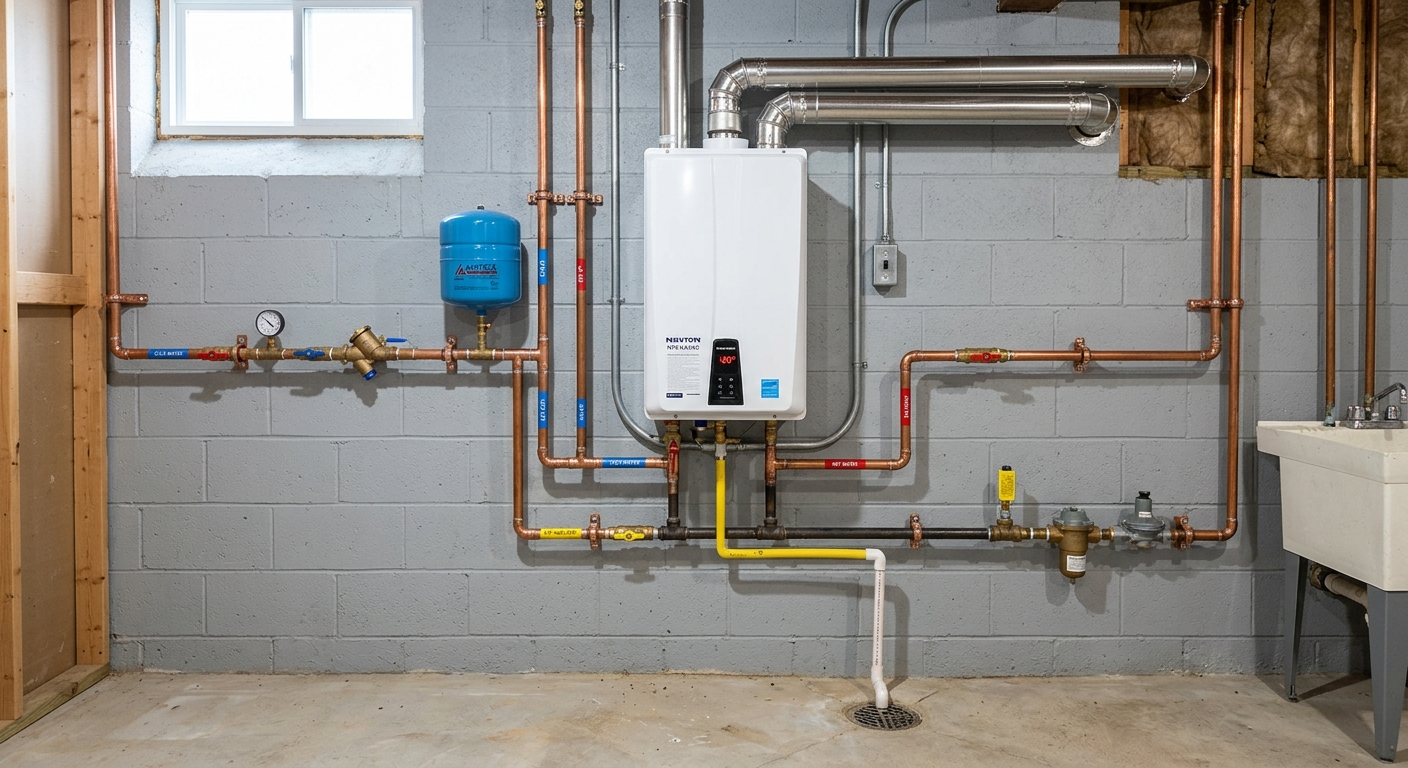
Tankless (on-demand) gas units offer endless hot water and run efficiently—but installation almost always requires a larger gas line and vent upgrade, which can push total costs toward the top of the price band. These make sense for bigger households or those with high hot water needs, but the payback is slow unless you’re replacing an old tank at the end of its life already. Heat pump water heaters are the most efficient, but need enough space for air circulation and do best in a warm basement or utility room (not a tight, cold closet). They cool the room they’re in and make a noticeable hum—factors if you’re finishing a Lower Gwynedd basement.
What matters more than tank size is the “first-hour” rating—how much hot water it can deliver quickly. Always ask for an expansion tank (required by code in most cases), and make sure you’ve got a pan and drain if it’s above finished space. When water heaters fail, it’s almost always the tank rusting out—controls last much longer.
| Type |
Installed cost |
Service life |
Operating cost |
Best when |
| Gas tank, 40–50 gal |
$1,400–$3,200 |
8–12 yrs |
moderate |
Standard replacement, families of 2–5, basement or utility closet |
| Electric tank, 40–50 gal |
$1,400–$2,200 |
10–15 yrs |
high |
No gas available, lighter hot water use, quick install |
| Gas tankless |
$2,200–$3,200 |
18–25 yrs |
low-moderate |
High hot water demand, whole house, ready for vent/gas line work |
| Heat pump water heater |
$2,200–$3,200 |
13–15 yrs |
lowest |
Plenty of basement space, lowest running costs, electric only |
Frequently asked questions — plumbing in Lower Gwynedd
How much does a plumber cost in Lower Gwynedd?
Plumbing costs in Lower Gwynedd reflect both the local housing stock and the high density of experienced contractors working the area. For a common emergency, like a burst pipe, you’ll pay between $700–$1,400 for a same-day response, with repairs during normal business hours falling into the $400–$1,400 range. Standard scheduled services, such as a water heater replacement, typically runs $1,400–$3,200. Minor drain cleanings are less—often $200–$500. Material access and age drive costs; many homes here were built before 1980 (U.S. Census Bureau, ACS 2024), which means working with older pipes tucked in finished spaces, sometimes raising the price if repairs require cutting open walls or patching after.
What causes low water pressure in Lower Gwynedd homes?
In Lower Gwynedd’s mostly pre-1980 housing, low water pressure is usually a sign of mineral buildup inside old galvanized or steel pipes, or partly closed shutoff valves after emergency repairs. Sometimes it’s an issue at the fixture, but with so many older service lines in the ground, corrosion or pinhole leaks in the main supply line can also be the culprit. If your whole house pressure is low and you’re on public water, it’s worth asking your neighbors first—it could be a utility-side event. Otherwise, a plumber can diagnose with pressure gauges and, in most cases, fix the problem with a targeted repair. Full service line replacements fall in the $6,300–$14,000 range, but most pressure issues are fixed for far less.
What do I do if sewage is backing up?
In Lower Gwynedd, almost all homes have municipal sewer service. If you notice sewage coming up in a floor drain or lower-level fixture, stop all water use immediately. Check if it’s a single fixture or the whole house. If everything is backing up, call a plumber for an emergency drain clearing—this runs about $350–$800 in an emergency. Don’t delay; sewer water is hazardous, and a backup can quickly cause thousands in damage to finished basements. Once the immediate blockage is cleared, a camera inspection should be done to look for root intrusion or collapsed clay pipe—a known risk in the area’s older systems.
Do I need to drain outdoor spigots in Lower Gwynedd?
Absolutely. With a frost depth of 30 inches and regular winter lows in the teens, outdoor hose bibs and any pipes running through unconditioned spaces are at real risk every year. If you skip draining and shutting off exterior spigots, you risk a burst pipe as the ice expands and splits the copper inside your wall—leaks that can cost $700–$1,400 to repair once water starts running in the spring. This simple maintenance takes five minutes in the fall and can save a full emergency call later.
How do I verify a plumber's licence and insurance?
In Pennsylvania—and specifically for Lower Gwynedd—plumbers are not licensed statewide, but registered locally by each municipality. Before signing any contract over $500, ask for the plumber’s Home Improvement Contractor (HIC) registration number and check it at hic.attorneygeneral.gov. Always verify proof of workers’ compensation insurance through WCAIS (wcais.pa.gov). For homes built before 1978, confirm EPA Lead RRP certification at certifiedrenovatorsearch.epa.gov. If a plumber can’t provide these, keep looking—especially with emergency work, where you might pay a premium of $700–$1,400 and want peace of mind you’re protected.
Who owns the sewer lateral, me or the city?
In Lower Gwynedd and the rest of Montgomery County, the homeowner is responsible for the sewer lateral from the building to the municipal main, even if part of that line is under the sidewalk or street. If a blockage or collapse happens in your portion, all repair costs—including excavation—fall to you. Spot repairs on these lines can range from $2,300–$14,000 depending on depth, access, and what’s overhead. Only the main under the street falls on the city or township, so insurance or a lateral warranty is worth considering for older homes here.
What does emergency plumbing cost in Lower Gwynedd?
Emergency rates here mean premium pricing. Most service calls that can’t wait until normal hours—active leaks, total water loss, sewage backups—fall between $700–$1,400 for a quick repair. You’ll pay more due to after-hours labor, immediate parts runs, and triage in high-pressure situations. For drain clogs, emergency augering or hydro-jetting might be in the $350–$800 range, versus less if scheduled outside of peak hours. Planning ahead whenever possible keeps your costs toward the low end of these bands.
Repair or replace a leaking water heater?
In most Lower Gwynedd homes—especially those built before 1980—if your water heater is leaking from the tank itself, it’s time to replace. Tank failures aren’t repairable; fixes to controls, thermostats, or relief valves are possible, but actual leaks mean rust has won. Expect a replacement cost of $1,400–$3,200 for a standard 40–50 gallon gas unit. If your unit is more than 8–12 years old, replacement almost always makes more sense. If it’s a valve or fitting leak and the tank is younger, a repair may suffice, often for just service call labor.
Do older Lower Gwynedd homes have galvanized pipes?
Yes—many Lower Gwynedd homes from the 1950s and 1960s were built with galvanized steel supply lines or trunks. These pipes are susceptible to internal rust and scale buildup, causing low pressure and brown water. If original, they’re reaching or have passed end of life, and whole-house repipes are common jobs here, usually running $4,000–$9,800 depending on house size and access. Many homes have been partially updated over the decades, so you may only have galvanized in select areas, but if you’re seeing evidence—yellow stains, pressure loss—it’s time for an honest inspection.