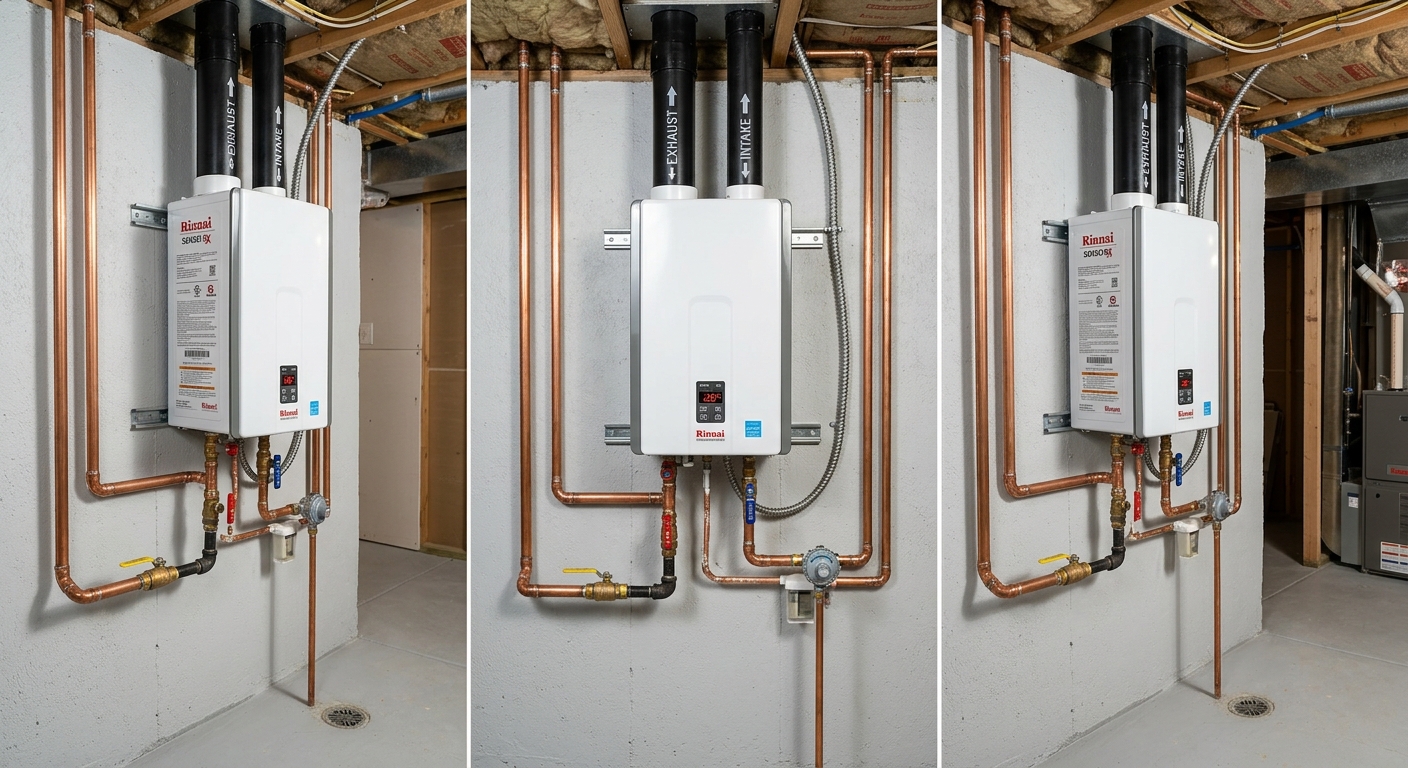
Loyalsock plumbing prices by job type — 2026
Loyalsock homeowners face a unique plumbing landscape shaped by the area’s housing stock and history. With 73.3% owner-occupied homes and 59.2% built before 1980 (U.S. Census Bureau, ACS 2024), most properties in Loyalsock and nearby Williamsport are mid-century houses with a mix of galvanized and copper supply piping. That detail truly matters: galvanized pipes from the original build often corrode and plug up, while copper can develop pinholes—both leading to the kinds of failures that trigger calls for emergency repair or planned replacement. The construction era is a key predictor of pipe material, and pipe material drives what goes wrong (bursts, pinholes, leaks) and what it costs to put right.
One thing Loyalsock residents learn quickly: nearly every plumbing service comes in two price bands, depending on whether it’s an emergency. For active water leaks or no-service failures, the emergency rate covers rapid dispatch, overtime, and extra troubleshooting, and you’ll always pay more for nights and weekends. Below are typical price ranges for Loyalsock in 2026:
| Service |
Scope |
Emergency rate |
Standard rate |
| Emergency repair — burst pipe |
locate, open, repair section, restore service |
$550–$1,150 |
$325–$1,150 |
| Water heater replacement (gas, 40–50 gal) |
remove old, install, test, haul away |
$1,800–$2,700 |
$1,150–$2,700 |
| Drain cleaning — main line |
augering or hydro-jet, camera if needed |
$350–$800 |
$200–$500 |
| Sewer line spot repair |
excavate or reline a failed section |
$1,900–$11,500 |
$1,900–$11,500 |
| Whole-house repipe |
replace supply lines throughout, patch and finish |
|
$3,300–$8,100 |
| Water service line replacement |
street to house, excavation and restoration |
|
$5,200–$11,500 |
Estimates for a typical Loyalsock home. Access difficulty and pipe material move these figures more than anything else.
Freeze risk and what to do about it
Loyalsock is deep winter country, with ground frost reaching 36 inches and a winter design temperature of 2 °F. The long, cold season means pipes are under real threat every year—especially in homes built before the modern codes required better insulation. When it drops below freezing, water in exposed pipes can turn to ice. Here’s the part many miss: the damage isn’t always where the ice forms. As water freezes and expands, it builds pressure between the blockage and the next closed faucet. The actual burst often appears downstream of the ice plug—in walls or cabinets—instead of the visibly frozen spot.
Most vulnerable: pipes in exterior walls, unheated crawlspaces, garages, hose bibs, and any line running through an unconditioned attic. Older homes in Loyalsock with little or aging insulation are especially at risk. Prevention matters more here than most places. Start with pipe insulation for exposed sections, add heat tape for outbuildings or garages, let a faucet trickle in the worst cold (a slow drip relieves pressure), and open cabinet doors under kitchen sinks so warm room air keeps pipes above freezing. Before the first hard freeze, be sure to shut off exterior hose bibs at their interior valve and drain them out.
If a line does freeze but doesn’t burst, use a hair dryer, heat lamp, or electric pipe heater to thaw it gently—never an open flame, which has set more than one Loyalsock basement ablaze. If you ignore the risk, the aftermath is expensive; a burst pipe emergency repair typically runs $550–$1,150 in Loyalsock.
How to find a good plumber in Loyalsock
In Loyalsock, plumbing contractor quality varies more than you might think—especially with thin pickings in rural Lycoming County. Pennsylvania does not have a statewide plumbing license; registration and credentialing are handled municipally. If you hire someone from Williamsport, for example, that does not guarantee they are qualified or approved to work in Loyalsock or your township. Always ask, “Are you licensed and registered to do plumbing work here?” For jobs over $500, state law requires a Home Improvement Contractor (HIC) registration — check at hic.attorneygeneral.gov. Ask to see workers’ compensation documentation (verify current status at wcais.pa.gov), and any insurance certificate should name your property directly as the insured site for the duration of work.
Ask whether the company uses its own licensed technicians or subcontracts out—this makes a real difference in accountability. When dealing with emergencies, require up-front written disclosure of overtime and dispatch surcharges.
- HIC registration is current for your specific municipality
- Insurance certificate lists your address as insured site
- Workers’ compensation status is “active” in state records
- Clear contract with full price and scope before work begins
- Written policy on after-hours/emergency rates
- No verbal only promises on timeline or scope
- Technicians are employees with background checks
- References from other local homeowners
- Service vehicle and uniforms are branded—not unmarked
- Camera inspection and pressure test provided for drain/sewer quotes
- No scare talk about “codes” without documentation
- Photos/video of completed job before payment
Red flag: a plumber asks for a deposit before arriving, quotes a big repipe or sewer line job without offering camera footage or a pressure test, or can’t clearly state which municipality they are licensed in. Rural travel surcharges are common, but “pay now or it gets worse” pressure rarely is in honest business.
Hardness, treatment and fixture life in Loyalsock
Loyalsock is served by the Williamsport Municipal Water Authority, which means public water users have access to annual water quality reports—just ask them for the latest or download online. Most local tap water is moderately hard, which means scale can form inside water heaters and on fixtures, cutting their lifespan. If you’re replacing a failed unit and scrape white or chalky buildup from old parts, that’s scale from hard water at work. Corrosive (aggressive) water is less common here, but copper pinhole leaks can still happen, especially in houses with mixed piping.
A standard softener will reduce scaling and help water heaters and dishwashers last longer, but with Loyalsock’s moderate hardness, a softener is not always a slam-dunk economic win. Factor in salt, maintenance, and space for the tank when weighing that decision. For drinking quality, a whole-house filter helps if you hate the taste or get brown water from old city mains, but most people opt for a pitcher or sink-mounted unit to save cost.
On township outskirts, where private wells and septic are common, owners must arrange their own annual water testing—no utility steps in there. Skip high-dollar “whole-home” treatment systems unless you’ve tested and proven a specific issue. Many work, but you shouldn’t be sold on one until you have the data to justify it.
Licensing and permits for plumbing work in Loyalsock
Pennsylvania does not issue or require a statewide plumbing license. Instead, each municipality sets its own requirements, and this matters in Loyalsock—plumbing is only licensed and permitted at the local level. For Williamsport and neighboring townships, that means code enforcement falls under the Williamsport Bureau of Codes. If a plumber is licensed in Williamsport, it does not guarantee they are approved to work in Loyalsock or your township. For any project, the real question to ask is, “Are you licensed to work and pull permits here?”
Permits are required for pipe replacements, water heater swaps, sewer and service line work—not for fixing a loose faucet or clearing a simple clog. Once a permit is pulled, the municipality’s inspector (often via the Williamsport Bureau of Codes) will check the completed work for compliance with the Pennsylvania Uniform Construction Code (UCC), which incorporates the relevant parts of the International Residential Code. The permit fee covers required inspections, so you should see your permit in writing before any walls are closed up or trenches are filled.
Insurance and workers’ comp checks are the homeowner’s best protection; verify the insurance certificate names your property, and look up workers’ comp status at wcais.pa.gov. For projects over $500, the contract must define the scope and timeline, with your three-business-day cancellation right spelled out under state law.
Loyalsock's housing stock and its plumbing
Loyalsock and the Williamsport area are dominated by homes built before 1980; 59.2% of homes were built prior to Reagan’s first term (U.S. Census Bureau, ACS 2024). In practice, that means your plumbing is likely a patchwork of original galvanized steel supply lines (now corroded), mid-era copper retrofits, and maybe even some recent PEX thrown in from past repairs. The main drain is often cast iron or clay tile, both prone to root intrusion or sections settling out of line. If your main sewer hasn’t needed work yet, you’re fortunate—or on borrowed time. Sewer laterals are often original and made of clay or cast iron, unless a prior owner has done a replacement.
Service lines—the pipe from the curb to the house—run galvanized or copper. Galvanized will, if it hasn’t already, restrict flow and eventually spring a fatal leak or close off. Water heaters in this kind of home are virtually never original. Expect to be on your second or third tank, if nothing’s been upgraded to tankless yet. Even the best fixtures from this era will start to leak, rattle, or clog, even with the best maintenance, long before the house crosses the 60-year mark. Remodeling or ownership change almost always triggers some degree of plumbing overhaul in housing of this vintage.
When to call now and when to wait until Monday
Every Loyalsock homeowner faces the “urgent or not” question eventually. Emergency service always comes with a premium—typically a higher trip charge, after-hours labor rates, and the reality that diagnosis and repair must happen under the clock. These rates reflect not just overtime, but the real cost of keeping experienced techs on call outside 8–5. The same repair—a burst pipe, for example—can run $550–$1,150 as an emergency, and $325–$1,150 at regular rates.
True emergencies don’t wait: active flooding (water pouring from a broken supply line), total loss of water to the house, sewage backing up into fixtures, or the unmistakable smell of gas from a water heater all demand a call right now. On the other hand, slow leaks, a single slow drain, or a running toilet can safely wait until business hours. If you have no running water in freezing weather, that’s also an emergency—the risk of burst pipes climbs by the hour.
Know where your main shutoff is—usually where the water line enters through the basement wall. Turn it off clockwise to stop water at the source for the entire house; use individual fixture shutoffs under sinks and behind toilets for smaller drips. Shutting off quickly can buy you time, prevent further damage, and allow you to schedule the work at a non-emergency rate. Most emergencies can be defused this way, saving hundreds of dollars on the bill.
Frequently asked questions — plumbing in Loyalsock
What does discoloured water on first draw mean?
Discoloured water on your first draw—often rusty or brownish—usually means sediment or rust in the pipes, either from municipal water mains or your own aging galvanized steel supply lines. In Loyalsock, this is common, especially in homes built before 1980 with original galvanized or older copper. If the color clears up after a brief flush, it’s often harmless iron oxide, and running the tap for a minute will clear it. If it persists, it could mean older pipes are close to failure, or the water main is being worked on in your area. Rest assured, Williamsport Municipal Water Authority issues water quality reports each year you can request for details. If you see actual grit or flakes, or notice the color coming and going after plumbing work, you may be looking at the early signs of a pipe in need of repair—which can run from a small section repair around $325–$1,150 to a full replacement if the pipes are too far gone.
Is Loyalsock on combined sewers or septic?
Loyalsock properties have a mix: homes inside Williamsport city limits use public sewers, while many township homes and those further out rely on septic systems. This split traces straight to the way the region developed, with urban core on sewer and outlying subdivisions never getting connected. If you’re in Loyalsock or Old Lycoming, know that both arrangements appear block to block. If you don’t pay a sewer bill to Williamsport, you’re likely on septic, which you’ll need to maintain yourself. Sewer line repairs for public sewered homes run from $1,900–$11,500 for spot repair. Septic issues are a different game; no city crew comes out, and pumping is on you.
Who inspects plumbing work in Loyalsock?
Plumbing permits and inspections in Loyalsock are handled by the local municipality—in most cases, the Williamsport Bureau of Codes. There is no state-level plumbing inspection (Pennsylvania does not operate a statewide board for this trade), so all code checks, permits, and final signoff come through the local authority. If you’re planning a big project—a new water heater or replacing pipes—make sure your contractor pulls the municipal permit and posts it on-site. The inspection is covered by the permit fee. A reputable plumber will never object. If you’re spending over $500 on work, always require the permit and inspection—they’re your best guarantee the work was done properly and up to current codes.
How much does sewer line repair cost in Loyalsock?
Sewer line repair costs fluctuate a lot depending on where the failure is, if it’s a spot fix or a long run, and whether your line is buried under a driveway or just lawn. In Loyalsock, spot repairs to a sewer line—digging up and fixing a section or doing a trenchless sleeve—typically range from $1,900–$11,500. The most common cause here is tree roots causing a break in the old clay or cast iron lateral running from your house to the street. Always ask for camera footage before authorizing any repair so you know exactly what you’re paying for, and get a second opinion if someone quotes the high end without clear proof.
Repair or replace a leaking water heater?
If your water heater in Loyalsock is leaking from the bottom of the tank itself (not just a fitting or valve), replacement almost always pays. Most tanks reaching that stage are 8–15 years old—right at or past their expected life, especially with the moderate hardness from Williamsport Municipal Water Authority. If the leak is from a valve or fitting, repair is possible and much cheaper (often under $325–$1,150 depending on access). If you see rust or water accumulating under the tank, plan on a full replacement, which typically costs $1,150–$2,700 installed. Don’t patch a rusted-out tank—it’s a temporary fix at best, and can fail catastrophically.
How much does a water heater replacement cost in Loyalsock?
For Loyalsock homes, replacing a standard gas water heater (40–50 gallons), including haul-away of the old unit and basic hooking up, typically runs between $1,150–$2,700. The usual figure most owners see is around $1,800, but it can trend higher for emergency service, complicated venting, or if you need code upgrades called out by the inspector. The price will shift if access is tight (like moving a tank out of a low basement), or the supply lines are old enough to need replacement or adapters. Always get a written price before work starts, and check the contractor’s registration at hic.attorneygeneral.gov—required for any job over $500 in Pennsylvania.
What do I do if a pipe is frozen but not burst?
If a pipe freezes in Loyalsock’s long winter, but hasn’t yet burst, act quickly and you may avoid serious water damage and a hefty emergency bill (commonly $550–$1,150 for pipe bursts). First, shut off the house water at the main valve to stop further flow. Open the affected faucet to relieve pressure. Then, thaw the pipe gently with a hair dryer, heat lamp, or an electric pipe wrap if you have one. Always start at the faucet end and work back toward the area where you suspect the freeze. Never use an open flame; many Loyalsock basements have had fires started this way. After thawing, check carefully for leaks as you turn the water back on. If the pipe is split or dripping—call for professional repair before service is restored.
What counts as a plumbing emergency?
A true emergency in Loyalsock is anything causing active water damage or posing a health or safety risk: a burst pipe flooding your basement, water spraying from ruptured lines, total loss of water pressure, sewage backing up into fixtures, or a gas smell from a water heater. These warrant a call right now—even on nights or weekends—which does mean paying the higher emergency rate (expect $550–$1,150 for a burst pipe). Things like a slow drip under a sink, a single clogged drain, or a whistling toilet are aggravating, but can almost always wait for normal business hours so you don’t pay a premium.
Is a sewer line replacement covered by homeowner's insurance?
Most Loyalsock homeowner’s insurance policies do not cover wear and tear or replacement of your sewer lateral (the pipe from house to street), unless the damage is sudden and accidental—a collapse triggered by external force, not aging clay, tree roots, or corrosion. A spot repair or full replacement (running $1,900–$11,500 in this market) is usually an out-of-pocket cost. Some insurers offer coverage add-ons (sometimes called “buried utility” endorsements) for an extra premium, which can be a good buy in older areas like Loyalsock, where original pipes are past their lifespan. Always read the fine print and call your provider before work starts.