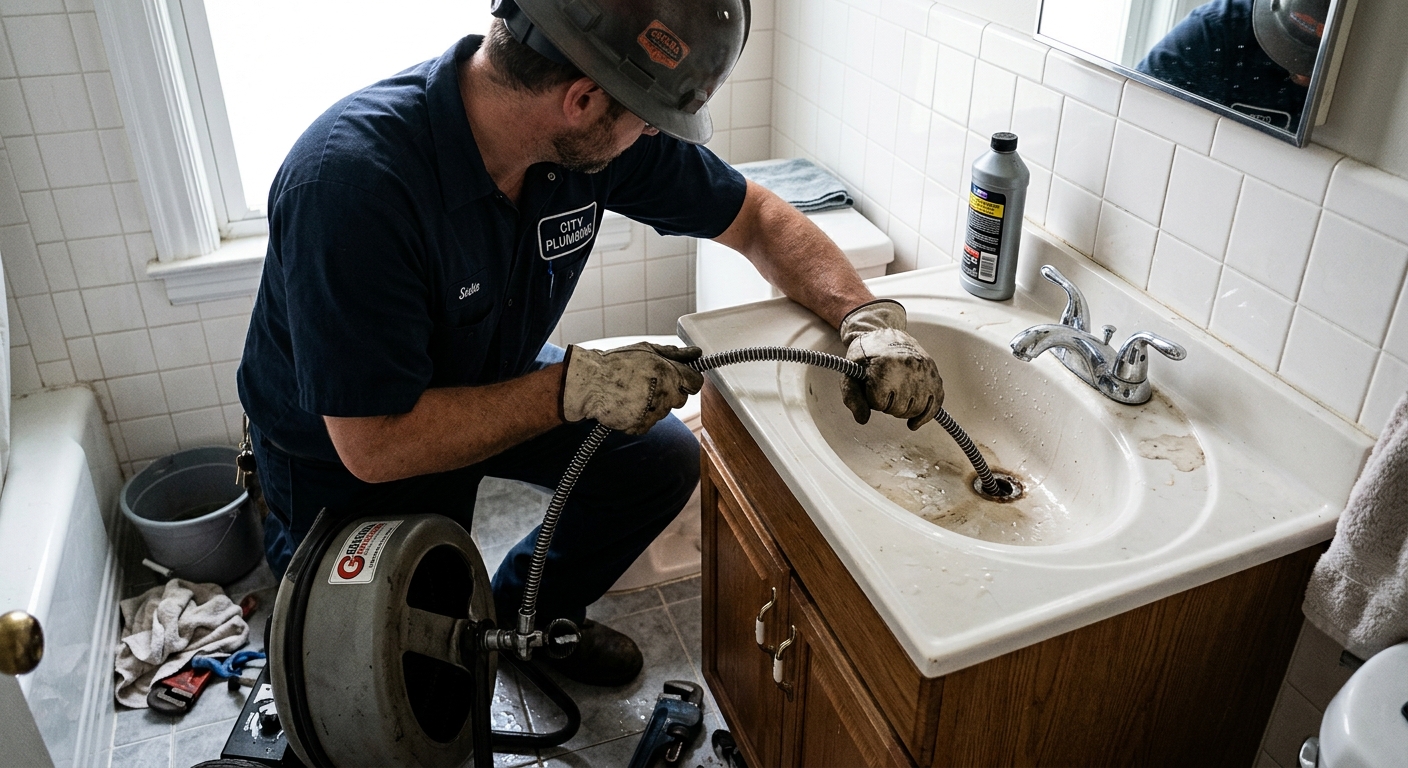
East Caln plumbing prices by job type — 2026
East Caln homeowners regularly face repair and replacement costs shaped by when their home was built and what type of plumbing materials were used. With about 1,500 owner-occupied households and over one-third of the local homes built before 1980 (U.S. Census Bureau, ACS 2024), many East Caln properties are either nearing the end of their first plumbing generation or were constructed during Chester County’s big housing push from 1960 to 2000. That window predicts a lot about your plumbing: copper pipes giving way to PEX, builder-grade water heaters nearing second or third replacements, and the first big failures for PVC and older sewer lines.
Whenever possible, costs are lower if service is scheduled in advance. For any job—from a burst pipe to water heater installation—an emergency call nearly always lands at the top of the range. Plumbers in Chester County, including East Caln, set emergency rates above standard jobs to cover after-hours labor, unpredictable access, and prioritizing your fix ahead of prescheduled work.
Here’s what you can expect to pay for typical plumbing jobs in East Caln, broken down by service type:
| Service |
Scope |
Emergency rate |
Standard rate |
| Emergency repair — burst pipe |
locate, open, repair section, restore service |
$650–$1,300 |
$375–$1,300 |
| Water heater replacement (gas, 40–50 gal) |
remove old, install, test, haul away |
$2,100–$3,100 |
$1,300–$3,100 |
| Drain cleaning — main line |
augering or hydro-jet, camera if needed |
$350–$800 |
$200–$500 |
| Sewer line spot repair |
excavate or reline a failed section |
$2,200–$13,000 |
$2,200–$13,000 |
| Whole-house repipe |
replace supply lines throughout, patch and finish |
$6,000–$13,000 |
$3,800–$9,300 |
| Water service line replacement |
street to house, excavation and restoration |
$8,000–$13,000 |
$6,000–$13,000 |
Estimates for a typical East Caln home. Access difficulty and pipe material move these figures more than anything else.
Choosing a water heater in East Caln
In East Caln, your choice of water heater depends as much on utility layout and home design as on budget. Tank water heaters (gas or electric) remain common as they are cheapest to install, but they come with the shortest lifespans and lose heat even when not in use. Tankless water heaters, especially gas models, provide endless hot water but inflate the up-front cost—often requiring a larger gas line and a new vent. This is a surprise for many; don’t assume it’ll drop right into the old spot.
A heat pump water heater—which runs on electricity and pulls warmth from the air—is the most efficient to run, but its install price is at the top end. It also needs a room large enough for air circulation, makes significant noise, and cools the basement or utility room where it sits. If you’re in a finished basement, this matters.
Sizing should follow first-hour ratings, not just gallons. In this market, a typical family does well with 50 gallons, but two back-to-back showers in the morning call for more. Expect to install an expansion tank (required by current codes) and a drain pan with a routed drain.
The weakest link is almost always the tank itself. Unlike controls or anode rods, which can be repaired, tank failures mean full replacement. Around Chester County, large numbers of homes built between 1960 and 2000 are now seeing their second or third water heater, so planning ahead matters.
| Type |
Installed cost |
Service life |
Operating cost |
Best when |
| Gas tank, 40–50 gal |
$1,300–$3,100 |
8–12 yrs |
moderate |
existing gas and vent; budget focused |
| Electric tank, 40–50 gal |
$1,300–$2,100 |
10–15 yrs |
high |
gas not available; small family |
| Gas tankless |
$2,100–$3,100 |
18–25 yrs |
low-moderate |
long-term stay; luxury of endless hot water |
| Heat pump water heater |
$2,100–$3,100 |
13–15 yrs |
lowest |
ample space; electricity cheaper than gas |
Comparing plumbing estimates in East Caln
When you ask for a plumbing estimate in East Caln, you’ll usually see one of two billing methods: flat rate or time-and-materials. A flat rate gives you price certainty—the plumber takes on the risk if anything gets tricky. The time-and-materials model can be less expensive if access is good and the problem is simple, but it’s open-ended if a routine job runs into surprises. Neither is a scam—problems come up when you’re unclear which billing method you’ve chosen.
A reputable estimate will mention a diagnostic fee (and whether it is credited against the full repair), spell out what is included in the work, and address wall and floor restoration. Finer points include whether fixture brand and models are specified, if permits are included and priced, and whether labor and parts warranties are stated separately. After-hours rates should be disclosed before you sign. Never accept an estimate that simply offers a number without describing the scope.
| Line item |
What to look for |
Red flag if… |
| Billing model |
flat rate or hourly, stated up front |
unstated |
| Diagnostic fee |
amount, and whether it credits |
vague |
| Scope |
what is opened, repaired and restored |
price with no scope |
| Restoration |
drywall and finish explicitly in or out |
silent |
| Permit |
included and priced |
'not needed' |
| Parts |
brand and model for fixtures |
'standard fixture' |
| Warranty |
labour period stated separately |
parts only |
East Caln's housing stock and its plumbing
East Caln’s housing story matches much of Chester County: big development surges between 1960 and 2000, with roughly a third of homes predating 1980 (U.S. Census Bureau, ACS 2024). What does that mean for your plumbing? In homes newer than 1980, copper supply lines are common, often paired with PVC drains and original builder-grade fixtures. Some mid-80s to mid-90s builds may have stretches of polybutylene—a material now universally replaced during any major job.
Pre-1980 homes may still hide galvanized water lines or cast iron drains, and their sewer laterals could be the original clay. It’s about this moment that water heaters are hitting their end-of-life for the second or third time. PEX repipes are now common, especially where pinhole leaks and corrosion in older copper pipes start to show. Age doesn’t guarantee trouble, but older and mid-life plumbing means more issues with leaks, rust, and the unexpected.
Newer homes aren’t immune—some freeze issues come from shallowly buried PEX or improperly insulated garages. And builder-grade fixtures can fail surprisingly early. In all eras, the water service line is worth knowing; while remaining lead services make up under 1% of Chester County inventories, they still turn up in East Caln’s older stretches. Sewer backup? If you’ve never had your line camera-inspected, now’s the time, especially in those pre-1980 homes.
Who is allowed to do plumbing work in Pennsylvania
In Pennsylvania, plumbing is licensed at the municipal level—not statewide. This means there is no single state plumbing licence; instead, plumbers are licensed and registered by individual municipalities that choose to run their own code offices. For example, some Chester County townships, such as Westtown, issue their own plumbing contractor registrations, but a plumber licensed in Philadelphia or Pittsburgh may hold no standing in East Caln or your township. Always ask, “Are you licensed to work here?”
Permits are also enforced locally. For example, in West Goshen Township, any new or replacement plumbing connected to public water or sewer needs a township plumbing permit, and your local code office is the authority that inspects the work under the Pennsylvania Uniform Construction Code (UCC), which relies on the International Residential Code as its base. If you’re unsure of your township’s requirements, contact the code office directly.
To protect yourself, check that your contractor is registered as a Home Improvement Contractor (for any contract over $500) through the Pennsylvania Office of Attorney General’s HIC registry at hic.attorneygeneral.gov. Verify their workers’ compensation coverage through WCAIS, Pennsylvania’s online system. Plumbing contractors must carry private or self-insured workers’ comp for employees, and you have the right to see a certificate showing your address as the insured project.
Choosing a plumbing contractor
In East Caln, the key to a good plumbing job is hiring a contractor who is properly registered and active in your local township. Use the Pennsylvania HIC registry (hic.attorneygeneral.gov) to confirm registration for any job over $500, and ask your township if a local licence is required. Always verify the contractor names your property on their insurance certificate and uses their own insured workers rather than unknown subcontractors. Use the WCAIS system (wcais.pa.gov) to confirm that any business with employees carries valid workers’ compensation.
East Caln is part of a dense suburban market, so you have choices. That makes it sensible to get more than one quote, especially when someone recommends an expensive whole-house repipe or sewer replacement—never agree to jobs at this level without camera footage, pressure test results, and clear justification.
- Confirm the contractor holds a current local registration, not just in another township
- Check Pennsylvania HIC registration
- Get an insurance certificate with your address as additional insured
- Use WCAIS to check workers’ compensation
- Ask if all crew are employees or if subs are used—and how they're vetted
- Get a written contract for any job over $500 (required by law)
- Ensure scope and limits of restoration are specified, not assumed
- Request actual camera footage for drain or sewer replacement quotes
- Insist on pressure test evidence for repipe recommendations
- Review after-hours and emergency rates before work is scheduled
- Know when permit fees and utility shutoffs are included in the quote
- Insist on labor and manufacturer warranty terms in writing
Be wary of any company that tries to sell you a high-dollar repair or replacement with no supporting camera or pressure evidence. The large number of plumbers in this market lets you compare, so take advantage.
When to repipe a East Caln home
Don’t let wishful thinking cost you: two or more leaks on the same pipe material in three years is a pattern, not bad luck. In East Caln’s post-1960 housing wave, copper pipes are showing their age, while some homes built in the mid-80s to late-90s wound up with polybutylene—a material nobody tries to repair anymore.
Other warning signs for repiping include pressure drops at every fixture, rusty or discolored water on first draw, visible green-blue corrosion on copper pipes, and repeated pinhole leaks. If you have old galvanized supply pipes, pressure loss and long wait times for hot water are tipoffs. Cast iron drains often show their age through root intrusion and slow, repeating backups; these should get camera-checked before deciding on spot repair or full replacement.
PEX is the new standard for whole-house repipes for speed and flexibility, but copper is sometimes used in visible areas. The cost that surprises most people isn’t the pipe—it’s the wall and ceiling restoration afterward. In older Chester County homes with plaster, the patching cost can rival the plumbing labor.
| Situation |
Recommendation |
Cost |
Reasoning |
| One leak, accessible, modern pipe |
Spot repair |
$375–$1,300 |
Small area, new material, no evidence of systemwide failure |
| Two or more leaks in 3 years |
Partial repipe |
$3,800–$6,300 |
Repeated failures in the same system indicate aging or corrosive water |
| Galvanized supply, pressure loss |
Full repipe |
$3,800–$9,300 |
Galvanized piping won't improve and typically is on borrowed time |
| Polybutylene anywhere in the house |
Full repipe |
$3,800–$9,300 |
Material is failed industry-wide, not worth spot repairs |
| Cast iron drain with root intrusion |
Camera, then reline or replace |
$2,200–$13,000 |
Replacement or lining after confirming extent of damage |
| Suspected lead service line |
Test, then replace the lateral |
$6,000–$13,000 |
Replace due to health concern even if original line is intact |
Frequently asked questions — plumbing in East Caln
What does emergency plumbing cost in East Caln?
Emergency plumbing service in East Caln typically runs at the higher end of the price spectrum due to the immediate nature of the response and the need for overtime or after-hours work. For instance, a burst pipe repair on an emergency call usually falls between $650–$1,300. This range reflects the technician’s labor, the difficulty of accessing the rupture, and the need to restore service right away. If your issue can safely wait for regular hours, you’ll often pay far less—sometimes half. It’s worth weighing the urgency before calling, but with water running through a ceiling or flooding your basement, the emergency rate is justified and common in Chester County’s suburban market.
Who owns the sewer lateral, me or the city?
In East Caln and most of Chester County, homeowners are responsible for the full length of the sewer lateral running from their house to the municipal main, including the portion under the street. The township or city typically owns and maintains only the main sewer line itself. This means repairs—especially those requiring excavation in the street—fall on you, not the municipality. That’s why a sewer line spot repair in this area can range from $2,200–$13,000, depending largely on where the break is and how much street or yard needs to be opened up. It’s always a smart move to have any suspected issues camera-inspected before any digging happens.
Should I reline or replace my sewer line?
Relining a sewer line is often an option in East Caln if the pipe is mostly intact but shows signs of minor cracks or root intrusion. This approach is less invasive and can be more affordable—sometimes saving you from tearing up landscaping or driveways. However, if the original pipe is collapsing, back-pitched, or made of material like clay that's at the end of its useful life, replacement may be safer in the long run. A camera inspection will tell the real story and often determines if relining or replacement is appropriate. Typical costs for either approach start at $2,200–$13,000, with access and restoration as the major cost factors.
How do I find a hidden water leak?
Hidden leaks in East Caln homes are usually detected through water bill spikes, unexplained damp areas, or stained ceilings and walls. Start by shutting off all fixtures and checking if your water meter is still spinning—if it is, something’s leaking inside. Your plumber will use tools like thermal cameras or acoustic sensors to narrow down the source, especially for leaks inside walls or under slabs. Because most East Caln houses built after 1960 use copper or PEX, the likely problem is at a connection or in a section where pipes pass from one floor to another. Emergency leak detection can fall in the $375–$1,300 range, depending on how destructive access is needed to find and repair the pipe.
How much does sewer line repair cost in East Caln?
Sewer line repair in East Caln is one of the more expensive plumbing repairs due to the need for excavation, replacement of failed pipe, and restoring hard surfaces like driveways or streets. For a typical spot repair, expect to pay between $2,200–$13,000. The upper end covers scenarios where trenchless technology isn’t an option, or heavy equipment must be used under the street. Home age plays a role here; homes built before 1980 may have clay or cast iron laterals prone to failure, while newer homes generally see issues only from root intrusion or improper backfill. Always see camera footage before signing any repair contract.
Do older East Caln homes have galvanized pipes?
Many of the homes in East Caln built before 1980 may have sections of galvanized steel supply pipe, which is known to corrode and restrict water flow as it ages. If your home fits this era and you experience low pressure at every fixture or rusty water on first draw, galvanized piping is likely the culprit. Replacement is usually the best solution, and a full house repipe costs between $3,800–$9,300 throughout Chester County. In homes updated since the 1980s, most of these pipes have already been replaced, but it's always worth checking when you see exposed lines in the basement or utility rooms.
How do I verify a plumber's licence and insurance?
In East Caln, always use the Pennsylvania Office of Attorney General HIC contractor registry at hic.attorneygeneral.gov to check registration for any job over $500. For township-specific work, check with your local code office—some Chester County townships issue their own registrations as well. Request an insurance certificate that names your property, and use the WCAIS system to confirm the active workers’ compensation coverage. If the plumber can’t show you local registration and valid insurance, move on—even if they quote a lower rate for something like a water heater install, which averages $1,300–$3,100 in this market.
Should I wait until business hours to call?
Unless you’re dealing with major water flowing into finished spaces, have lost all water service, or face an active sewer backup, it pays to wait until business hours for plumbing work. Emergency rates in East Caln can double the after-hours bill, with services like leak repair running $650–$1,300 after hours but as low as $375 if scheduled. Minor drips or slow drains can nearly always wait—but never defer if you see electrical hazards, a gas smell, or significant flooding.
Should I leave a faucet dripping in cold weather?
In East Caln’s winters, with a 14 °F design temperature and a moderate freeze-thaw cycle, leaving a trickle running overnight during the coldest spells can make sense in older homes with pipes in exterior walls or unheated crawlspaces. A burst pipe repair can cost $650–$1,300 on emergency call—far more than you’ll ever spend on a little extra water. This step isn’t necessary if your plumbing is fully inside heated space and well insulated, which is common in Chester County’s 1980s and newer homes. If you’re unsure about your exposure, ask during your next plumbing checkup.