Manor plumbing prices by job type — 2026
Manor’s plumbing costs follow the same two-lane pricing as most of Lancaster County: the same job can run two different directions depending on whether you call in a routine problem or an emergency. With 75.8% of Manor homes owner-occupied and more than a third built before 1980 (U.S. Census Bureau, ACS 2024), older piping is a common concern. Lancaster city’s mix of pre-1940 row and twin homes nearby means galvanized pipe is still lurking behind many walls. Galvanized wears out, corrodes, and frequently shows up in water emergencies or full-house repiping scenarios. Pipe material drives both the kind of failures seen and how much you’ll pay—emergency service after hours always comes with a premium, especially when a supply line lets go.
Emergency calls pack in extra costs: after-hours labor, urgent dispatch, and sometimes unavoidable repairs to restore water right away. Planned work can be scheduled and quoted lower, but the nature of plumbing—especially old pipes in Manor—means even routine jobs can uncover hidden headaches, like discovering lead service lines when changing out a water heater or finding failed joints in a slow-draining main sewer. Below, you’ll find typical ranges for common jobs Manor residents need. Expect prices at the high end for jobs in tight crawlspaces or with heavy restoration work. Especially important: whole-house repipes and water service line replacements come into play when older materials (galvanized, lead, or failing copper) are still present.
| Service |
Scope |
Emergency rate |
Standard rate |
| Emergency repair — burst pipe |
locate, open, repair section, restore service |
$600–$1,250 |
$350–$1,250 |
| Water heater replacement (gas, 40–50 gal) |
remove old, install, test, haul away |
$1,950–$2,900 |
$1,250–$2,900 |
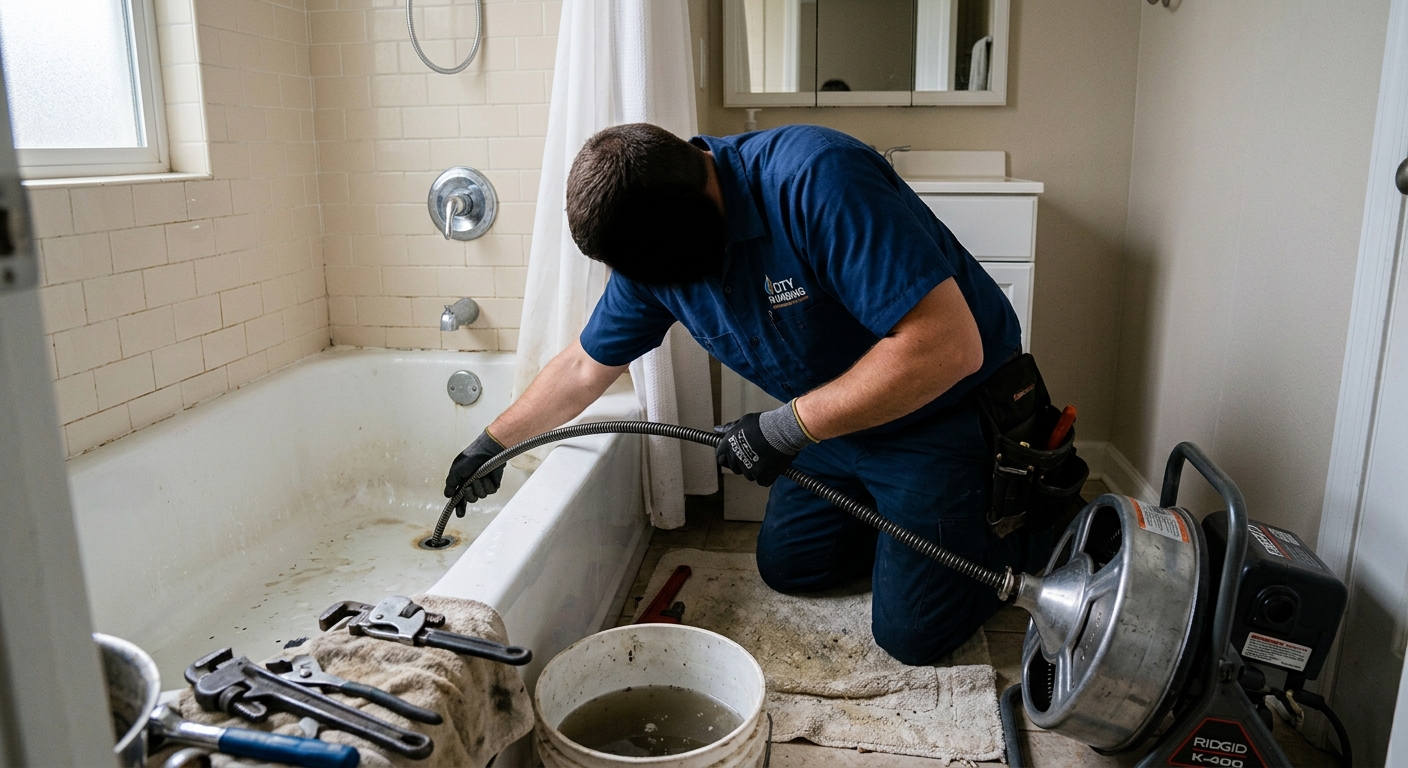
| Drain cleaning — main line |
augering or hydro-jet, camera if needed |
$350–$800 |
$200–$500 |
| Sewer line spot repair |
excavate or reline a failed section |
$2,000–$12,500 |
$2,000–$12,500 |
| Whole-house repipe |
replace supply lines throughout, patch and finish |
— |
$3,600–$8,700 |
| Water service line replacement |
street to house, excavation and restoration |
— |
$5,600–$12,500 |
Estimates for a typical Manor home. Access difficulty and pipe material move these figures more than anything else.
Lead service lines in Manor
The City of Lancaster Water Bureau supplies most in-town properties, while the rest of Manor residents may draw from nearby municipal authorities. Lancaster city’s ongoing lead service line inventory and replacement program is a major factor if you own or are buying in the area, particularly in older neighborhoods. Here’s what Manor homeowners need to know: service lines—the pipe running from the street to your house—split ownership at or near the curb stop. The utility typically owns the portion up to the curb, with everything from the curb into the house your responsibility. Unfortunately, many municipal lead removal programs only cover the utility’s side unless specified otherwise, potentially leaving you with the cost of replacing your section.
If your home was built before 1980, and especially before 1940, you could have a lead service line. The simplest way to check is at the pipe’s point of entry: scratch the pipe with a coin or screwdriver (lead is soft and turns shiny), and check if a magnet sticks (it won’t stick to lead). If you’re concerned, your next step is to check your address against the utility’s online service line inventory or call the City of Lancaster Water Bureau directly—don’t assume eligibility for a replacement subsidy.
Bear in mind: a partial replacement (just your side or just the utility’s) can sometimes spike lead levels by disturbing built-up scale, at least in the months after. Full replacement is the gold standard. Expect homeowner-side costs in the $3,600–$8,700 range if it means a whole-house repipe, or $5,600–$12,500 if a new water service line from the curb or street is needed. Always get a firm quote and ask if the bid covers surface restoration and permits.
What urgency costs you
If you need a plumber now—after hours, weekends, or because water is pouring through your ceiling—expect to pay a premium. In Manor and the rest of Lancaster County, emergency rates reflect more than just fast arrival: they include after-hours dispatch fees, higher labor rates, and the reality that the plumber has to diagnose, access, and fix under tight time pressure. A trip charge and extra costs for parts at odd hours are common. Even on the same job, prices may run in the $600–$1,250 range after hours, versus $350–$1,250 if you can schedule during the regular workweek.
Here’s how to triage what’s truly urgent:
- A true emergency (call now): Sudden active flooding (water gushing, not just dripping), no water service to the entire house, sewage backing up into tubs or basement floor drains, and any gas smell near the water heater or boiler.
- Usually can wait (call in the morning): A slow drip under a sink you’ve caught in a bucket, a single slow drain when others are clear, a running toilet, or a whistling noise in the pipes.
The most valuable thing is knowing where your home’s main shutoff valve is (typically where the water service enters the basement) and how to use it. Turning off water at the main or, for isolated issues, at the fixture itself (under-sink valves, toilet shut-offs) can turn an emergency into scheduled work—saving you a potential $250–$400 in premium charges alone. If you don’t know the shutoff location, now’s the time to find and tag it.
Freeze risk and what to do about it
Manor winters are shaped by our south-central Pennsylvania climate: frost depth runs 30 inches, with winter design temperatures down to 12 °F and pronounced freeze-thaw cycles. Piping in exterior walls, unheated crawlspaces, attached garages, and attic runs (common in older Manor homes) are frequent freeze victims. The mechanism is simple but destructive: when water freezes, it plugs the pipe, and pressure builds between that plug and the next closed fixture. The pipe often bursts downstream from the frozen spot—the rupture might not be where you expect.
Here’s how to protect yourself, listed by cost:
- Insulate exposed supply lines (pipe wrap is inexpensive and easy).
- Use heat tape on pipes in crawlspaces or attics.
- During extreme cold, let a trickle run in suspect fixtures overnight.
- Open kitchen and vanity cabinets to let warm air reach wall pipes.
- Always shut off and drain outdoor faucets before the first hard freeze.
If a pipe does freeze, don’t use an open flame—stick with a hair dryer, heat gun (on low), or a space heater. Call in for a professional thaw and repair if the pipe is split. The cost for emergency burst pipe repair in Manor typically falls in the $600–$1,250 band. Prevention almost always beats the cleanup and damage bill. Older homes here deserve extra vigilance, since uninsulated pipes are particularly common.
Camera inspection, relining and replacement
In Manor and across Lancaster County, you own and are responsible for your home’s sewer lateral—from your foundation out to the main in the street. That point of ownership is a common source of confusion and potential expense if problems crop up. The first signs of lateral issues are subtle: a single slow drain, then multiple drains gurgling, and finally sewage backing up at the lowest fixture—often the basement floor drain.
Before accepting any excavation quote, insist on a camera inspection. A sewer camera sends live video through the entire run and will spot root intrusion (common in older homes with clay tile pipes), bellies where the pipe has settled, or joint offsets. Tree roots are especially problematic in Manor’s mature neighborhoods. Open-cut replacement requires digging a trench for a new pipe, while trenchless relining (if possible) means less digging but not always a permanent fix in deteriorated piping.
Many Manor homes outside the Lancaster city core have their own septic systems. For septic, slow drains or backups may signal the tank needs pumping (every 3–5 years) or, in tough cases, that the drainfield itself is failing. Those are different problems than a city sewer lateral.
For sewer repairs, spot repairs and trenchless relining typically run $2,000–$12,500 in Manor. Never accept a sewer excavation proposal without seeing the camera footage yourself—you need to know what you’re paying for, and footage will often save you thousands by narrowing the repair area.
Who is allowed to do plumbing work in Pennsylvania
Pennsylvania takes a patchwork approach to licensing: plumbing isn’t licensed at the state level, but locally by municipality. That means a plumber carrying all needed credentials for Lancaster city may have no authority to work in Manor Township unless the township licenses or registers their own. Lancaster city runs its own code enforcement and permitting through the Bureau of Building Code Administration, but the surrounding townships—including Manor—often operate their own permitting offices with different requirements.
The Pennsylvania Uniform Construction Code, built on the IRC, governs residential plumbing standards statewide. For most work that physically alters, expands, or adds value to a home—in Lancaster city especially—a plumbing permit is mandatory. Routine faucet or toilet part swaps generally don’t require permits, but always check with the local office if in doubt. Inspections are performed by the municipal code or plumbing inspector, not by any statewide body.
When hiring, ask not “are you licensed?” but “are you authorized to work here in Manor?” Also, for any contract over $500, ask for a Home Improvement Contractor registration number (verify at hic.attorneygeneral.gov) and insurance certificate. Required workers’ compensation coverage can be checked through the WCAIS system (wcais.pa.gov). If your home was built before 1978, EPA Lead RRP certification is also required for work that disturbs painted surfaces.
Choosing a water heater in Manor
Most Manor homes are set up for either gas or electric water heaters. For local homeowners, the right choice depends on installation cost, operating expense, and space constraints. Tank water heaters—gas or electric—offer the lowest upfront cost. They’re easy to replace but have the shortest lifespan (typically 8 to 15 years depending on the model), and experience higher standby losses (heat lost from water just sitting in the tank).
Tankless gas heaters are popular for endless hot water and higher efficiency, but the surprise is the higher install bill—upgrading to a tankless unit often means running a larger gas line and putting in a new vent. This can tack thousands onto the cost for older Manor homes. Electric tankless models are rare here because they need heavy-duty wiring.
Heat pump water heaters are growing in popularity for their low running cost, but need a room with plenty of air volume (unlike a small closet) and work best where temperatures stay above freezing—installing one in an unconditioned garage or attic isn’t recommended. They’re effective but cool the air in the room, which isn’t always a bonus in a finished basement. They’re also noisier than a tank.
For all options, size by first-hour rating, not just tank gallons. Modern code calls for expansion tanks on closed systems, and all water heaters need a drain pan (preferably with a drain pipe) to limit leak damage. Most water heater failures are tank ruptures, so age is the signal to plan a replacement before disaster.
| Type |
Installed cost |
Service life |
Operating cost |
Best when |
| Gas tank, 40–50 gal |
$1,250–$2,900 |
8–12 yrs |
moderate |
Existing gas line, easy like-for-like swap, low install cost |
| Electric tank, 40–50 gal |
$1,250–$1,950 |
10–15 yrs |
high |
No gas available, low upfront cost, smaller households |
| Gas tankless |
$1,950–$2,900 |
18–25 yrs |
low-moderate |
New construction or when upgrading gas and venting anyway |
| Heat pump water heater |
$1,950–$2,900 |
13–15 yrs |
lowest |
Large, conditioned space, low operating cost is top priority |
Frequently asked questions — plumbing in Manor
What do I do if a pipe is frozen but not burst?
The freeze-thaw cycle is a big risk in Manor and the wider Lancaster area. If a pipe is frozen but hasn’t burst, first turn off the water at the affected supply valve (or at the main shutoff if you can’t isolate the line). Open the nearest faucet so that melted water has somewhere to go. Use a hair dryer, space heater, or heating pad to gently warm the pipe starting closest to the faucet—never use an open flame, as it can split the pipe or start a fire. Most thawing jobs can be handled by a homeowner if the frozen section is accessible. If you can’t reach the pipe, or if no water flows hours after thawing efforts, call a plumber before the pipe bursts; the typical service rate is between $350–$1,250 depending on whether it’s an emergency. Early attention almost always saves you the cost and hassle of full repairs.
Is trenchless sewer repair reliable?
Trenchless repair—using cured-in-place-pipe liners or pipe bursting—can be very reliable in Manor’s older homes, provided the host pipe isn’t completely collapsed or back-pitched (sagged). These methods preserve landscaping and hardscaping, which is valuable in the tight yards and mature trees common in the area. The catch: trenchless is not a magic fix for every problem. If the line is severely offset, backfilled with debris, or has major root intrusion, open-cut may be unavoidable. Always insist on a camera inspection first and keep the footage for your records. A typical trenchless spot repair costs $2,000–$12,500 in Manor, but always get an itemized quote. If you’re quoted both a trenchless and dig-and-replace job, ask for pros and cons—on the oldest clay pipes, relining may not buy as many years as full replacement.
What counts as a plumbing emergency?
In Manor, a true plumbing emergency is anything that threatens immediate water damage, health, or safety. Examples: active flooding due to a burst pipe, sewage backing up into living areas, a main water line leak, or any gas smell from a water heater or boiler. Lack of water service to the whole house is also urgent if you can’t restore it with the main valve. Most other issues—a dripping faucet, a single slow drain, or a minor leak under a sink—can wait for normal business hours. Emergency service calls range from $600–$1,250, while standard rates for the same repair later may be much lower. If you are unsure, shut off water at the main and call a professional for guidance—that’s almost always the safest first step for Manor homeowners.
Are tree roots a common sewer problem in Manor?
Yes, tree roots are a leading cause of sewer lateral blockages in Manor, especially in neighborhoods with mature trees—and even more in older homes still using clay tile pipes. Cracks or loose joints in the original lateral provide entry points for roots, which over time can form thick mats that obstruct or even break the line. Symptoms range from frequent slow drains to sewer backups at the lowest fixture. Clearing roots may require drain snaking or hydro-jetting, but persistent problems usually call for camera inspection and sometimes repair in the $2,000–$12,500 range. Preventive root treatments exist, but long-term, damaged sections often need replacement or relining to solve the problem for good.
What causes low water pressure in Manor homes?
Low water pressure in Manor can have several sources: corroded galvanized supply lines (especially if your house predates 1940), a partially closed main valve, sediment-clogged fixtures, or a failing pressure regulator outside the home. Galvanized pipes in particular develop buildup inside the pipe until flow is greatly reduced. Sometimes, the problem starts at the curb with a compromised service line—lead or old iron pipes can collapse or leak underground. While faucet aerators or fixture valves can clog, persistent pressure drop throughout the house should be checked with a pressure gauge at an exterior spigot. If replacement is needed, a whole-house repipe typically runs $3,600–$8,700 in Manor. Always get the source accurately diagnosed before investing in new piping.
What does repiping a house cost in Manor?
Repiping a typical Manor home is a significant investment, with most projects falling into the $3,600–$8,700 range. The actual figure depends on home size, whether you’re switching from galvanized or old copper to PEX or new copper, and how much wall or floor finishing is needed after. Homes built before the 1940s—common in the greater Lancaster area—often have tricky access and historic finishes that impact price. You’ll also pay more if utility tie-ins or service line replacements are needed. If you’re quoted at the high end, ask for specifics: does it include new shutoffs at each fixture, wall patching, and permit fees? Repiping solves pressure, water quality, and leak risks, but always get more than one quote and ask about the plumber’s experience with local Manor codes.
Can I do my own plumbing work in Manor?
Pennsylvania does not license plumbers statewide, but many municipalities—including Manor Township—require permits and may restrict certain plumbing work to registered contractors. For very minor jobs like changing a faucet or repairing a running toilet, you can usually DIY without a permit, but this changes as the job gets larger. Anything that alters a water line, vent, or drain stack (like moving a sink, adding a bathroom, or doing a repipe) almost always needs a permit and inspection. If your work exceeds $500 in value, HICPA requires a written contract if you’re hiring help, and if the home predates 1978, federal lead paint safety rules may apply. For most Manor homeowners, the risk of code violations, water damage, and complicated insurance claims often outweighs the savings—professional repairs in the $350–$1,250 band tend to pay off in peace of mind.
Is a sewer line replacement covered by homeowner's insurance?
Typically, standard homeowners insurance in Manor and elsewhere in Pennsylvania will not cover sewer line replacement outside the footprint of the home. The lateral from the house to the street is considered a “maintenance” responsibility, and failures from tree roots, age, or collapse are excluded. Some policies offer add-on “service line” endorsements that can cover some of these costs—but you’ll have to buy this separately, and there are limits and exclusions. For big jobs, costs range from $2,000–$12,500 depending on the method and depth of excavation. Before starting work, call your insurer and ask about coverage specifics; a claim for backup damage inside the house may be covered differently than the repair of the exterior pipe itself.
How much does a plumber cost in Manor?
Plumber costs in Manor depend mainly on the type of job and when you call. Simple, planned repairs (like a leaky faucet or clearing a drain) often run in the $200–$500 range for standard work. Emergency repairs for problems such as burst pipes or urgent leaks are more—usually $600–$1,250 for fast dispatch and after-hours labor. Major work like water heater replacement is typically $1,250–$2,900, while repiping or sewer repair can be several thousand dollars. Always ask for a written estimate, see if the quoted price includes permit fees and restoration, and check that your plumber is registered and insured for work in Manor or your specific township. Be wary of unusually low quotes—they’re rarely a bargain once old-home surprises show up.