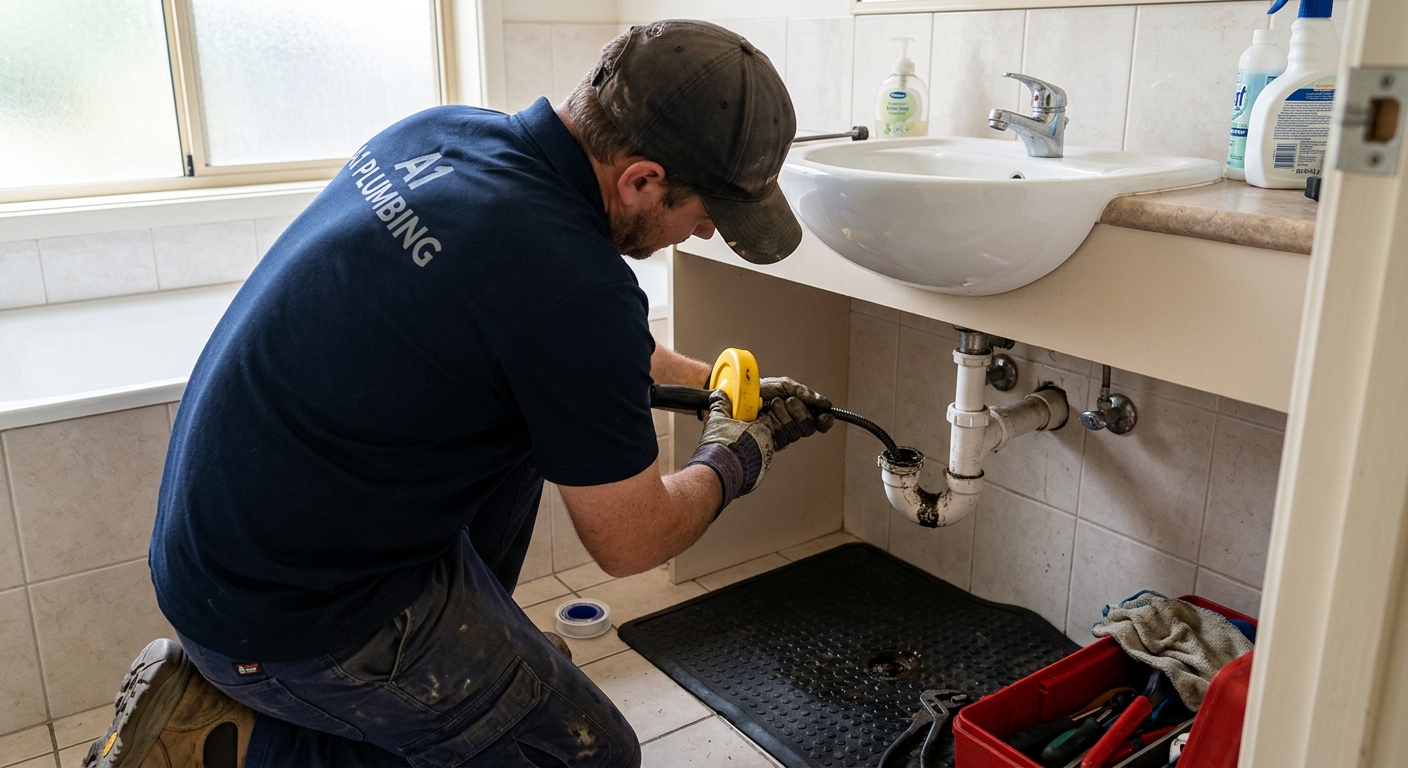
What plumbers charge in South Strabane
Homeowners in South Strabane will find that plumbing costs track closely with both the age and style of their home. With 66.0% single-family homes and more than half built before 1980 (U.S. Census Bureau, ACS 2024), your plumbing system could contain a mix of galvanized steel, copper, or even PEX. Washington County’s Peters Township, nearby, saw major single-family subdivision construction from the 1980s–2000s, which means many South Strabane homes share the same copper-to-PEX repiping needs—and those material choices directly affect cost.
What you pay depends not just on the job but whether it is an emergency. Emergency plumbing in South Strabane—like a burst pipe at 10pm—will always command a higher rate than a scheduled visit, not just for parts and labor, but for rapid response and off-hours call-outs. For the same type of repair, the spread between emergency and standard rates can be significant, especially for jobs where delays risk water damage.
| Service | Scope | Emergency rate | Standard rate |
|---|
| Emergency repair — burst pipe | locate, open, repair section, restore service | $600–$1,200 | $350–$1,200 |
| Water heater replacement (gas, 40–50 gal) | remove old, install, test, haul away | $1,950–$2,900 | $1,200–$2,900 |
| Drain cleaning — main line | augering or hydro-jet, camera if needed | $350–$800 | $200–$500 |
| Sewer line spot repair | excavate or reline a failed section | $2,000–$12,000 | $2,000–$12,000 |
| Whole-house repipe | replace supply lines throughout, patch and finish | — | $3,600–$8,700 |
| Water service line replacement | street to house, excavation and restoration | — | $5,600–$12,000 |
Estimates for a typical South Strabane home. Access difficulty and pipe material move these figures more than anything else.
Winter pipe failures in southwestern Pennsylvania
Southwestern Pennsylvania’s winters present a real challenge for water lines, thanks to a 36-inch frost depth and temperatures that drop to a winter design low of 8°F. These factors, along with a heavy freeze-thaw cycle and hilly terrain, can stress pipes—especially in the older homes common to South Strabane.
Pipe bursts don’t usually happen at the ice plug itself. Instead, as water freezes and expands in the pipe, pressure builds up between the blockage and a closed fixture (like a faucet or toilet shutoff). When the trapped water has nowhere to go, the pipe bursts at its weakest nearby point. This means the visible freeze can be feet away from the point of failure.
The most vulnerable locations are pipes in exterior walls, unheated crawlspaces, under sinks in cabinets, garages, hose bibbs, and especially pipes running through an unconditioned attic. Prevention starts with proper pipe insulation—always worth the effort. Heat tape is the next step up in cost and protection. During cold snaps, let a trickle run at the coldest fixture, open cabinet doors under sinks to let warmer air circulate, and always shut off and drain outdoor spigots before the first hard freeze of the year.
If you do find a frozen pipe, thaw it gently with a hair dryer or a warm towel wrapped around the section—never a torch or open flame, which risks fire and ruined pipe. The cost to fix a burst pipe (after a freeze) runs $600–$1,200 in an emergency, which is usually much more than even the best prevention costs.
Who is allowed to do plumbing work in Pennsylvania
In Pennsylvania, plumbing is not licensed at the state level—there is no statewide plumbing license or board. Instead, each municipality enforces its own requirements. In Washington County, this means a plumber licensed in the City of Washington may not hold any credential in South Strabane Township or Peters Township, and vice versa. The right question to ask is always “Are you licensed and registered to work here?” not just “Are you licensed?”
Residential work follows the Pennsylvania Uniform Construction Code (UCC), based on the IRC, but each municipality enforces it separately. In the City of Washington, permits are typically required for interior plumbing system alterations involving new fixture installations. In the county’s townships, like North Strabane, minor work such as faucet replacements often proceeds without a plumbing permit—but anything more substantial could still trigger one. Permits are inspected by the local code enforcement office or the municipality itself.
When hiring, check your contractor’s Home Improvement Contractor (HIC) registration at hic.attorneygeneral.gov if your contract is above $500—a legal requirement. Ask to see a current insurance certificate naming your property. If workers’ compensation is mandatory (as it is for all employers), verify status via WCAIS at wcais.pa.gov.
Camera inspection, relining and replacement
In South Strabane and most of Washington County, homeowners generally own the sewer lateral from their house out to where it meets the main—sometimes including the section that runs under the street. This is a point of frequent dispute, but it means you’re on the hook for repairs beneath your lawn or driveway if something goes wrong.
Watch for symptoms in order of severity: one slow drain (often a branch line issue), multiple slow drains, gurgling from toilets or tubs, and the most serious—sewage backup at the lowest fixture in your home. At that point, a mainline problem is likely. Especially in older clay tile, roots can intrude at the joints, while bellies and offsets develop with ground movement from freeze-thaw cycles.
Before anyone quotes excavation or replacement, always insist on a camera inspection—this is your best protection against unnecessary or misdiagnosed work. The video will show exactly what and where the problem is. Other common solutions include open-cut (dig-and-replace) repair or trenchless relining, which can save your yard and hardscape from major disruption. In most cases, drain cleaning or snaking is a first step, but beware of repeated backup—it means there’s an underlying pipe issue, not just a clog.
Outside the City of Washington, South Strabane and nearby townships often rely on septic systems, which require regular tank pumping (every 3–5 years) and fail differently—drainfield problems cause slow drains and sewage smells without pipe collapse. Make sure to match the repair to your system type.
To protect yourself, never accept a sewer excavation quote without seeing clear camera footage, ideally provided in a way you can keep for your records.
Pipe materials in South Strabane homes and how they fail
The supply and drain pipes in South Strabane homes reveal their age. Washington County’s Peters Township, just a short drive away, experienced a construction boom from the 1980s–2000s—and many homes from this era have been repiped from copper to PEX. Older homes in the area commonly have galvanized steel pipes, which corrode from the inside, eventually narrowing and killing water pressure before leaks ever surface. Copper pipe, the gold standard from the 1950s on, can pinhole thanks to aggressive water or stray current, but a visual inspection and scratch test (copper is reddish and won’t attract a magnet) will help you spot it. Polybutylene, a grayish-blue plastic found in late-1970s to mid-1990s homes, is notorious for failing at the plastic fittings—if you see stamped PB2110 on exposed pipe, consider replacement soon.
PEX is flexible and now standard in repiping, especially in neighborhoods with rampant freeze-thaw issues. On the drain side, homes built before the late ’70s often have cast iron or clay tile, both of which fail with age: cast iron rusts and cracks, while clay tile joints welcome invading tree roots, especially in hilly, well-treed lots. To check your pipes, look for threaded silver-gray (galvanized), soldered reddish (copper), blue-gray plastic (polybutylene), or flexible colored tubing (PEX). Use a magnet (sticks to steel, not copper) and scratch suspect spots with a coin.
If your house was built in the 1950s–1980s, you’re likely approaching the service life of original supply and sewer piping—so budget accordingly for repairs or full replacement.
| Material | Typical era | Failure mode | Service life |
|---|
| Galvanized steel supply | pre-1960 | internal corrosion, pressure loss | 40–60 yrs |
| Copper supply | 1950s–present | pinhole leaks, joint failure | 50–70 yrs |
| Polybutylene supply | late 1970s–1995 | fitting failure, sudden bursts | unreliable |
| PEX supply | 2000s–present | fitting or UV degradation | 40–50 yrs |
| Cast iron drain | pre-1975 | corrosion, cracking, scale | 50–75 yrs |
| Clay tile sewer lateral | pre-1980 | root intrusion at joints, offset | 50–60 yrs |
| PVC / ABS drain | 1970s–present | joint separation, crushing | 50+ yrs |
Tank, tankless or heat pump water heater?
If you’re replacing a water heater in South Strabane, you’ll be choosing among three main types: tank (standard), tankless, and heat pump. Traditional tank heaters are cheapest upfront and simple to install but typically last only 8–15 years. They have “standby losses”—heat constantly escapes from the stored water, even when not in use. Tankless heaters offer unlimited hot water and last almost twice as long, but installing them in an older home can require upgrading the gas line and venting—costs that catch many owners off-guard. If your house doesn’t already have a large enough gas line or vent, expect higher install bills.
Heat pump water heaters are the most efficient and cost-effective to run. They work by pulling heat from ambient air but need plenty of space and a warm spot—the cooler and finished basements common in South Strabane may not always suit them. They are also noisier and will lower the air temperature around them, so keep that in mind for basements used as living space.
When sizing, look for the “first-hour rating” instead of just the tank size. Every installation should have an expansion tank, a drain pan, and a floor drain if possible—the tank itself almost always fails before the controls, usually as a leak at the base.
| Type | Installed cost | Service life | Operating cost | Best when |
|---|
| Gas tank, 40–50 gal | $1,200–$2,900 | 8–12 yrs | moderate | existing gas, vent is sized right |
| Electric tank, 40–50 gal | $1,200–$1,950 | 10–15 yrs | high | no gas available, modest use |
| Gas tankless | $1,950–$2,900 | 18–25 yrs | low-moderate | gas line/venting upgraded, endless hot water wanted |
| Heat pump water heater | $1,950–$2,900 | 13–15 yrs | lowest | warm location, lower operating cost goal |
Vetting a plumber in Washington County
In Washington County, proper vetting starts with making sure your plumber holds the right registration for your specific municipality. Since plumbing is licensed and permitted at the municipal level—not statewide—it’s not enough to see a “Pennsylvania license.” Ask to see a Home Improvement Contractor (HIC) registration (required for jobs over $500) at hic.attorneygeneral.gov, and confirm municipal licensing where required. For insurance, ask for a certificate showing your property as the insured location. For workers’ compensation, Pennsylvania employers must provide proof by status at wcais.pa.gov.
Ask who will actually do the work—some companies subcontract instead of running their own crews. Always expect a clear explanation of emergency versus standard pricing, especially since Washington County has only a moderate market density, and travel time can affect rates. Unscrupulous contractors may push expensive repipes or sewer excavations without pressure tests or camera footage to back them up—don’t bite.
- Check Home Improvement Contractor (HIC) registration at hic.attorneygeneral.gov
- Confirm licensing/registration for work in your township
- Ask for an insurance certificate naming your address
- Verify workers’ compensation at wcais.pa.gov
- Demand written estimates for all work over $500 (as required by law)
- Ask whether they use employees or subcontractors
- Clarify emergency versus standard rates up front
- Request camera inspection footage for any drain or sewer work
- Never accept excavation or repipe bids without supporting evidence
- Check for experience with your home’s pipe material and age
- Inquire about permit handling and code inspection process
- Ask for references from South Strabane or nearby townships
Red flags: Any plumber who says “no permit needed” for substantial interior work, or who can’t provide HIC registration, insurance, or proof of workers’ comp. Always walk if there’s a hard sales pitch for new pipe without test results or camera proof.
Frequently asked questions — plumbing in South Strabane
How much does sewer line repair cost in South Strabane?
Sewer line repairs in South Strabane typically run from $2,000–$12,000, with the majority of spot repairs averaging around $5,600. The final cost depends on how deep the line runs under your yard, if it’s under a driveway or sidewalk, and whether trenchless repair is possible. In neighborhoods with older clay or cast iron piping, root intrusion and offsets increase the likelihood of localized repair, but a full replacement is sometimes needed if the pipe has extensive damage over a long distance. Never commit to a repair or replacement without a camera inspection showing the problem. Some properties in South Strabane connect to public sewer, while others (particularly in rural sections) rely on septic systems, which have very different repair needs and costs.
How hard is the water in South Strabane?
Most homes in South Strabane get public water service from Pennsylvania American Water’s Washington District. The water here is moderately hard—enough to scale up water heaters and showerheads over the years, but generally not hard enough to require a softener in every house. If you have an older tank-type water heater, moderate hardness may reduce heating efficiency over time and shorten its expected service life, which brings its replacement closer to the typical $1,200–$2,900 range. For most households, periodic descaling of appliances is more cost-effective than installing an expensive softener system unless you notice visible scale buildup or low water pressure due to mineral deposits.
Repair or replace a leaking water heater?
In South Strabane, a water heater that leaks from the tank itself (usually from the bottom seam) is ready for replacement, not repair. The tank rusts from the inside out, and patching is not a permanent fix. If a leak is from a fitting or the temperature and pressure valve, a plumber can often repair it for less. Age is key—tank water heaters typically last 8–12 years for gas and 10–15 years for electric. If yours is at the end of its service life and needs repairs close to $1,200–$2,900, replacement makes better financial sense. Local homes with finished basements or living areas nearby should act quickly—water damage from a burst tank happens fast. Always have a drip pan and proper drain, especially in multi-story homes.
Should I leave a faucet dripping in cold weather?
Yes, in South Strabane and across southwestern Pennsylvania, leaving a faucet trickling can help prevent frozen pipes during extreme cold snaps. With a winter design temperature of 8°F and a frost depth of 36 inches, older homes often have insufficiently insulated pipes in exterior walls, crawlspaces, or basements. Running water is much less likely to freeze solid. Consider this especially if you’ve had frozen pipes before—the cost of a minor increase on your water bill is small against the $600–$1,200 you might pay for emergency burst pipe repairs. Also, open cabinet doors under sinks to let room air warm the pipes, and insulate any exposed runs.
Should I wait until business hours to call?
If you have an active water leak (especially a burst pipe, ceiling drip, or sewage backup) in South Strabane, don’t wait. Immediate action can prevent much larger bills from water damage. While calling after hours will likely mean you pay an emergency rate—often $600–$1,200 for burst pipe repair—the cost of waiting could include structural repairs and mold remediation. For minor leaks or slow drains, you can usually wait until business hours and save on service call charges. When in doubt, shut off the main valve and call to ask—good plumbers will tell you honestly if it can wait or not.
Who pays to replace a lead service line in South Strabane?
In South Strabane and the nearby City of Washington, the property owner is typically responsible for replacing the water service line from the curb to the house—this includes legacy lead service lines still present in older neighborhoods. There is no blanket program for free replacement, but occasional utility cost-share or grant programs happen. When replacement is needed, expect costs in the $5,600–$12,000 range, depending on the length of the run and what landscaping or pavement lies above it. If your home was built before 1980, it is worth checking your main service line material. Pennsylvania American Water or a local plumber can assist with identification and testing.
Why do all my drains drain slowly at once?
In South Strabane, when every drain in your house begins slowing down at once, the most likely culprit is your main sewer line—not the branch pipes under sinks or tubs. This can be caused by a buildup, root intrusion (especially if you have original clay tile from pre-1980), or even a collapsed section. If left alone, you risk a full backup. The proper first step is a camera inspection—a service that often runs in the $200–$500 range combined with drain cleaning—so you see exactly what you’re dealing with. Do not let anyone excavate or reline your pipe without showing you the footage first. For homes on septic, a full tank or failed field can produce similar symptoms.
What does emergency plumbing cost in South Strabane?
Emergency plumbing rates in South Strabane are higher than scheduled visits, reflecting travel, off-hours work, and the urgency to prevent water damage. Depending on the repair, you’ll typically pay $600–$1,200 for emergency response to a burst pipe or major active leak. This includes locating, opening up, repairing, and restoring service. Less urgent emergencies, such as a clogged main drain, usually cost less—around $350–$800. Expect higher ranges if parts of your home are difficult to access, and always ask upfront for a clear breakdown of rates, minimum charges, and what’s included to avoid surprises.
Do I need a permit for plumbing work in South Strabane?
Whether you need a permit in South Strabane depends on the type of work and where exactly you live. In the City of Washington, permits are required for most interior plumbing system alterations that involve new fixtures or changing the layout, and the local code enforcement office will inspect the work. In South Strabane Township and other county townships, simple replacements—like faucets or minor repairs—usually don’t require a permit, but anything with new piping or fixtures often does. Permit costs average less than what you risk if you skip them—such as fines or redone work. Always confirm permit needs with your plumber. Most reputable plumbers include permit handling in their estimate, which for significant projects—like a repipe or water heater replacement—will already run from $1,200–$8,700 including labor and materials.