What plumbers charge in College
College homeowners face a wide range of plumbing costs depending on the type of work, the urgency, and the era of their home. With 74.1% single-family homes and 37.6% of houses built before 1980 (U.S. Census Bureau, ACS 2024), much of the local housing stock still relies on copper and galvanized steel pipes. These materials, installed during the major 1960–1980 subdivision boom around State College, have reached the age when leak repairs and full repipes are routine. The era of your plumbing predicts not just what will fail but what it will cost—aging metals typically mean more leaks and more costly repairs.
There are always two prices for plumbing in College: the emergency rate and the standard rate. The same repair that costs $375–$1,250 on a scheduled visit may jump to $650–$1,250 if you need help right now with water pouring through the ceiling. This frame holds for water heater failures, drain clogs, and any service disrupted after hours or on weekends. Emergency response means paying for the disruption of other scheduled work, plus added risk for the contractor. For non-urgent jobs—like repiping or water service replacement—you can usually negotiate work at the standard rate, provided you have a working system and some patience.
| Service |
Scope |
Emergency rate |
Standard rate |
| Emergency repair — burst pipe |
locate, open, repair section, restore service |
$650–$1,250 |
$375–$1,250 |
| Water heater replacement (gas, 40–50 gal) |
remove old, install, test, haul away |
$2,000–$3,000 |
$1,250–$3,000 |
| Drain cleaning — main line |
augering or hydro-jet, camera if needed |
$350–$800 |
$200–$500 |
| Sewer line spot repair |
excavate or reline a failed section |
$2,100–$12,500 |
$2,100–$12,500 |
| Whole-house repipe |
replace supply lines throughout, patch and finish |
|
$3,700–$9,000 |
| Water service line replacement |
street to house, excavation and restoration |
|
$5,800–$12,500 |
Estimates for a typical College home. Access difficulty and pipe material move these figures more than anything else.
Verifying a College plumber's credentials
Pennsylvania does not license plumbers at the state level—there is no statewide plumbing board or license. In practice, licensing is handled municipally. This means that a plumber registered in one city or township may not hold a valid credential in the next. In College and State College, plumbing code enforcement falls to the local Centre Region Code Administration or the Centre County Code office, depending on your municipality. When you're hiring, the right question is never just “Are you licensed?” but “Are you licensed to pull a permit in my township?”
In State College, any plumbing work that requires inspection by the Centre Region Code Administration—anything beyond simple fixture swaps—requires a permit. Surrounding townships follow similar standards via the County office. For minor fixture replacements in existing bathrooms, a formal plumbing permit is often not required, but you should always confirm with your local inspector. All major work—like repipes, water service, or water heater replacement—requires a written contract if the cost exceeds $500 under Pennsylvania’s Home Improvement Consumer Protection Act. Your plumber must be registered as a Home Improvement Contractor (HIC) with the Pennsylvania Office of Attorney General; you can verify this at hic.attorneygeneral.gov. Employers must carry workers’ compensation insurance; you can check coverage status at wcais.pa.gov. Always confirm these before signing any contract.
What construction era means for your pipes
The age of your College home tells you a lot about what’s behind the walls. With a full 37.6% of local homes built before 1980, most plumbing systems rely on copper or galvanized steel for supply lines. Expect older homes to have original cast iron drains and, if the house predates modern water utilities, a buried clay or even lead water service line. These materials age differently—copper may last 60 years but will eventually pit and leak, while galvanized steel is prone to rust, pressure loss, and eventual pinhole leaks that come in waves. Drain pipes may be cast iron or clay, both vulnerable to root intrusion, shifting soils, or corrosion over decades.
Newer homes—especially the subdivisions built in College and State College from 1960 to 1980—often feature builder-grade fixtures, and nearly all copper or galvanized supply lines are at or past midlife. Most water heaters are on their second or third replacement cycle; it’s rare to find one over 12 years old still performing well. Post-1980 homes tend toward copper or early PEX, with occasional polybutylene (a liability) in the late 1980s into the early 1990s. Newer stock doesn’t mean zero problems—it’s just that you’re more likely to be looking at fixture replacements and occasional valve leaks, not full system overhauls. Sooner or later, pipe material and age catch up with every homeowner.
Water heater replacement decisions
When your water heater gives up in College, you have three main choices: tank, tankless, and heat pump. A standard tank water heater is the lowest installed cost—usually $1,250–$3,000 for a 40–50 gallon gas or electric model. The downside is a shorter service life (8–15 years), consistent standby losses, and only as much hot water as fits in the tank. Tankless units promise endless hot water, but come with higher installation cost—particularly if you need a bigger gas line or special venting, which is often the case in older College homes. Expect $2,000–$3,000 for a complete tankless install. They last longer, use less energy if your usage is spread out, but may struggle if multiple showers run at once. Heat pump water heaters are the cheapest to run and cost $2,000–$3,000 installed, yet need plenty of warm, open basement air and make more noise than a tank.
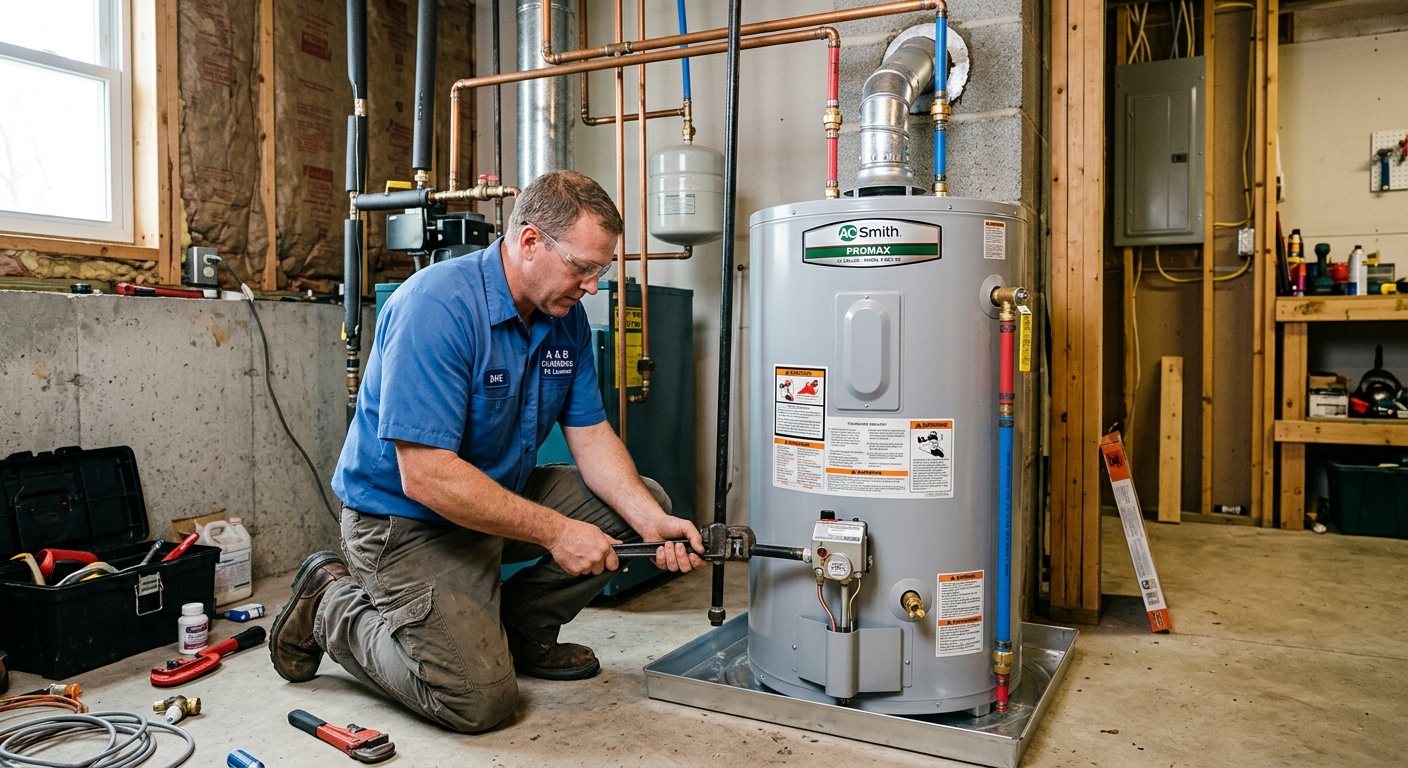
Sizing isn’t about gallons—focus on first-hour rating: hot water delivered in the busiest sixty minutes. Older homes in College need an expansion tank and a drain pan installed to meet code. Most failures happen at the tank itself (internal corrosion or a burst), not the controls—so replacement time usually means a wet floor. If you’re debating the payback on a tankless or heat pump model, factor in the necessary upgrades to gas or electrical service, venting, and the ambient temperature of your basement—heat pumps don’t love cold spaces and tankless needs high up-front work for venting. For most moderate-sized College homes, a well-installed tank still makes the most sense.
| Type |
Installed cost |
Service life |
Operating cost |
Best when |
| Gas tank, 40–50 gal |
$1,250–$3,000 |
8–12 yrs |
moderate |
existing gas, average usage |
| Electric tank, 40–50 gal |
$1,250–$2,000 |
10–15 yrs |
high |
no gas, easy swap |
| Gas tankless |
$2,000–$3,000 |
18–25 yrs |
low-moderate |
large households, endless hot water needed |
| Heat pump water heater |
$2,000–$3,000 |
13–15 yrs |
lowest |
warm basement, high electric rates |
The point where patching stops making sense
Patching leaks makes sense—until it doesn’t. If you’ve had two or more repairs on the same stretch of pipe in three years, you’re past the point of “bad luck” and squarely in “bad material” territory. College has a lot of homes built from 1960–1980, during the subdivision boom, and these usually rely on copper or galvanized steel that’s simply worn out. The warning signs are clear: falling water pressure throughout the house, water that runs orange or brown first thing, corrosion at any exposed pipe joints, and repeated pinhole leaks patched with clamps or quick-fixes.
At that point, you should weigh the cost of chasing leaks against partial or full repiping—replacing all supply lines with PEX or new copper. PEX is easier and less invasive to install, but some folks prefer copper for longevity and peace of mind. Don’t forget the mess: opening walls or ceilings to run new lines leaves drywall and sometimes plaster to repair, and older homes in College may have plaster walls where the finish work quickly rivals the plumbing cost. Galvanized steel and polybutylene are both candidates for full replacement, not more patches. Cast iron drains with root intrusion or offset joints need a look with a camera; sometimes relining is possible, but with repeated issues, digging is unavoidable.
| Situation |
Recommendation |
Cost |
Reasoning |
| One leak, accessible, modern pipe |
Spot repair |
$375–$1,250 |
isolated issue, low risk of repeat |
| Two or more leaks in 3 years |
Partial repipe |
$3,700–$6,000 |
pattern of failure, recurring labor adds up |
| Galvanized supply, pressure loss |
Full repipe |
$3,700–$9,000 |
material at end of life, systemic risk |
| Polybutylene anywhere in the house |
Full repipe |
$3,700–$9,000 |
failures unpredictable, insurance risk |
| Cast iron drain with root intrusion |
Camera, then reline or replace |
$2,100–$12,500 |
structural failure, can’t patch roots |
| Suspected lead service line |
Test, then replace the lateral |
$5,800–$12,500 |
lead confirmed, full line is homeowner’s |
What a plumbing quote should contain
In College, plumbing contractors use two billing models: flat rate (set price up front) or time-and-materials (hourly plus parts). Flat rate brings peace of mind—your bill won’t change even if the job takes longer. With time-and-materials, you may pay less for a simple fix, but there’s more risk on complicated jobs. The key is clarity. If your quote doesn’t spell out which model, ask before work starts to avoid any surprises.
Most shops charge a diagnostic fee for the visit, often crediting this if you approve the work. The written quote should define the exact scope—what fixtures are touched, walls or floors opened, and what will be restored when the job is done. Permits are usually needed for anything major in College, and the quote should state if these costs are included. Wall repair, painting, and floor restoration are sometimes included, sometimes not—get it in writing. Labor warranties are distinct from manufacturer parts warranties; make sure both are spelled out clearly. Finally, if the regular price goes up after hours, your quote should lay out those rates ahead of time.
| Line item |
What to look for |
Red flag if… |
| Billing model |
flat rate or hourly, stated up front |
unstated |
| Diagnostic fee |
amount, and whether it credits |
vague |
| Scope |
what is opened, repaired and restored |
price with no scope |
| Restoration |
drywall and finish explicitly in or out |
silent |
| Permit |
included and priced |
'not needed' |
| Parts |
brand and model for fixtures |
'standard fixture' |
| Warranty |
labour period stated separately |
parts only |
Sewer laterals: the pipe you own and can't see
In College and the State College area, the homeowner owns the sewer lateral from the house all the way to the main—this usually means your property, and sometimes beyond the sidewalk. Ownership comes with responsibility: if the pipe leaks, clogs, or collapses under your yard (or driveway), you pay for repairs, not the utility. Typical symptoms start subtly—a slow drain at one fixture, then throughout the lower level, progressing to gurgling sounds, or finally a backup at the floor drain or tub. When you reach more than one fixture or see sewage at the lowest point, you’re on borrowed time.
Before any excavation quote, insist on a camera inspection. Many older College homes have clay or cast iron sewer laterals prone to cracks, root intrusion, or separated joints. Roots come in through tiny gaps and eventually form a living net inside the pipe. Bellies (low spots) hold debris and can’t be fixed without digging. Sometimes a trenchless reline—installing a “pipe within the pipe”—solves the problem, but offset or collapsed pipe leaves digging as the only answer. For those living outside the State College sewer system, many rural Benner and Spring Township homes operate with septic systems—here, tank pumping every 2–3 years prevents most major headaches, but a failing drainfield is a different challenge. If you’re handed a quote for thousands in sewer work, don’t move forward without reviewing the camera footage—it’s your best leverage and peace of mind.
Frequently asked questions — plumbing in College
How do I shut off the water to my house?
In most College homes, your main water shutoff is located where the service line enters—usually in the basement near the front wall. Look for a lever or round-handled valve just above the basement floor before the meter or pressure regulator. To shut off the water, turn the valve clockwise (right) until it stops. If your valve hasn’t moved in years, it may stick—never force it. Every year or so, gently test it to avoid surprises during an emergency. For a burst pipe, shutting this quickly can save you $650–$1,250 in water damage and emergency plumbing fees. If your shutoff is corroded or leaks, have it replaced during other plumbing work. If you don’t see a shutoff at home, contact the State College Borough Water Authority for guidance.
What does repiping a house cost in College?
Repiping costs in College depend on your home’s size and what walls must be opened, not just the price per foot for pipe. Most whole-house repipes fall in the range of $3,700–$9,000 for a typical single-family home. Expect costs at the high end for older homes with plaster walls, finished basements, or tight crawlspaces. Much of the housing around State College uses aging copper or galvanized steel, and if you’ve had repeated leaks, a repipe can be cheaper than patching year after year. The quote should always spell out drywall or finish repairs, as these can add several hundred dollars to the bill. Always get a detailed written estimate, and beware of low bids that skip restoration or use questionable materials.
Who pays to replace a lead service line in College?
In College, the homeowner is responsible for maintaining and replacing the water service line from the street into the home. If a lead line is confirmed, replacement is your financial duty, not the water utility’s. A full water service line replacement typically lands between $5,800–$12,500, depending on the length, access, and what needs to be rebuilt after excavation. The State College Borough Water Authority has been targeting known lead services for replacement, but there is no systemwide replacement. Be wary of partial replacement strategies—they’re not EPA-recommended and can even spike lead levels temporarily. If your home was built before 1980 and you suspect lead, request testing, and get a clear estimate before digging.
Do I need a permit for plumbing work in College?
Yes, most plumbing projects in College require a permit, especially if the work involves moving or altering water, vent, or drain lines. The Centre Region Code Administration (for State College and nearby townships) and the county code office issue permits for significant changes, water heaters, and repipes. Minor fixture swaps—like replacing a faucet or toilet in an existing bath—don’t usually trigger a permit. The cost of a permit is commonly included in your plumbing quote and should be itemized. For jobs over $500, Pennsylvania law also requires a written contract under the Home Improvement Consumer Protection Act. Permit fees are low compared to the risks of uninspected work—a failed inspection could cost you far more than the fee (or a redo if you ever sell your house).
Should I leave a faucet dripping in cold weather?
In College, winter lows reach 2 °F and frost depth is 36 inches, so pipes can freeze—especially in uninsulated areas or exposed crawlspaces. For most modern homes with pipes below the frost line and heated basements, dripping faucets is usually unnecessary; good insulation is more effective. But if you have a history of freezes in your plumbing, leaving a trickle overnight during extreme cold is a last-resort option to prevent a burst pipe that could cost you $650–$1,250 in emergency repairs. Focus first on pipe insulation, air sealing, and keeping cabinet doors open under sinks along outside walls—these steps are both preventive and safer long-term.
Should I reline or replace my sewer line?
Relining—creating a new pipe inside the old one—can be a good option for College homes with clay or cast iron sewer laterals that are mostly intact but leaking at the joints. It costs less disruption and usually less money. Relining avoids destroying landscaping and hardscaping, and runs between $2,100–$12,500, depending on length and prep work. However, if your pipe has major collapses, severe offsets, or repeated root blockages, replacement may be unavoidable. Always get a camera inspection to document the condition before making the decision. Replacement is disruptive, especially under driveways or sidewalks, but sometimes it’s the only route to reliable long-term drainage.
What causes low water pressure in College homes?
Low water pressure in College is often tied to aging galvanized steel or partially-blocked copper pipes common in homes built from 1960 to 1980 around State College. As galvanized steel corrodes, mineral and rust build up, shrinking the pipe’s effective diameter and choking water flow. Signs include slow pressure at all taps, worse with multiple fixtures running. Other causes include main shutoff valves not fully open, partially clogged pressure regulators, or problems at the meter. Infrequently, it’s an issue with the public supply, but typically, if your neighbor has good pressure and you don’t, the trouble is inside. Correcting a pressure problem with new supply lines (a whole-house repipe) runs $3,700–$9,000 but restores normal flow everywhere.
Are tree roots a common sewer problem in College?
Yes, especially in College’s older neighborhoods, where pre-1980 homes still use clay or cast iron sewer laterals. Trees love the consistent moisture and sneak roots through cracks or separated joints, clogging pipes over decades. The first sign is usually a slow or gurgling drain, then backups in the lowest fixtures. Camera inspection will show roots if present, and hydro-jetting can sometimes clear them temporarily, but relining or replacing the pipe is the long-term fix—usually in the $2,100–$12,500 range depending on location and access. If you’re planting new trees, keep them at least 10 feet from your sewer line’s path to lower the risk in the future.
How much does sewer line repair cost in College?
Sewer line repairs in College span a wide price range due to soil, depth, and access. Spot repairs—excavating and fixing a single failed section, or inserting a trenchless liner—start at $2,100, but complex jobs with deep digging, long runs, or work under driveways can hit $12,500. For the typical College home, expect a midrange cost around $5,800. Always insist on a camera inspection first—this protects you from unnecessary excavation and helps nail down a realistic quote. Multiple slow drains, sewage backflow, or visible water in your yard after heavy rain mean it’s time to act before property damage snowballs.