Plumbing costs in Fairview — 2026
Fairview’s plumbing costs depend as much on timing as on the work done. The same repair will land you at two different price points depending on whether you call in a panic with water pouring through your ceiling, or schedule routine service. This is especially true with older homes—66.4% of properties here were built before 1980 (U.S. Census Bureau, ACS 2024), often with original galvanized or cast-iron plumbing. That matters because with pipes, age and material aren’t just trivia—they drive what breaks and what you’ll pay to fix it.
Both Erie and Millcreek have a lot of 1900–1950 homes, so if your house falls in that era, it likely has hidden galvanized pipes (prone to corrosion) or cast iron (cracks over time). Emergency repairs—think burst pipes during a winter freeze—carry overtime or after-hours surcharges, while scheduled jobs, like replacing a water heater or repiping, let you plan and usually save. With Fairview’s high homeownership rate of 90.8%, knowing what price to expect helps families budget and avoid surprises.
| Service |
Scope |
Emergency rate |
Standard rate |
| Emergency repair — burst pipe |
locate, open, repair section, restore service |
$650–$1,300 |
$375–$1,300 |
| Water heater replacement (gas, 40–50 gal) |
remove old, install, test, haul away |
$2,000–$3,000 |
$1,300–$3,000 |
| Drain cleaning — main line |
augering or hydro-jet, camera if needed |
$350–$800 |
$200–$500 |
| Sewer line spot repair |
excavate or reline a failed section |
$2,100–$13,000 |
$2,100–$13,000 |
| Whole-house repipe |
replace supply lines throughout, patch and finish |
|
$3,800–$9,100 |
| Water service line replacement |
street to house, excavation and restoration |
|
$5,900–$13,000 |
Estimates for a typical Fairview home. Access difficulty and pipe material move these figures more than anything else.
Finding a hidden leak in Fairview
The first step to catching a hidden supply leak in your Fairview home is free: the meter test. Shut off all the water fixtures inside and out, wait a couple of minutes, and check your water meter—if the indicator dial is still moving, there’s a supply leak somewhere between the meter and your home’s plumbing system.
Once you’ve confirmed a leak, a professional should use non-invasive methods before reaching for the drywall saw. Acoustic listening devices can pinpoint leaks in walls or under floors for about $200–$500 as part of a targeted call, with thermal imaging an additional tool, especially if there’s a warm water leak. Tracer gas (inert gas injected into the pipes and detected above ground) is sometimes used for the most elusive pipe runs—especially underground—typically starting around $350 and up. For slab leaks—pipes running under a concrete slab—the process usually involves a combination of methods, with accurate location helping avoid unnecessary demolition.
Common trouble spots are inside wall cavities (particularly on exterior walls), under slabs, and even hidden irrigation or supply lines for outbuildings. If a plumber wants to start opening walls or ceilings before using these detection methods, that’s going backwards and is likely to create more mess—and cost—than necessary. Reliable plumbers will always locate the leak first, then cut carefully to repair only what’s needed.
Winter pipe failures in northwestern Pennsylvania
Fairview sits in the Lake Erie snowbelt, so local plumbing faces real winter risks. With a typical frost depth of 36 inches and a winter design temperature of 5°F, every cold snap pushes pipes to their limits. Pipes burst not where they freeze, but just downstream—pressure builds up between the ice plug and the nearest closed faucet, splitting a weak spot.
The most vulnerable spots are exterior walls, unheated crawlspaces or basements, garages (especially when the door is left open), hose bibs not drained before winter, and supply pipes run through attics without enough insulation. Prevention can cost next to nothing or several hundred dollars, but always costs less than a repair after the fact. Start by adding foam pipe insulation to exposed pipes, especially where they run along outside walls or are close to vents and unheated spaces. Electric heat tape is an option for trouble spots—just make sure it’s properly installed and monitored. During deep freezes, a steady trickle from the faucet relieves pressure and keeps water moving. On especially cold nights, open cabinet doors under sinks along exterior walls to let warm air in. Always shut off and drain exterior spigots before the first hard freeze.
If a pipe does freeze, use a hair dryer, heat lamp, or electric pipe thawing machine—never an open flame, which can set walls ablaze and void insurance. Dealing with a burst pipe in an emergency can run $650–$1,300, so a little prevention early in the season can save you hundreds.
Lead service lines in Fairview
Erie Water Works supplies much of Fairview, and they’ve reported thousands of old lead service lines in their service area. These lines run from the water main under the street to homes, split into a utility-owned portion (typically up to the property line) and a homeowner-owned lateral from there into your basement. Replacement programs usually cover only the utility side, which means most homeowners are on their own for their section of pipe—always check with Erie Water Works to confirm what’s covered, and don’t assume you’re included.
To figure out if your home has a lead service line, check where the water pipe enters through the basement wall or floor—use a screwdriver to lightly scratch the pipe. Lead is dull gray and easily scratched, while other materials look and feel different. A magnet won’t stick to lead, but it will to steel. Partial replacement isn’t always a win: disturbing the old line can release particles into your water, especially if scale that blocked lead flow gets knocked loose. Full replacement is the safest bet, and always use cold water for cooking or drinking in older homes until you know your water line’s material.
Homeowners can check Erie Water Works’ published service line inventory or call to ask about cost-sharing or ongoing programs. For a full replacement from the street to your home, including excavation and surface restoration, expect a bill in the $5,900–$13,000 range. Spot repairs, though less common, cost $2,100–$13,000 and only address a section—often a band-aid, not a fix.
Licensing and permits for plumbing work in Fairview
In Pennsylvania, plumbing is not licensed at the state level—the system is municipal. This means a plumber licensed in Erie City may not hold the proper credential in Fairview Township or Millcreek Township. Always ask if your contractor is licensed to work in your specific municipality; otherwise, they may not be legally allowed to pull permits for your job.
The Pennsylvania Uniform Construction Code (UCC), based on the IRC, governs plumbing in all residential properties, with enforcement by each municipality or, in “opted out” areas, by the PA Department of Labor & Industry. Only the City of Erie Bureau of Code Enforcement is specifically named as handling plumbing permits in this area, but each township, including Fairview, has its own code office. In Erie, any addition, alteration, replacement, or relocation of plumbing piping needs a building permit. Refinishing an existing fixture, such as re-glazing a tub, does not.
For contract work over $500, your plumber must have Home Improvement Contractor (HIC) registration, which you can verify at hic.attorneygeneral.gov. When it comes to liability, always ask for proof of active insurance, specifically workers’ compensation for all employees—verify this at the state’s WCAIS system (wcais.pa.gov). A written contract is required by the Home Improvement Consumer Protection Act for any job over $500, and you have three business days to cancel once it’s signed.
How to find a good plumber in Fairview
Finding a competent, local plumber in Fairview isn’t complicated if you know what to check. Always verify your plumber’s HIC registration (hic.attorneygeneral.gov) for jobs over $500, and confirm they’re authorized to work in Fairview—since Pennsylvania’s plumbing licensing is municipal, credentials in Erie don’t apply automatically to other townships. Ask for proof of insurance and workers’ compensation, verified via the WCAIS website (wcais.pa.gov), and make sure your policy and property are named. Demand clarity on whether the company uses its own crews or subs out work—direct employment typically means more accountability. For emergency and after-hours calls, get pricing in writing before scheduling the dispatcher.
- Is the plumber’s HIC registration current (hic.attorneygeneral.gov)?
- Are they licensed or permitted in Fairview or your specific township?
- Can they provide a certificate of insurance specific to your address?
- Do they have current workers’ compensation coverage (wcais.pa.gov)?
- Is the estimate a written contract (required over $500)?
- How do they handle change orders or surprises on the job?
- Do they use in-house techs or subcontractors?
- Is scope-of-work clear for emergency and standard rates?
- Will you see video or pressure test results if recommended for sewer or repipe?
- How will permits and inspections be handled?
- For older homes, can they explain options for galvanized/lead replacement?
- Are safety and lead protocols detailed for pre-1978 properties?
Red flags include any plumber unwilling to provide licensing or insurance documentation, vague emergency pricing, or pressing for expensive repiping or sewer work without showing you camera footage or pressure test data. Fairview’s moderate density means travel charges vary but should always be disclosed.
Choosing a water heater in Fairview
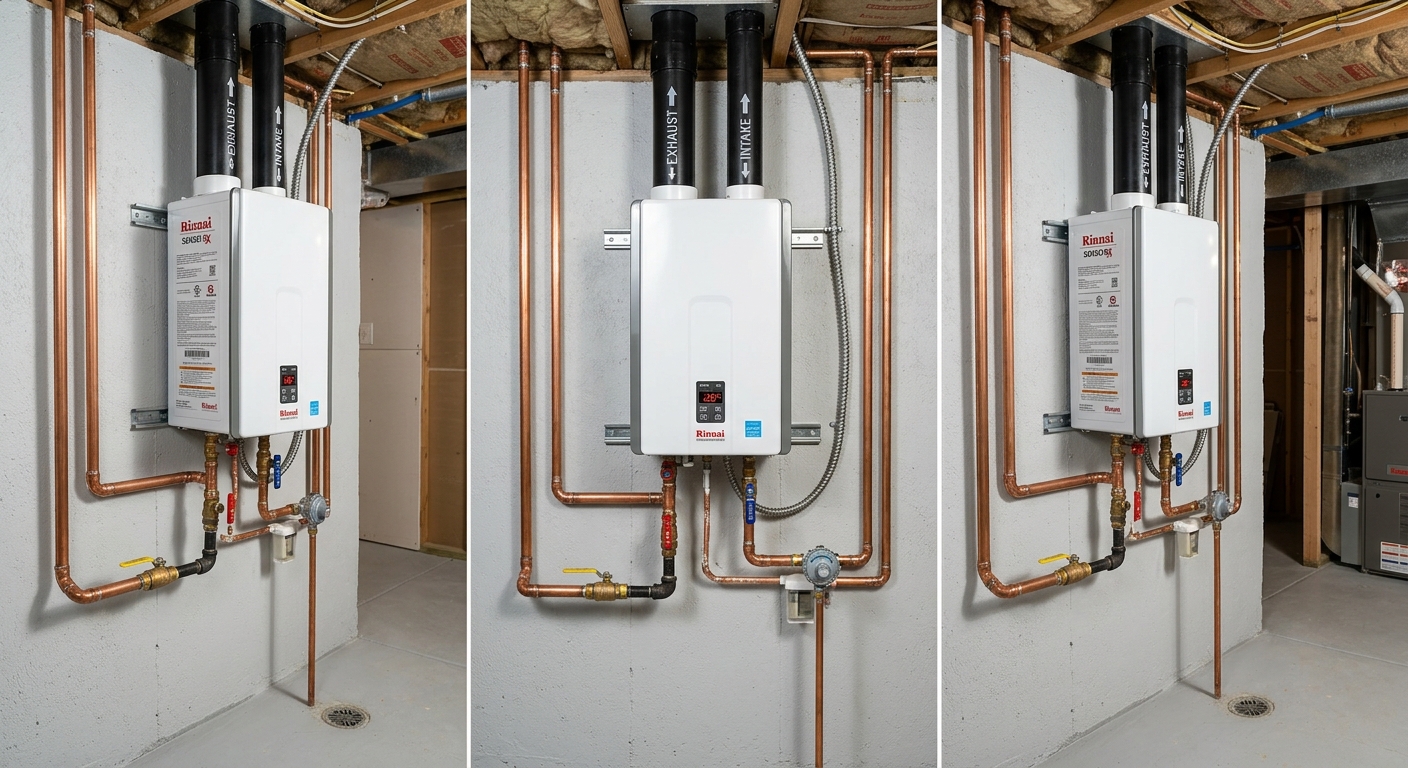
Choosing a water heater in Fairview means weighing upfront cost, long-term efficiency, and what your house was built for. Standard gas and electric tank heaters are straightforward to install and fit easily into most basements, but they differ in operating costs—electric is simplest but will cost more month-to-month unless you’re on off-peak rates. Tankless gas heaters provide endless hot water but almost always require a larger gas line and new vent, tricky and costly in older homes with original plumbing. Heat pump water heaters are the most efficient to run and replace a standard electric tank directly, but they need plenty of space for airflow and may not suit a small or finished basement because they’re noisy and can cool the surrounding space.
Sizing by the first-hour rating (how much hot water it delivers in one hour of use) is more reliable than tank size alone, especially for families. For all tank installs, Erie County codes require an expansion tank if any backflow device is present, and a drain pan with a proper drain or alarm in finished basements. Most failures happen at the tank itself as it rusts from the inside out—controls or elements fail less often and are usually worth repairing only on units under five years old.
| Type |
Installed cost |
Service life |
Operating cost |
Best when |
| Gas tank, 40–50 gal |
$1,300–$3,000 |
8–12 yrs |
moderate |
existing gas and vent, standard use |
| Electric tank, 40–50 gal |
$1,300–$2,000 |
10–15 yrs |
high |
no gas service, low upfront cost |
| Gas tankless |
$2,000–$3,000 |
18–25 yrs |
low-moderate |
endless hot water, willing to pay extra upfront |
| Heat pump water heater |
$2,000–$3,000 |
13–15 yrs |
lowest |
ample space, no gas, want lowest operating cost |
Frequently asked questions — plumbing in Fairview
Does Pennsylvania license plumbers at the state level?
Pennsylvania does not issue statewide plumbing licenses. Instead, each city and township has its own guidelines for licensing and registration, which is especially important in places like Fairview and the Erie area. A plumber licensed in Erie won’t necessarily be licensed in Fairview Township. This means you should always ask if your plumber is properly credentialed and permitted for your particular location. For any contract over $500, Home Improvement Contractor (HIC) registration is a requirement statewide, and you can look it up at hic.attorneygeneral.gov. Plumbing work in Fairview—especially any addition or alteration—will require proper permits and local code inspection. Hiring a non-local or unregistered plumber may save you a few dollars upfront, but it won’t protect your investment or ensure your work passes code.
What do I do if sewage is backing up?
If sewage is backing up into your Fairview home, start by stopping all water use to avoid worsening the overflow. Check if the issue is affecting just one fixture (like a single basement drain) or the whole house. If it’s the main drain, call a plumber immediately for emergency service—expect to spend $350–$800 for main line drain cleaning on an emergency call, depending on time of day and access. In rural areas with septic systems (such as some Fairview neighborhoods), backups may indicate tank or drain field failure and need separate assessment. Never attempt to unclog a main sewer with store-bought chemicals—they can be dangerous and often ruin a plumber’s equipment. In the City of Erie and other local municipalities, the homeowner owns the lateral from the house to the main, so repairs are typically your responsibility.
Should I repipe my Fairview home or keep repairing?
If your Fairview home was built before 1980—and especially if it still has original galvanized or cast-iron pipes—frequent repairs usually signal it’s time to bite the bullet and repipe. Each fix on failing old pipe is a temporary patch, and costs add up quickly. Full repiping may cost $3,800–$9,100 depending on house size and access, but it means fewer pipe bursts and less water damage risk down the line. If you’re seeing reduced water pressure, discolored water, or repeated leaks, full repiping brings long-term peace of mind and improved home value, particularly in Fairview where older housing stock is common. Short-term repair only makes sense if you intend to move soon or if your original pipe is still mostly sound outside a single problem area.
What does drain cleaning cost in Fairview?
For a standard main line cleaning in Fairview, costs run $200–$500 for a scheduled (non-emergency) service. If you need emergency help—say at night or during the holidays—expect to pay closer to $350–$800. Additional costs can come from video camera inspection, which some plumbers include or charge separately. Factors that drive up price are main line blockages outside the home (requiring more labor), the need for hydro-jetting, or if the blockage is due to collapsed or root-invaded old clay and cast-iron pipes (common in older local homes). Most clogs can be resolved in one visit, but repeat issues are a sign of bigger pipe problems.
How much does a water heater replacement cost in Fairview?
In 2026, replacing a standard gas water heater (40–50 gallons) in Fairview typically lands between $1,300–$3,000, including removal of the old unit, installation, and haul-away. If your replacement happens as an emergency, expect the figure to be at the upper end or just above. Electric units are on the lower end of that range, while tankless and heat pump water heaters run higher upfront but can save on energy costs over time. In some older Erie County homes, upgrades to the vent or gas supply may add to the base cost. A full quote should be in writing and specify any code-required extras (pans, expansion tanks, or updated venting) for your exact situation.
Which utility supplies water to Fairview?
Erie Water Works is the primary public water utility for Fairview and much of Erie County. They’re responsible for water main maintenance and the utility side of your service line—the homeowner owns the pipe from property line to basement. If you’re planning major plumbing work, check with Erie Water Works to verify whether they’ve documented your home’s water service line material and if any replacement program is active. If you ever need to replace your own service line, expect to budget $5,900–$13,000 for full replacement in 2026.
Who owns the sewer lateral, me or the city?
In Fairview, as in the rest of Erie County, the homeowner owns the sewer lateral—from your house out to the main in the street. The municipality maintains the main line only. If a blockage or collapse occurs under your yard or driveway, the repair bill lands with you, not the city. Spot sewer line repairs (excavation, restoration) routinely range from $2,100–$13,000 depending on the length and complexity. Camera inspections before any big repair are essential to pinpoint the problem and prevent unnecessary excavation or lining.
How long should a water heater last in Fairview?
In Fairview, a standard gas water heater will generally last 8–12 years; electric tanks average 10–15 years. Tankless models can last even longer—18 to 25 years—if properly maintained. Hard water, common in Erie County, can reduce lifespan, especially if the heater isn’t drained of sediment periodically. Most failures stem from tank corrosion, so once a tank starts leaking, it needs replacement. Replacement costs in Fairview sit at $1,300–$3,000 installed. If your heater is nearing its lifespan or showing rust, replacement is usually more cost-effective—and less disastrous—than waiting for a basement-flooding failure.
Should I leave a faucet dripping in cold weather?
Yes, leaving a trickle running from a faucet on an exterior wall can help prevent pipe freezing during cold Fairview winters, especially when temperatures drop below 5°F. Movement keeps pressure from building up between a frozen section and a closed valve, drastically reducing the chance of a burst pipe—which would cost $650–$1,300 to repair after an emergency freeze. This trickle is cheap insurance against the cost, hassle, and potential water damage of a winter pipe burst. Combine it with other measures like insulating exposed pipes and opening cabinets for best results.