Plumbing costs in Middle Smithfield — 2026
In Middle Smithfield, plumbing costs depend as much on the type of call—emergency versus scheduled—as on the job itself. With 86.1% of homes owner-occupied and 77.0% being single-family (U.S. Census Bureau, ACS 2024), most repairs here mean entering a home where the plumbing was installed between the 1970s and early 2000s. That means you often see PEX retrofits next to original copper, or find the odd cast iron or clay in the drains. When pipes fail, what they're made of and how easily they can be accessed will dictate both the repair approach and the price.
For any given repair, you could see two very different prices depending on whether you’re calling at 2 p.m. on a Wednesday or 11 p.m. during a January freeze. Emergency work costs more because it means overtime, after-hours dispatch, and a job that can’t wait for easy access or parts. For example, an emergency burst pipe fix can cost up to $1,200, but the same work scheduled during business hours could come in at $350. Other common jobs, like water heater replacement, main line drain cleaning, and sewer or water line repairs, have ranges set mostly by whether they’re urgent and by what materials are hiding behind your drywall.
If your home has had septic tie-ins, clay or older cast iron may still run out to the tank, and roots are a regular headache. For newer subdivisions, PEX and PVC dominate, which can be quicker and cheaper to service. Ultimately, the era and material of your plumbing are what swing your job’s cost more than any other factor.
| Service |
Scope |
Emergency rate |
Standard rate |
| Emergency repair — burst pipe |
locate, open, repair section, restore service |
$600–$1,200 |
$350–$1,200 |
| Water heater replacement (gas, 40–50 gal) |
remove old, install, test, haul away |
$1,900–$2,800 |
$1,200–$2,800 |
| Drain cleaning — main line |
augering or hydro-jet, camera if needed |
$350–$800 |
$200–$500 |
| Sewer line spot repair |
excavate or reline a failed section |
$2,000–$12,000 |
$2,000–$12,000 |
| Whole-house repipe |
replace supply lines throughout, patch and finish |
$4,500–$8,600 |
$3,500–$8,600 |
| Water service line replacement |
street to house, excavation and restoration |
$7,000–$12,000 |
$5,500–$12,000 |
Estimates for a typical Middle Smithfield home. Access difficulty and pipe material move these figures more than anything else.
Flat rate versus time and materials
When you hire a plumber in Middle Smithfield, you’ll see two main billing models: flat rate and time-and-materials. With flat rate, you know exactly what you’ll pay before the work begins—the contractor builds in their risk, so if the job takes longer than expected, you pay the same. That can be a relief in an emergency or for complex work, but you may pay more for smaller, straightforward repairs under this model.
Time-and-materials means you’re billed for the actual hours and materials used. On a simple job with good access—think swapping out a toilet or fixing a visible leak—this can be cheaper. But it comes with risk: if the plumber runs into trouble or the problem is bigger than it looks, your bill climbs with every hour. Neither approach is a scam. Trouble starts when you aren’t told up front which you’re agreeing to.
A written quote should spell out more than just a price. Look for a diagnostic fee (and whether it’s credited back when you hire out the work), detailed scope of repair, whether wall restoration is included, specific brands for fixture replacements, warranty on labor, and clear disclosure of after-hours or holiday rates. Every line should account for what’s included—and what isn’t.
| Line item |
What to look for |
Red flag if… |
| Billing model |
flat rate or hourly, stated up front |
unstated |
| Diagnostic fee |
$75–$150, and whether it credits |
vague |
| Scope |
what is opened, repaired and restored |
price with no scope |
| Restoration |
drywall and finish explicitly in or out |
silent |
| Permit |
included and priced |
'not needed' |
| Parts |
brand and model for fixtures |
'standard fixture' |
| Warranty |
labour period stated separately |
parts only |
Dating your plumbing by what it's made of
In Middle Smithfield’s mix of 1970s-2000s vacation homes and subdivisions, you’re likely to have more than one type of pipe in your walls and floors—especially if the home’s seen a retrofit or tie-in. The main supply could be copper or PEX, sometimes patched onto older galvanized or even polybutylene. Sewers are often clay or cast iron, swapped out in sections, with PVC for anything more recent.
To identify what you’ve got, look for exposed pipe near the water heater, main shutoff, or under a sink. Galvanized steel is gray, dull, and magnetic, with threaded joints; copper is orangey-brown and soldered. Polybutylene is usually gray or blue, has plastic or metal crimp rings, and is flexible but notorious—if you have it, plan for replacement. PEX runs are flexible, colored blue or red, using push-fit or crimp-fitted plastic or brass connectors. Cast iron drain pipes are dark and heavy, non-magnetic but thick-walled; clay tile is orange-brown and seen mainly outside. PVC and ABS are plastic and white or black, with glued joints.
Era matters for lifespan. Galvanized steel is often already overdue for replacement, and pinhole leaks in copper can show up after 50 years. Polybutylene is a wild card—best bet is to replace, not patch. Cast iron and clay drains, if original, are in their final decades here, especially with root issues. Modern PEX and PVC should be good for another few decades if well-installed and kept out of sunlight.
| Material |
Typical era |
Failure mode |
Service life |
| Galvanized steel supply |
pre-1960 |
internal corrosion, pressure loss |
40–60 yrs |
| Copper supply |
1950s–present |
pinhole leaks, joint failure |
50–70 yrs |
| Polybutylene supply |
late 1970s–1995 |
fitting failure, sudden bursts |
unreliable |
| PEX supply |
2000s–present |
fitting or UV degradation |
40–50 yrs |
| Cast iron drain |
pre-1975 |
corrosion, cracking, scale |
50–75 yrs |
| Clay tile sewer lateral |
pre-1980 |
root intrusion at joints, offset |
50–60 yrs |
| PVC / ABS drain |
1970s–present |
joint separation, crushing |
50+ yrs |
Finding a hidden leak in Middle Smithfield
Before you call a plumber in Middle Smithfield, try the meter test: turn off every tap, appliance, and irrigation line. Watch your water meter—if the dial moves with everything shut, you have a supply-side leak. This step costs nothing and can save you an unnecessary service call.
When the leak isn't obvious—maybe you hear water running behind a wall or notice a warm spot on a slab—pros use a progression of methods. Acoustic listening helps pinpoint leaks in pressurized lines; this typically runs $250–$500 depending on how many areas must be checked. Thermal imaging sees temperature differences through walls or floors (good for radiant heat or slab leaks); expect a similar cost. Tracer gas is rare for residential work but is precise when all else fails, often adding $400–$800. For a slab leak, expect more—the hunt plus the repair often tops $1,000.
Hidden irrigation leaks can be isolated by shutting supply valves at the yard and checking the meter again. Remember, no legitimate plumber in Monroe County should start busting into drywall or jackhammering slab until leak location is dialed in. Locating should always come before demolition in a modern home—anything else means you’re paying for guesswork, not diagnostics.
Verifying a Middle Smithfield plumber's credentials
In Pennsylvania, plumbing licensing is handled at the municipal level—there is no statewide plumbing licence or registry. This means a plumber licensed to work in one municipality may not be approved in the next. In Middle Smithfield, always ask directly if your plumber is licensed to work in your specific township. For emergencies or big projects, you don’t want to learn after the fact that your municipality requires local registration.
The Pennsylvania Uniform Construction Code (UCC), based on the IRC, is what plumbers must follow here and is enforced locally, typically by municipal code enforcement, or by the state Department of Labor & Industry where municipalities have opted out. For Monroe County, East Stroudsburg Borough has its own code enforcement. If in doubt, call the local office to confirm what permits are needed and who can pull them.
For any plumbing job over $500, Pennsylvania requires contractors to hold a Home Improvement Contractor (HIC) registration through the Office of Attorney General—verify at hic.attorneygeneral.gov. A written contract is also required for these jobs, giving you a 3-business-day right to cancel. Insurance is another must: check both liability and workers’ compensation, which in Pennsylvania is mandatory for all employers and verified via WCAIS at wcais.pa.gov. Never take a plumber’s word; ask for certificates made out in your name and check registration numbers yourself.
Emergency rates versus scheduled work in Middle Smithfield
The biggest price swings in Middle Smithfield plumbing—hundreds, sometimes thousands of dollars—come from whether or not your job is an emergency. A genuine emergency commands a premium because the plumber is paying overtime, dropping current jobs, and heading into the field with short notice. There’s often a night or weekend trip charge, and diagnosis has to happen fast, sometimes without a full parts run or ideal access.
Not every bad plumbing problem is an emergency. True emergencies here are: active flooding (burst pipe, water everywhere), total loss of water (main break, failed well pump), sewage backing up into living space, or any gas odor. These need an immediate response, even at a higher rate—think $600–$1,200 for a burst pipe fix. Problems that don’t get worse by the hour—a slow drip into a pan, a single slow drain, a running toilet—almost always make sense to schedule for standard hours, where repair can cost half as much.
Knowing how to turn off your water at the main can convert many emergencies into scheduled work. Find your main shutoff (usually near the meter or where the line enters the foundation) and turn it clockwise to stop flow. Each fixture often has its own valve as well—under sinks and behind toilets. If you can safely stop the leak and avoid flooding, you buy yourself time to hire smart, not fast.
Choosing a plumbing contractor
Hiring a plumber in Middle Smithfield means checking both registration and insurance before the first wrench is turned—not after. In this part of Monroe County, verify Home Improvement Contractor (HIC) registration through the Pennsylvania Office of Attorney General for any job over $500, using hic.attorneygeneral.gov. Since plumbing licensing is municipal, always confirm the plumber is licensed or authorized to work in your exact township, not just “in Pennsylvania.”
Request both general liability and workers’ compensation certificates made out to your property address (not just a generic “insured” line). Verify workers’ comp at wcais.pa.gov. For large jobs—repipes, sewer line work—ask if the crew is direct employees or subcontractors (the biggest risk for uninsured labor is in subcontracted jobs). For emergencies, get the after-hours price in writing before anyone is dispatched.
- Verify HIC registration for jobs over $500
- Confirm plumber is licensed in your specific municipality
- Ask for certificates of liability and workers’ compensation insurance, naming your address
- Use wcais.pa.gov to confirm workers’ comp is active
- Request written contract for all work over $500
- Ask if the company uses employees or subs for major jobs
- Get all standard and after-hours rates in writing
- Demand camera footage for drain or sewer diagnoses before paying for replacement
- Never sign off on whole-house repipes or sewer replacements without video/pressure proof
- Look for specific brands and model numbers in fixture/list pricing
- Check that cleanup and restoration is clearly included or excluded
- Walk away if pressured to waive your insurance deductible—it’s illegal here
In a moderate contractor market like Monroe County, red flags include high-pressure up-selling, refusal to share camera footage before quoting a big repair, or a lack of written scope for anything major. Don’t pay for conjecture—a trustworthy plumber won’t pad the work or push whole-house jobs without proof.
Frequently asked questions — plumbing in Middle Smithfield
Do I need a permit for plumbing work in Middle Smithfield?
In Middle Smithfield, whether you need a plumbing permit depends on the type of work and your exact municipality. Plumbing is not licensed statewide in Pennsylvania—it’s handled by each municipality. For anything beyond simple repairs (like moving pipes, whole-house repiping, or new water heaters), a permit is typically required. East Stroudsburg, for example, has its own enforcement. Always ask your plumber if they are authorized to pull permits locally—having HIC registration and insurance is separate from municipal approval. The permit fee itself for a basic job can range from $50–$200. If you skip the permit and the job fails inspection down the line, you could face additional costs or have insurance claims denied. Always insist on seeing a copy of the permit and ask who will call for final inspection.
Is a tankless water heater worth it in Middle Smithfield?
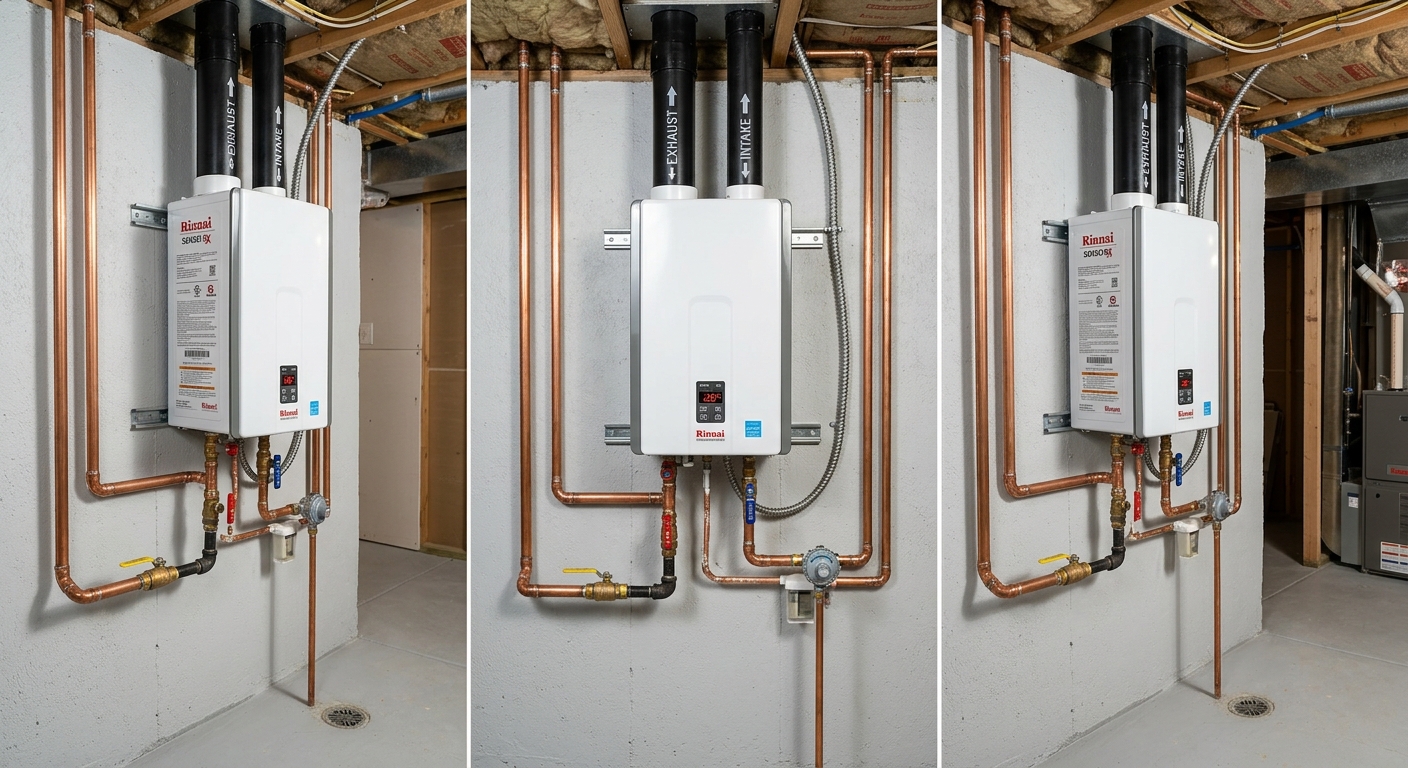
Tankless water heaters can be a good fit in Middle Smithfield for households wanting unlimited hot water or more space, but they’re not always the cost winner. The up-front installation cost is typically higher than traditional gas tank models—often $2,800–$4,500, compared to $1,200–$2,800 for a standard 40–50 gallon tank unit. Energy savings can be real, especially in smaller households or homes that sit empty part of the year, as is common with some properties here. However, you may need to upgrade your gas line or venting, adding to the install cost. If your priority is lowest first cost or easiest replacement, a regular tank still makes sense. Talk over your specific water usage and building layout with your plumber before going tankless.
Why do plumbers charge a diagnostic fee?
Plumbers in Middle Smithfield usually charge a diagnostic fee—often between $75–$150—to cover their time, travel, and tools used to correctly identify your problem. Unlike a simple service call, diagnosis is about taking the time to open up walls, run cameras down drains, and use specialized equipment like acoustic or thermal leak detectors. Many plumbers will credit this fee back if you authorize the repair. It’s not a hidden charge but a way to separate serious customers from shoppers, especially in a market where costs to access older copper, PEX, or even buried cast iron and clay tile pipes can run higher. Make sure you ask if the diagnostic fee will be credited to your repair cost—or if it’s a separate, non-refundable line in your contract.
What do I do if sewage is backing up?
Sewer backups in Middle Smithfield require quick action, especially if you’re on a septic system that’s common in many townships. First, stop using all water in the house to avoid adding more to the system. If you can safely access your cleanout (usually a capped pipe outside or in the basement), check for standing water at the cleanout—it signals a clog down the main. Call a plumber right away; main line drain clearing typically costs $200–$800 depending on severity and emergency rates. If the backup is confined to one fixture, try isolating that line, but if sewage is coming up in multiple spots, do not wait—sewage in living space is a health emergency. Make sure the plumber provides camera footage before suggesting a spot repair or replacement.
What does drain cleaning cost in Middle Smithfield?
For a typical single-family home in Middle Smithfield, main line drain cleaning costs between $200–$800 depending on whether it’s scheduled or an after-hours emergency. This covers augering or hydro-jetting the main line, sometimes with a follow-up camera inspection to check for roots, cracks, or blockages further down the line. Costs rise if access to the main sewer is buried or hard to reach, or if multiple passes are needed. Cleaning secondary (smaller branch) drains, like tubs or kitchen sinks, usually runs less but can add up if multiple fixtures are involved. Always get a fixed price before the work begins, and ask to see the footage if you’re told additional repairs are required.
Are tree roots a common sewer problem in Middle Smithfield?
Tree roots in sewer lines are a recurring problem in Middle Smithfield, especially for homes built before 1980 that likely still have clay tile laterals or cast iron sewers running to septic or municipal main connections. Roots enter through joints in clay tile and cracks in old cast iron, eventually causing blockages and backups. Clearing a root-blocked main line usually runs $200–$800, but if damage is advanced, spot repair or even full replacement may be warranted—those jobs range up to $12,000. If backups happen more than once a year, it’s time for a camera inspection to see the extent of root intrusion. Pipe lining or targeted replacement can solve the issue for decades and is usually cheaper than repeated cleaning.
How do I prevent frozen pipes in Middle Smithfield?
With Middle Smithfield’s winter design temps down to 4 °F and a 36 inch frost depth, frozen pipes are a real risk—especially for homes built as seasonal properties or with pipes in unheated crawl spaces. The most effective ways to prevent freezes are to insulate exposed supply lines, seal foundation vents, and keep a trickle of water flowing during deep cold spells. Heat tape or pipe wrap can be installed for $100–$350 per run, depending on access. If you’re away for the winter, winterize by shutting off the main, draining the system, and leaving cabinet doors open in kitchens and baths. If you don’t know where your main shutoff is, learn now—being able to stop flow quickly can save you the cost of an emergency call at $600–$1,200.
Who pays to replace a lead service line in Middle Smithfield?
In Middle Smithfield, homeowners almost always foot the bill for replacing a lead water service line from the street to the home. Public utilities are rarely responsible for lines on private property. Costs for water service line replacement typically run $5,500–$12,000 depending on length, access, and surface restoration (lawn versus driveway, for example). If your home predates the late 1950s and you’re unsure about the material, have your plumber check during any major job. In rare cases, Pennsylvania or local programs offer assistance, but always confirm before work starts. For newer homes or those already retrofit with PEX, this won’t apply, but any house with a suspicious metal line of uncertain vintage should be checked for lead.
How do I tell what my pipes are made of?
Identifying your pipes in a Middle Smithfield home is practical and can be done with a few simple tools. Start by checking exposed sections—under sinks, at the water heater, near the main shutoff. Copper is a reddish-brown metal that isn’t magnetic and has soldered connections. Galvanized steel is gray and will attract a magnet, with threaded joints. PEX, often newer, is flexible plastic (colored blue or red) and connects with crimp or push fittings. Polybutylene is gray or blue and flexible, but is less common since the 1990s. For drains, cast iron is heavy and black; clay tile is hard, reddish-orange, seen at main sewer exits; PVC/ABS is white or black plastic, used from the 1970s onward. If in doubt, your plumber can confirm during a quote visit (possibly as part of a $75–$150 diagnostic fee). Knowing your materials helps predict problems before they turn expensive.