Frankstown plumbing prices by job type — 2026
In Frankstown, the cost of plumbing work ties directly to how and when the job is needed. With a homeownership rate over 80% and most houses being single-family (U.S. Census Bureau, ACS 2024), plumbing services are a recurring necessity, especially as older homes become less forgiving. Blair County’s building boom from 1900–1950 left many properties — especially in Altoona-area towns — with galvanized pipes that corrode, leak, and need full replacement more than newer materials.
When you call for an emergency (a burst pipe flooding the kitchen at 10 pm, for example), you pay more — not just for the repair but for the overtime, rapid trip, and diagnosis under the clock. The same repair during the day, when a plumber can schedule jobs back-to-back, costs less even if the work is identical. How much less? It varies by job, but the difference is real enough to plan around. Certain jobs — like whole-house repipes or street-to-house line replacements — are scheduled in advance only.
| Service |
Scope |
Emergency rate |
Standard rate |
| Emergency repair — burst pipe |
locate, open, repair section, restore service |
$650–$1,250 |
$375–$1,250 |
| Water heater replacement (gas, 40–50 gal) |
remove old, install, test, haul away |
$2,000–$2,900 |
$1,250–$2,900 |
| Drain cleaning — main line |
augering or hydro-jet, camera if needed |
$350–$800 |
$200–$500 |
| Sewer line spot repair |
excavate or reline a failed section |
$2,100–$12,500 |
$2,100–$12,500 |
| Whole-house repipe |
replace supply lines throughout, patch and finish |
|
$3,700–$8,900 |
| Water service line replacement |
street to house, excavation and restoration |
|
$5,800–$12,500 |
Estimates for a typical Frankstown home. Access difficulty and pipe material move these figures more than anything else.
Service line material and drinking water in Frankstown
Every Frankstown homeowner should know what type of water service line brings water into their house. The Altoona Water Authority supplies public water to most municipalities in and around Frankstown, but the pipe running from the street to your home — often buried deep under your yard — can be made of lead, galvanized steel, or copper, depending on when the property was built.
Replacement responsibility is split: the utility typically owns the section out in the street (to the shutoff curb box), and you own the “lateral” that runs from the street to your foundation. If there’s a program for cost-sharing or full replacement, the Altoona Water Authority will publish it, but current countywide progress is UNKNOWN. Never assume full coverage; it pays to call them directly and ask.
To check what you have, find your main water entry point in the basement. Do a simple scratch test: scrape the pipe gently with a coin — a dull gray metal that’s easily scratched and isn’t magnetic is likely lead. Try a magnet too: if it sticks, it’s steel; if not, it could be lead or copper. Be cautious — disturbing old lead pipes, especially in only one segment, can actually increase lead in water for a while, as scale is knocked loose. Partial replacement may solve a leak but worsen short-term water quality.
A full water service line replacement from the street to your house in Frankstown usually runs $5,800–$12,500. If you’re dealing with aging galvanized or suspecting lead, a whole-house repipe sits at $3,700–$8,900. Always get the pipe material verified before deciding on next steps, and consult your water provider for current assistance options.
Verifying a Frankstown plumber's credentials
In Pennsylvania, plumbing isn’t licensed by the state itself. Municipalities set their own requirements. That means the right question in Frankstown isn’t “Are you licensed?” but “Are you licensed here?” A contractor holding a city credential for one area (like the City of Altoona for commercial plumbing) may have no standing in Frankstown Township — each place sets its own rules for residential work. There is no statewide plumbing license registry or board for homeowners to check.
For jobs over $500, every plumber in the state must carry a Home Improvement Contractor (HIC) registration from the Pennsylvania Office of Attorney General. You can verify this at hic.attorneygeneral.gov. For any work arrangement, written contracts are required by the Home Improvement Consumer Protection Act (HICPA), and you have a 3-day right to cancel. Don’t trust a contractor who offers to waive your deductible or seems hesitant to use a written contract.
Always ask to see insurance and workers’ compensation documentation. In Pennsylvania, employers must carry workers’ compensation, and you can confirm coverage with the WCAIS system (wcais.pa.gov). Residential permits aren’t always required for fixture swaps inside existing piping, but new supply lines, drain rework, or anything major do trigger inspection in places like Altoona — your township may differ, so always ask the inspector directly.
When to call now and when to wait until Monday
Deciding between an emergency plumbing call and a scheduled visit in Frankstown can mean saving hundreds of dollars. The “emergency premium” reflects real costs for the plumber: after-hours dispatch (often nights or weekends), extra trip charges, fast diagnosis under pressure, and higher labor rates for overtime. In Blair County, you might pay $650–$1,250 for an emergency burst pipe fix, versus $375–$1,250 if you can safely wait for normal business hours.
True emergencies are situations where waiting causes damage or risks health:
- Active flooding (burst pipe with ongoing water)
- No water at all (full loss of supply)
- Sewage backing up into the house
- Any gas smell (shut off and call utilities first)
Other problems — a slow drip under the sink, one slow drain, a running toilet — can almost always wait until business hours. If you can control the water, you can control the schedule.
Know your shutoffs: every Frankstown home should have a main water shutoff valve, often by the water meter or where the pipe enters your basement wall. Turn it clockwise (right) to close. Most fixtures (toilets, under sinks) have their own shutoffs — small oval or round valves under or behind the unit. By turning these off, you can convert a scary moment into a routine morning call, sparing yourself the full emergency rate.
Frozen pipes in Frankstown: prevention and thaw
Winters in Frankstown are long, with a winter design temperature at 2°F and a frost depth of 36 inches—the deepest in Pennsylvania. That, combined with frequent deep freezes, makes frozen pipes a serious risk, especially in homes built with little insulation or pipes run through cold crawlspaces or exterior walls.
Pipes burst not where they freeze, but most often between the ice plug and a closed faucet, as pressure builds behind the blockage. This means even a short freeze in an exposed area (like an unheated garage or attic) can result in leaks hidden inside your walls. The most vulnerable: pipes on outside walls, in crawlspaces, in unconditioned attics, and yard hydrants and hose bibs.
Prevention is cheaper than cleanup. Insulate exposed pipe runs, use heat tape on problem stretches, let a faucet trickle during deep cold snaps, and open cabinet doors for warm air flow. Always shut off and drain outdoor spigots before the first hard frost.
If you discover a frozen section, don’t reach for an open flame. Use a hair dryer, portable space heater, or heat tape. Start at the end nearest the faucet to avoid building pressure between the thaw and a closed valve. If a pipe bursts and starts leaking, emergency repair in Frankstown can cost $650–$1,250. Prevention efforts, by contrast, cost very little compared to both repair bills and water damage.
Choosing a water heater in Frankstown
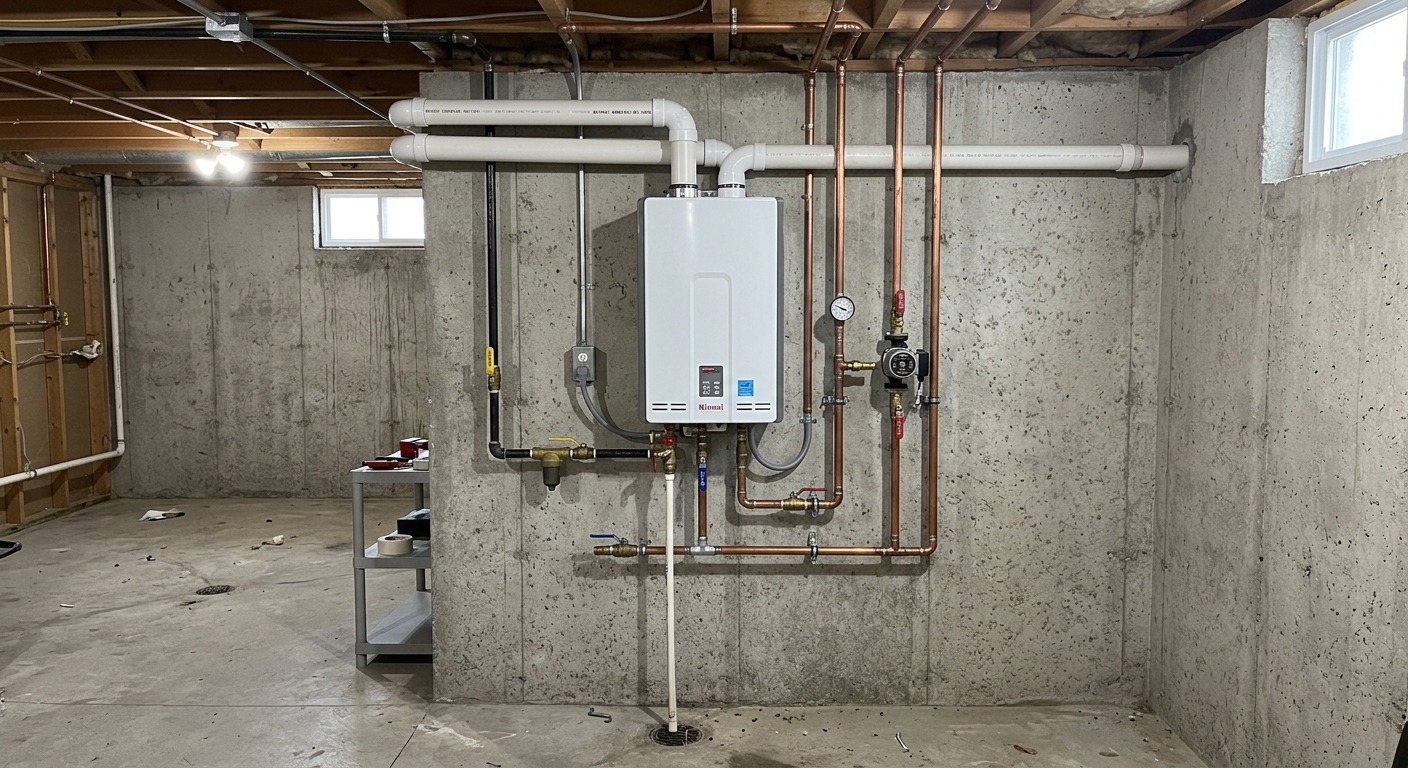
Frankstown homes span generations, and most use standard tank-style water heaters for cost and simplicity. The cheapest to install is the gas or electric tank, but these have the shortest lifespan and waste heat through the tank walls (standby loss). Tankless water heaters free up space and mean “endless” hot water, but they require a larger gas line and specialized venting in most cases. That can mean extra plumbing costs you won’t face with a simple swap.
Heat pump water heaters are catching on in Blair County for their very low operating cost but need enough space for airflow and can cool—sometimes uncomfortably—the room they occupy, especially in finished basements. They’re also markedly louder. If your home’s gas supply is limited or absent, heat pump or electric models may be your only practical choice.
Sizing should be done by the “first-hour rating” (how much hot water it delivers in 60 minutes), not just tank volume. Modern installs should include an expansion tank and a pan with a floor drain or sump. In Frankstown, failures almost always come from leaks at the bottom of a rusted tank, not from control boards.
| Type |
Installed cost |
Service life |
Operating cost |
Best when |
| Gas tank, 40–50 gal |
$1,250–$2,900 |
8–12 yrs |
moderate |
Standard swap in unfinished basement with good gas supply |
| Electric tank, 40–50 gal |
$1,250–$2,000 |
10–15 yrs |
high |
Where gas isn’t available or flue isn’t practical |
| Gas tankless |
$2,000–$2,900 |
18–25 yrs |
low-moderate |
Long-term home, need for endless hot water, upgrade-ready gas system |
| Heat pump water heater |
$2,000–$2,900 |
13–15 yrs |
lowest |
Heated utility room or open basement, lower operating cost matters |
Finding a hidden leak in Frankstown
Hidden leaks add up to real money and, if undetected, can ruin walls, floors, or foundations over time. The first thing any Frankstown homeowner should do is the meter test: shut off every faucet and appliance, make sure nothing is running, then watch your water meter. If the dial is turning, you have a supply-side leak somewhere between the meter and your final fixture.
Professional plumbers use several detection methods. Acoustic listening devices pick up the sound of water escaping under slab or behind walls — usually the first test, and costs less than invasive techniques. Thermal imaging cameras can spot surface cooling from leaks inside walls or floors. Tracer gas — pushing a harmless gas through pipes and detecting where it escapes — helps for the most hidden leaks, though it’s at the high end of the cost range. Slab leak location, a common challenge in older Blair County homes with early concrete construction, starts with these tools and rarely requires breaking floors before knowing the leak’s exact spot.
Typical costs: Acoustic and camera detection alone run less than opening walls, and most reputable plumbers treat destructive work as a last resort. If a plumber insists on tearing out drywall before any non-invasive testing, get a second opinion.
Frequently asked questions — plumbing in Frankstown
Am I responsible for the water line under the street?
Ownership for water service lines in Frankstown follows a common split. The section running from the street main to your curb box (or shutoff valve near the property line) is usually maintained by the Altoona Water Authority. From that curb box to your home’s foundation, you are responsible, including for repairs and full replacement. If the leak or break happens in your segment, you are likely looking at a bill in the $5,800–$12,500 range for a full street-to-house replacement. Always confirm responsibility with the water authority before calling a plumber, and never dig up your own yard until location and ownership are verified by them or your township.
Can I do my own plumbing work in Frankstown?
In Pennsylvania, homeowners can legally perform their own plumbing repairs inside their Frankstown home — provided the work is on their property and serves only their residence. However, there are limits: major changes (new supply lines, moving pipes, or large renovations) may require a building permit from the municipality, especially in more built-up areas near Altoona. Any work over $500 completed by a contractor requires a written contract. For major jobs like a whole-house repipe (which can run $3,700–$8,900), consider using a properly registered contractor. Some homeowner insurance policies won’t cover damages from unpermitted or improperly installed work, so always check with your township office and insurance provider first.
What does drain cleaning cost in Frankstown?
Most standard main line drain cleaning jobs in Frankstown cost between $200–$500 for a scheduled appointment, assuming typical access and no serious root invasion. If you need emergency clearing for a total blockage or sewage backup, pricing jumps to $350–$800. More involved cases that require hydro-jetting or video inspection may reach the upper end of this range. Always ask what’s included: a basic augering works for many older homes in Frankstown, but camera inspection sometimes helps pinpoint problems in homes with aging pipes.
How much does a water heater replacement cost in Frankstown?
Replacing a gas or electric tank water heater in a Frankstown home typically costs between $1,250–$2,900 depending on type, size, and complexity. Most installations fall closer to $2,000 for the average 40–50 gallon gas unit, especially in older homes built during Blair County’s surge in 1900–1950. The price covers removing the old heater, new connections, and hauling the unit away. Extra costs can appear if your gas line or venting needs a major upgrade, as sometimes happens when switching from electric to gas or tank to tankless.
Repair or replace a leaking water heater?
In Frankstown, once a tank water heater starts leaking — usually from the bottom due to internal corrosion — replacement is the only sensible answer. A minor drip from a valve or pipe fitting above the tank may be repairable, but a leaky tank itself can’t be patched. New gas or electric tanks run $1,250–$2,900 installed. If you’ve already had the current unit for over a decade, spending money on repairs usually doesn’t make sense. Plan ahead and replace before a full failure leaves you without hot water or with a flooded basement. Always add a drain pan if possible, to protect against the next time.
How hard is the water in Frankstown?
Frankstown-area water from the Altoona Water Authority is considered moderately hard. While it isn’t the worst in Pennsylvania, mineral buildup does occur, especially in water heaters and on fixtures. Over time, hard water can shorten the life of appliances and block pipes, which drives up the need for repairs or early repiping — often in that $3,700–$8,900 range for an older galvanized system. Many homeowners install simple sediment filters or softeners to reduce scale in the lines and fixtures.
Do I need to drain outdoor spigots in Frankstown?
Yes — draining and shutting off outdoor spigots is essential in Frankstown’s cold winters, where frost depth reaches 36 inches and deep freezes are common. Failing to winterize hose bibs can easily lead to a hidden split pipe inside the wall, leaving you with an emergency repair bill of $650–$1,250. Before the first hard freeze, close the interior shutoff valves for outdoor faucets, open the spigot to drain remaining water, and leave it open all winter. Frost-proof hydrants help, but even those can burst if hoses are left attached.
What causes low water pressure in Frankstown homes?
Low water pressure in Frankstown households is commonly caused by aging galvanized pipes — a legacy of Blair County’s mid-century construction surge. Internal corrosion narrows the pipe diameter, reducing flow and pressure to fixtures. Other causes include a leaking service line (especially if your meter test dial never stops turning) or a failed pressure regulating valve. Whole-house repiping, often costing $3,700–$8,900, is the permanent fix for galvanized pipe issues. If only one fixture is affected, check its aerator or shutoff valve before assuming the worst.
How do I shut off the water to my house?
Every Frankstown home should have a main shutoff valve — usually where the water pipe first enters your basement (often by the water meter). To shut off, turn the valve clockwise until snug; don’t force it. Test by trying a faucet: if the water doesn’t run, you’re successful. Each sink or toilet typically has its own nearby shutoff as well. Learning this step lets you halt water fast in an emergency and avoid the full $650–$1,250 emergency repair rate by giving you time until a regular booked appointment.