What plumbers charge in East Cocalico
In East Cocalico, plumbing costs can differ significantly depending on whether you’re facing an emergency or planning a standard repair. With 77.3% of homes in the area being single-family and 47.9% built before 1980 (U.S. Census Bureau, ACS 2024), the construction era often predicts what kind of plumbing materials you have, and those materials dictate both what goes wrong and what it costs to fix. Lancaster city’s older housing stock—row and twin homes, pre‑1940—has driven a steady demand for swapping galvanized supply lines for newer copper or PEX. While East Cocalico has its share of newer suburban builds, many of the same material issues show up in ranches and split-levels built between the 1960s and 1980s.
If you’re calling for an emergency—a burst pipe, active leak, or no hot water in February—you’re going to pay more than if you can schedule the repair a few days out. Emergency rates reflect both the urgency and the likely complexity of stopping damage at odd hours or in freezing weather. Standard rates usually apply to work scheduled in advance or non-critical repairs. What’s most important is that for the same job, the price can easily shift by several hundred dollars just based on how quickly the work needs to happen.
| Service |
Scope |
Emergency rate |
Standard rate |
| Emergency repair — burst pipe |
locate, open, repair section, restore service |
$650–$1,250 |
$375–$1,250 |
| Water heater replacement (gas, 40–50 gal) |
remove old, install, test, haul away |
$2,000–$2,900 |
$1,250–$2,900 |
| Drain cleaning — main line |
augering or hydro-jet, camera if needed |
$350–$800 |
$200–$500 |
| Sewer line spot repair |
excavate or reline a failed section |
$2,100–$12,500 |
$2,100–$12,500 |
| Whole-house repipe |
replace supply lines throughout, patch and finish |
|
$3,700–$8,900 |
| Water service line replacement |
street to house, excavation and restoration |
|
$5,700–$12,500 |
Estimates for a typical East Cocalico home. Access difficulty and pipe material move these figures more than anything else.
Camera inspection, relining and replacement
In East Cocalico, you as the homeowner typically own the sewer lateral—the pipe running from your house to the municipal main, sometimes extending all the way into the street. This is a key point because repairs in the yard, under the driveway, or even partway into the sidewalk are your responsibility, not the township’s.
Sewer problems tend to follow a pattern: first a slow drain at one fixture, then multiple drains, then gurgling from lower-level toilets or showers, and finally a backup at the lowest fixture in your home. Before anyone digs, a camera inspection should always come first. This small upfront step can save you thousands by pinpointing exactly what’s wrong—whether it’s root intrusion in older clay tile (common in many Lancaster County townships), a settled or “belly” in the sewer line, or an offset joint. Don’t let anyone quote excavation without handing you a copy of the footage for your own records.
If you’re on a septic system (still common on agricultural and exurban parcels in outlying townships), similar symptoms usually point to a different issue: a full tank that hasn’t been pumped in a few years, or a failing drainfield. The fixes, and costs, are separate from those of public sewer work.
Modern repairs depend on what the camera finds. Open-cut (trench) replacement is still the most common method, but trenchless relining or pipe bursting can avoid tearing up landscaping or driveways if conditions allow. No matter the method, never skip the inspection step—it protects you and keeps the contractor honest.
Freeze risk and what to do about it
South-central Pennsylvania winters bring real freeze risk, with a frost depth of 30 inches and winter design temperatures that can drop to 12°F. Because the ground here sees repeated freeze-thaw cycles and moderate snowfall, pipes running through exterior walls, unheated crawlspaces, garages, and attics are all at heightened risk for freezing and bursting.
Most pipe bursts actually occur not right at the frozen section, but between the ice plug and a closed fixture—pressure builds as water expands and the pipe splits apart. The usual suspects: hose bibs that weren’t shut off and drained before winter, supply pipes along basement walls, or runs above the ceiling in additions and garages. Prevention will always be cheaper than repair. Pipe insulation is a staple. Electric heat tape adds a little more protection for problem spots. In a deep freeze, leaving a faucet trickling keeps water moving. Opening cabinet doors under sinks on exterior walls, and properly draining exterior spigots before winter, are low- or no-cost measures. Remember, never use an open flame to thaw pipes—instead, use a space heater, hair dryer, or warm towels and work slowly toward the frozen spot.
The aftermath of a burst—water damage cleanup and a plumber’s repair—often runs $650–$1,250 in East Cocalico, and can climb higher if structural drying and wall repairs are needed. Spending a fraction of that now on insulation or prevention will pay for itself many winters over.
Choosing a plumbing contractor
In East Cocalico, there is no statewide plumbing license—licensing is handled at the municipal level. This means it’s critical to verify that your plumber is registered as a Home Improvement Contractor with the Pennsylvania Office of Attorney General for jobs over $500, and that they are authorized to work in your municipality. Always ask to see a current insurance certificate naming your property, and check workers’ compensation coverage via the WCAIS system, especially since any crew setting foot on the jobsite needs to be covered. Confirm whether the company runs its own employees or brings in subs, and how their emergency dispatch pricing is structured. Municipal permit offices may enforce their own requirements, so ask if your town requires specific plumbing credentials.
- Check HIC registration at hic.attorneygeneral.gov
- Verify workers’ compensation in WCAIS (wcais.pa.gov)
- Ask for proof of insurance with your address listed
- Request local references from similar recent jobs
- Ask if the crew will be company employees or subcontractors
- Get all quotes in writing, with itemized materials and labor
- Clarify if the bid includes permits and inspections
- Do not accept a sewer replacement or repipe quote without seeing camera footage and/or a pressure test
- Ask about the policy on change orders and extras
- Check if estimates include restoring flooring or finishes after repairs
- Require a written contract for work over $500 (this is mandatory by law)
- Be wary of contractors who pressure you to decide on the spot
In the Lancaster area’s moderate-density market, any reluctance to show credentials, verify coverage, or document the problem with a camera is a red flag. Never proceed with a major project without documentation justifying the work—they should earn your trust, not expect it.
Plumbing systems in East Cocalico homes
With nearly half of East Cocalico’s homes built before 1980 (47.9%), there’s a real mix of supply and drain pipe materials—and those drive your future plumbing issues and costs. Many homes from the mid-20th century period were originally plumbed with galvanized steel or copper supply lines. By now, most of the galvanized has either been replaced with copper or, in more recent years, PEX, but you’ll still find stubborn original runs in basements and branch lines. Sewer laterals in these older homes are often clay tile, which invites tree roots and shifting joints into the story. Water service lines could be copper, but older properties—especially in built-up places like Lancaster city—sometimes still have lead or even iron lines.
Younger homes and suburban ranches may be more likely to have all-copper supply and PVC drain lines. If your house was built nearer 1980, you might see early plastic piping like polybutylene, which is prone to failures and now the most common reason for whole-house repiping in that age range. Water heaters in these homes are probably on their second or even third install. Newer doesn’t mean problem-free: original builder-grade valves and fixtures in late 20th-century homes now show their age with leaks and failures at fixtures and shutoffs. Every era brings its distinct quirks, and knowing your home's vintage is the first clue to predicting the repairs you'll face next.
Water heater replacement decisions
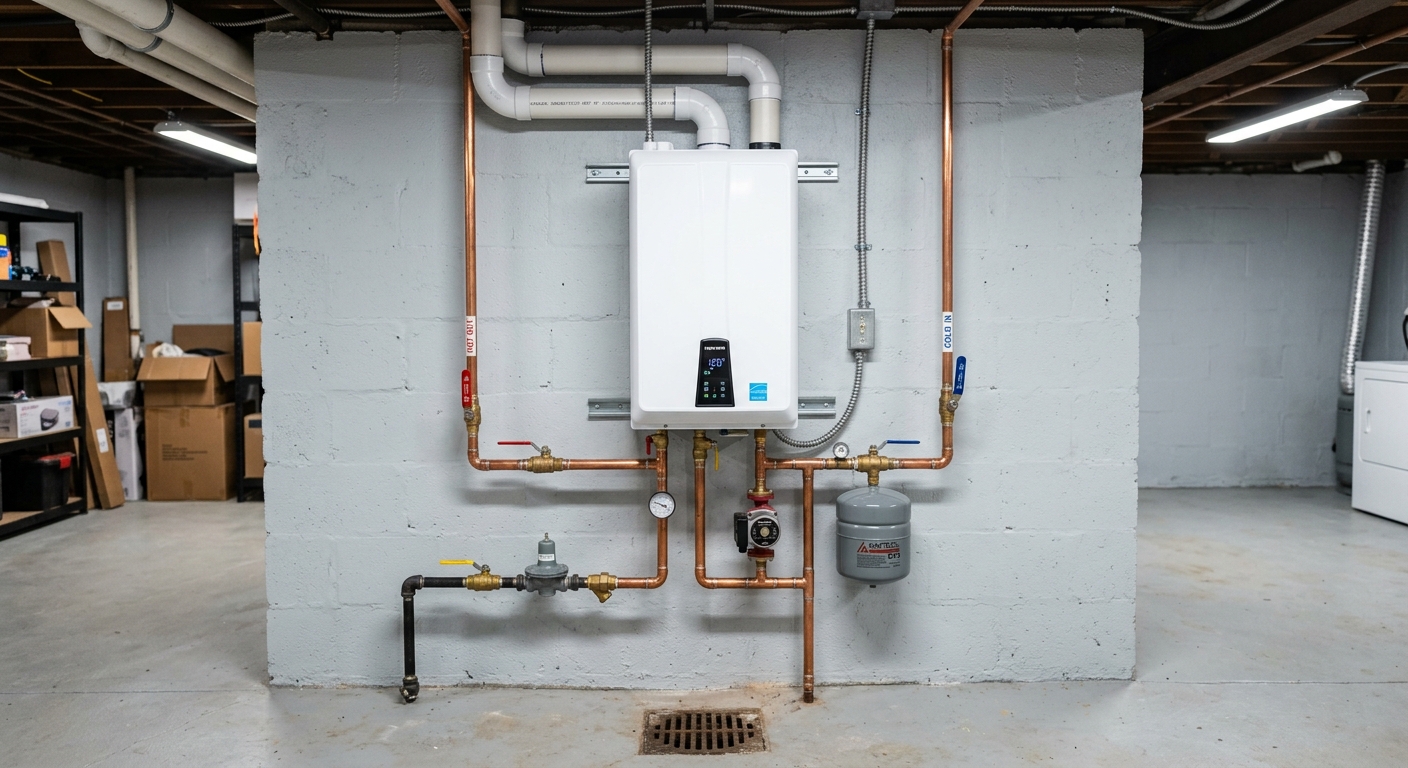
When it’s time to replace the water heater in your East Cocalico home, you’ll choose between standard tank types (gas or electric), tankless (on-demand), or heat pump models. The basic tank is cheapest upfront and remains the most popular option, but expect replacement every decade or so as corrosion eventually causes leaks. Standby losses—energy wasted keeping water hot all day—add to operating costs. Switching to tankless means you’ll never “run out” of hot water, but expect higher installation cost; gas tankless units may need a fatter gas line and special venting that can surprise you on the final bill. For heat pump water heaters, the operating cost is lowest, but they only make sense if they can be installed where there’s enough space and warmth—they cool the air around them and are louder than most expect, so location matters if you have a finished basement or rec room beside the utility area.
Proper sizing uses the “first-hour rating” (how much hot water you get at once), not just tank capacity. Expansion tanks are usually required now by code, especially if you have a pressure-reducing valve. Don’t skip a proper drain pan and floor drain where possible, because the tank, not the controls, is almost always what fails in the end.
| Type |
Installed cost |
Service life |
Operating cost |
Best when |
| Gas tank, 40–50 gal |
$1,250–$2,900 |
8–12 yrs |
moderate |
Basements/utility rooms with natural gas; simplest install; modest demand |
| Electric tank, 40–50 gal |
$1,250–$2,000 |
10–15 yrs |
high |
Homes without gas; simple swap for old electric; lower upfront cost |
| Gas tankless |
$2,000–$2,900 |
18–25 yrs |
low-moderate |
High hot water demand; willing to pay more upfront; compact spaces |
| Heat pump water heater |
$2,000–$2,900 |
13–15 yrs |
lowest |
Large unfinished basement, no gas service; energy conscious |
Who is allowed to do plumbing work in Pennsylvania
In Pennsylvania, plumbing is not licensed at the state level. Instead, licensing is handled municipally—so whether your East Cocalico plumber can lawfully work depends on the rules of your specific township or borough. The practical consequence is that a plumber fully licensed for Lancaster city could hold zero credential elsewhere in Lancaster County. So the question to ask isn’t just “are you licensed?” but “are you authorized to perform plumbing work in this municipality?”
For any job over $500, plumbers must be registered with the Pennsylvania Office of Attorney General as a Home Improvement Contractor; you can verify this at hic.attorneygeneral.gov. In Lancaster city, permits are required for any work that physically alters, expands, or adds value to a property. Minor same-fixture repairs often slide through without one. Permit requirements elsewhere in the county are set by each town’s code or zoning office under the Pennsylvania Uniform Construction Code as enforced locally. To cover yourself, request a current certificate of insurance with your property named, and verify workers’ compensation through the WCAIS system at wcais.pa.gov. Remember, municipal inspectors—not the state—review most work here, and consumer protections from the Home Improvement Consumer Protection Act back you up with required written contracts and a three-day right to cancel.
Frequently asked questions — plumbing in East Cocalico
Why do plumbers charge a diagnostic fee?
Plumbers in East Cocalico typically charge a diagnostic fee because it takes training, time, and sometimes special equipment to accurately pinpoint a plumbing issue. Unlike a quick visual check, proper diagnostics—especially of hidden leaks, slow drains, or no-hot-water situations—involve tools like moisture meters, cameras, or gauges. This protects you from unnecessary or misdirected repairs. The fee generally covers the technician's trip, the time to assess your problem, and the expertise to provide an honest quote right then and there. It's not unusual in this area for a plumber to bundle the diagnostic into the total bill if you proceed with the work—especially for repairs in the $375–$1,250 range, such as a burst pipe. Ultimately, the fee is about transparency and offsetting costs in a market where “free” estimates often just get buried elsewhere in the price.
How deep do water lines need to be buried in East Cocalico?
Water service lines in East Cocalico and the wider south-central Pennsylvania region must be buried below the frost line to prevent freezing over winter. The frost depth here is 30 inches, meaning any new or replaced water line should be installed at least that deep. In practice, most plumbers in this market aim for 36 inches just to build in a margin of safety given the area’s freeze-thaw cycles and 12°F winter design temperatures. Not meeting this depth risks freezes, especially in colder-than-average years, and the cost to remedy a frozen or ruptured water service line can easily range from $5,700–$12,500. Always confirm depth before backfilling—small errors at install lead to big headaches later.
How do I verify a plumber's licence and insurance?
In Pennsylvania—and specifically in East Cocalico—plumbing is municipally licensed if at all, not by the state. For any job over $500, check that your contractor holds a current Home Improvement Contractor (HIC) registration at hic.attorneygeneral.gov. In addition, request a certificate of insurance that specifically lists your address as a covered project and make sure their workers’ compensation coverage is verifiable through wcais.pa.gov. Since Lancaster County has its own patchwork of town, city, and township requirements, ask the contractor if they are approved to perform plumbing work in your specific municipality and, if needed, that they’ll arrange the permit. For larger jobs—such as a full repipe at $3,700–$8,900—these protections matter. Avoid anyone who cannot or will not provide proof before starting work.
What do I do about a burst pipe right now?
If a pipe bursts in your East Cocalico home, act quickly. First, find and turn off the main water shutoff—locate this ahead of time so you're ready. If the break is near your water heater or boiler, also kill the power or gas to those units. Open fixtures at the lowest point in your home to drain water out and relieve pressure. Then call a local plumber for an emergency repair. Typical costs run $650–$1,250 depending on access, severity, and time of day. While waiting, mop up standing water and protect valuables, but don’t use electrical outlets in affected areas. Leave any ceiling bulges alone—water trapped above presents a hazard. Remember, don’t delay: timely attention limits both damage and cost.
Who pays to replace a lead service line in East Cocalico?
In East Cocalico and surrounding Lancaster County townships, you as the homeowner are typically responsible for the full replacement cost of the water service line from the curb to your house, including any lead sections. Lancaster city has reported thousands of potential lead service lines and is running a multi-year replacement program, but outside the city the cost usually lands on the property owner. A full-service line replacement, including excavation and restoration, typically runs from $5,700–$12,500. Some municipalities or water authorities occasionally offer cost-sharing or incentive programs, but you’ll need to call and ask specifically. Until then, any replacement, upgrade, or repair of the line is out-of-pocket unless covered by local grants or insurance riders.
Are tree roots a common sewer problem in East Cocalico?
Yes, tree roots are a frequent cause of sewer line clogs and failures in East Cocalico, especially for homes with older clay tile laterals—a legacy found in many Lancaster County properties built before PVC piping became the norm. Roots seek out even hairline cracks in clay joints, eventually growing thick enough to slow or block sewage flow, leading to repeated backups. If you notice multiple drains emptying slowly or hear gurgling from lower-level fixtures, it’s a sign to schedule a camera inspection. A single spot repair can run $2,100–$12,500 if digging or relining is needed, so routine augering or hydro-jetting—while not cheap—is far less invasive and expensive in the long run. Always insist on viewing the camera footage before agreeing to any repair or replacement.
How long should a water heater last in East Cocalico?
Most water heaters in East Cocalico—especially gas or electric tank models—last about 8 to 12 years, depending on water quality, installation, and maintenance. Lancaster County’s mix of housing ages means some homes have already cycled through two or three replacements, while others are still running their original units. When tanks do fail, it’s nearly always a slow leak caused by internal corrosion, not a sudden electrical or control issue. Replacement costs in this market range from $1,250–$2,900 for standard tanks, with tankless and heat pump units costing a bit more upfront but lasting longer when properly maintained. If your heater is approaching its design life and you notice less hot water, noisy operation, or rust at the tank base, it’s time to consider a proactive swap.
How much does a plumber cost in East Cocalico?
The price you pay largely depends on the type of service, urgency, and access challenges in your home. Emergency repairs—like a major leak or a burst pipe in freezing weather—often cost between $650–$1,250. Standard, scheduled work like water heater replacement typically falls in the $1,250–$2,900 range, depending on type and complexity. Drain cleaning and maintenance or minor fixture repairs can be less. It’s important to recognize that older homes, especially those built before 1980 (nearly half the stock locally), may have hard-to-reach piping and older materials, which increase cost. For major system work like sewer spot repairs or full-house repiping, expect several thousand dollars. Always request a written estimate so there are no surprises.
Should I repipe my East Cocalico home or keep repairing?
If your East Cocalico home still has original galvanized steel or aging polybutylene pipes—and you’re seeing repeated leaks, drop in water pressure, rusty water, or high repair frequency—a full repipe may now be the best investment. The up-front cost, typically $3,700–$8,900, seems high, but adds value, eliminates risk of sudden water damage, and lets you forget chronic plumbing headaches. For a home with mostly copper or only one or two trouble spots, targeted repairs can still make sense. But as the number of “small” issues climbs and you’re calling a plumber every year, it’s usually cheaper long-term to do one comprehensive fix. The era and condition of your pipes—not just any single leak—should guide your choice. Don’t spend on patching forever if the system’s time is simply up.