What plumbers charge in Columbia
In Columbia, what you pay for plumbing services depends as much on timing as on the job itself. Emergency work always costs more per hour—plain and simple. Prices jump for anything that happens outside business hours or can't wait even a day. About half of Columbia homes are owner-occupied (U.S. Census Bureau, ACS 2024), and nearly 88% were built before 1980. That means far more original piping material than you'll see in newer suburbs, and an outsized share of galvanized pipes needing replacement.
Lancaster city’s housing stock is known for its pre-1940 row and twin homes, and here in Columbia you’ll see a similar problem: galvanized or even lead supply lines. This makes full or partial repiping with copper or PEX a frequent project—one with a wide price band depending mostly on access (finished basement vs. crawlspace) and material chosen. Whether you’re replacing a water heater, tackling a leak, or unclogging a main, you’ll find two prices everywhere: the standard rate if you can wait, and the emergency rate if you can’t.
Below are typical price bands for the most requested work. These cover the majority of jobs in Columbia, but access and material choices—common issues in the area’s older homes—will move you up or down the range.
| Service |
Scope |
Emergency rate |
Standard rate |
| Emergency repair — burst pipe |
locate, open, repair section, restore service |
$600–$1,150 |
$325–$1,150 |
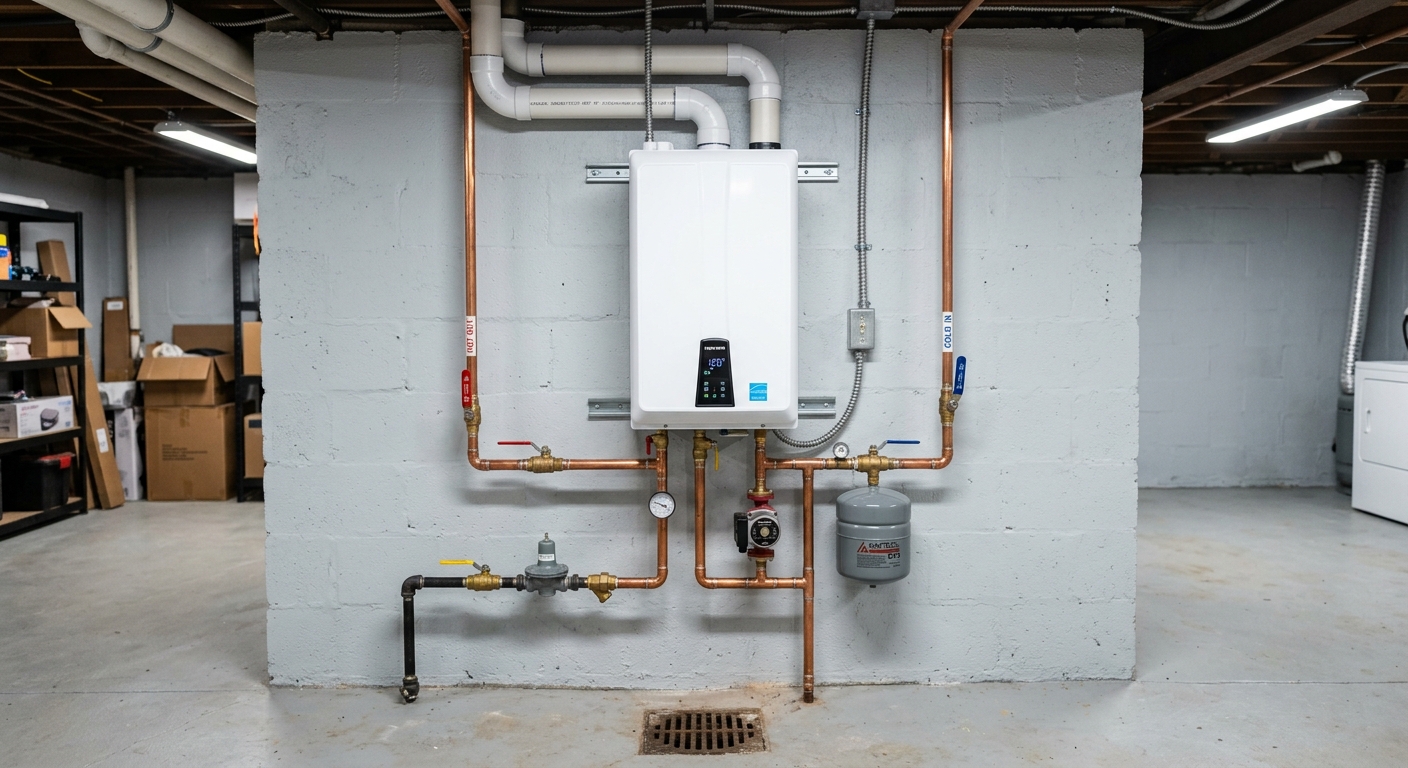
| Water heater replacement (gas, 40–50 gal) |
remove old, install, test, haul away |
$1,850–$2,700 |
$1,150–$2,700 |
| Drain cleaning — main line |
augering or hydro-jet, camera if needed |
$350–$800 |
$200–$500 |
| Sewer line spot repair |
excavate or reline a failed section |
$1,900–$11,500 |
$1,900–$11,500 |
| Whole-house repipe |
replace supply lines throughout, patch and finish |
|
$3,400–$8,200 |
| Water service line replacement |
street to house, excavation and restoration |
|
$5,300–$11,500 |
Estimates for a typical Columbia home. Access difficulty and pipe material move these figures more than anything else.
Who is allowed to do plumbing work in Pennsylvania
In Pennsylvania, plumbing licensing is handled locally, not statewide. That means there’s no universal Pennsylvania plumbing licence—what matters is whether your plumber is authorized to work where your house is. In Lancaster County, each municipality—including Lancaster city and all the surrounding townships—sets and enforces its own permit and inspection rules. A plumber registered in Lancaster may not have any standing in East Hempfield Township or in Columbia unless they meet municipal requirements there.
If your job involves more than a minor repair—say, you're swapping a toilet fill valve or a faucet washer—most municipalities require a permit for work that physically alters or adds value to a property. In Lancaster city, nearly any such work needs a building or plumbing permit and inspection by the local Bureau of Building Code Administration. For most neighboring townships, it's their local code or zoning office that handles permits and inspections. Insurance is mandatory for all employers in Pennsylvania; you can verify a company's workers' comp coverage using the WCAIS system (wcais.pa.gov). For jobs over $500, contractors must also have current Home Improvement Contractor registration, searchable at hic.attorneygeneral.gov.
Always ask whether your plumber is registered and insured for Columbia. Don’t settle for a state licence claim alone—municipal paperwork is what makes the work legal and insurable where you live.
The leak you can hear but can't see
If you hear water running but can’t find the source, start with the simple meter test: shut off every faucet and fixture in your Columbia home, then watch the water meter. If the dial is still spinning, water’s moving somewhere—most likely on the pressurized supply side, not a drain.
When a leak’s location is a mystery, plumbers rely on a mix of technology and skill. Acoustic listening devices pick up the sound of pressurized leaks behind walls or underground, typically for a fee in the $325–$1,150 range if it turns into a same-day repair. For slab leaks (common in older homes with buried pipes), thermal imaging can spot temperature variations at a price somewhat below full opening and patching work. In rare cases, tracer gases—harmless and non-staining—can be introduced to pinpoint a path where sound or heat might fail.
Leaks in walls, under slabs, or in hidden irrigation lines all need precise location before any demolition begins. Any plumber who wants to open up finishes before using these tools is working backwards; clean access saves money and repairs. Once found, repairs generally cost as much as the emergency bands above, plus patching.
Freeze risk and what to do about it
Here in south-central Pennsylvania, we deal with pronounced freeze-thaw cycles, a ground frost depth of 30 inches, and winter design temperatures that can dip to 12 °F. The issue isn’t just that pipes freeze, but how they burst. When water freezes, pressure can build up between the ice plug and a closed valve or fixture—often causing failure not where it froze, but somewhere downstream.
Pipes are most vulnerable inside exterior walls without insulation, unheated crawlspaces, garages, and attics in Columbia’s older homes. Hose bibs and supply lines routed along foundations are especially at risk. Prevention is a lot cheaper than repair:
- Insulating exposed pipes in crawlspaces or cold areas is the first step and not expensive DIY work.
- Electrical heat tape is a step up in both cost and protection for exposed sections.
- Letting a faucet trickle keeps water moving and relieves pressure, turning potential freezes into a minor inconvenience.
- On the coldest nights, open cabinet doors below sinks on exterior walls to let warm air in.
- Always shut off and drain outdoor spigots well before the first real freeze in autumn.
If something freezes, use a hair dryer or heater—not an open flame—to thaw the section slowly. The aftermath of a burst pipe, including repair and restoration, typically runs $600–$1,150 on an emergency ticket in Columbia. A ten-dollar insulation wrap is a bargain by comparison.
What's in the water here
Columbia homes are mainly supplied by the City of Lancaster Water Bureau or nearby municipal systems. These utilities publish an annual water quality report that’s yours for the asking—review it before buying any treatment system.
Municipal water around Columbia is moderately hard, which can leave scale in water heaters and at fixtures, shortening their life. At the same time, aggressive water can cause pinhole leaks in older copper lines, especially if there’s still some galvanized pipe feeding in. Water softeners are common, but unless your house has enough scale to ruin appliances every couple of years, they rarely pay for themselves versus simple fixture cleaning or replacing a water heater at $1,150–$2,700 every decade or so. Whole-house filters are another expense—worth it only where specific taste, odor, or sediment issues persist and after checking your utility report. If you’re in the outer townships on a private well, you’ll need to send samples for testing yourself; nobody else is monitoring your supply.
Steer clear of anyone recommending expensive filtration or treatment devices without a current water report or direct evidence. Most Columbia homeowners can get by with little more than a good drinking water filter at the tap.
Comparing plumbing estimates in Columbia
When you get estimates for plumbing in Columbia, you’ll usually see two billing models: flat rate and time-and-materials. Flat rate gives you price certainty and shifts the risk to the contractor—if the job runs long, they eat it. Time-and-materials can be cheaper if the problem is simple and straightforward, but it stays open-ended if something turns complicated. Neither is a scam. The trouble is not understanding which you’re getting.
Look for: a diagnostic fee (does it count toward the job if you hire them?), a clear description of what’s included in the scope, permits stated and priced, drywall and floor restoration explicitly included or excluded, and a clear warranty on labor and parts. Make sure after-hours rates, if any, are disclosed in advance. Here’s what to check for in every quote:
| Line item |
What to look for |
Red flag if… |
| Billing model |
flat rate or hourly, stated up front |
unstated |
| Diagnostic fee |
amount, and whether it credits |
vague |
| Scope |
what is opened, repaired and restored |
price with no scope |
| Restoration |
drywall and finish explicitly in or out |
silent |
| Permit |
included and priced |
'not needed' |
| Parts |
brand and model for fixtures |
'standard fixture' |
| Warranty |
labour period stated separately |
parts only |
What urgency costs you
When it comes to plumbing, how quickly you need the work usually costs more than the work itself. Emergency plumbing in Columbia brings premiums driven by dispatching a crew after-hours, a flat trip charge, and overtime rates. In emergencies, the diagnostic process is rushed—sometimes only enough to stop the damage, and a final repair is scheduled after.
Here’s the triage: true emergencies are active flooding (from a burst pipe or water heater), loss of all water supply, sewer backups into the house, and any gas odor. These are worth paying the emergency rate of $600–$1,150 for immediate turnout—further delays risk expensive damage or create health hazards. On the other hand, a slow drip under the sink, a toilet that runs, or a single slow drain can generally wait and save you hundreds by scheduling during normal hours, often at $325 or so for basic repair.
If a pipe bursts or you have a serious leak, shut off the home’s water supply at the main (usually next to the meter or where the line comes in from the street). Most shutoffs turn clockwise to close. For fixtures, turn the valve behind the toilet or under the sink. Knowing this step can keep an urgent situation from becoming a flooded house—and your plumber can finish the repair during business hours, saving you money.
Frequently asked questions — plumbing in Columbia
How hard is the water in Columbia?
Columbia’s water, supplied primarily by the City of Lancaster Water Bureau, is moderately hard. Most homeowners will notice some mineral buildup on faucets, showerheads, or inside appliances over time. While this can reduce the life of water heaters and affect fixture performance, it usually isn’t severe enough to justify the cost of a whole-house softener unless scale is ruining appliances every 5–7 years. The price for a new water heater is $1,150–$2,700 installed, far below the long-term spend on softening systems for most households. If you want a precise figure for hardness, review the latest annual water quality report or ask your utility for a lab result—don’t buy equipment based on generic sales claims.
Should I leave a faucet dripping in cold weather?
Yes, if you live in one of Columbia’s older homes—many local houses have pipes running through cold crawlspaces or exterior walls. When temperatures drop toward the winter design low of 12 °F, a slow drip keeps water moving and relieves pressure that forms behind any freeze. The cost of a few gallons of water is insignificant compared to a burst pipe emergency, which can run $600–$1,150 by the time the plumber leaves and repairs are patched. For best results, let the furthest faucet from the main trickle, especially overnight or during bitter cold snaps.
Who pays to replace a lead service line in Columbia?
If your Columbia home still has a lead water service line, you as the property owner are responsible from the street connection to your house. Lancaster city has an active lead service line replacement program, but unless prompted by the municipality, expect to bear the cost for your private portion. Replacing a water service line, including excavation and restoration, usually costs $5,300–$11,500 in this area—expensive, but often necessary to meet current safety standards and mortgage requirements on resale. Always check with your municipal authority about assistance or current programs.
Why do all my drains drain slowly at once?
In Columbia, if every drain in your home is moving slowly, it almost always signals a blockage somewhere in the main line, not isolated clogs at sinks. Older homes in this area often have original cast iron or clay sewer lines that collect buildup, roots, or scale. Snaking or hydro-jetting the main line typically solves this, with emergency rates between $350–$800 and standard hours between $200–$500. If drain cleaning solves the issue only temporarily, you might need a camera inspection to identify broken or offset sections and avoid much more expensive emergency repairs.
How do I shut off the water to my house?
In most Columbia homes, the main water shutoff is right by the water meter or where the line enters from the street—typically in the basement or a utility room. The valve usually turns clockwise (right) to close. For emergencies, shutting this valve stops all water flow to your house and can prevent a burst pipe from flooding your property, saving you a repair bill between $325–$1,150. For individual fixtures, look for valves under sinks or behind toilets. If you’re unsure, have a plumber walk you through the steps during a scheduled visit; it’s worth knowing before disaster strikes.
Repair or replace a leaking water heater?
If your gas water heater in Columbia is leaking from the tank itself, replacement is almost always the answer—repairs are rarely reliable, and code now requires newer, safer models. For a typical 40–50 gallon replacement including haul-away, you’ll pay $1,150–$2,700. Small leaks at pipe connections or valves can sometimes be repaired for less, but once the tank body starts leaking, patching it is a losing battle. Older models nearing or past the warranty period aren’t worth pouring money into.
Why do plumbers charge a diagnostic fee?
In Columbia, diagnostic fees typically cover the plumber’s time, travel, and the expertise to trace the source of leaks or loss of service, especially in homes with complicated, older plumbing. This fee is usually credited to your bill if you hire them for the repair, but always confirm up front. The fee recognizes that troubleshooting in an 80-year-old home may take as long, or longer, than the actual repair. Expect a service call of $325–$1,150 if you need urgent troubleshooting. Get clear: ask if the fee is applied to the work and exactly what’s included.
Who inspects plumbing work in Columbia?
Plumbing jobs that alter or add value to a property in Columbia typically require permits, with inspections carried out by the local code enforcement office or the Bureau of Building Code Administration in Lancaster city. For Columbia and other townships, the local zoning or code office will inspect completed work for compliance with the Pennsylvania Uniform Construction Code—based on the IRC. Your plumber should secure the permit and schedule inspection as part of a legitimate estimate. Unauthorized work risks a failed inspection and can void home insurance. Expect to see permit costs included in any standard quote, which should reference both permit and inspection.
How much does sewer line repair cost in Columbia?
Sewer line spot repairs in Columbia—often needed on older houses with original clay or cast iron pipes—cost $1,900–$11,500 depending on length, access, and whether excavation or relining is involved. Typical jobs average $5,300. Emergency calls rarely get you a better deal, but they do ensure priority response when backups threaten property or health. Always insist on a camera inspection before a major repair; a good scope and clear video can prevent unnecessary digging and confirm the true extent of the problem.