What plumbers charge in Dunmore
If you own a home in Dunmore, pricing for plumbing work is tightly tied to the age and original construction of your house. With 82.0% of Dunmore homes built before 1980 and a 60.5% homeownership rate (U.S. Census Bureau, ACS 2024), older plumbing materials are the norm — and they drive the types and costs of repairs. Here, much of the housing stock mirrors neighboring Scranton and Old Forge, where pre-1940 construction means active drain reconfiguration and galvanized-to-copper or PEX repiping are common calls. The main takeaway: construction era predicts your pipe material, and material predicts your most likely problem — and what you’ll pay to solve it.
For any type of work, “emergency” pricing is real: a Saturday-night leak costs more than a Tuesday fix because you’re paying not just for late hours, but for the readiness to respond when nobody else wants to pick up. Below is a realistic band for typical Dunmore jobs — you’ll find that labor and material can flex within these, but emergency status can push you to the top end.
| Service |
Scope |
Emergency rate |
Standard rate |
| Emergency repair — burst pipe |
locate, open, repair section, restore service |
$600–$1,150 |
$350–$1,150 |
| Water heater replacement (gas, 40–50 gal) |
remove old, install, test, haul away |
$1,850–$2,700 |
$1,150–$2,700 |
| Drain cleaning — main line |
augering or hydro-jet, camera if needed |
$350–$800 |
$200–$500 |
| Sewer line spot repair |
excavate or reline a failed section |
$1,950–$11,500 |
$1,950–$11,500 |
| Whole-house repipe |
replace supply lines throughout, patch and finish |
|
$3,400–$8,300 |
| Water service line replacement |
street to house, excavation and restoration |
|
$5,400–$11,500 |
Estimates for a typical Dunmore home. Access difficulty and pipe material move these figures more than anything else.
Licensing and permits for plumbing work in Dunmore
Pennsylvania does not have statewide plumbing licensure. Here in Lackawanna County, including Dunmore, every municipality sets its own requirements for plumber licensing and registration. This matters: a plumber licensed in Scranton or another nearby city may hold no credential at all in Dunmore or a neighboring township. The only statewide standard covering plumbing contractors is Home Improvement Contractor (HIC) registration, required for jobs over $500 — you can confirm a contractor’s registration at hic.attorneygeneral.gov. This protects you for contracts but is not a trade qualification.
For work involving employee labor, Pennsylvania mandates workers’ compensation coverage. Do not accept a verbal assurance — verify compliance using WCAIS (wcais.pa.gov) to see coverage is active and valid.
Permits for plumbing are issued and enforced at the municipal level in Lackawanna County. Dunmore operates its own code enforcement, so before any plumbing alteration, repipe, or water heater replacement (not just new builds), your contractor should advise if a permit is required and who will inspect the finished work. Written contracts are required for jobs over $500 under the Home Improvement Consumer Protection Act, and you have three business days to cancel. Never proceed without a clear contract, current HIC registration, and confirm workers’ compensation is in force.
Dating your plumbing by what it's made of
In Dunmore (and Scranton, Old Forge, and the rest of Lackawanna County), the age of your house tells you a lot about what’s behind the walls. So does a simple scratch or magnet test in the basement. Galvanized steel pipes, found in most homes built before 1960, feel heavy, dull gray, and will hold a magnet—supply lines with threaded fittings are a giveaway. Galvanized pipes corrode from the inside before leaking, so you lose pressure and flow long before you see water. Homes from the postwar years through recent decades typically have copper (shinier, warm bronze, not magnetic, soldered joints). Copper is tough, but acidic water can create pinholes, especially here, if the supply is slightly aggressive.
Polybutylene appeared briefly from the late 1970s through 1995 — usually gray or blue, with compression or crimped plastic fittings — but is now considered an insurance risk due to catastrophic failures at fittings. PEX piping (usually white, red, or blue, flexible with crimped brass fittings) started replacing other materials in the 2000s, and is current practice. As for drains, older homes still have cast iron (black, heavy, bell-shaped joints), which are strong but brittle after about 60 years, with failures at cracks and rust. Sewer laterals in Dunmore often use clay tile—orange or brown, with pronounced hubbed joints—susceptible to root intrusion and shifting. Newer homes or remodels lean to PVC or ABS drains, plastic and easy to spot.
Knowing the material, and matching it to the age of your home, helps you anticipate both failure and replacement cost—important when more than 80% of the local housing stock is pre-1980.
| Material |
Typical era |
Failure mode |
Service life |
| Galvanized steel supply |
pre-1960 |
internal corrosion, pressure loss |
40–60 yrs |
| Copper supply |
1950s–present |
pinhole leaks, joint failure |
50–70 yrs |
| Polybutylene supply |
late 1970s–1995 |
fitting failure, sudden bursts |
unreliable |
| PEX supply |
2000s–present |
fitting or UV degradation |
40–50 yrs |
| Cast iron drain |
pre-1975 |
corrosion, cracking, scale |
50–75 yrs |
| Clay tile sewer lateral |
pre-1980 |
root intrusion at joints, offset |
50–60 yrs |
| PVC / ABS drain |
1970s–present |
joint separation, crushing |
50+ yrs |
Choosing a water heater in Dunmore
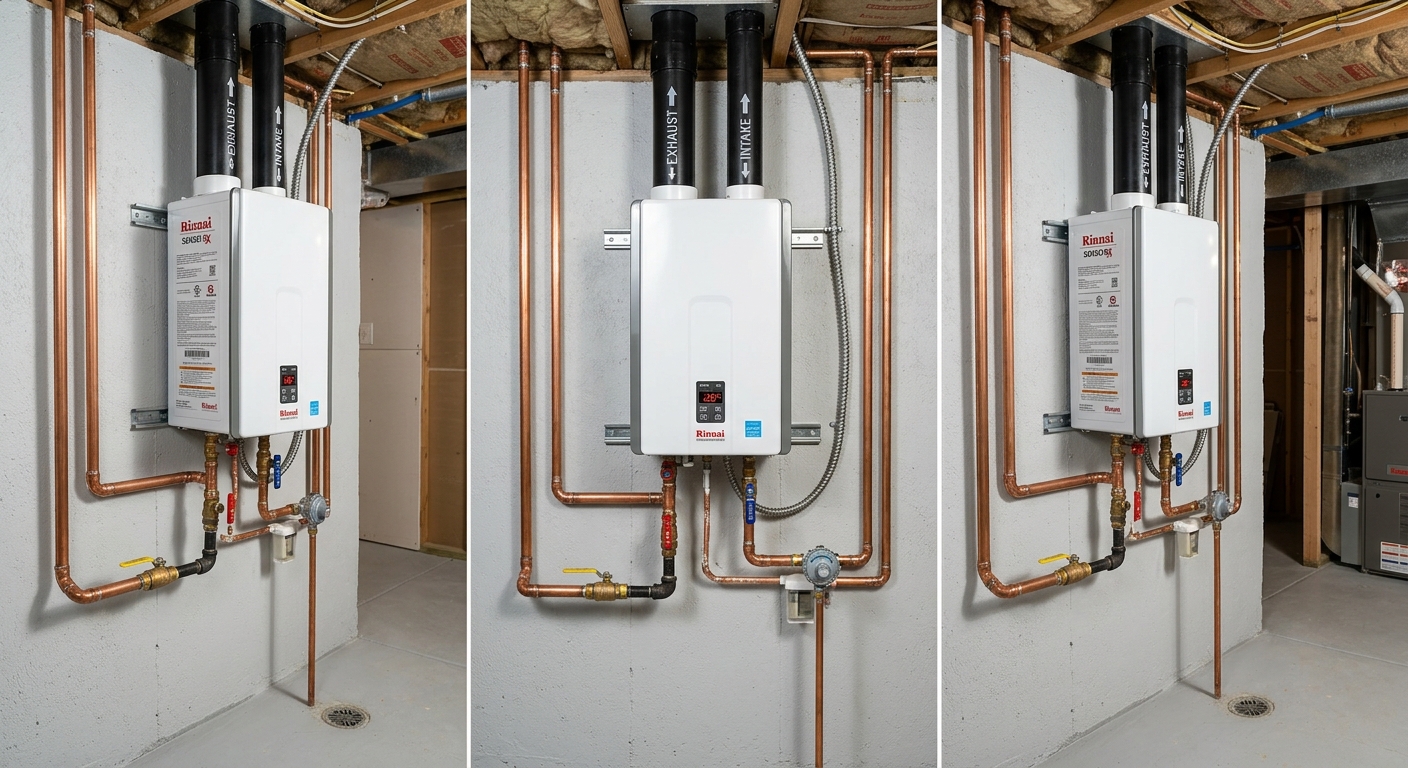
In Dunmore, most replacements involve a 40–50 gallon gas or electric tank—the least expensive to install, though not the longest lasting. Standard tanks lose heat just sitting, so they're costlier to run over years. Tankless has become popular for endless hot water and a smaller footprint, but beware: the upgrade often requires a larger gas line and a specialized vent, both of which add to the bill. For older Dunmore homes (especially pre-1980), these “hidden” requirements can be dealbreakers if your gas service or venting is original.
Heat pump water heaters are energy champs, but need at least 700–1,000 cubic feet of warm air and create a noticeable hum. If yours is going near a finished basement, know that they cool the air around them—annoying in winter here with our 4 °F design temp. They're often not practical for cramped Dunmore basements. Water heater size should always match your peak “first-hour” need, not just the tank’s physical gallons.
Whatever you pick, Dunmore’s older homes should always get a new expansion tank, and a pan with a working drain if the heater is on a finished floor. Most failures are tank ruptures, so plan for annual checks after year 8.
| Type |
Installed cost |
Service life |
Operating cost |
Best when |
| Gas tank, 40–50 gal |
$1,150–$2,700 |
8–12 yrs |
moderate |
existing gas, moderate use |
| Electric tank, 40–50 gal |
$1,150–$1,850 |
10–15 yrs |
high |
no gas, small household |
| Gas tankless |
$1,850–$2,700 |
18–25 yrs |
low-moderate |
endless hot water, plan longer install |
| Heat pump water heater |
$1,850–$2,700 |
13–15 yrs |
lowest |
ample space, electric only, mild basement |
Sewer line problems in Dunmore
For most Dunmore homes, you own the lateral sewer line all the way from your house to the city main, often extending under the sidewalk or street — so if a break occurs anywhere in that run, repair costs are on you, not the city. Most problems surface first as slow drains: a single slow fixture is likely a local clog, but when multiple fixtures (especially on lower floors) slow down at once, or you notice gurgling or backups, your main line is suspect.
The gold standard for diagnosis is a camera inspection. Don’t let anyone price excavation or a full pipe replacement without showing you video footage—be wary if they cannot. In Dunmore, many homes with clay tile laterals are at high risk for root intrusion and shifting at the joints; for these, open-cut excavation costs more but may be necessary if the damage is severe. With cast iron, failures usually mean corrosion or cracks. Trenchless relining can work for moderate damage and saves digging up yards or driveways.
Outside Dunmore, many townships use individual septic systems — these bring their own issues: pump the tank every 3–5 years, watch for soggy patches or backups, and know that drainfield repairs are entirely separate from sewer line work.
What a plumbing quote should contain
Most Dunmore plumbers quote either a flat rate (one set price for the job) or time-and-materials (hourly rate plus materials). Flat rate gives you certainty and shifts risk to the contractor if the job goes long, while time-and-materials can save if a repair is simple but leaves the final price uncertain if surprises arise. Neither is wrong — just make sure you know which you’re agreeing to before the work starts.
Expect a diagnostic fee for locating and assessing the problem; some plumbers will credit this fee against the work if you hire them, but you should clarify. The quote should also spell out exactly what will be opened, replaced, and restored, not just a lump sum. Permits, when required, should be included and priced. Restoration of walls and flooring is a big variable; sometimes it’s included, but often it’s not. Ask to see the warranty terms: labor and parts warranties are usually separate, and the best quotes specify both. If you’re facing an after-hours emergency, rates should be disclosed clearly before anyone shows up.
| Line item |
What to look for |
Red flag if… |
| Billing model |
flat rate or hourly, stated up front |
unstated |
| Diagnostic fee |
amount, and whether it credits |
vague |
| Scope |
what is opened, repaired and restored |
price with no scope |
| Restoration |
drywall and finish explicitly in or out |
silent |
| Permit |
included and priced |
'not needed' |
| Parts |
brand and model for fixtures |
'standard fixture' |
| Warranty |
labour period stated separately |
parts only |
What's in the water here
Dunmore’s main water is supplied by major regional public utilities, such as Pennsylvania American Water and Scranton Sewer Authority–related entities. By law, these systems publish an annual water quality report—request it if you notice changes or just want baseline information on hardness, chlorination, or lead testing. Hard water isn’t unusual here, and it can shorten the life of water heaters and fixtures by causing mineral buildup. Aggressive (slightly acidic) water, which sometimes appears in part of the region, can speed up copper corrosion and pinhole leaks.
Whole-house softeners may reduce buildup but only truly pay off when hardness is high; most Dunmore homes do just as well with regular water heater flushes. Be skeptical about pricey filtration systems unless you have specific water taste or odor complaints—point-of-use filters are often enough.
If you’re on a private well (more common outside municipal Dunmore), nobody publishes a report for you. Arrange for periodic professional testing, especially if you notice any changes in taste or color—or after local flooding. Don’t be talked into expensive treatment unless a real water test justifies it.
Frequently asked questions — plumbing in Dunmore
What does discoloured water on first draw mean?
If you’re seeing rusty or brownish water in Dunmore when you first turn on the tap in the morning, it’s usually a sign of aging supply pipes—often galvanized steel—in your home or the service line out to the street. Galvanized pipes corrode inside and release rust that settles when the water isn't flowing. After 40–60 years of service, this is common in Dunmore’s pre-1940 housing stock. Sometimes the minerals clear after a minute or two of running, but chronic staining means pipe replacement is coming. For a typical house, a whole-home repipe with PEX or copper runs $3,400–$8,300. If the problem is only at one tap, it may just be a local supply line or faucet that needs replacing, not the whole system.
Why do plumbers charge a diagnostic fee?
In Dunmore, a diagnostic fee protects both the homeowner and the plumber’s time. The homes here—most built before 1980—aren't always straightforward, and tracking down the root of a leak or clog can take time and specialized gear (like pipe cameras). That fee covers up-front labor and expertise; if you decide not to proceed, it compensates the contractor for making a house call. Most reputable Dunmore plumbers will credit the diagnostic fee toward your actual repair if you hire them for the work. For something like a mainline drain cleaning, expect service to start at $200–$500, which often folds in basic diagnosis.
How deep do water lines need to be buried in Dunmore?
In Lackawanna County, including Dunmore, local code follows Northeast Pennsylvania’s climate needs. The minimum frost depth here is 36 inches, so water and sewer lines must be buried at least that deep to prevent freezing—our winter design temp is just 4 °F with heavy snow possible. Failing to hit that depth means you risk a burst service line on the first really hard freeze. If you discover a shallow service and need it redone, full replacement from the house to the street typically costs $5,400–$11,500. Always ask your plumber if a permit and inspection are required for service line or sewer trenching.
Should I repipe my Dunmore home or keep repairing?
In much of Dunmore’s older housing, you’re likely already on your second round of repairs—galvanized pipe with chronic rust, low pressure, or pinhole leaks in copper are very typical here. If you’re fixing a new leak every year or two, it’s time to look at a full repipe. For most homes, expect $3,400–$8,300 for a whole-house supply line replacement. Compare that with what you've spent on repeated patching, water damage, and fixture replacement already. If your current lines are PEX or post-1990s copper, spot repair makes sense, but with original pre-1960s supply, repiping pays off in the long run—especially if you’re planning to sell or remodel.
Who pays to replace a lead service line in Dunmore?
In Dunmore and much of surrounding Lackawanna County, the homeowner owns the service line from the main out at the street right up to and into your house. If your lead service is flagged by the water authority as needing replacement, you’ll typically be responsible for your side—everything from the curb inward. Programs sometimes help offset costs, but public agencies here do not report a completed countywide replacement. For a full water service line replacement, from the street into your house, expect it to run $5,400–$11,500. Always ask for a written breakdown and clarify exactly how much of the run is being replaced.
Is Dunmore on combined sewers or septic?
Dunmore is mostly served by separated sanitary and storm sewers, just like Scranton—meaning your household wastewater goes to the sewer, not to the same pipes that handle stormwater. That limits backups during heavy rain but doesn’t completely prevent them. However, if you live in a township just outside Dunmore, it’s still common to have your own septic system instead of a public sewer. Septic systems require regular pumping every 3–5 years and more careful maintenance. If you’re paying for a sewer line repair inside Dunmore, expect costs in the $1,950–$11,500 range for a spot repair. Septic work is a separate specialty.
Can I do my own plumbing work in Dunmore?
In Dunmore and other municipalities around Lackawanna County, plumbing work is regulated locally. While Pennsylvania has no statewide plumbing license, Dunmore’s code enforcement may require permits and inspections for anything beyond simple fixture changes. If you’re replacing supply piping, water heaters, or doing a repipe—even as a homeowner—you’ll likely need an inspection and a permit. Doing work without a permit can mean failed sales down the line or even redoing work. If you need professional repairs, expect standard rates of $350–$1,150 for emergency leak fixes. If you have the skills and get the right permit, swapping a faucet or changing a toilet is usually fine.
What does drain cleaning cost in Dunmore?
Main line drain cleaning in a Dunmore home will typically cost $200–$500 for a standard call that uses a mechanical auger and basic clearing. For emergencies or calls after hours, that can jump up to $350–$800, especially if a camera inspection or hydro-jetting is needed. If you’re seeing repeat clogs even after cleaning, the problem may be with deteriorating cast iron or root intrusion in an old clay sewer lateral—which is common in older Dunmore homes. In that case, you should insist on a camera inspection to avoid unnecessary repeat charges.
How do I shut off the water to my house?
In almost every Dunmore home, your main shutoff valve is in the basement, usually right where the water line enters from the street—look for a round wheel or a lever-style handle. It may be near the water meter. Turn the valve clockwise (right) to close it and stop the flow to your house. Test by opening a faucet in the lowest part of the house—if water stops, you did it right. If the valve won’t move or leaks, replacing it is a straightforward job; expect a standard service call in the $350–$1,150 range for most Dunmore homes. Always know your shutoff before you need it.