What plumbers charge in Upper Southampton
Upper Southampton’s plumbing costs line up closely with other older Bucks County townships, but homeowners here see more than average repairs linked to age—over 78% of homes were built before 1980, and a striking 84.4% are owner-occupied (U.S. Census Bureau, ACS 2024). This means far more jobs triggered by long-deferred issues, most commonly in aging copper and galvanized pipes. If you’ve got a home built in the same post‑1950, mass-construction wave as Levittown, don’t be surprised if you run into similar recurring plumbing failures—omitted shutoffs, narrow or corroded lines, and undersized mains.
The same job costs more when it’s emergency work—and nearly everything feels urgent once there’s active water. If you discover a leak at midnight or wake up to a flooded basement, expect to pay an emergency rate, which covers overtime, quick response, and after-hours call-outs. Non-emergency calls, like routine water heater swaps or planned repiping, track lower but can overlap with emergency rates when discovery leads to surprises.
| Service |
Scope |
Emergency rate |
Standard rate |
| Emergency repair — burst pipe |
locate, open, repair section, restore service |
$650–$1,300 |
$375–$1,300 |
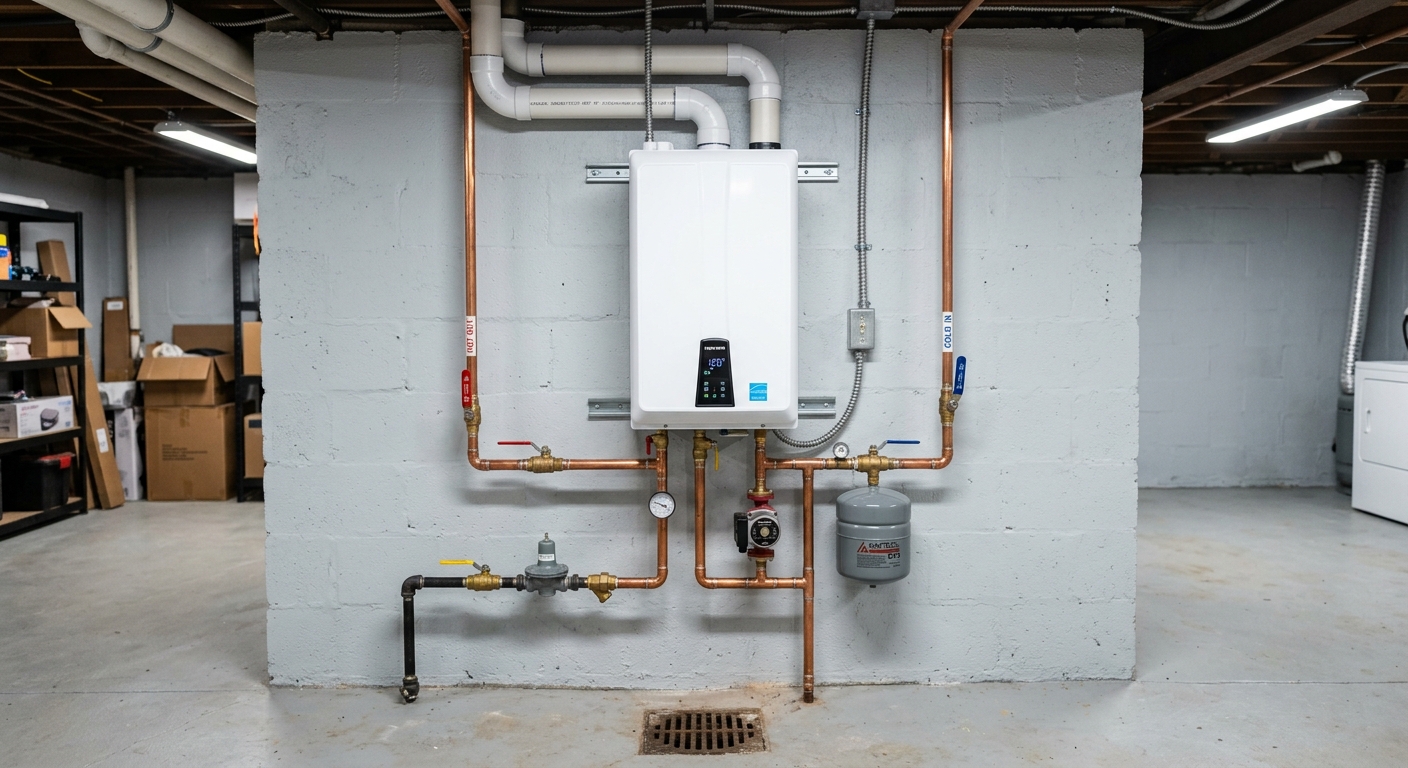
| Water heater replacement (gas, 40–50 gal) |
remove old, install, test, haul away |
$2,100–$3,000 |
$1,300–$3,000 |
| Drain cleaning — main line |
augering or hydro-jet, camera if needed |
$350–$800 |
$200–$500 |
| Sewer line spot repair |
excavate or reline a failed section |
$2,200–$13,000 |
$2,200–$13,000 |
| Whole-house repipe |
replace supply lines throughout, patch and finish |
— |
$3,800–$9,200 |
| Water service line replacement |
street to house, excavation and restoration |
— |
$6,000–$13,000 |
Estimates for a typical Upper Southampton home. Access difficulty and pipe material move these figures more than anything else.
Winter pipe failures in southeastern Pennsylvania
With a frost depth of 30 inches and a winter design temp of 14°F, Upper Southampton often sees pipes freeze when subfreezing spells stretch past a few days. The climate brings moderate freeze-thaw cycles, so it’s not just the very worst cold: extended chilly weather is enough to trigger failures. Contrary to what most think, the burst usually doesn’t happen where the pipe ices—it happens between the ice plug and a closed faucet, when expanding ice and trapped pressure force a split at a weak spot in the supply.
Pipes on exterior walls, in unheated crawlspaces, garages, hose bibs, and attics with little or no insulation are the first to fail in Bucks County. In older Upper Southampton homes, these spots can be especially vulnerable due to original layout and minimal insulation. Prevention is far cheaper than repair: start with proper insulation on vulnerable stretches, then wrap exposed pipe in heat tape (thermostatic, not the old constant-on kind). Open cabinet doors under kitchen sinks on outside walls during cold snaps, and let a trickle run overnight in the most exposed fixture if the forecast is below 15°F. For hose bibs, always shut off inside valves and drain down before the first hard freeze—those brass splitters aren’t built for deep winter.
If you do have a freeze, thaw gently using a hair dryer or an electric heat gun, but never an open flame. Don’t take a torch to your pipes: fire risk is real, and insurance may not cover the outcome. The aftermath of a burst supply—locating the spot, opening walls, making the fix, and restoring pressure—costs typically $375–$1,300. Stop it before it starts and keep that money in your pocket.
Service line material and drinking water in Upper Southampton
Bucks County Water & Sewer Authority supplies public water across most of Upper Southampton, handling the utility side of the service line up to their shutoff (typically at the curb or property line). As the homeowner, you own the “lateral”—the stretch from curb box to the valve inside your wall. Replacement drives costs on your side, not theirs, and the current reported tally is about 2,000 known or suspected lead service lines countywide yet to be replaced. Utility programs (when offered) often cover only their public section, so don’t assume both halves will be handled together.
To check your pipe: locate where water enters your home (usually in a basement or crawlspace), clean a 2-inch patch, and scratch with a coin. Lead is silvery, soft, and a magnet will not stick. Copper is reddish; galvanized is gray and magnetic. Partial replacement—swapping only the street or only the house side—can briefly worsen your water quality by disturbing the protective scale, sometimes causing a spike in lead levels for weeks or months.
The utility should publish a service line inventory; check their website, or call directly. Ask specifically what side their replacement covers and about any cost sharing. If you’re unlucky enough to own a lead service, expect the replacement to run $2,200–$13,000 for a spot repair, or $6,000–$13,000 for full water service line replacement, depending on excavation difficulty.
What a plumbing quote should contain
Plumbing work in Upper Southampton is typically quoted two ways. Flat rate means you’re given a price upfront for the whole job, so the contractor carries the risk of surprises. Time-and-materials bills you for actual hours and material used—fair on small, predictable work but expensive if the scope balloons. Neither model is a scam, but not knowing which you’re getting puts you at risk for sticker shock.
Look for whether a diagnostic fee is charged, and if it credits if you go ahead with the work. Your written quote should always list what will be opened, exactly what’s getting repaired, and what shape you’ll be left in—wall and floor restoration in or out makes a cost difference. Permit costs should be named directly, never glossed over (“not needed” is a red flag when code clearly requires one). Brands and models for fixtures should be specified; “standard” means little and protects nobody. Labor warranty and parts warranty are not the same—ask for both periods. And after-hours rates should be disclosed on paper, not as a surprise after you come home to a mess at 2 am.
| Line item |
What to look for |
Red flag if… |
| Billing model |
flat rate or hourly, stated up front |
unstated |
| Diagnostic fee |
amount, and whether it credits |
vague |
| Scope |
what is opened, repaired and restored |
price with no scope |
| Restoration |
drywall and finish explicitly in or out |
silent |
| Permit |
included and priced |
'not needed' |
| Parts |
brand and model for fixtures |
'standard fixture' |
| Warranty |
labour period stated separately |
parts only |
Water quality and what it does to your pipes
The Bucks County Water & Sewer Authority is your source for both drinking and household water in most of Upper Southampton, and they’re required to issue an annual water quality report upon request. These reports will tell you if hardness (calcium and magnesium) or any aggressive qualities in the water can shorten the lifespan of your pipes, water heaters, and fixtures.
Hard water leaves scale that builds up in water heaters and shower heads, which means shorter appliance life and more frequent cleaning and repair. At the same time, our area doesn’t usually see aggressively “soft” or acidic water that eats pinholes through copper—if you do have leaks with green stains, have your water tested, but most issues I see are age and wear, not water chemistry. Water softeners can reduce scale, but between equipment costs and salt purchases, they rarely pay back in full unless you have extreme buildup.
Whole-house filtration makes sense if you’re after taste and odor improvement throughout, but if your issue is just the tap water for drinking and cooking, a point-of-use (under-sink) filter does the same job for less. Don’t spend thousands on oversized treatment gear pushed door-to-door—have real results first and match the fix to the need.
Finding a hidden leak in Upper Southampton
The simplest leak test you can do costs nothing: turn off every faucet and appliance, check your water meter (usually inside or outside the front wall), and see if the dial or digital readout moves after everything is off. Movement means a supply-side leak—water is going somewhere, even if you can’t see it.
Professionals use a few methods to chase hidden leaks. Acoustic listening devices can pinpoint drips in walls and under slabs ($375–$1,300 if it goes to repair). Thermal imaging cameras show cold spots from pipe bursts. Tracer gas testing can find tiny leaks especially in new pipe runs. For slab leaks—rare in Upper Southampton but not unheard of—you’ll want accurate pinpointing before a hammer comes out. Wall cavity leaks should be confirmed acoustically before drywall is disturbed. Hidden irrigation leaks often appear as damp spots or muddy lawns; a meter test and zone-by-zone shutoff confirm the culprit.
If a plumber wants to open walls before confirming the leak’s location, push back—there’s no excuse for turning your home into Swiss cheese without a strong lead on where the problem is hiding.
Licensing and permits for plumbing work in Upper Southampton
Pennsylvania’s Uniform Construction Code (UCC), based on the IRC, governs residential plumbing—but unlike some other states, Pennsylvania does not issue statewide plumbing licenses. Instead, plumbers are licensed municipally: passing an exam in one township or city does not mean your contractor is legal everywhere. That makes the core question, “Are you licensed here in Upper Southampton, or just elsewhere?” It’s on the homeowner to verify this directly with your township office.
Permits are needed for most substantial plumbing in the area. For example, in Bensalem Township, altering the layout of water or sewer pipes or changing your fixture count triggers a plumbing permit requirement. In Falls Township, minor like-for-like faucet or showerhead swaps often skip permits. Each municipality runs its own enforcement, not the county; the township code office will inspect work once permitted.
Pennsylvania requires Home Improvement Contractor (HIC) registration, issued by the Office of Attorney General, for any contract over $500. You can verify a contractor’s HIC status at hic.attorneygeneral.gov. All local employers must have workers’ compensation insurance, which you can look up using the WCAIS system (wcais.pa.gov). Never accept excuses or paperwork that doesn’t match the job site address or actual contractor name.
No state plumbing board governs this area, and only some towns require testing. For your own legal protection, always confirm that licensing and permits line up for your exact property’s township before any work starts.
Frequently asked questions — plumbing in Upper Southampton
Do I need to drain outdoor spigots in Upper Southampton?
It’s a smart move in Bucks County, including Upper Southampton, to shut off and drain your outdoor spigots before the first hard freeze hits—ideally, by late October or early November most years. Our frost depth goes down 30 inches and winter temps often hit 14°F, which is plenty to burst an undrained hose bib or sillcock. You’ll avoid a split pipe and a possible repair bill in the $375–$1,300 range. Locate the inside shutoff valve serving your outdoor faucet, close it, open the outside faucet to drain, and leave it open all winter. Skipping this step could easily lead to an indoor leak, wall damage, and a wet first floor—something I see every winter around here.
What does repiping a house cost in Upper Southampton?
Repiping a typical Upper Southampton home—built mostly before 1980 and often with original copper or galvanized pipes—ranges from $3,800–$9,200. Most jobs land near $6,200, depending on house size, stories, and how many walls need opening. Older Levittown-era construction sometimes means narrow lines or corroded fittings that take more labor, so final costs can swing above or below the average. If you’re not experiencing ongoing pinhole leaks, rusty water, or pressure loss, don’t jump to a full repipe; spot repairs may keep you going for years. Always ask for a line-by-line quote and check what’s included in restoring walls and floors before signing.
Should I reline or replace my sewer line?
Both methods are used in Upper Southampton—lining (cured-in-place pipe) avoids excavation, while traditional replacement involves digging and swapping out the failed pipe. Replacement, at $2,200–$13,000, is essential when the pipe has collapsed, sagged, or is badly offset. Lining is great for minor cracks or root intrusion if the structure is still mostly sound and grades well, so it’s less disruptive. However, lining doesn’t fix grade problems or severe channeling. Get a camera inspection and written scope before picking a fix. In some cases, spot repair with excavation is still the best answer to prevent ongoing backups or future foundation problems.
Do I need a permit for plumbing work in Upper Southampton?
Most major plumbing work in Upper Southampton does require a permit, especially anything altering water or sewer piping, fixture location, or count—this is enforced locally, not by the state. For minor like-for-like swaps (such as replacing a showerhead in Falls Township), a permit is often not needed. Expect to pay a permit fee, which should be listed on your estimate or invoice and is usually included for larger jobs over $500. Always check with your township office directly—regulations and enforcement are township-specific within Bucks County, so don’t assume what counted in Bensalem is true here.
What causes low water pressure in Upper Southampton homes?
In older Upper Southampton homes, low water pressure usually traces back to buildup in original copper or galvanized supply lines, reduced diameter from years of mineral scale, or sometimes corroded main shutoffs. Public water from Bucks County Water & Sewer Authority generally arrives at a solid base pressure—you may lose a little if you’re at the height of a dead-end line or during hydrant flushing, but chronic low pressure is usually a house-side issue. Simple fixture cleaning or replacement runs less than $375–$1,300, but full line replacement can run up to $3,800–$9,200 if extensive. Have a plumber measure static and flowing pressure at several points to narrow down the root cause.
Why do plumbers charge a diagnostic fee?
Plumbers in Upper Southampton often charge a diagnostic fee to come out, assess the situation, and make recommendations. This covers time, travel, and expertise, especially when the issue is not obvious or you decide not to proceed with immediate repairs. Legitimate contractors typically credit this fee toward the job if you give them the go-ahead, so ask up front. For example, a plumber might charge a $100–$175 diagnostic fee, but this gets knocked off your final bill if a burst pipe repair is needed (which itself could run $375–$1,300). Make sure you understand if the diagnostic fee applies both ways before signing.
What counts as a plumbing emergency?
In Upper Southampton, a plumbing emergency generally means any active leak or failure that threatens property damage or health and can’t wait for a normal appointment. Burst pipes, sewer backups, water heater leaks, or any situation where water is running uncontrolled into your home all count. Emergency rates are higher—around $650–$1,300 for repairs—because response is immediate and often after hours. If you can safely shut off water and wait, you may save by scheduling, but don’t ignore live leaks or sewage in a finished basement. If in doubt, call; the plumber can often tell you whether to wait or move fast.
Who owns the sewer lateral, me or the city?
In Bucks County, including Upper Southampton, you as the homeowner are responsible for the entire sewer lateral—from your house to where it meets the main in the street or an easement. The municipality or utility owns only the main lines. Any clogs, cracks, or failures from the house up to the main are on you to fix or replace; spot repairs typically run $2,200–$13,000. Always locate and mark any cleanouts before calling for work, as it saves time and money.
Which utility supplies water to Upper Southampton?
Upper Southampton is served by the Bucks County Water & Sewer Authority, which covers most of the densely developed areas in this part of Bucks County. They handle treatment, distribution, and emergency supply, and regularly test water to state and federal standards. If you need a water quality report or confirmation of your service connection material, call them directly or check their official site. If you ever need water service line replacement, expect costs to run between $6,000–$13,000 depending on distance to the curb and landscape restoration needs.