What plumbers charge in Upper St. Clair
In Upper St. Clair, where 86.7% of households are single-family homes and 70.7% were built before 1980 (U.S. Census Bureau, ACS 2024), plumbing costs are closely tied to the age and layout of your home. Much of the Pittsburgh region’s housing stock dates to 1900–1950, which means a higher chance of running into galvanized steel and cast iron pipes—both now in their replacement window. The material and access to those pipes, often tucked inside finished basements or behind layered drywall, drive up both the price and complexity of service.
It’s important to know that nearly every job has two prices: emergency and standard rates. After-hours calls and live leaks command higher prices due to overtime labor, rush availability, and the immediate need for damage prevention. For example, a burst pipe in the middle of the night may cost significantly more than a planned pipe replacement done during business hours. The same is true for water heater replacements or main line drain clearing—expect a bigger bill if water is running where it shouldn’t be or you can’t use your kitchen or bath.
| Service |
Scope |
Emergency rate |
Standard rate |
| Emergency repair — burst pipe |
locate, open, repair section, restore service |
$650–$1,300 |
$375–$1,300 |
| Water heater replacement (gas, 40–50 gal) |
remove old, install, test, haul away |
$2,100–$3,100 |
$1,300–$3,100 |
| Drain cleaning — main line |
augering or hydro-jet, camera if needed |
$350–$800 |
$200–$500 |
| Sewer line spot repair |
excavate or reline a failed section |
$2,200–$13,000 |
$2,200–$13,000 |
| Whole-house repipe |
replace supply lines throughout, patch and finish |
|
$3,900–$9,400 |
| Water service line replacement |
street to house, excavation and restoration |
|
$6,100–$13,000 |
Estimates for a typical Upper St. Clair home. Access difficulty and pipe material move these figures more than anything else.
Licensing and permits for plumbing work in Upper St. Clair
Pennsylvania does not require a statewide license for plumbers. Instead, plumbing is licensed municipally—meaning a contractor licensed in Pittsburgh or Bethel Park may not hold the right credential to work in Upper St. Clair or even the next township over. In Allegheny County, the Allegheny County Health Department administers its own plumbing licensing program for Pittsburgh and nearby municipalities. For any project, always ask if your plumber is licensed to work specifically in your municipality, not just somewhere in the county.
Permit requirements are also set locally. In Pittsburgh and much of Allegheny County, new or altered plumbing systems must have an Allegheny County Health Department plumbing permit and are inspected by that same authority. Smaller jobs, like a faucet or showerhead swap, are generally completed without a formal permit, but anything that touches supply piping or drainage—and all water service or sewer line work—should be permitted and inspected.
Consumers are protected by the Pennsylvania Home Improvement Consumer Protection Act (HICPA): written contracts are required for jobs over $500, and you have a three-day right to cancel. Plumbers must register as a Home Improvement Contractor (HIC) for any job over $500; you can verify at hic.attorneygeneral.gov. Workers’ compensation coverage is legally required—verify compliance or claims at WCAIS (wcais.pa.gov). Pre-1978 homes require an EPA-certified lead renovator if the work disturbs paint.
Freeze risk and what to do about it
Southwestern Pennsylvania, including Upper St. Clair, sees a 36-inch frost depth and winter lows around 8°F. Heavy freeze-thaw cycles and hilly terrain add to the challenge. Typically, pipes burst not where they freeze solid, but between the blockage and a closed faucet, as expanding ice creates pressure—so a failure may show up in a different area from the ice itself.
Pipes in exterior walls, unheated garages, crawlspaces, and attics are most likely to freeze. Outside spigots and supply lines running through less-insulated areas are also at risk. Prevent frozen pipes with several measured steps:
- Insulate: Use foam sleeves on vulnerable pipes, especially near outside walls.
- Heat tape: Electric heat tape works for stubborn cold spots—plug it into a GFCI outlet.
- Let it trickle: In extreme cold snaps, let a faucet drip to keep water moving overnight.
- Open cabinets: Leave vanity or kitchen cabinets open to warm under-sink pipes by circulating house air.
- Winterize spigots: Shut off and drain outdoor faucets well before the first freeze—many failures trace back to neglected hose bibs.
If a pipe does freeze, thaw with a hair dryer or portable heater—never an open flame, which is a major fire hazard. Prevention is far cheaper than repair: a ruined carpet after a burst pipe can push labor and restoration to $650–$1,300 or more. Five dollars’ worth of insulation can save you from that bill.
Hardness, treatment and fixture life in Upper St. Clair
Most Upper St. Clair homes are served by the Pittsburgh Water and Sewer Authority, which supplies treated water to central Allegheny County. This public water system publishes an annual water quality report, which you can request to confirm current hardness and any treatment changes year-to-year.
Moderate hardness is typical, which means you’ll see some scale in fixtures and inside water heaters as they age. Scale can shorten the life of both tank and tankless water heaters, sometimes requiring replacement at $1,300–$3,100 well before you'd expect. Aggressive water—where it occurs—can lead to pinholes in copper. If you’re replacing fixtures every few years or seeing blue-green stains, test for pH and hardness before investing in expensive filters.
Water softeners often don’t pay back in Upper St. Clair unless you see consistent scaling or have specific appliance needs. Whole-house filtration is rarely necessary; point-of-use (like a kitchen filter) handles taste and odor for most families. Don’t overbuy: walk away from high-pressure sales pitches for equipment you don’t need. For private wells, regular testing is best—there’s no public report, and chemistry can shift over time.
Dating your plumbing by what it's made of
Because much of Pittsburgh’s housing stock went up between 1900 and 1950, many Upper St. Clair homes still rely on galvanized steel for supply, cast iron for drains, and sometimes clay tile for sewer laterals. Galvanized steel loses its inside diameter as it rusts, leading to water pressure drops before leaks start. Copper is generally excellent, but can develop pinholes or leak at joints with certain water chemistries. Polybutylene supply lines, used from the late 1970s to 1995, are known for unreliable fittings and bursts. PEX is today’s standard—flexible, resilient, and fast to install.
On the drain side, older cast iron can corrode or crack after 50–75 years, especially near junctions and at the base of stacks. Clay sewer pipes are easily invaded by roots at the joints. Plastic pipes—PVC or ABS—have been common since the 1970s and last longest if protected from crushing and UV.
To ID your supply lines: scratch an exposed pipe with a coin. If it’s gray and your magnet sticks, it’s probably galvanized steel. Copper is reddish and non-magnetic. Polybutylene is gray-blue, flexible, and joined by crimp rings. PEX is usually red, blue, or white plastic. For drains: cast iron is heavy, dark, and magnetic; clay is tan or red-brown and rings like pottery; PVC/ABS is white or black plastic joined by glue.
If your materials date to the original build (pre-1960 for galvanized/cast iron, pre-1980 for clay sewer), plan ahead: you may be closer to a major repipe or sewer job than you'd like. Spot repair is possible, but old pipes rarely fail just once.
| Material |
Typical era |
Failure mode |
Service life |
| Galvanized steel supply |
pre-1960 |
internal corrosion, pressure loss |
40–60 yrs |
| Copper supply |
1950s–present |
pinhole leaks, joint failure |
50–70 yrs |
| Polybutylene supply |
late 1970s–1995 |
fitting failure, sudden bursts |
unreliable |
| PEX supply |
2000s–present |
fitting or UV degradation |
40–50 yrs |
| Cast iron drain |
pre-1975 |
corrosion, cracking, scale |
50–75 yrs |
| Clay tile sewer lateral |
pre-1980 |
root intrusion at joints, offset |
50–60 yrs |
| PVC / ABS drain |
1970s–present |
joint separation, crushing |
50+ yrs |
Water heater replacement decisions
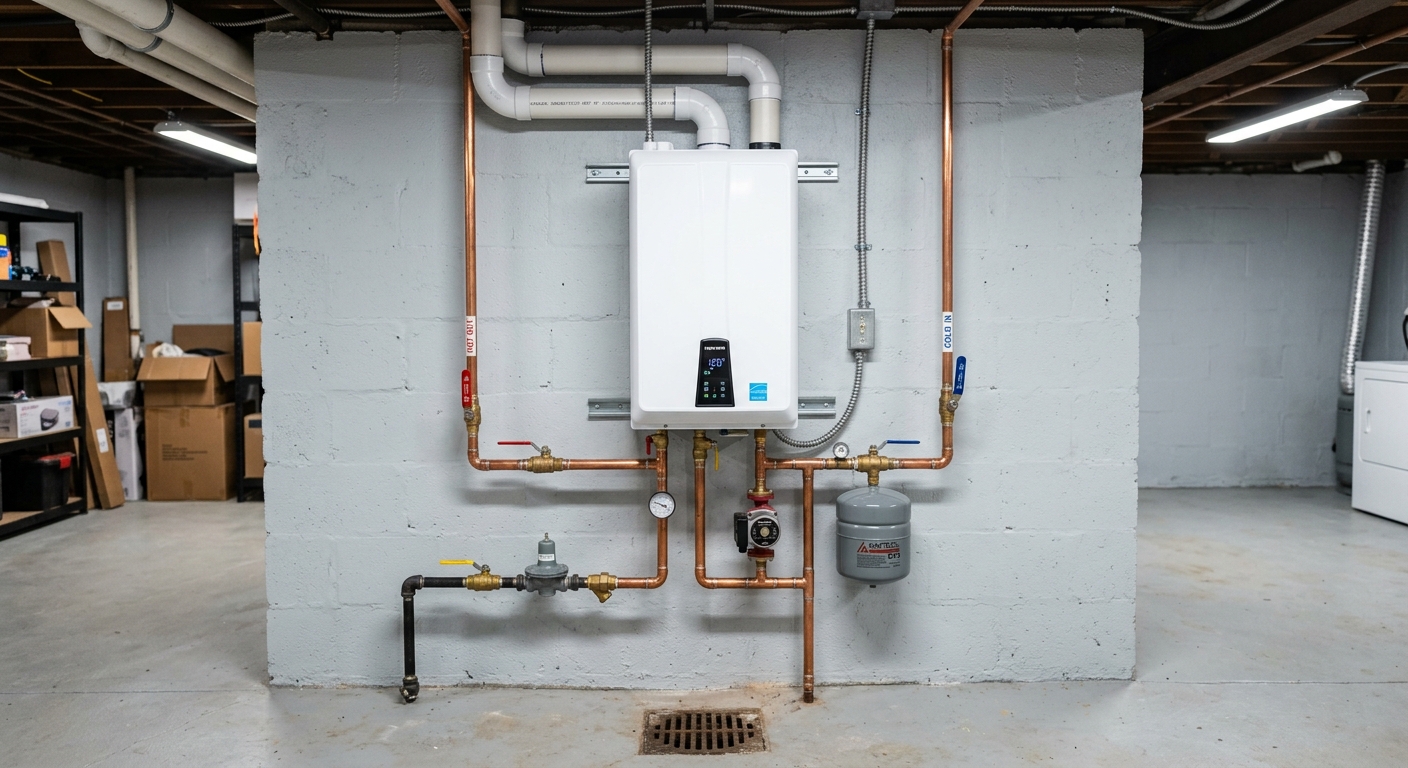
The choice between traditional tank, tankless, and heat pump water heaters comes down to cost, space, and how your family uses hot water. Standard gas or electric tanks are the lowest up-front investment and easiest swap for what almost every Upper St. Clair home already has—expect a typical replacement cost of $1,300–$3,100. Drawbacks: tanks wear out fastest and steadily lose heat. Failures are usually a rusted-out tank, so an eventual leak is almost always “when,” not “if.”
Tankless (on-demand) models last longer and never “run out” of hot water. But installation costs more, often $2,100–$3,100, and many older homes need a new, larger gas line plus a special vent. These hidden extras catch many homeowners by surprise. Tankless makes sense for high demand, but payback can be slow unless you use a lot of hot water all day.
Heat pump water heaters are cheapest to run, but want about 1,000 cubic feet of warm air and make noticeable noise. They cool the room they’re in, so basements with finished spaces may not suit. Stick with the classic tank if your budget is tight or space is limited.
Always size your new heater by “first hour rating,” not just gallons, and add an expansion tank and drain pan—modern codes and local inspectors expect them. The tank is almost always what fails, not controls.
| Type |
Installed cost |
Service life |
Operating cost |
Best when |
| Gas tank, 40–50 gal |
$1,300–$3,100 |
8–12 yrs |
moderate |
existing gas, low upfront cost |
| Electric tank, 40–50 gal |
$1,300–$2,100 |
10–15 yrs |
high |
no gas available |
| Gas tankless |
$2,100–$3,100 |
18–25 yrs |
low-moderate |
high demand, space savings, willing to pay more |
| Heat pump water heater |
$2,100–$3,100 |
13–15 yrs |
lowest |
warm, unfinished basement, electric only |
When to call now and when to wait until Monday
The difference between an emergency and a scheduled visit—often several hundred dollars—comes down to risk and urgency. Emergency plumbing bills are higher because of after-hours dispatch, overtime labor, premium trip charges, and the need to diagnose fast, sometimes with extra techs on site. In Upper St. Clair, an urgent pipe repair at night or a flooded basement can easily cost $650–$1,300 versus half that on a regular weekday.
What truly calls for emergency service? Active flooding (water rising fast or spraying), complete loss of water to the house, sewage backing up inside, or any suspicion of a gas leak—these all justify calling now. But not every leak needs immediate response: a slow drip under the sink, one slow drain when others work fine, or a running toilet can nearly always wait until business hours. That patience can save you hundreds.
Want to turn a crisis into a manageable repair? Learn to shut off your main water valve—usually near the meter in the basement, with a lever or round wheel. Each fixture (toilet, sink) also has its own supply shutoff. Knowing how to use these controls turns many “emergencies” into quick appointments at standard rates.
Frequently asked questions — plumbing in Upper St. Clair
Which utility supplies water to Upper St. Clair?
The primary water supplier for Upper St. Clair is the Pittsburgh Water and Sewer Authority, which serves much of central Allegheny County, including this township. Their annual water quality report covers everything from hardness to lead testing, and every homeowner should know it’s available by request. If you have a water concern or need to plan major plumbing work, starting with the public provider ensures you’re relying on current data—not guesses. For major replacements like a new water heater, knowing the quality and chemistry of your supplied water can even influence your decision, potentially saving you from an early ($1,300–$3,100) tank failure caused by scaling.
What does discoloured water on first draw mean?
In Upper St. Clair, discoloured water—usually brown, yellow, or cloudy—when you first turn on the tap often points to sediment in aging supply lines or temporary disturbance from utility work. With so many area homes built before 1980 and many still using galvanized or cast iron mains, some rust and mineral buildup is common. If it clears after a minute or two of running, it’s usually harmless. However, if the issue is persistent and concentrated to hot water only, your water heater might be rusting out—replacement could run $1,300–$3,100. Persistent discoloration from both taps may mean it’s time for a plumber to inspect your supply lines and possibly consult the utility’s water quality report.
Do I need to drain outdoor spigots in Upper St. Clair?
Yes, in Upper St. Clair—where frost depth runs to 36 inches and winter lows can reach 8°F—it’s a must to drain and shut off outdoor faucets before the first deep freeze. Leave hoses disconnected and open the spigot after shutting the interior valve, allowing water to drain. Failure to winterize is one of the most common ways pipes burst, and local terrain means those leaks are often hard to reach and expensive to fix. Emergency burst repairs for neglected hose bibs commonly cost $650–$1,300. It’s five minutes’ work that saves you far more than you’ll ever spend on a foam cover or shutoff kit.
Should I repipe my Upper St. Clair home or keep repairing?
Repiping is a big decision, especially in Upper St. Clair where many homes have reached the age when galvanized or cast iron pipes start failing repeatedly. Patch repairs are cheaper up front, but frequent small leaks and worsening water pressure often mean the whole system is at the end of service life. Replacing everything in one shot isn’t cheap—a whole-house repipe runs $3,900–$9,400—but it’s an investment that can stop a cycle of emergency calls and property damage. If you’re facing yearly leaks or repairs, your money is better spent on a planned upgrade than chasing after the next inevitable failure.
What does drain cleaning cost in Upper St. Clair?
For most main line drain clogs in Upper St. Clair, expect to pay $200–$500 for a standard augering or hydro-jet during business hours. If the job must be done after hours or is complicated by access or old piping, the price can increase to $350–$800. Mainline backups are often due to aging clay or cast iron, so inspecting the line with a camera can add to the bill but may save you from a bigger failure down the line. Always ask for an estimate before work starts, and beware of companies that push additional services you don’t need on a simple clog.
What counts as a plumbing emergency?
A plumbing emergency in Upper St. Clair is anything that’s actively damaging your home or putting your family at risk: burst pipes flooding a basement, sewage backing up through floor drains, or a complete loss of water to the house. Gas odors also count—leave the home and call 911 first. Lesser issues like a dripping faucet or slow sink drain don’t require emergency response; those can safely wait for a normal service window at a lower rate. Remember, after-hours or emergency work comes in at $650–$1,300 or more, often double what a routine daytime visit costs.
Does Pennsylvania license plumbers at the state level?
Pennsylvania does not license plumbers at the state level. In Upper St. Clair and the rest of Allegheny County, licensing and permit requirements are handled locally, like through the Allegheny County Health Department for Pittsburgh and surrounding areas. Always confirm that a contractor is licensed for your specific municipality. On any job over $500, plumbers must be registered as a Home Improvement Contractor (HIC), which you can check at the state’s official website. Emergency repairs, such as a burst pipe, can run $650–$1,300, so the right credential is more than a technicality—it’s insurance for the work performed.
Am I responsible for the water line under the street?
In most of Upper St. Clair and Allegheny County, the homeowner is responsible for the water service line from the property all the way to its connection at the public main, which typically means under your yard and even some distance under the street. If you face a break or need to upgrade an old lead, galvanized, or leaking line, you pay for the replacement and for restoring any disturbed road or landscaping. Costs are significant—in this market, a full water service line job runs $6,100–$13,000, depending on length and accessibility.
How much does a water heater replacement cost in Upper St. Clair?
The installed cost for a new 40–50 gallon gas water heater in Upper St. Clair is typically $1,300–$3,100, with the average job landing around $2,100. This covers removal of the old unit, installation, safety checks, and disposal. If you need upgrades—such as a new vent, expansion tank, or rerouted piping—the price moves to the higher end. Emergency or off-hours replacements run even more; planning the job for regular business hours is the easiest way to save. Electric models are similar in labor cost but sometimes less expensive for the heater itself.