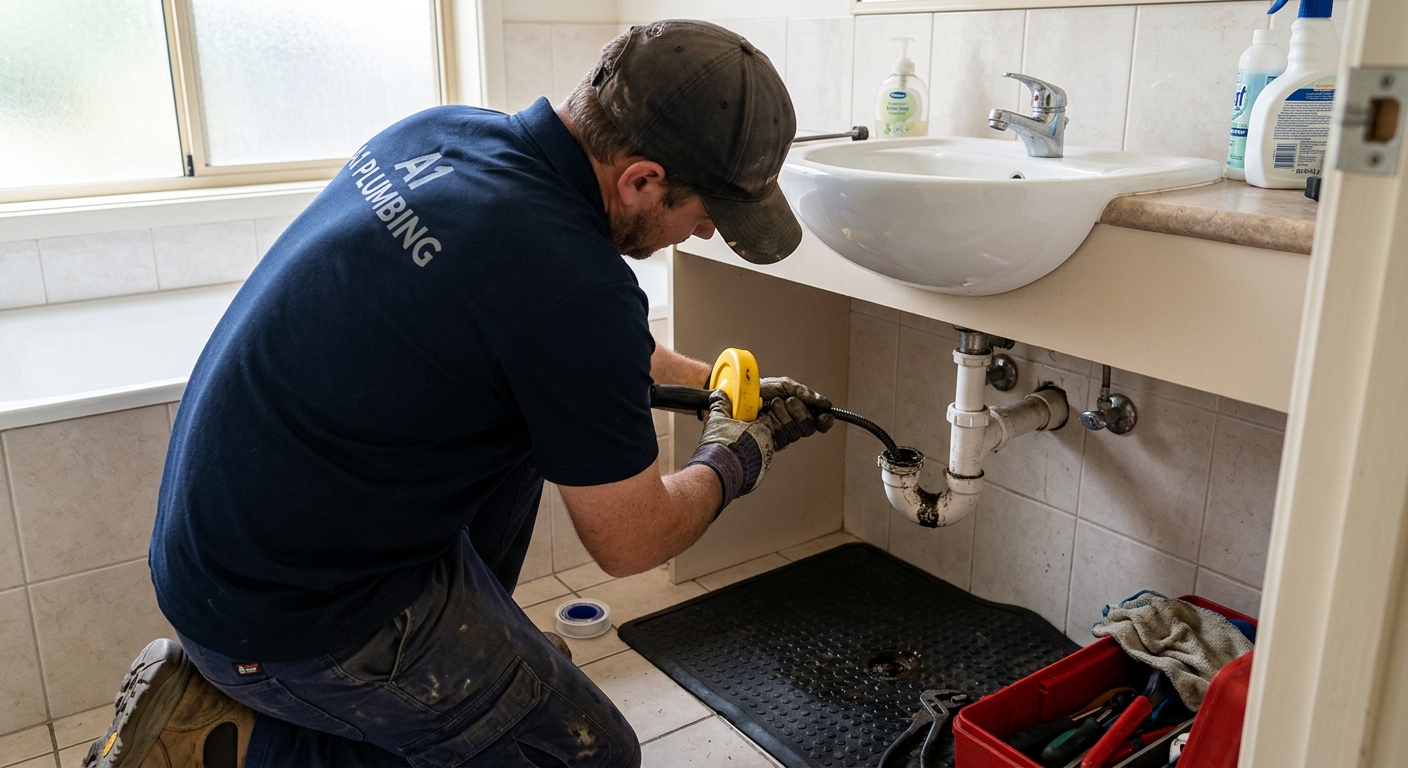
Clairton plumbing prices by job type — 2026
Plumbing costs in Clairton reflect both the type of service and the urgency of the situation. In an older community like Clairton, where 92.9% of homes were built before 1980 and a majority are single-family dwellings (U.S. Census Bureau, ACS 2024), original plumbing materials often dictate the cost and complexity of repairs. Much of Pittsburgh’s housing stock dates from 1900–1950, and these same materials—especially galvanized steel and cast iron—are still common beneath Clairton’s streets and inside its basements. The age of these systems means both small repairs and major replacements are routine here.
It's important to know that the very same job costs more when it’s an emergency. Emergency call-outs carry a premium—that’s not just higher labor, but the overhead of dispatching after hours, troubleshooting under pressure, and sometimes needing to open finished walls or floors. A scheduled water heater replacement, for example, starts at the low end of the range, but if you’re out of hot water on a winter Sunday, expect to pay at the top. Access, pipe material, and urgency are the three major drivers of price.
| Service |
Scope |
Emergency rate |
Standard rate |
| Emergency repair — burst pipe |
locate, open, repair section, restore service |
$550–$1,150 |
$325–$1,150 |
| Water heater replacement (gas, 40–50 gal) |
remove old, install, test, haul away |
$1,800–$2,600 |
$1,150–$2,600 |
| Drain cleaning — main line |
augering or hydro-jet, camera if needed |
$350–$800 |
$200–$500 |
| Sewer line spot repair |
excavate or reline a failed section |
$1,900–$11,500 |
$1,900–$11,500 |
| Whole-house repipe |
replace supply lines throughout, patch and finish |
|
$3,300–$8,000 |
| Water service line replacement |
street to house, excavation and restoration |
|
$5,200–$11,500 |
Estimates for a typical Clairton home. Access difficulty and pipe material move these figures more than anything else.
Emergency rates versus scheduled work in Clairton
Every Clairton homeowner should know this: plumbing costs split sharply depending on whether you need help right now, or if it can wait. Emergency rates include more than just the repair itself. After-hours dispatch means someone is dropping other jobs to get to your door in a hurry. There’s usually a flat trip charge, plus overtime wage for technicians, and fast diagnosis—sometimes with less time to minimize the damage neatly.
A true plumbing emergency looks like: active flooding from a burst pipe, sewage backing up into showers or basements, water completely shut off to the home, or any trace of a gas smell near a water heater or furnace. These situations put your home or your health at immediate risk and justify emergency service, typically running $550–$1,150 for even straightforward repairs.
Problems that can safely wait: a slow drip under a kitchen sink, a single slow drain (as long as the rest still work), a running toilet, or even a leaking faucet can wait for regular business hours. You’ll avoid the emergency premium and keep your bill at the lower end—down to $325–$1,150 for the same work if it’s routine.
You can turn many emergencies into scheduled work yourself. Find your water main shutoff—it’s often in the basement where the line enters the house, sometimes near the water meter. Turn it clockwise to stop all supply. For sinks and toilets, look for the oval shut-off valve under the fixture. Being able to halt the water gives you time to call for standard-rate service.
Galvanized, copper, PEX, cast iron
Clairton homes, like much of the Pittsburgh area, reveal their plumbing era by what the last century called standard practice. Galvanized steel was the go-to for water supply up until the 1950s–60s, but it corrodes day by day from inside, narrowing the passage and killing water pressure long before it starts weeping rust. Copper took over by the 1950s and is tough but not immortal—watch for pinhole leaks, especially if your water is acidic. Polybutylene had a brief window (mainly in 1980s–90s), but if you have it, it’s a ticking clock; insurers have written it off. PEX is current standard—quick to install, good for tight retrofits. On the drain side, cast iron and clay tile once ruled: cast iron is rugged, but 50+ years brings corrosion and cracks; clay tile fails where roots find their way into the joints.
To identify what’s in your home: scratch a pipe with a screwdriver—if it’s gray and a magnet sticks, it’s steel. Greenish color and soldered joints are copper. Black or dark blue plastic with crimped brass rings is PEX. Cast iron drain lines are thick-walled and dull black; clay tile is obvious on exterior digging—reddish-orange and brittle. For supply lines, threaded joints mean steel or galvanized; soldered are copper; push-fit or crimped are PEX.
Here’s how long each should last:
| Material |
Typical era |
Failure mode |
Service life |
| Galvanized steel supply |
pre-1960 |
internal corrosion, pressure loss |
40–60 yrs |
| Copper supply |
1950s–present |
pinhole leaks, joint failure |
50–70 yrs |
| Polybutylene supply |
late 1970s–1995 |
fitting failure, sudden bursts |
unreliable |
| PEX supply |
2000s–present |
fitting or UV degradation |
40–50 yrs |
| Cast iron drain |
pre-1975 |
corrosion, cracking, scale |
50–75 yrs |
| Clay tile sewer lateral |
pre-1980 |
root intrusion at joints, offset |
50–60 yrs |
| PVC / ABS drain |
1970s–present |
joint separation, crushing |
50+ yrs |
Clairton's housing stock and its plumbing
Clairton’s housing story is nearly a century old. With more than 92% of homes built before 1980 (U.S. Census Bureau, ACS 2024), many residents are living with their second or third generation of plumbing. That means galvanized supply lines are still lurking in basements and behind walls, often partnered with cast iron or even clay tile waste lines. Homes from this era commonly have original clay tile sewer laterals running from the house to the street, and galvanized steel or sometimes lead for the main water service.
In these older houses, unless there’s been a full update, low water pressure, rusty water, and slow drains are regular signals of pipe age. Drain stacks may be cast iron, now decades past their peak. Water heaters are rarely original; many homes are on their third unit given the average tank lasts 10–15 years. Bathrooms and kitchens may show the “staged” remodels of the decades, with a mix of new fixtures tied into old pipes.
If you do find a post-1980 home in Clairton, the risks shift. That’s the window for polybutylene, an unreliable plastic supply line, and the earliest plastic (PVC/ABS) drains. A newer house might still have its original builder-grade fixtures and first replacement water heater, but being newer doesn’t mean problem-free—just a different list to watch: failing fill valves, loose drains, and evidence of past leaks in a finished basement.
Camera inspection, relining and replacement
Every Clairton homeowner should know: you own and are responsible for the sewer lateral running from your house to the main in the street. Disputes about “city versus homeowner” responsibility almost always come down to problems in this zone—clogs, roots, collapses, and soggy yards point to a failure between house and main, and yes, it’s yours to fix.
Symptoms come in order: a single slow drain is often a fixture problem, but two or more slow drains—especially at the lowest level—signal an issue further down. Gurgling noises or offensive odors from floor drains are early warnings. Sewage backing up at the lowest shower or toilet means the main line is blocked or collapsed. Before any bid for excavation or relining, a camera inspection should be performed—no guesswork. This inspection reveals root intrusion (common in pre-1980 clay tile), bellies (sags that trap solids), and offsets (joints that have shifted).
Modern repairs offer two paths: open-cut replacement, where the yard and sometimes driveway are torn up, or trenchless relining, which can fix sections without major digging. Both options in Clairton are routinely priced at $1,900–$11,500 per segment. For homes in outlying Allegheny County townships with septic, problems shift—tank overflows or slow-draining fixtures mean you may need the tank pumped or the drainfield replaced, not a main line repair.
One thing to insist on as a Clairton homeowner: always view the camera footage before you sign on to a sewer project, whether you’re offered excavation or a trenchless “cure.”
Verifying a Clairton plumber's credentials
In Pennsylvania, plumbing is not licensed at the state level. Instead, licensure is municipal: a plumber can be fully qualified for one city but have no credential to work in the next township. For Clairton and most of Allegheny County, there are two questions to ask. First: “Are you licensed here?” Second: “Do you have Allegheny County Health Department credentials if working in Pittsburgh or nearby municipalities?” This is critical, because local inspectors won’t sign off on work by an unregistered contractor, and you could be on the hook to redo it.
Permits are required for new or altered plumbing systems—including water service line replacements and whole-house repipes. This means most real plumbing work receives an inspection by the local municipality or the county health department. Just replacing a faucet or toilet typically doesn’t need a permit in Allegheny County.
For contracts above $500, Pennsylvania law requires your plumber to hold a Home Improvement Contractor (HIC) registration from the Office of Attorney General, and they must furnish a written contract—giving you a 3 business-day right to cancel. Always verify workers' compensation coverage using WCAIS (wcais.pa.gov), and confirm their HIC registration at hic.attorneygeneral.gov. On older homes, if there is disturbance of painted surfaces from before 1978, the contractor should also be trained and certified under federal EPA Lead RRP rules.
The point where patching stops making sense
If you’re experiencing two or more leaks from the same plumbing system within three years, especially in an older Clairton home, that’s a sign it’s time to stop patching and consider a real solution. This isn’t bad luck—it’s a warning from aging materials. In houses with galvanized steel, you might see the water pressure dropping in every shower and tap, discolored water when you first turn on the faucets, or visible orange rust around joints. One pinhole in copper can be repaired, but repeated pinholes mean it’s time for a closer look.
When considering a repipe, most Clairton homes from the 1900–1950 wave will have at least partly exposed lines in basements, but upstairs the real cost—sometimes matching or exceeding the plumbing—is in patching drywall and especially plaster. Partial repipes make sense for isolated runs, but if most of your supply is original or shows visible corrosion, a whole-house upgrade is likely the more cost-effective path. Current standard is PEX for supply: it’s flexible, resists scale build-up, and is easier to retro-fit in old framing. Copper is still prized and reliable, but labor and material cost are higher.
Here’s how those decisions break down:
| Situation |
Recommendation |
Cost |
Reasoning |
| One leak, accessible, modern pipe |
Spot repair |
$325–$1,150 |
Caught early, minimal labor, no need for wall repair |
| Two or more leaks in 3 years |
Partial repipe |
$3,300–$5,400 |
Repeating failures predict more to come, invest in high-use runs first |
| Galvanized supply, pressure loss |
Full repipe |
$3,300–$8,000 |
Whole system is nearing or past end of life |
| Polybutylene anywhere in the house |
Full repipe |
$3,300–$8,000 |
Unsupported by insurers, known to fail unpredictably |
| Cast iron drain with root intrusion |
Camera, then reline or replace |
$1,900–$11,500 |
Root invasion signals deteriorated joints, duct tape isn’t a fix |
| Suspected lead service line |
Test, then replace the lateral |
$5,200–$11,500 |
Lead is a health hazard, PWSA is actively replacing but owner may be responsible |
Frequently asked questions — plumbing in Clairton
Does Pennsylvania license plumbers at the state level?
Pennsylvania does not license plumbers at the state level. Instead, licensing is handled by individual municipalities. This is particularly important for Clairton homeowners to understand: just because a plumber is licensed or qualified in Pittsburgh or another Allegheny County community doesn’t mean their license is valid in Clairton unless they've met that specific city’s (or municipality’s) requirements. Always ask, “Are you licensed here?” before hiring. State law does require any contractor taking projects over $500 to be registered as a Home Improvement Contractor (HIC) with the Pennsylvania Office of Attorney General. You can confirm this at hic.attorneygeneral.gov. Emergency repairs, even for a burst pipe costing $550–$1,150, should always be done by someone who fulfills all local requirements—don’t settle for less.
How much does sewer line repair cost in Clairton?
Sewer line repair in Clairton is often driven by the age and material of your lateral pipe. For homes built before 1980—which is most of Clairton—the lateral is likely clay tile or cast iron, both prone to root intrusion and joint failures after 50–60 years. A typical spot repair, whether by excavation or trenchless relining, will fall in the range of $1,900–$11,500. The wide range depends on length, depth, and landscaping. Never commit to any sewer work without first seeing the camera footage—a good plumber will offer it as part of the diagnostic process. On occasion, smaller blockages can be cleared by hydro-jetting or snaking for much less (sometimes as low as $200–$500), but replacement or relining drives the big-ticket costs.
What do I do about a burst pipe right now?
In Clairton, a burst pipe is a “drop everything” emergency, especially with older galvanized or copper lines common in these homes. First, find your main water shutoff (usually where the pipe enters the basement) and turn it clockwise until tight—this will stop further flooding. Mop up excess water to avoid electrical hazards and photograph the scene if you plan to make an insurance claim. Once safe, call a qualified local plumber for emergency repair, which typically runs $550–$1,150. For homes over 60 years old, a burst may signal that other sections are ready to fail—if you’ve had other leaks or see rust in the water, mention this during your call, as a targeted repipe might save money over repeated emergency visits.
Do older Clairton homes have galvanized pipes?
Yes, most homes in Clairton built before 1960—and some as late as the 1970s—were originally fitted with galvanized steel water supply lines. These pipes corrode from the inside over time, leading to reduced water pressure, rusty stains, and eventually leaks or burst sections. If you notice orange or grayish pipes with threaded joints near your meter or in the basement, you likely have galvanized pipe. Many Clairton homeowners stagger pipe replacements over years due to cost—a full whole-house repipe is in the $3,300–$8,000 range. If only part of the piping is still galvanized and you notice pressure drops or discoloration, it’s wise to assess the remaining lifespan before another emergency forces your hand.
How do I tell what my pipes are made of?
Identifying your home’s pipe materials isn’t complicated if you know what to look for. In Clairton, where much of the stock dates pre-1980, start in the basement or utility space. Galvanized steel is dull gray and magnetic; scratch it with a screwdriver, and it shows shiny silver beneath the scale. Copper is reddish and doesn’t attract a magnet, with soldered joints. PVC and PEX are obvious—white or cream for PVC, blue/red flexible tubing for PEX. Cast iron drain pipes are thick, black, and heavy, while clay tile is usually seen outside (orange-brown, brittle). This detective work can help you decide whether a spot repair ($325–$1,150) is reasonable or if it’s time to discuss an upgrade, especially if you see a patchwork of materials and spliced-in repairs.
Is a water softener worth it in Clairton?
Most water supplied through the major utilities in Allegheny County, including Clairton, is considered moderately hard but not extreme. Softener salespeople may try to convince you that every home needs one, but unless you’re seeing white scale on fixtures, glassware spotting, or frequent tankless water heater failures, a softener isn’t essential. If you do choose to install one—perhaps because old galvanized or copper pipes have built up scale—it’s a mid-range investment compared to bigger plumbing undertakings. The price to install, plumb, and commission a residential softener is typically in line with a standard water heater replacement: $1,150–$2,600. Test your water before spending anything; many households do fine without one.
What does repiping a house cost in Clairton?
Repiping an entire house in Clairton is a real investment, needed when you’ve got leaks piling up, falling water pressure, or ongoing problems with rusty or discolored water. The cost depends on the size of your house, the material chosen (PEX is now common, copper is a higher ticket), and how much drywall or plaster repair is needed after the work. For the average Clairton single-family home, expect a full repipe in the area of $3,300–$8,000. Partial replacement targeting the most troubled sections might land between $3,300–$5,400. Make sure your estimate includes wall patching, not just the plumbing labor, particularly if you have original plaster upstairs.
Who owns the sewer lateral, me or the city?
In Clairton and across most of Allegheny County, the homeowner owns the entire sewer lateral from the house to the street, including any section that runs under the sidewalk or even under the road until it connects with the main. This means you’re responsible for repairs if it collapses, gets blocked by roots, or leaks under the front yard. Spot repairs or full replacements run from $1,900–$11,500, depending on depth and length. The city will only step in for issues beyond your connection at the main sewer—it’s critical to understand this liability before an emergency arises. Always request a camera inspection before approving any dig.
What do I do if a pipe is frozen but not burst?
In Clairton, especially on cold January nights when the design minimum hits 8°F, frozen pipes are a reality—especially in older, under-insulated homes. If you turn on a faucet and no water comes out, leave the tap open (a drip relieves pressure as the pipe thaws) and gently warm the frozen section with a hair dryer, starting closest to the tap. Never use an open flame. If you can’t reach the pipe or thawing fails, call a plumber before a burst happens—frozen pipes can be thawed professionally for a much lower cost than a full emergency repair (think $325–$1,150 not $550–$1,150). Once thawed, consider adding insulation, and check for any small leaks—the freeze may have caused a tiny split that won’t show until the next cold snap.