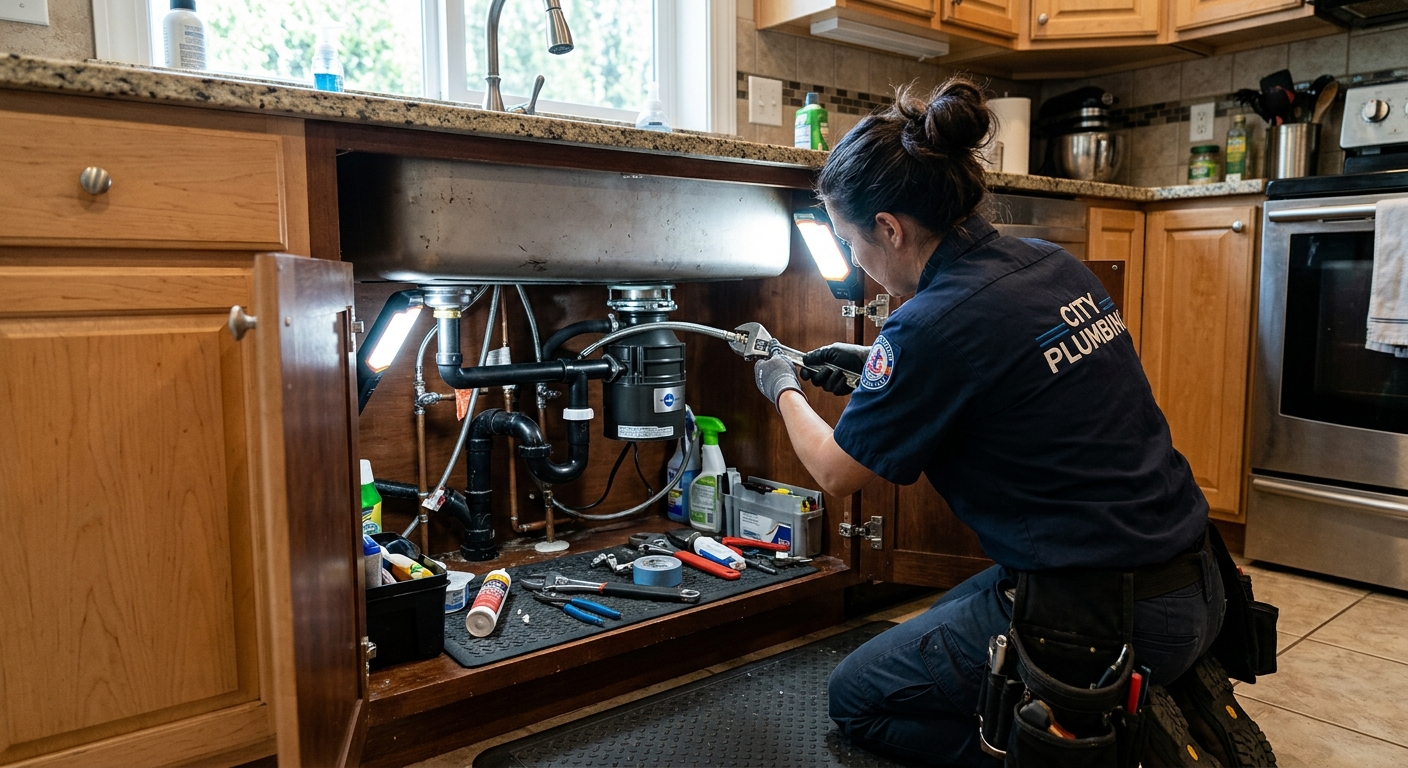
What plumbers charge in Chartiers
In Chartiers, what you pay for plumbing depends first on whether the call is an emergency or an ordinary scheduled job. If a pipe bursts at night or your sewer backs up on a holiday, expect a higher rate—urgency carries real costs, even before labor and material. This is especially true in a place like Chartiers, where 78.8% of homes are single-family and most were built before 1980 (U.S. Census Bureau, ACS 2024). Older homes often mean legacy materials, with copper and galvanized piping common. In newer parts of Peters Township, copper-to-PEX repiping is frequent, thanks to a wave of subdivision construction from the 1980s onward. This building era directly shapes what goes wrong and how expensive repairs get.
If you need a whole-house repipe or water service line replacement, these are major projects, not emergency calls, and prices reflect excavation and patching as much as plumbing. Water heaters and drain cleaning are more routine, but in an emergency—say, water pouring from a failed tank—the same install typically costs more. Always ask for standard and emergency pricing up front. Here’s what to expect:
| Service |
Scope |
Emergency rate |
Standard rate |
| Emergency repair — burst pipe |
locate, open, repair section, restore service |
$650–$1,250 |
$375–$1,250 |
| Water heater replacement (gas, 40–50 gal) |
remove old, install, test, haul away |
$2,000–$3,000 |
$1,250–$3,000 |
| Drain cleaning — main line |
augering or hydro-jet, camera if needed |
$350–$800 |
$200–$500 |
| Sewer line spot repair |
excavate or reline a failed section |
$2,100–$12,500 |
$2,100–$12,500 |
| Whole-house repipe |
replace supply lines throughout, patch and finish |
|
$3,700–$9,000 |
| Water service line replacement |
street to house, excavation and restoration |
|
$5,800–$12,500 |
Estimates for a typical Chartiers home. Access difficulty and pipe material move these figures more than anything else.
Tank, tankless or heat pump water heater?
For Chartiers homeowners, picking a new water heater should be more than picking the cheapest tank. Conventional tank heaters—gas or electric—remain the easiest to install, and in many neighborhood homes dating to the 1980s–2000s, you’ll find them in basements or utility rooms. They cost less up front, but tend to last 8–15 years. The downside isn’t just age: all tanks lose heat standing by and, in this climate, tanks in unconditioned spaces bleed some dollars every winter.
Tankless (on-demand) gas heaters have the selling point of never running out of hot water, which appeals for homes with big soaker tubs or high demand. But installation surprises many: gas tankless units often need a larger gas line and a different vent arrangement than a standard tank, driving up the initial investment. The payback comes through longer life and lower operating costs, but you’ll only see those savings if your family’s hot water use is consistent and high.
Heat pump water heaters are the most efficient, with the lowest day-to-day cost, but only make sense if you have enough space (they need a good volume of air and some warmth to “grab” heat from) and can tolerate their noise and tendency to cool the area they’re installed in. Chartiers’ many finished basements often make these a tough fit. Sizing any water heater by “first-hour rating” — how much hot water it can deliver at once — is smarter than picking by tank size. Don’t skip adding an expansion tank, and always set the unit in a pan with a floor drain if possible. Remember, in almost every failure, it’s the tank that goes—not the controls.
| Type |
Installed cost |
Service life |
Operating cost |
Best when |
| Gas tank, 40–50 gal |
$1,250–$3,000 |
8–12 yrs |
moderate |
Existing gas line, standard use |
| Electric tank, 40–50 gal |
$1,250–$2,000 |
10–15 yrs |
high |
No gas, modest hot water needs |
| Gas tankless |
$2,000–$3,000 |
18–25 yrs |
low-moderate |
Heavy use, accept higher install cost |
| Heat pump water heater |
$2,000–$3,000 |
13–15 yrs |
lowest |
Warm, unfinished space, lower load |
When to repipe a Chartiers home
You should consider repiping your Chartiers house when you see two or more leaks on the same supply material within three years, especially with old copper or galvanized lines. That’s not bad luck—it’s the material reaching end of service. Other signals: water pressure dropping at every fixture (not just kitchen or bath), discolored water that clears after a minute, or repeated pinholes and corrosion at exposed joints. Don’t ignore visible stains; even if it’s just one leak, repeated repairs start to cost more than replacement.
For a single leak in modern pipe and easy access, a spot repair is often enough. But with older housing stock (63.0% built before 1980 in Chartiers), partial or full repipes become common—especially if you still have galvanized or polybutylene. Peters Township’s big development wave in the 1980s–2000s led to lots of copper-to-PEX upgrades. PEX is flexible, lasts longer, and can be snaked with less wall damage than copper, but the hidden cost is drywall or plaster repair after the plumbing. In older homes, especially with plaster, patching can rival the plumbing bill itself.
| Situation |
Recommendation |
Cost |
Reasoning |
| One leak, accessible, modern pipe |
Spot repair |
$375–$1,250 |
Cheaper than wholesale replacement |
| Two or more leaks in 3 years |
Partial repipe |
$3,700–$6,100 |
Material at end of life; more failures expected |
| Galvanized supply, pressure loss |
Full repipe |
$3,700–$9,000 |
Material misses modern pressure/flow standards |
| Polybutylene anywhere in the house |
Full repipe |
$3,700–$9,000 |
Manufacturer defect, insurance may exclude |
| Cast iron drain with root intrusion |
Camera, then reline or replace |
$2,100–$12,500 |
Recurrent clogs not solved with cleaning |
| Suspected lead service line |
Test, then replace the lateral |
$5,800–$12,500 |
Lead service pipes should be fully replaced |
Verifying a Chartiers plumber's credentials
Pennsylvania does not issue a statewide plumbing license. Instead, plumbing licenses—the legal right to work on pipes—are issued at the municipal level. That means a plumber licensed in the City of Washington may have no credentials in Peters Township or North Strabane Township. If you’re hiring for your Chartiers home, ask directly: “Are you licensed to perform plumbing work in this municipality?” For larger jobs, like new fixture installations in the City of Washington, a city plumbing permit is usually required. In township areas, things are less strict: ordinary faucet replacements typically don’t require a permit.
You should also confirm that any contractor holds a Pennsylvania Home Improvement Contractor (HIC) registration for jobs over $500; verify at hic.attorneygeneral.gov. Workers' compensation coverage is mandatory for all employers and can be checked through WCAIS (wcais.pa.gov). For jobs involving older homes—common in Chartiers—ask if they are certified for safe work under the EPA Lead RRP Rule if your home was built before 1978. Don’t skip the step of asking for a written contract for work above $500, and know you have a 3-business day right of cancellation under the Home Improvement Consumer Protection Act.
What urgency costs you
When you call a plumber in Chartiers for a true emergency, you’re paying for more than quick labor. Emergency calls cost more because you’re buying speed: after-hours dispatch, a trip charge, possible overtime, and fast diagnosis made under the pressure of preventing further damage. These costs add up—and the same job can cost twice as much, depending on when you call.
A real emergency is flooding from an active burst, no water to the whole house, sewage backing up into tubs or floor drains, or any gas smell. If you face any of these, don’t wait—these require a call right now, and expect an emergency rate. But many issues aren’t truly urgent: a slow drip under a sink, one sluggish drain, or a toilet that won’t stop running can usually wait for regular hours, saving you hundreds of dollars.
For example, a burst pipe repair may run $650–$1,250 as an emergency, but just $375–$1,250 if handled on a regular schedule. Whenever possible, shut off water at the main (usually where the water line enters your basement or utility room) or use angle stop valves beneath individual fixtures. This simple act turns many “emergencies” into problems that can wait for business hours—and regular rates.
Vetting a plumber in Washington County
In Washington County, always start by confirming your plumber is registered with the Pennsylvania Attorney General as a Home Improvement Contractor (for contracts over $500), which you can check at hic.attorneygeneral.gov. If you’re in the City of Washington, ask directly if your plumber holds a valid license for that municipality—since plumbing licenses are not statewide. In any township (like North Strabane or Peters), a “licensed in the region” answer is not enough—double check local requirements with the municipal code office.
Ask for an insurance certificate that names your property as the additional insured, which verifies valid liability. Workers’ compensation status should be confirmed, especially if the plumber has employees, via WCAIS (wcais.pa.gov). Find out if the company uses its own staff or subs out the work, and always request an upfront emergency rate sheet if you’re calling after hours.
- Ask if the plumber is licensed for plumbing work in your municipality
- Verify HIC registration at hic.attorneygeneral.gov
- Request a written contract for work over $500
- Check their workers’ compensation via WCAIS
- Get a certificate of insurance naming your property
- Confirm who will be on site—employees or subcontractors
- Read the fine print on emergency and after-hours pricing
- Get camera footage/diagnostics before major sewer quotes
- Require a pressure test on repipe bids
- Look for EPA Lead RRP certification for pre-1978 properties
- Scrutinize any bid that jumps straight to replacement
- Ask for references from jobs in Chartiers or neighboring municipalities
Be wary in a moderate market: if your only evidence of “need” for a repipe or sewer job is a contractor’s word, and you haven’t seen any diagnostics—walk away. A responsible Chartiers plumber always documents the problem.
Freeze risk and what to do about it
Chartiers faces real winter risk—frost depth here is 36 inches and the winter design temperature is 8°F, with heavy freeze-thaw cycles and a lot of hilly, exposed ground. Pipes commonly freeze when they’re run through exterior walls, unheated crawlspaces, unfinished basements, garages, or—less often—uninsulated attics. The burst doesn’t usually happen right at the freeze, but between the ice plug and a closed faucet, with pressure splitting the copper, PEX, or CPVC open far from the ice.
To prevent frozen pipes, start with insulation on any plumbing near exterior walls. Heat tape adds protection, especially in crawlspaces or garages. On the coldest nights, leave a trickle running at the most vulnerable fixture—usually the farthest point from your main. Think about opening kitchen or bath cabinets along exterior walls to let house heat in. Always shut off and drain outdoor spigots before the first hard freeze of the fall.
If you discover a frozen pipe, never use an open flame. Safe thawing is slow: try a hair dryer, gentle heat lamp, or towels soaked in hot water. The cost if you get this wrong? Repairing a burst pipe in Chartiers runs from $375–$1,250 (more if after hours)—money easily prevented by a little cold-weather prep.
Frequently asked questions — plumbing in Chartiers
How much does a water heater replacement cost in Chartiers?
If you're replacing a basic 40–50 gallon gas water heater in Chartiers, expect to pay between $1,250–$3,000 with most jobs falling close to $2,000. This price covers removal of the old tank, hauling it away, and standard installation of the new one. If your water heater fails after hours or starts leaking suddenly—meaning you need same-day or overtime help—the cost can inch up toward the higher end of that range. If your old tank needs a new vent or your gas line has to be upgraded to meet code (common in older Chartiers homes), that adds more. It's best to schedule a replacement during business hours and get a firm quote in writing, especially since over 63% of local homes predate 1980 and may have unusual hookups.
Should I repipe my Chartiers home or keep repairing?
If your Chartiers home has had two or more leaks in the same pipe material within three years, it's usually smarter to repipe rather than keep patching holes. In older Chartiers neighborhoods, especially those with galvanized or early copper plumbing remaining from the pre-1980 era, recurring leaks signal the whole material is aging out. Spot repairs might run $375–$1,250 each, so the bill stacks up fast. By contrast, a partial or full repipe with copper or PEX usually falls between $3,700–$9,000, but after that, you start fresh and get modern pipe. If you only have a single leak and your pipes are otherwise in good shape, repair is the way to go. But with multiple failures, replacement is not only safer—it’s more cost-effective within a few years.
Is a sewer line replacement covered by homeowner's insurance?
In Chartiers, homeowner’s insurance rarely covers a full sewer line replacement unless damage is sudden and the policy specifically covers underground service lines. Most policies exclude “wear and tear,” which is the usual cause in local homes—especially with older clay or cast iron sewers running under mature trees. If roots invade or the pipe simply collapses, which is common in Chartiers' pre-1980 homes, the job is typically out of pocket and can run from $2,100–$12,500 depending on the length and how much yard or driveway needs restoration. Always check your specific policy and ask your agent about any “service line endorsement” or optional coverage.
Is Chartiers on combined sewers or septic?
In Chartiers, whether you’re on public sewer or septic depends on your exact location. The City of Washington and other denser boroughs have separated sanitary and storm sewers; further out, in rural townships like North and South Strabane, individual septic systems are common. If you’re unsure, your water bill or property disclosure will often tell you, or you can call the municipal code office. For any major sewer line repairs—from spot fix (starting at $2,100) to a full replacement—knowing what you’re connected to matters for permits and inspection. Septic properties have their own set of maintenance and local rules you’ll need to follow.
Should I leave a faucet dripping in cold weather?
Yes, in Chartiers’ climate—with winter design temperatures reaching 8°F—it’s wise to leave a faucet trickling on the coldest nights, especially if you’ve had freeze-ups before or have pipes running through unheated areas. A slow, steady drip keeps water moving and helps prevent pressure from building up behind a freeze plug—a common cause of burst pipes. If a pipe freezes and bursts, repair costs will be in the $375–$1,250 range or higher if it’s an after-hours emergency. Opening cabinet doors under sinks along outside walls is another no-cost trick. Prevention is always cheaper and easier here than a cold-weather cleanup and a drywall patch.
How much does sewer line repair cost in Chartiers?
Most sewer line spot repairs in Chartiers cost between $2,100–$12,500. The wide range reflects everything from finding and patching one break near the house to replacing a large section involving deep excavation, concrete, or restoring landscaping. The average job, especially where tree roots invade older lines, runs about $5,800. If your plumber quotes a full replacement right away, ask to see camera footage of the break—responsible Chartiers plumbers always provide documentation. For smaller blockages or maintenance, drain cleaning is much less, usually $200–$800.
How do I tell what my pipes are made of?
In Chartiers homes—many built before 1980—you might have a mix of copper, galvanized steel, PEX, CPVC, or even legacy materials like polybutylene or lead. Look at any exposed plumbing: copper is reddish, galvanized is silver-gray and threaded, PEX is flexible and usually red, blue, or white plastic. If you see a dull gray pipe entering your house from the street, especially in an older home, it may be lead—this is worth testing. Cast iron or clay is used for old drain lines, identifiable by their weight and color. If you’re thinking about a repipe due to recurring problems, budget $3,700–$9,000 and ask for a home walk-through; a pro can type your supply and drain lines and lay out a replacement plan.
How do I verify a plumber's licence and insurance?
In Pennsylvania, plumbing licenses are municipal, not statewide. That means your plumber must hold a license in the city or township where your Chartiers home is located. Always ask, “Are you licensed to do plumbing work in this municipality?” For jobs over $500, confirm your contractor’s Home Improvement Contractor (HIC) registration at hic.attorneygeneral.gov. For insurance and workers’ comp, ask for certificates and verify workers’ compensation at wcais.pa.gov. Don’t accept a generic insurance letter; the certificate should name your property. Insist on these steps, especially in the moderate-density Chartiers market—solid paperwork is the dividing line between established firms and fly-by-night operations.
What do I do about a burst pipe right now?
First, shut off the main water valve—usually where the pipe enters your basement or crawlspace. If you can’t find or turn the main, turn off the nearest fixture valve to stop the flow. Open faucets to drain pressure. Then, call a local Chartiers plumber and ask for their emergency dispatch rate—expect a repair between $650–$1,250 if after hours. Move belongings out of the wet area and document any damage. Don’t try to thaw pipes with open flames. When the plumber arrives, they’ll repair the damaged section and restore service, but remember—if this is your second or third pipe failure in a few years, it may be time to discuss a permanent repipe while the walls are open.